
Another small thing worth some thought: How your bass sounds to you on stage is almost certainly different than it’ll sound to your audience. And that’s where it ultimately matters. If possible, audition your tone out in the room and make your choices based on what you hear out there… Or not. It’s your journey…

Enjoy the benefits of a premium membership!
Upgrade Account
-
TalkBass has been independent since 1998. Add your voice.
Create a free account to reply to discussions, view embedded media, and browse with fewer display ads.
Join free Log in
Want zero display ads or expanded classifieds tools? Compare plans.
You are using an out of date browser. It may not display this or other websites correctly.
You should upgrade or use an alternative browser.
You should upgrade or use an alternative browser.
Cab Sim IR's and LIVE sound
- Thread starter TeoStr
- Start date
More options
Who Replied?
Post cab sim EQ, that is.If FRFR on stage I'd say keep the IR in the chain for it and FOH but have additional EQ for the FRFR side so you can tweak for audibility on stage.

Finally! The truth!The reality is getting a good bass sound live tends to range from difficult to impossible.


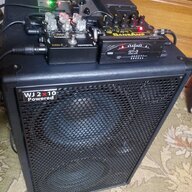
The ideal is to mimic the Ampeq sound as close as possible,
but without the weight.
For my Wayne Jones Powered 2X10 (very full range, hifi), I also like the Sansamp drive and cabsim of the BDDI v.2: the best solution so far for a real Ampeg-like sound has been to add a DSM Omnicabsim Deluxe AFTER the BDDI. It really fine-tunes the signal to emulate a convincing 8X10 vibe and feel of the Ampeg to the WJ2X10 and/or FOH, all analog. They're out of production but come up used pretty often...I love the SansAmp sound primary and because now I have given my money on this. I can't go back.


1) Yes.Hi dear friends.
My name is Teo. Greetings from Greece.
I am a bassist and I'm building my portable kinda rig.
I do live stuff mostly.
I need a help in understanding more in depth the IR philosophy and how I could benefit from it.
Probably this gonna be a big thread but I would like to be detailed and understood on what I ask. Sorry and thanks in advance.
In order to catch up answers I have already read many threads around but couldn't find yet the answers I seek.
I am mostly an analogue guy but (as all of us) I'm trying to reduce weight for my transportations. The digital amp modelers is not my thing anyway.
My rig till now consists by:
* a tuner
* a noise gate and the
* all analogue Tech 21 XB Driver (2 channels bass preamp)
At home I go balanced (Line level) from the XLR output of the XB Driver to my QSC K8.2 active Full Range speaker.
In live situations I usually go directly to FOH desk using the exact above path and occasionaly I go simultaneously to the RETURN of the stage amp via the unbalanced TS 1/4" Output of the XB Driver.
The ideal is to mimic the Ampeq sound as close as possible,
but without the weight.
The preamp by itself is very very close. At least to my liking I'm very happy and fulfilled of what I get from it. Very convincing I dare to say with meat and balls.
Especially the crossover bi-amp feature with low and high pass filters on both channels is a shaging game changer.
Well, I step upon IR's in which I'm completely unfamiliar and by human curiosity the devil made me to ask myself (and you furthermore) if I could achieve something even more realistic with those in the game. Do I really need them? How does it work? From where to where?... And stuff like that.
Although I made my research, read a lot of topics, threads, seen dozen of YouTube videos, however I couldn't get all the answers I need for my setup scenario. I have understood what an IR is, what length of it is useful. The basic philosophy and structure anyway. But I still have queries.
And here I am asking you.
The only one IR loader that fits in the above shown Pedalboard is this one: TC electronics Impulse IR Loader
and probably placed underneath the Pedalboard as a "set and forget" pedal. It doesn't fit on top anywhere.
QUESTIONS
1.) Where should I place the IR Loader in the signal chain?
In the very end, directly after the XLR output of the XB Driver and before the K8.2 speaker? Is that the appropriate place?
2.) But the IR Loader has 1/4" I/O's only (not XLR) and the cable from the Balanced Output of the XB Driver is a microphone CABLE (not an instrument cable). Should I make XLR to 1/4" TRS and 1'4" TRS to XLR cables in order to make properly the connectivity? That's the way?
3.) In a live situation, where the XLR output from the XB driver goes FOH and the 1/4" output goes to my speaker or into the return of the stage amp.... Where will the IR Loader be? Because it seems that it cannot be on both. Is that true?
Only one of those will have the IR sound?
4.) The IR cab simulation will alter all my eq from the preamp itself?
Or it just adds the picture of the Cab (the air, the presence, the reverberation of the room) with a specific microphone?
In my sound, especially the distorted sound, where high and low pass filters have taken place, the eq is critical.
If something comes after and change all this, then that's not ideal at all and not welcome.
I'm asking because the IR will be after the eq-ing on the preamp. And if it truly alters dramatically the preamp stage eq, I cannot see the reason to fix surgicaly my eq on the preamp and all this be lost and replaced by something else by the IR. That's very confusing and not ideal to me. That's the reason I don't want the amp modelers thing.... The simplicity of my preamp. You set values just out of the box and you are ready to go. If I have to make different eq settings back and forth then that leads to a chaos and the ideal simplicity just like that doesn't even exist anymore.
Anyone who has the knowledge, please try to inlight me and guide me.
Thank you.
2) I don't know this one. Maybe someone else can help you.
3) According to your setup, it can't be in both.
4) The IR will definitely change de character of your sound, as a speaker would, and you'll have to readjust the eq to your taste.
If I might, the questions you're facing are due to the limitations of your preamp. I have a NUX NBP-5 preamp, which is quite low in price and fixes all the problems for you: it's a preamp, has drive, has IR loader and comes with good ones already (including Ampeg), it has XLR out, 1/4 out, 1/4 through... You can also decide on the fly if you want to turn off the IR for the XLR or the 1/4 separately. Plus has headphone and Aux in connections.
"You can't straighten a tree that already grew bent"

I don't know if you have purposely shortened that quote to focus on the qualities of the built-in cab sim, but the full quote reads thus, and states you can run another sim/IR in combination.Are you already using the cab sim in the XB driver?
From the Tech 21 description:
"BUILT-IN SPEAKER/CAB SIM: The 100% analog SansAmp Tube Amplifier Emulation technology encompasses the entire signal chain, from pre-amp to power amp to speaker simulation. The SansAmp speaker sim is designed and individually tailored for a smooth, even response as would be achieved by a multiply-miked cabinet –without peaks, valleys, and notches associated with single miking and many IRs."
BUILT-IN SPEAKER/CAB SIM: The 100% analog SansAmp Tube Amplifier Emulation technology encompasses the entire signal chain, from pre-amp to power amp to speaker simulation. An integral part of the circuitry, the SansAmp speaker simulation will complement any type of guitar or bass speaker cabinet system. You can also place an external IR after a SansAmp to give additional flavor if you so desire. The SansAmp speaker sim is designed and individually tailored for a smooth, even response as would be achieved by a multiply-miked cabinet –without peaks, valleys, and notches associated with single miking and many IRs.
My two-pennies-worth, based on my experience and limited knowledge only
An 8x10 IR (or whatever configuration IR) through a PA system or FRFR will not sound like a real 8x10 raging in the room with you. An IR is the sound captured by a specific mic in front of (usually) one speaker in a specific environment. Rather than 'amp in the room', think of it as 'amp in the other room'.
I have been using the Helix direct to PA for several years now, with and without frfr, and with IEM. For ages, I didn't use cab sims or IR, largely because I don't have the knowledge or experience of cab mic'ing techniques to make it effective. My sound was decent, but there was always something a little 'off' that I couldn't dial in.
I started experimenting with them within the last year, firstly my own attempts, then a cab block in an Ian Martin Alison preset (which sounded great) and now the Nolly's Blend IR ripped from the Darkglass Adam. An IR will always need post EQ work to make it fit in the mix and environment - usually a hpf more than anything, but I feel like it's the secret sauce to getting a more organic sound and response out of a modeller, particularly if you use drive sounds.
It makes the most sense to me to put it at the end of your signal chain, replicating a real-world scenario of putting a mic in front of a cab. With your gear, however, you will be reliant on the sound engineer to adjust your final tone to sit in the mix properly. If you can find an IR loader with a parametric eq and XLR out, you will have complete control. Unfortunately, I don't have much knowledge in this area - perhaps someone else here will.
You also might want to think about parallel paths, mixing an IR-affected path with a clean DI path for the best of both worlds. This comes with a couple of caveats.
1. Phase alignment as IRs can introduce a tiny bit of delay, and
2. Will anyone notice?
I went down this rabbit hole recently, mixing an SVT and IR, with a Noble DI model and ran into issues, including phase alignment, among others. I stripped it back and now just use the amp and cab path, and it sounds great. No one has told me it desperately needs a parallel path with a DI to make it sound better. Sometimes, less is more!
An 8x10 IR (or whatever configuration IR) through a PA system or FRFR will not sound like a real 8x10 raging in the room with you. An IR is the sound captured by a specific mic in front of (usually) one speaker in a specific environment. Rather than 'amp in the room', think of it as 'amp in the other room'.
I have been using the Helix direct to PA for several years now, with and without frfr, and with IEM. For ages, I didn't use cab sims or IR, largely because I don't have the knowledge or experience of cab mic'ing techniques to make it effective. My sound was decent, but there was always something a little 'off' that I couldn't dial in.
I started experimenting with them within the last year, firstly my own attempts, then a cab block in an Ian Martin Alison preset (which sounded great) and now the Nolly's Blend IR ripped from the Darkglass Adam. An IR will always need post EQ work to make it fit in the mix and environment - usually a hpf more than anything, but I feel like it's the secret sauce to getting a more organic sound and response out of a modeller, particularly if you use drive sounds.
It makes the most sense to me to put it at the end of your signal chain, replicating a real-world scenario of putting a mic in front of a cab. With your gear, however, you will be reliant on the sound engineer to adjust your final tone to sit in the mix properly. If you can find an IR loader with a parametric eq and XLR out, you will have complete control. Unfortunately, I don't have much knowledge in this area - perhaps someone else here will.
You also might want to think about parallel paths, mixing an IR-affected path with a clean DI path for the best of both worlds. This comes with a couple of caveats.
1. Phase alignment as IRs can introduce a tiny bit of delay, and
2. Will anyone notice?
I went down this rabbit hole recently, mixing an SVT and IR, with a Noble DI model and ran into issues, including phase alignment, among others. I stripped it back and now just use the amp and cab path, and it sounds great. No one has told me it desperately needs a parallel path with a DI to make it sound better. Sometimes, less is more!

I don't know if you have purposely shortened that quote to focus on the qualities of the built-in cab sim, but the full quote reads thus, and states you can run another sim/IR in combination.
I was just asking if Teo had been using the SansAmp sim and didn't like it. Chill.
Last edited:
My apologies if that came across as arsey. Not my intention. I only mentioned it in case there was confusion over whether using a separate IR in conjunction with the built-in cab sim was a good idea or not. The full quote explains it.I was just asking if you had been using the SansAmp sim and didn't like it. Chill.
I don’t have any technical recommendations. However, I run similarly direct to FoH on all my gigs. So I’m relying on the sound guy to give me a good tone. A board operator is usually going to load the same EQ / Compression that he has saved in his computer for every bassist. So, whatever you put before it is going to be altered by what he puts on it.
For me, I try not to stress about it. I tell him to try to give me a very “middle of the road” flat set up. I go from Motown, to 70s Funk and disco, to some more modern R&B. I have settings on my Line6 or my Eventide to try to get me as close to that as I can. I warn him to have a limiter set to protect his system from any peaks that come along when I put effects on.
I have used IRs (helix modeled) live. They seem pretty useful from the preamp/amp emulation perspective. It’s nice to get an SVT tone from a box. But I also Iike to be able to get a flip top tone, maybe a more modern FET response, along with the SVT on a given show. But how much does the sound guy’s manipulation negate all that attention to detail I put into the signal I’m sending him before he EQs, compresses, and mixes it?
Cab sims - I have mixed feelings on them because, ultimately, you are engaging an artificial speaker tone…to run your signal through an actual speaker. Maybe it’s just me, just always sound like a darker and semi-reverbed version of the unaffected sound.
For me, I try not to stress about it. I tell him to try to give me a very “middle of the road” flat set up. I go from Motown, to 70s Funk and disco, to some more modern R&B. I have settings on my Line6 or my Eventide to try to get me as close to that as I can. I warn him to have a limiter set to protect his system from any peaks that come along when I put effects on.
I have used IRs (helix modeled) live. They seem pretty useful from the preamp/amp emulation perspective. It’s nice to get an SVT tone from a box. But I also Iike to be able to get a flip top tone, maybe a more modern FET response, along with the SVT on a given show. But how much does the sound guy’s manipulation negate all that attention to detail I put into the signal I’m sending him before he EQs, compresses, and mixes it?
Cab sims - I have mixed feelings on them because, ultimately, you are engaging an artificial speaker tone…to run your signal through an actual speaker. Maybe it’s just me, just always sound like a darker and semi-reverbed version of the unaffected sound.

I’ve spent a lot of time researching and experimenting on this topic so I’ll add what’s working for me…
I treat my signal going to my amp and the FOH mixer completely independently. As such, using a Darkglass Microtubes which has IR capability, I run the IR just after a split at the end of my digital chain (within the Darkglass unit - but this could be Line6 or other pedals) whereby my amp gets the Non-IR signal and the FOH get’s the IR version. A couple of practical observations:
- Stage Amp - My stage amp sound doesn’t need the IR because, hopefully obviously, has its own cabs.
- In Ears - this is probably the biggest impact in that I found an 8x10 sim that I absolutely love as it sounds like a mic’d sealed cabinet. When I say ‘Mic’d cabinet…’ I literally mean that I can hear it the detail of how the speaker sounds and reacts the same as if I mic’d it with my favorite mic. IF IF IF… you’re not at the point where you can discern this distinction, then don’t even bother with the IR, lol. Once my experience level grew to where I starting picking up on the differences the IR was a game changer for how things feel in my ear. And, yes, feel is the word because it’s more of a feel thing like when a tube amp reacts.
- FOH - While it can be said that no one will notice whether you have an IR or not, I would challenge that a bit as generally when you start to separate out the bands that sound amazing live vs. the ones that sound flat, it’s really a 100 little things that go into it. For example:
(Distortion - If you use distortion than you most definitely need an IR because distortion does not play nice when it goes straight to the mixing board)
*** Stage amps vs. Direct only
*** Direct boxes and mixer preamps, i.e. (Neeve & A&H) vs. Whirlwind & Behringer/QSC
*** New drum heads and strings vs. flat wore out drum heads and strings
*** Electronic drums vs. real drums mic’d well
*** Clean signal chains vs. over buffered signal chains
*** Awareness of who’s occupying which frequency ranges and…
*** Awareness of proper placement in the mix (without studio mixing experience, some people don’t have this awareness)
*** Etc. on and on
All this being said, your decision on having a good IR that’s going to the FOH mixer in itself is not a game changer to what the audience hears. However, if your band is really striving for world class sound and is making dozens of decisions to get there, your use of a good IR ‘will’ impact the quality of your band’s sound and the ‘impression’ the audience gets.
Hopefully, this adds some perspective
I treat my signal going to my amp and the FOH mixer completely independently. As such, using a Darkglass Microtubes which has IR capability, I run the IR just after a split at the end of my digital chain (within the Darkglass unit - but this could be Line6 or other pedals) whereby my amp gets the Non-IR signal and the FOH get’s the IR version. A couple of practical observations:
- Stage Amp - My stage amp sound doesn’t need the IR because, hopefully obviously, has its own cabs.
- In Ears - this is probably the biggest impact in that I found an 8x10 sim that I absolutely love as it sounds like a mic’d sealed cabinet. When I say ‘Mic’d cabinet…’ I literally mean that I can hear it the detail of how the speaker sounds and reacts the same as if I mic’d it with my favorite mic. IF IF IF… you’re not at the point where you can discern this distinction, then don’t even bother with the IR, lol. Once my experience level grew to where I starting picking up on the differences the IR was a game changer for how things feel in my ear. And, yes, feel is the word because it’s more of a feel thing like when a tube amp reacts.
- FOH - While it can be said that no one will notice whether you have an IR or not, I would challenge that a bit as generally when you start to separate out the bands that sound amazing live vs. the ones that sound flat, it’s really a 100 little things that go into it. For example:
(Distortion - If you use distortion than you most definitely need an IR because distortion does not play nice when it goes straight to the mixing board)
*** Stage amps vs. Direct only
*** Direct boxes and mixer preamps, i.e. (Neeve & A&H) vs. Whirlwind & Behringer/QSC
*** New drum heads and strings vs. flat wore out drum heads and strings
*** Electronic drums vs. real drums mic’d well
*** Clean signal chains vs. over buffered signal chains
*** Awareness of who’s occupying which frequency ranges and…
*** Awareness of proper placement in the mix (without studio mixing experience, some people don’t have this awareness)
*** Etc. on and on
All this being said, your decision on having a good IR that’s going to the FOH mixer in itself is not a game changer to what the audience hears. However, if your band is really striving for world class sound and is making dozens of decisions to get there, your use of a good IR ‘will’ impact the quality of your band’s sound and the ‘impression’ the audience gets.
Hopefully, this adds some perspective
Last edited:

I will start by saying I don't have first hand experience using IRs, but I do have quite a bit of experience running live sound.
Another area to consider relates to feedback. With a real mic, a feedback loop will be formed between the mic and whatever speakers are broadcasting the mic'd sound. This interaction will have an impact on how the bass sounds in the room. The mic will also pick up bleed from any other sound sources in the area, such as drums, guitar, vocals, keys, etc. An IR will most likely simulate a feedback loop for the bass signal as part of its simulation of the room, but it will not sample bleed from the other sound sources. The feedback loop for the bass in a given IR will be consistent from gig to gig and should be optimized. However there will also be a feedback loop created by the PA and the room between all of the speakers and all of the open mics. This feedback loop is often so strong that it is a problem.
AFAIK some IRs allow the user to tweak parts of the simulation. Let's assume your playing in a big boomy room. It may be useful to dial back and modify the room simulation in the IR. While I can see the IR's room simulation being useful for recording in a controlled environment. I would expect that layering the virtual acoustic environment of the IR too heavily with the real acoustic environment of a room to frequently be a bit over the top. IME the actual acoustic environment in the majority of performance venues tends to significantly degrade the sound of bass. So I don't see much potential benefit for layering in a second virtual acoustic environment. There may be elements of the virtual environment that are useful, but probably not a simulation a big acoustic space.
To really use an IR effectively, you probably need a couple of different IRs that are optimized to work in different real acoustic environments. An IR optimized to sound great through headphones or studio monitors will most likely have way too much simulated acoustic space.
I agree. If you mic a cab, the signal you get at the mixing board does not sound exactly like an 810 raging in the room. If it's a good IR, the signal sounds like a mic'd cab, which is definitely different from what you will hear on stage. In other words a mic'd cab doesn't sound exactly like an 810 raging in the room either. However, if the audio tech were to solo up a great IR and compare it to the sound of a mic'd cab in his/her headphonse, it should be hard to figure out which is real and which is simulated.An 8x10 IR (or whatever configuration IR) through a PA system or FRFR will not sound like a real 8x10 raging in the room with you. An IR is the sound captured by a specific mic in front of (usually) one speaker in a specific environment.
This is correct as well. However, if a real mic is super close to the drivers, then the impact of the room is greatly reduced. As you back off the mic, the direct sound changes a bit and the level decreases, while the level of the room picked up by the mic should stay about the some. I guess I would say, this comment is less relevant if the mic is really close to the speaker and becomes more relevant as the mic is pulled back. Also, the value of using an IR is it should be setup to simulate the ideal mic spacing in the ideal room, rather having signal quality vary from gig to gig like with a mic. In other words, using an IR should enhance consistency a bit.Rather than 'amp in the room', think of it as 'amp in the other room'.
Another area to consider relates to feedback. With a real mic, a feedback loop will be formed between the mic and whatever speakers are broadcasting the mic'd sound. This interaction will have an impact on how the bass sounds in the room. The mic will also pick up bleed from any other sound sources in the area, such as drums, guitar, vocals, keys, etc. An IR will most likely simulate a feedback loop for the bass signal as part of its simulation of the room, but it will not sample bleed from the other sound sources. The feedback loop for the bass in a given IR will be consistent from gig to gig and should be optimized. However there will also be a feedback loop created by the PA and the room between all of the speakers and all of the open mics. This feedback loop is often so strong that it is a problem.
AFAIK some IRs allow the user to tweak parts of the simulation. Let's assume your playing in a big boomy room. It may be useful to dial back and modify the room simulation in the IR. While I can see the IR's room simulation being useful for recording in a controlled environment. I would expect that layering the virtual acoustic environment of the IR too heavily with the real acoustic environment of a room to frequently be a bit over the top. IME the actual acoustic environment in the majority of performance venues tends to significantly degrade the sound of bass. So I don't see much potential benefit for layering in a second virtual acoustic environment. There may be elements of the virtual environment that are useful, but probably not a simulation a big acoustic space.
To really use an IR effectively, you probably need a couple of different IRs that are optimized to work in different real acoustic environments. An IR optimized to sound great through headphones or studio monitors will most likely have way too much simulated acoustic space.

I am a Tech21 fan as well. I have tried and used IRs for a long time. I used the Two Notes CabM+ which is a REALLY great all in one solution for preamp, power and and cab sim. In the end the Cab sim sounds really well if you are playing on your own.
In the mix I prefer not to have any digital cab sim at all. The slight" scratch" or edge when not using an IR helps the bass better fit in the mix, even when using overdrive. A simple analog HPF for cuttings subs and LPF for taking care of the highs works way better.
In the mix I prefer not to have any digital cab sim at all. The slight" scratch" or edge when not using an IR helps the bass better fit in the mix, even when using overdrive. A simple analog HPF for cuttings subs and LPF for taking care of the highs works way better.


