• TalkBass has been independent since 1998. Add your voice.
    Create a free account to reply to discussions, view embedded media, and browse with fewer display ads.
    Join freeLog in
    Want zero display ads or expanded classifieds tools? Compare plans.

Cali 76, best, most effective, favorite settings?

Ringhammer

Supporting Member
Sep 3, 2016
3,522
18,137
S. F. Bay Area
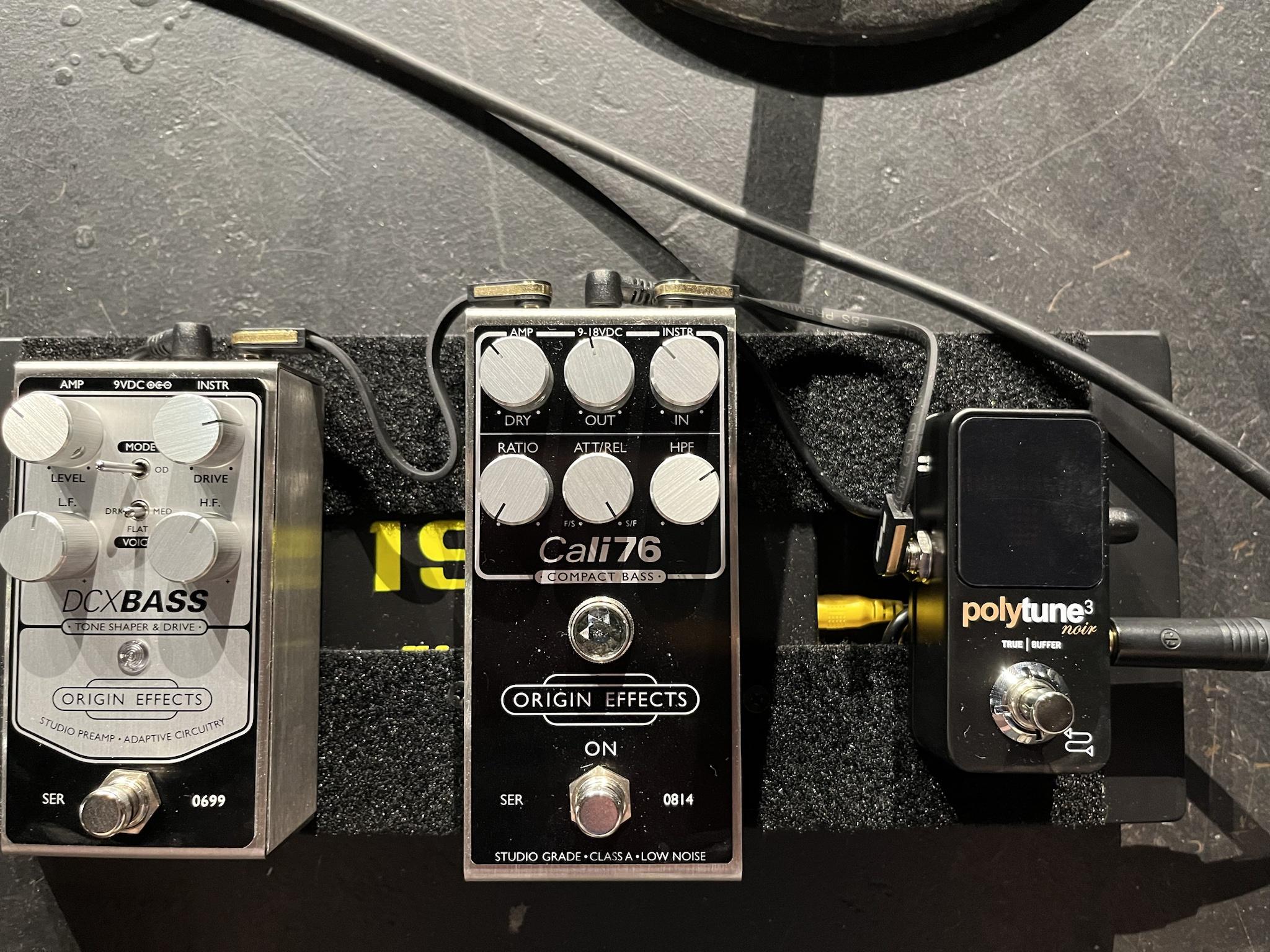
I have a Cali 76 Compact Bass and I’m curious as to what some of people’s favorite and/or most effective settings are. I’m looking to get a fair amount of compression without losing too much dynamic control. Just want to smooth out the peaks a little and not lose any low end. I will be using thing in a rather loud two guitar drums and me, all tuned to D standard and drop C.

 
KACCurR.jpg


I had posted this in another thread about the DCX but this worked well for me the other day with the stingray
 
I have a Cali 76 Compact Bass and I’m curious as to what some of people’s favorite and/or most effective settings are. I’m looking to get a fair amount of compression without losing too much dynamic control. Just want to smooth out the peaks a little and not lose any low end. I will be using thing in a rather loud two guitar drums and me, all tuned to D standard and drop C.

Your mileage may vary.

What settings work best for compression are entirely situationally-dependent, and it's sort of useless to talk about compression settings except in the most general sense, which is to say, "use as little as possible".
 
Your mileage may vary.

What settings work best for compression are entirely situationally-dependent, and it's sort of useless to talk about compression settings except in the most general sense, which is to say, "use as little as possible".
I disagree. If that was the case we'll be changing settings every song, not gonna happen. There has the be some middle of the road settings. While maybe not ideally set for studio work, average setting are good to see. From what I see I'm setting my compression way to high... Something to check out, thanks guys.
 
If the main objective is to catch peaks I would probably use a faster attack than the examples above. Dry signal all the way OFF. The input signal will need to be set to ONLY exceed the threshold at peaks of course. If not you will affect the attack on ALL your notes (ot just the peaks) and squish your dynamics (which can be cool but not what you wanted). For general "squishing" I would normally use a slower attack though.

You'll have to use your ears I'm afraid. The "best" compressor setting will depend on your playing style and the genre of music.
 
I used to have that pedal. When I got it I reached out to Ian Allison since he’s big on Cali76. He directed me to an Instagram video he did years ago about how he likes to setup his compressor. I have no idea where that video is, but it was worth a deep dive to find it.
I now play an Empress MKII and use the same approach I learned in that tutorial.
 
Your mileage may vary.

What settings work best for compression are entirely situationally-dependent, and it's sort of useless to talk about compression settings except in the most general sense, which is to say, "use as little as possible".

If youre saying that compression settings are tailored to the individual player then, yes, I completely agree
 
  • Like
Reactions: amper
A reasonable starting point is all knobs at 12 o'clock - a testament to how well Origin designed the ranges of the controls.

yes…everything at noon is a good starting point. It’s like the Mesa instant gratification setting and sounds good to me.

From there I tend to roll the ratio, dry and HPF back between 9 and 11. As far as the HPF I don’t mind having a little more compression on the lower notes. I started with the attack all the way to the right but I do like the noonish setting, I seem to get a little more sustain.
 
Your mileage may vary.

What settings work best for compression are entirely situationally-dependent, and it's sort of useless to talk about compression settings except in the most general sense, which is to say, "use as little as possible".

Absolutely. You have to understand what threshold, attack and release are, then set it up according to your playing style. You can't just copy someone's settings.

I disagree. If that was the case we'll be changing settings every song, not gonna happen. There has the be some middle of the road settings. While maybe not ideally set for studio work, average setting are good to see. From what I see I'm setting my compression way to high... Something to check out, thanks guys.

Based on your reply (You're setting your compression high, because you see other users settings.) you clearly don't understand the compressor.
 
I agree that settings aren't necessarily transferable, but I think having some guidelines can be helpful, especially with 6 knobs that are all pretty interactive. The fact that at least some of us wind up with similar settings speaks to that.
Some users wind up similar settings because some of them might have same dynamics.

This is a guideline imo not user settings: Audio Compression 101: How to Use a Compressor for a Better Mix | LANDR

You can go a long way with understanding compression basics.
 
Interesting that some of your examples have a slow attack and fast release. One intention on using a compressor is to try to remove the clack I get from when I’m digging in and the string is striking the frets hard. I’m mostly a finger player and I can come down pretty hard when I’m into it. Seems like a fast attack is what would be what’s called for in that example. The other reason I have thought of for using a compressor on bass might be to get a little more volume out of the thinner strings, but I’m not sure if that’s actually possible or if a compressor is the right application for that?

Yes, I probably am not an expert on using a compressor, that why I asked here. I thought that’s what these forums were for…