• TalkBass has been independent since 1998. Add your voice.
    Create a free account to reply to discussions, view embedded media, and browse with fewer display ads.
    Join freeLog in
    Want zero display ads or expanded classifieds tools? Compare plans.

Can someone explain the reason for a zero fret

I thought a lot of Gretsch instruments had them.

I think my old Gretsch hollow body bass had one.

I believe Gretsch started using zero frets in the 50's. Maybe they were the first company to do it, not sure. I was reading a Chet Atkins interview years ago. He was in on some of the Gretsch designs (for a long time he was a Gretsch endorser and some design ideas came from Chet Atkins), and he talked about presenting the idea to Gretsch, because he was having trouble with string nuts.
 
Is the zero fret the same fretwire as the rest of the frets?

it can be the same fretwire, but it doesn't have to be. I used to utilize the same fretwire, but experimentation lead me down a different path ...

on my current builds I utilize a similar but different fretwire for the zero-fret. the zero-fret wire I install is about .005" taller than the regular fret wire. this gives me the capability to adjust the zero-fret height slightly if need be, and allows me the ability to hone the set-up for a very flat neck relief for those players who have that set-up preference

all the best,

R
 
SGD, that zero looks sweet! You did that huh? Nice. I can't recall ever seeing that before on a guitar, but it seems like a very nice custom touch. On that type of set up is the nut set further back, lowered, and only holds the stings in place? No chance that can be retro-ed on an existing neck, not for "cheap" I suppose right.
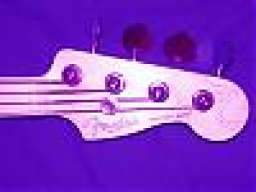

Thanks! Yes, that's one of my basses.

Yes, the nut is farther back and is only a string retainer.

It would difficult to add a zero fret to an existing neck. A brass nut would be a good alternative.

(the head shot, made in 1994, right before I was using the SGD name)
DSC02725.jpg
 
All of mine have zero's unless specifically not wanted by a customer.

I level all of the other frets before installing the zero, this makes the zero a little bit higher and then I have the ability to adjust it a small amount if needed. This is really beneficial on basses with a low B string, as the little bit of added "nut height" can help achieve a tighter sounding B with the neck set flat. This isn't the cure all to floppy B stings, just a small factor in helping get a nice tight B with low action.

I’ve also used harder wire in the past in the zero position to help minimize wear but since I’ve yet to wear out a normal nickel fret at the zero position I’ve come to the conclusion that it may be unnecessary, time will tell.
Picture081-4.jpg
 
how hard is it to get a zero fret installed on a bass which originally did not have one?

you would have to place it exactly where your nut current,y is and move the nut back towards the tuners...

If I understand it... the Zero fret was developed by Chet Atkins and Gretsch, yes, so they did not have to worry about having the nuts perfectly carved, it helped the save production cost and still allow the strings to slide through the slots when you used those killer Bigsby Tremelo Bars.
 
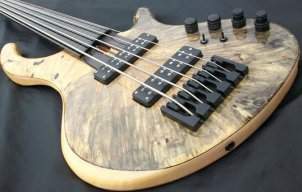
Has anyone ever had a fretless with ONLY a zero fret?

I've seen it, but in my opinion you shouldn't use a zero fret on a fretless, since it positions the action too high for open strings. So you don't get that "mwah" on open notes.

I cut my nuts on fretless basses so the string is resting on the end of the fingerboard.
 
agreed with several above ... as I've posted elsewhere on this topic, IMO/IME a zero-fret has no place on a fretless bass. even mandolin wire is too tall to be usable IMO

only a true nut can be slotted properly for playing in 1st position on a fretless

all the best,

R
 

Latest posts