Another important aspect is how we play and what we play.
I got results by raising the string height, turning down amp and plucking harder, striking right through the strings. Making those strings vibrate, and keeping them vibrating through each pluck sounds good. Don't damp the string, pull it, then release it to make a tone, but strike right through in one motion.
It's helpful to play across the open strings and climb the G to get register, as opposed to climbing the E and then moving across the strings to get register. The initially 'cumbersome' upright style fingerings on a fretless electric bass add a lot to the phrasing and sound of the lines and figures we play. Learning Simandl style fingers can help one play in tune a 34" scale fretless bass. On a 30", one may be able to use 1234 fingers... it depends on how it sounds.
Some of the stuff on the posted picture, seems overly optimistic.
There is always this bass to get...
http://www.ashborybass.com/
Very portable, and very good sounding with the right amp, but can be hard to play in tune as the scale is so short and the strings so fat in relation to scale length.
Then of course, an electric bass is nothing with out an amp and speaker, so we need a quality amp/speaker combo to get a quality sound. And the EQ has to be adjusted to deliver what we want to hear.
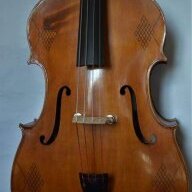
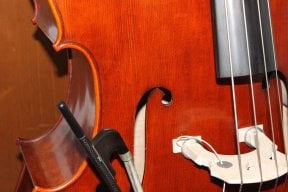
Keep in mind though, as we move towards a 'DB' sound with our electrics, double bass players are moving towards an electric sound with our DB's. As soon as we plug in a DB with a piezo pickup. it becomes a hybrid EUB. As the volume increases and more of the sound which audience hears is amplified from the piezo, then the more electric a DB sounds.
(studio recording)
It's important to play well, with a sound that goes well the music being played. Then all sorts of things work.