
I've tried using different softwares to chart new songs but I always end up hand writting it with my ipad/notes app - For those of you that do hand written charts, whats your method or style charting it? how do you organize and your notes in the chord chart? could you possibly post a sample? Thanks

Enjoy the benefits of a premium membership!
Upgrade Account
-
TalkBass has been independent since 1998. Add your voice.
Create a free account to reply to discussions, view embedded media, and browse with fewer display ads.
Join free Log in
Want zero display ads or expanded classifieds tools? Compare plans.
You are using an out of date browser. It may not display this or other websites correctly.
You should upgrade or use an alternative browser.
You should upgrade or use an alternative browser.
Charting / learning songs
- Thread starter ragetoca
- Start date
More options
Who Replied?
If I need to chart something out , I use real book style as it's what I am used to.

JazznFunk
Supporting Member
Jazz lead sheet style. Very easy to do in a program like MuseScore.... which is free. I use it to help generate chord and melody demos when composing as well. Pretty easy to set up chords, melodies, etc very quickly (depending on the complexity of the piece). I still hand write all of my initial charts in the initial stages of composing, or if I'm making scratch sheets for a session and then transfer them into MuseScore for permanent storage and ease of reprinting.


for the rhythm section, i "chart" tunes as you'd find them in the real book, mostly, as a lead sheet: melody (or part) with the chord symbols as they occur. for horns/other, i give them the part they should play with the changes as needed. i use sibelius (i could use just about any software) because i'm used to the program.
My handwritten charts tend to be too messy and/or subject to misinterpretation; so, I use the software to tidy things up and to make my charts non-controversial.
My handwritten charts tend to be too messy and/or subject to misinterpretation; so, I use the software to tidy things up and to make my charts non-controversial.
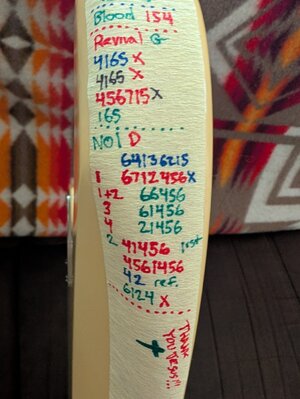
Yes use some of the nashville note system, have to learn all the symbols lolI have a couple notepads where I write down NNS charts, then I transcribe them onto flexible masking tape and throw them on the upper horn. Color coding separates bridge/verses/choruses. No charts on stage for this guy
Nashville Number System: A Complete Guide - grantlar.com
Welcome to the last guide you'll ever need to fully understand the Nashville Number System; what the pros use in Music City itself.
 grantlar.com

I’ve been using Nashville Number System for many years.. it’s been valuable resource and has helped me with this process. I don’t read standard notation so this is a good alternative for my needs.
I'm able to read notation, so if needed, I'll write it out. I was offered a pretty good pro level gig, but the charts were in the nashville number system, and I was never good at math. 
For me, in a pinch I'll just copy something simple fom ultimate guitar, and reformat to make it fit 2 pages then create a word document, the main reason isn't for me, but to get how the band is playing the cover, how long certain things are, (IE leads) I've found if there's a solid foundation for how long things can be it avoids the temptation for guitar players to ramble on with endless solos. Additionally, if there's something we've had a disagreement on and resolved, it helps to avoid reverting back to the same old argument in the future.
Granted, I was a bit OCD whewn it came to timing out setlists, and lighting sequences, so it was important to actually know how the show and individual songs would progress.
For me, in a pinch I'll just copy something simple fom ultimate guitar, and reformat to make it fit 2 pages then create a word document, the main reason isn't for me, but to get how the band is playing the cover, how long certain things are, (IE leads) I've found if there's a solid foundation for how long things can be it avoids the temptation for guitar players to ramble on with endless solos. Additionally, if there's something we've had a disagreement on and resolved, it helps to avoid reverting back to the same old argument in the future.
Granted, I was a bit OCD whewn it came to timing out setlists, and lighting sequences, so it was important to actually know how the show and individual songs would progress.
I use some sort of hybrid. Usually NNS for changes, although if it's a punk gig where I know nothing's going to need on-the-fly transposition, I might write it with just chord names.
Then I'll note out the structure, and use some sort of simplified rhythmic notation for any hits or stops that are in unexpected spots.
Then I'll note out the structure, and use some sort of simplified rhythmic notation for any hits or stops that are in unexpected spots.
Same here. And I use a very bare bones approach to it, usually just the chord numbers and basic structure. The rest is committed to memory. I just make them in Word and save as PDFs to view on my iPad.I’ve been using Nashville Number System for many years.. it’s been valuable resource and has helped me with this process. I don’t read standard notation so this is a good alternative for my needs.
Was using OnSong for a while but it was sooo glitchy--literally just stopped working one day for no apparent reason and their support could not figure it out. I didn't need all the features anyway so back to just PDFs.
Last edited:
I've always just done lead sheets (melody in treble clef with chord symbols above), but for my current project the leader has song form and chord changes written out in a simple way, e.g.:
and I just supplement this with standard notation for any set parts/riffs I need to remember.
song title - time signature - tempo - key
Intro
Verse
Chorus 1
Verse
Chorus 2
Verse (solo)
Chorus 2
Outro
----------------------
Intro
| F | C | G | Dm | 2x
Verse
| F | C | G | Dm | 4x
Chorus 1
| F | F | C | G |
| F | F | C | G |
| Dm | Dm | G ...
and I just supplement this with standard notation for any set parts/riffs I need to remember.
Anybody mess with this before? Just found it a second ago, looks interesting: JotChord: Nashville Number System App - Chart songs fast

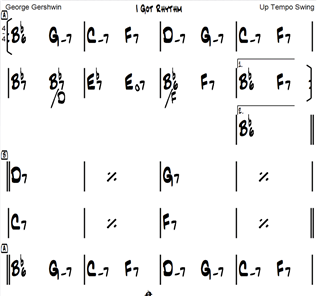
basically this style like from jazzstudies.us
sometimes roman numerals instead
sometimes specific rhythm notations or musical /lyric cues
what I want is a precise map of every bar & section
scrawling out chord symbols without bar lines or repeats too ambiguous for me.
sometimes roman numerals instead
sometimes specific rhythm notations or musical /lyric cues
what I want is a precise map of every bar & section
scrawling out chord symbols without bar lines or repeats too ambiguous for me.
Last edited:
Probably understood, but hopefully worth saying again for the many people that may come across this post, that the more you listen to and internalize the songs to the point where the name pops up on your listening device and the song just unfolds in full detail like you hit the "play button", the better... and the less complete your notes and charts need to be, and the less important the notation style and format will matter.I've tried using different softwares to chart new songs but I always end up hand writting it with my ipad/notes app - For those of you that do hand written charts, whats your method or style charting it? how do you organize and your notes in the chord chart? could you possibly post a sample? Thanks
There IS something of an opportunity cost of time being finite, and when pressed for time as we often are, the inevitable question arises: Am I going to spend the available time I have charting songs and working with software, writing notes, etc... or am I going to sit (maybe with instrument in hand) learning and internalizing songs? Maybe it's just because I only have five brain cells but reliable and accurate transcriptions of whatever depth and detail and internalizing songs are two very different mental processes for me that cannot happen at the same time.
I do find, sometimes through no fault of my own on quick sub-in things, I DO have to make this decision with the time I have available, and I ALWAYS choose the listening and internalizing the songs, for all it's strengths and faults, instead of spending that same bucket of finite, available time, writing and transcribing.
When I was teaching musical lessons, I DID take lined music paper, and write out every measure with some basic chord details (I/IV/V, etc...) for students and some structural detail (Verse, Chorus, Solo, etc...) but that was for the benefit of the student to think of songs not as 137 measures of different information, but to see PATTERNS and blocks of stable information that predictably repeats on a thirty-thousand foot level. The larger structure of the thing. To keep track of NOT 137 things times X amount of information in each measure, but 6-10 big buckets of things that in some cases are duplicate or repeating buckets. Excuse the metaphor.


Are we creating quick charts for a song we will likely not play again anytime soon?
As working professional bassist often are tasked with learning the repertoire of many artists, often with short notice. Really learning the tune and internalizing the music in not an option.
A down and dirty method is to chart chord changes and make rhythmic notations where necessary when figures are syncopated. Often Verse, Chorus, and Bridge sections are flushed out in this manner accompanied by road map for form. Of course, this method requires you can read rhythmic notation.
For tunes that fall under the category of, "I need to really know this tune for my own repertoire," I will transcribe the song in detail, using Muse Score, which notation software that will produce a professional quality typeset chart.
As working professional bassist often are tasked with learning the repertoire of many artists, often with short notice. Really learning the tune and internalizing the music in not an option.
A down and dirty method is to chart chord changes and make rhythmic notations where necessary when figures are syncopated. Often Verse, Chorus, and Bridge sections are flushed out in this manner accompanied by road map for form. Of course, this method requires you can read rhythmic notation.
For tunes that fall under the category of, "I need to really know this tune for my own repertoire," I will transcribe the song in detail, using Muse Score, which notation software that will produce a professional quality typeset chart.

MuseScore here, real book style, it is awesome and you can play your transcription.... along with the track even, that was pretty successful. It takes a while but you could get pretty fast with it with shortcuts etc... been a while since I used it.
Attachments

JazznFunk
Supporting Member
Yeah man... this is exactly what I do for basic 'charts' for certain bands where I'm jumping in last minute, or if there really isn't a need for a 'lead sheet' per-se. The 'books' for several old bands I was in were full of these types of roadmaps.If I don’t need to transcribe heads or note-for-note parts, I do this kind of thing and I just use Apple Notes.
Since Apple Notes shows a note index pane to the left, it works pretty well.
View attachment 7277613
It depends on the project as to the style of reminder I use. For jazz oriented tunes I prefer a jazz chart or real book style with chords and melody, yes melody. For singer songwriter having the lyrics and chords works better. I used to keep things in notebooks with separate books for each project but these days keeping them all on an iPad is much more convenient.


