• TalkBass has been independent since 1998. Add your voice.
    Create a free account to reply to discussions, view embedded media, and browse with fewer display ads.
    Join freeLog in
    Want zero display ads or expanded classifieds tools? Compare plans.

Chinese Made Gutars?

Status
Not open for further replies.
So some basses made in China are good but most are not?
Am I to assume only the licensed brand names are the good ones?

No I wouldn't say that. But usually the Name brands manufactured in China tend to be good because the brand doing the import buying usually has standards for instruments to be met to keep their reputation from suffering.

But there are a number of larger Chinese Instrument companies like Team International which has SX as one of it's brands. They have a lot of love around here. Basically they are Fender clones in decent wood like alder and ash, and while there is a certain "custom handmade" spastic quality to their work, generally, with a bit of mods they can turned into reasonable instruments at extremely low prices.

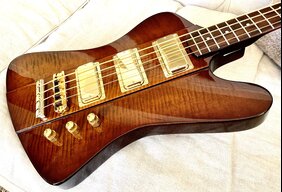
Totally worst are the Chinese outfits that are copying and faking expensive brands. This is illegal and unethical on many levels, so why would you expect people whose basic operation is crooked to be giving you a decent buy? RickenFakers are fine examples. As others have noted what they make an sell are basically stage props that LOOK like the real thing. If you just want to stand there and not play it, you can save a lot. Basically the same idea as paper mache rocks. On Rickenfakers I noticed that while they copy the guitar shape and look and the outline of the pickups, they don't even bother to copy the way the pickups are built. So just HOW close do you expect those fake pickups will sound to a real Ric? Like I said, paper mache rocks.
 
So some basses made in China are good but most are not?
Am I to assume only the licensed brand names are the good ones?
:rollno:
A legitimate (not counterfeit) bass or guitar made in China should meet the quality standards dictated by the parent company and will be priced accordingly. A counterfeit bass or guitar made in China may or may not meet the same quality standards depending on how many shortcuts the manufacturer took to get the counterfeit bass out the door, through customs and onto the black market where it might or might not be priced accordingly.

When it comes to buying a known counterfeit, just do what you think is right. But remember, you're part of a brotherhood of bass players on this TB community. I and many others will trust that you'll treat your fellow bass players and the manufactures and distributors that supply our tools of the trade with honesty and integrity. Break that trust once and you'll probably never earn it back.
 
  • Like
Reactions: tmdazed
Ive got chinese made stuff that play well , others that are pure crap. Xenophobia plays a big role in the "I aint playin nothin that aint Murican" set. the labour costs are cheap in chinese factories , so the purchase prices reflect. I have owned American or Canadian made stuff that were great and others terrible. you have to try it out and see what your fingers and ears say. But I do have to say the above board stuff being made for the big name producers is a hell of a lot better than the true knock off "clones" at least the licenced stuff does have a certain quality demanded
 
  • Like
Reactions: blindrabbit
Ive got chinese made stuff that play well , others that are pure crap. Xenophobia plays a big role in the "I aint playin nothin that aint Murican" set. the labour costs are cheap in chinese factories , so the purchase prices reflect. I have owned American or Canadian made stuff that were great and others terrible. you have to try it out and see what your fingers and ears say. But I do have to say the above board stuff being made for the big name producers is a hell of a lot better than the true knock off "clones" at least the licenced stuff does have a certain quality demanded

The fact that you use a cliche like "murican" tells me that you let stereotypes do the tedious work of thinking for you, so I'll break it down. It's not about what we play. It is about what we choose to support in the marketplace with our money. We support American industry because we want to live in a country that has industry, along with good paying jobs and a tax base that supports a decent standard of living in the communities where we live. We oppose the outsourcing of classic American designs to low-wage countries, undercutting our workers and exporting our manufacturing base. This is not xenophobia. It's about being aware of the implications of our purchasing decisions. It's about rejecting the mindless consumerism that says "Gimme what I want at the lowest possible price; who cares about the country's future, the environment, workers' rights, animal welfare, or any of that crappolo..."

The Chinese understand the importance of supporting their national industry, as do the Japanese, the Koreans, and many others. Americans used to understand it. You do what you choose.
 
The fact that you use a cliche like "murican" tells me that you let stereotypes do the tedious work of thinking for you, so I'll break it down. It's not about what we play. It is about what we choose to support in the marketplace with our money. We support American industry because we want to live in a country that has industry, along with good paying jobs and a tax base that supports a decent standard of living in the communities where we live. We oppose the outsourcing of classic American designs to low-wage countries, undercutting our workers and exporting our manufacturing base. This is not xenophobia. It's about being aware of the implications of our purchasing decisions. It's about rejecting the mindless consumerism that says "Gimme what I want at the lowest possible price; who cares about the country's future, the environment, workers' rights, animal welfare, or any of that crappolo..."

The Chinese understand the importance of supporting their national industry, as do the Japanese, the Koreans, and many others. Americans used to understand it. You do what you choose.
isn't it a tad cliche for some to say , that an instrument is made in china, therefore its a pile of kindling? there is a lot of xenophobia involved, a ton of nationalism and pure racism. I seem to remember many years back the Japanese had the same stigma applied until they started actually beating north american ( and other world) manufacturing powers at their own game. Japanese electronics are in most cases second to none, Japanese vintage (read knockoff back in the day) instruments for the most part are highly desirable instruments, 20\20 hindsight I guess. Supporting national industry is all well and great , but inconsistent product quality and over inflated pricing are not conducive, the Chinese merely saw an opportunity, a niche to fill and took it , as always there are growing pains , but recent quality and future will prove they are overcoming that.
 
Chinese basses are crap or great; it just depends on what the brand owner wanted to pay for the build.

Counterfeit basses are another matter entirely. Somewhere on TB, there is a thread where somebody bought a knock-off Fodera just our of curiosity. It was reportedly horrible when compared to a legitimate China-sourced bass, let alone when compared to a Fodera. I believe he gave the knock-off bass to Fodera when he was done evaluating it.
 
The fact that you use a cliche like "murican" tells me that you let stereotypes do the tedious work of thinking for you, so I'll break it down. It's not about what we play. It is about what we choose to support in the marketplace with our money. We support American industry because we want to live in a country that has industry, along with good paying jobs and a tax base that supports a decent standard of living in the communities where we live. We oppose the outsourcing of classic American designs to low-wage countries, undercutting our workers and exporting our manufacturing base. This is not xenophobia. It's about being aware of the implications of our purchasing decisions. It's about rejecting the mindless consumerism that says "Gimme what I want at the lowest possible price; who cares about the country's future, the environment, workers' rights, animal welfare, or any of that crappolo..."

The Chinese understand the importance of supporting their national industry, as do the Japanese, the Koreans, and many others. Americans used to understand it. You do what you choose.

It is interesting to me that folks deride people like myself who avoid Chinese made gear, but fail to understand that China (and like-minded countries) have extreme import restrictions, thus shutting out US business and US made goods. But I'm the one who is unreasonable. Huh. :eyebrow:
 
  • Like
Reactions: buldog5151bass
isn't it a tad cliche for some to say , that an instrument is made in china, therefore its a pile of kindling? there is a lot of xenophobia involved, a ton of nationalism and pure racism. I seem to remember many years back the Japanese had the same stigma applied until they started actually beating north american ( and other world) manufacturing powers at their own game. Japanese electronics are in most cases second to none, Japanese vintage (read knockoff back in the day) instruments for the most part are highly desirable instruments, 20\20 hindsight I guess. Supporting national industry is all well and great , but inconsistent product quality and over inflated pricing are not conducive, the Chinese merely saw an opportunity, a niche to fill and took it , as always there are growing pains , but recent quality and future will prove they are overcoming that.

Japan is quite different from China. It has a well paid work force, environmental standards that are at least the equal of ours, and has been a leader in innovation for a long time.

China did not see a niche. It opened its doors to a lot of multinational companies who saw a niche undercutting the wages of workers in the developed countries and taking advantage of dirt-cheap labor, reaping the short-term benefits of environmental destruction, and relying on an authoritarian government to crush any protest of their practices. Of course those companies still expect to sell their products to American consumers, the very ones whose earnings are being undercut by the process. One look at this forum will tell you they were not wrong. The situation is unsustainable.

Sadly, Fender is one of those companies. They are even manufacturing the Fender brand in China now. I don't have a lot of respect for the corporate culture but I'll still buy an American Fender because it's a quality instrument, well-priced in my opinion, and made by American workers.

The cliches about "poor quality, overpriced" American products are just that, cliches. There are plenty of companies making affordable, high-quality instruments in America. They may cost more than a Chinese knock off, but are worth it in the larger scheme of things. If you're a kid starting out or a struggling musician and a Squier is what you can afford, I understand. I really do. But think about it. I could pay $400 for a Squier or about twice that for a MIA Fender. I may own that instrument for the rest of my life and spend tens of thousands of hours playing it. Spread over that time, the difference in initial cost is miniscule. And I will know that I own a quality instrument made by workers who were paid a living wage, have health care, and some of whom may be customers of my business as well.
 
Hmm. Sadly enough, American manufactured products are not expensive because they have a higher quality or are made better. They are priced higher because they are more expensive to build here. Our environmental regualtions are the most severe on the planet, Our corporate tax rate is the highest in civilized world and our labor cost is one of the highest due to regulations and union policies. Its actually cheaper to send wood to china, have it manufactured and then shipped back here. Most of our raw goods are done that way. If your buying maple and or american ash, there is a good chance it was cut here, shipped to china, fabricated and manufactured then shipped back here. Insane but true.
 
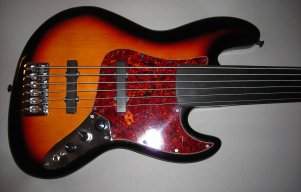
I bought two of these Chines lefty 5 string jazz bass copies, Fender or Squier don't make them lefthanded so a fake will have to do.
Right out of the box they were unplayable and there were a lot of things that were either misaligned or just mounted wrong, no shielding, and poor grounding.
Most parts and components were okay, actually the neck on the white one is great.
You must just look at these things as a basis out of which you can make something nice, at least that's what I did.

This is the first one I ordered, after all the work I've done on it.
jb-5.jpg

And this is the second one, also after all the modifications.
jb-5v2t800.jpg


Right now they are very nice players and I'm happy with the endresult, but it took some work and time to get them like this.

If you are not into tinkering and modifying of your basses these things are something I would not recommend.
The basis for a good instrument is there but there is lot to be done on them before they are okay, out of the box they were crap.
 
I still have ethical issues, even if they were the best playing basses in the world.
I do understand your ethical issues, however, if this is the ONLY way to get a LEFTHANDED five string Jazz Bass I'm willing to go for a fake one that can actually be bought.
Fender or Squier don't offer a lefty 5 string!!!

And for what it's worth, I'll always mention they are fake and never try to pass them off as the real deal!
 
I agree it's ridiculous that Fender and Squier do not offer a Jazz V lefty. Seems like you might have had other options for a better quality Jazz type bass, whether made here or elsewhere. At least sand off that (really poor) fake Fender decal before you sell it.

As I said above, I don't have much respect for the corporate culture of Fender. The fact that they are now producing Fender-branded instruments in China tells me they have little regard for the legacy of their brand. If the Chinese Modern Players win acceptance, I predict the Mexican production will be phased out and moved to China within a decade. The American Fenders will remain as a luxury brand unless and until the bean counters decide they can charge American-made prices for an Asian bass the way somebody like Dan Lakin is trying to do.

What bugs me about these counterfeits isn't that it's ripping off Fender. It's that they are intended to fool the unsuspecting buyers. You knew what you were getting but many who bought these second hand did not.
 
I personally do not want any instrument made in China, unless it's a native instrument of China. However, if you buy one and like it, more power to you. Brand names means nothing when it comes to instruments. Some manufactures have more consistency than others, there are great Nike shoes and there are crappy Nike shoes. You have to get what you can afford. Hopefully enjoy whatever you own.
 
  • Like
Reactions: Dug2
I bought two of these Chines lefty 5 string jazz bass copies, Fender or Squier don't make them lefthanded so a fake will have to do.
Right out of the box they were unplayable and there were a lot of things that were either misaligned or just mounted wrong, no shielding, and poor grounding.
Most parts and components were okay, actually the neck on the white one is great.
You must just look at these things as a basis out of which you can make something nice, at least that's what I did.

This is the first one I ordered, after all the work I've done on it.
jb-5.jpg

And this is the second one, also after all the modifications.
jb-5v2t800.jpg


Right now they are very nice players and I'm happy with the endresult, but it took some work and time to get them like this.

If you are not into tinkering and modifying of your basses these things are something I would not recommend.
The basis for a good instrument is there but there is lot to be done on them before they are okay, out of the box they were crap.

Actually there are Fender licensed options through Warmoth company that would have given you an identical bass. The issue is a fully finished neck and body matching that white one of yours would be in the neighborhood of about $850 USD not including shipping and import fees and other taxes. And you'd still have to buy and install the tuners, bridge, pickups, controls, pickguard, control plate, strap pins and strings, all totaling about another $350. So you're sitting at about $1200 in parts and labor (not including taxes, shipping, customs, etc) to duplicate that white left handed bass.

You clearly had a choice (that you might not have been aware of). You choose what I assume was a more cost efficient option. There's obvious pros and cons to that from both an ethical and financial standpoint.

From an ethical standpoint, I would challenge you to consider removing the Fender logo from the headstock. You've already mentioned your good intentions about full non Fender disclosure if you decide to sell. Unfortunately the person you sell to may not have the same good intentions you do and may decide to flip it as a Fender for some tidy quick profit.

BTW - I really like the looks of that burst stack pot jazz, very sharp!
 
  • Like
Reactions: Robus
Status
Not open for further replies.