
Enjoy the benefits of a premium membership!
Upgrade Account
-
TalkBass has been independent since 1998. Add your voice.
Create a free account to reply to discussions, view embedded media, and browse with fewer display ads.
Join free Log in
Want zero display ads or expanded classifieds tools? Compare plans.
You are using an out of date browser. It may not display this or other websites correctly.
You should upgrade or use an alternative browser.
You should upgrade or use an alternative browser.
CITES - What every bass player should know
- Thread starter Turnaround
- Start date
More options
Who Replied?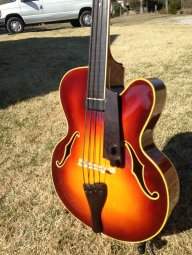

I don't begrudge anybody the use of anything, if it means the difference between surviving or not. If you'd prefer to keep everything on the endangered list untouchable even if it means people dieing, then you are a person I would rather not know personally.
If I seem uninformed to you, please comment on the substance of my previous post before suggesting more reading material.
If I seem uninformed to you, please comment on the substance of my previous post before suggesting more reading material.
I don't feel a need to educate - it's quite simple - deforestation happens is places where poverty is the worst - Africa, SE Asia, central & South America
It used to be only corporate destruction but now it's often subsistence folks harvesting both flora & fuana just to exist - it's sad but, until the world begins to value these things for the diversity necessary to sustain a habitable globe, we will continue to see huge species die-offs
I am 60 - in my lifetime 50% of all species (plant & animals) have gone extinct and the pace is only increasing
Better get used to synthetic material musical instruments
The problem with the laws and treaties is the administration thereof including educating customs agents - no one wants to take your bass - but many unethical instrument builders have looked the other way while buying huge quantities of irreplaceable wood stocks - greed on both ends
It used to be only corporate destruction but now it's often subsistence folks harvesting both flora & fuana just to exist - it's sad but, until the world begins to value these things for the diversity necessary to sustain a habitable globe, we will continue to see huge species die-offs
I am 60 - in my lifetime 50% of all species (plant & animals) have gone extinct and the pace is only increasing
Better get used to synthetic material musical instruments
The problem with the laws and treaties is the administration thereof including educating customs agents - no one wants to take your bass - but many unethical instrument builders have looked the other way while buying huge quantities of irreplaceable wood stocks - greed on both ends

The problem with the laws and treaties is the administration thereof including educating customs agents - no one wants to take your bass - but many unethical instrument builders have looked the other way while buying huge quantities of irreplaceable wood stocks - greed on both ends
Examples, please?
If you know of many unethical builders who have looked the other way while buying huge quantities of irreplaceable wood stocks, you shouldn't have a problem naming a few of them.

I played one of [Invalid or Expired Link Removed] the other day. Let's just say that we are not ready.................Better get used to synthetic material musical instruments
On the other hand, I met a luthier who is very aware and does not used any endangered species in his guitars (I bought one
 ). Another luthier I met a few days earlier may have some BRW in his inventory but his was obtained decades ago and he too, will not buy any more, just continue to use what he has on hand until it runs out.
Another luthier I met a few days earlier may have some BRW in his inventory but his was obtained decades ago and he too, will not buy any more, just continue to use what he has on hand until it runs out.
Commendable, but the bureaucrats who implemented SITES will neither know nor care. To them, a guitar made with new old-stock-isn't much different than a hunk of wood from an endangered tree you chopped down yourself only yesterday.
Unfortunately, that is a BIG part of the problem.Commendable, but the bureaucrats who implemented SITES [sic] will neither know nor care. To them, a guitar made with new old-stock-isn't much different than a hunk of wood from an endangered tree you chopped down yourself only yesterday.
Last edited:

I don't begrudge anybody the use of anything, if it means the difference between surviving or not. If you'd prefer to keep everything on the endangered list untouchable even if it means people dieing, then you are a person I would rather not know personally.
It's the classic canary in the coal mine. Complex life depends on biodiversity: if plants and animals are dying off, then humans won't survive either (aside from possibly a Soylent Green world). So, please spare us the silly rhetoric that environmentalists care more about plants and animals than they do about humans.
Good freakin grief. It's not silly rhetoric, if one of your own is actually saying it. Did you not read pnchad's past few posts? He's more concerned about deforestation than people surviving, he even clarified it. I'm not making a straw man argument or putting words in anyone's mouth.It's the classic canary in the coal mine. Complex life depends on biodiversity: if plants and animals are dying off, then humans won't survive either (aside from possibly a Soylent Green world). So, please spare us the silly rhetoric that environmentalists care more about plants and animals than they do about humans.
But note two things. One, I never said nor implied that all environmentalists are as extreme as pnchad -- for that matter, I didn't really say anything about environmentalists at all, because...
Two, my focus is on the SITES, as it's currently written and implemented, which also happens to be the topic of the thread. I'm not opposed to saving endangered plants and animals. I'm opposed to onerous regulations and bureaucrasy.
Not "us", just you. Your cohorts disavowed your stated preference for untouched rainforests over surviving people.

This CITES crap is an abuse of power in general, confiscating someone's beloved instrument is not protecting any tree, it will be cut down for furniture anyway.I would think that this is where a decent "manufacturer's organization" (NAMM?) would use some of their revenues to hire a team of lawyers to get on the case and file some motion to grandfather in instruments built before a certain date. Preposterous to have a problem with a twenty-five year old existing instrument (where the wood is ALREADY in it's final use) that was built before those laws were even in existence.
That's NOT protecting ANYTHING, it's just an abuse of power.

scotch
It's not rocket science!
- Nov 12, 2006
- 6,944
- 2,081
- 51
- Disclosures
- Please see Profile for Endorsement disclosures
This thread is pretty much just political bickering now. Zero constructive content or helpful information from folks who actually cross borders with their instruments. Sigh...
All I have yo go on is my own experience travelling internationally with bands for about 20 years. All sorts of electric guitars and acoustics, some older Gibsons and lots of Tak's and Taylors. Never have I had, or have I seen, an instrument confiscated at the border. That's not to say it *never* happens, but it's far more likely your expensive instrument will be stolen in baggage, in your hotel room, or at the gig!
If your instrument is too precious to lose, don't travel with it. It's pretty simple. It's all about what risk you're willing to take!
All I have yo go on is my own experience travelling internationally with bands for about 20 years. All sorts of electric guitars and acoustics, some older Gibsons and lots of Tak's and Taylors. Never have I had, or have I seen, an instrument confiscated at the border. That's not to say it *never* happens, but it's far more likely your expensive instrument will be stolen in baggage, in your hotel room, or at the gig!
If your instrument is too precious to lose, don't travel with it. It's pretty simple. It's all about what risk you're willing to take!
Last edited:

This thread is pretty much just political bickering now. Zero constructive content or helpful information from folks who actually cross borders with their instruments. Sigh...
All I have yo go on is my own experience travelling internationally with bands for about 20 years. All sorts of electric guitars and acoustics, some older Gibsons and lots of Tak's and Taylors. Never have I had, or have I seen, an instrument confiscated at the border. That's not to say it *never* happens, but it's far more likely your expensive instrument will be stolen in baggage, in your hotel room, or at the gig!
If your instrument is too precious to lose, don't travel with it. It's pretty simple. It's all about what risk you're willing to take!
I think perhaps you have been lucky. In my experience, in the last 18 months I know of 6 instruments I was closely involved with that were stopped at the border. Luckily all six were retrieved after a lot of red tape, but I wouldn't count on the bureaucracy to be fair always.
scotch
It's not rocket science!
- Nov 12, 2006
- 6,944
- 2,081
- 51
- Disclosures
- Please see Profile for Endorsement disclosures
Perhaps I've been lucky, sure... but then so have been all of my Nashville colleagues, hundreds of them, none of which have CITES horror stories.
I'd love to now the details on those 6 seizures, Turnaround!
I'd love to now the details on those 6 seizures, Turnaround!
Jim Carr
Dr. Jim
- Jan 21, 2006
- 16,223
- 7,613
- 76
- Disclosures
- fEARful Kool-Aid dispensing liberal academic card-carrying union member Musicians Local 72-147
...where does one go to get an instrument passport?...
Yes, indeed.
The information you seek has been posted to this thread several times, see above, especially my posts.
Let's all just cool off—not just you— but ALL of us. We need to understand the legal facts and the environmental issues.
I think that despite left or right biases, we are all in agreement that there are endangered woods, and that the treaties embodied by CITES are an international attempt to protect our environment and our future. Raging about the "man" is so worthless, IMHO.

I think you might have missed the point of my post, if that's all you took from it.The information you seek has been posted to this thread several times, see above, especially my posts.
Jim Carr
Dr. Jim
- Jan 21, 2006
- 16,223
- 7,613
- 76
- Disclosures
- fEARful Kool-Aid dispensing liberal academic card-carrying union member Musicians Local 72-147
You have most certainly missed mine.I think you might have missed the point of my post, if that's all you took from it.


