• TalkBass has been independent since 1998. Add your voice.
    Create a free account to reply to discussions, view embedded media, and browse with fewer display ads.
    Join freeLog in
    Want zero display ads or expanded classifieds tools? Compare plans.

Double Bass classroom repair - epoxy vs wood glue?

It seems to me that what will solve the problem for the students most efficiently would likely be a new (better, donated) Chinese cello-shaped object.


pretty much how i saw it... which is why I wanted to just get some glue in there and "hope for the best."

after all, as long as it doesn't implode the day of my school concerts, whats the big deal right? :smug:


I guess ill go with wood glue...

Looking into a HHG setup for next year for sure.
 
  • Like
Reactions: 210superair
pretty much how i saw it... which is why I wanted to just get some glue in there and "hope for the best."

after all, as long as it doesn't implode the day of my school concerts, whats the big deal right? :smug:


I guess ill go with wood glue...

Looking into a HHG setup for next year for sure.

Man, I just use a small soup pot, a hot plate, and a Mason jar. Works great. I keep a kitchen thermometer in there to monitor temp, voiala. All you need are a few brushes and you're good to go.
 
So I guess I don't understand the thought process here.

"I am thinking of using epoxy or PVA wood glue for these repairs."

[multiple people]: "Don't use those, use hot hide glue."

"Hey, here's a picture where I used PVA wood glue after everyone told me it wasn't a good idea."

Why ask the question, if you had already decided what you were going to do no matter what you were told?
 
Since the $8 investment and ten minutes of your time, combined with almost every single person here suggesting you use hot hide glue is not enough.....look at it like the objective is not this instrument. This instrument is merely a training ground at no personal expense for your to learn how to use hot hide glue so when (not if) your next "real instrument with a real repair" comes up, you'll already have the skills and materials needed and save yourself that $100 luthier's fee....
 
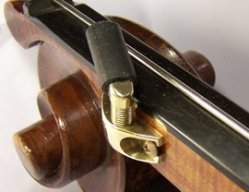
I would also mention that repairs like this are really more about clamping than the type of glue. I use screws. Under the fingerboard preferably, but through it if you really can't be bothered. If you can make some screw holes which will draw the parts together perfectly, then that is the road to a successful repair. I prefer hide glue because you get a second, third or forth chance to do it right.
 
so, in this situation (hot hide glue is not an option) -

Why not? It's really not very difficult, and the point of a classroom is to learn, am I right? :)

Since the $8 investment and ten minutes of your time, combined with almost every single person here suggesting you use hot hide glue is not enough.....look at it like the objective is not this instrument. This instrument is merely a training ground at no personal expense for your to learn how to use hot hide glue so when (not if) your next "real instrument with a real repair" comes up, you'll already have the skills and materials needed and save yourself that $100 luthier's fee....

This.

Here's an ancient thread where I was pondering something similar...
Best use for a CCB?

And another more recent one that has some good homebrew suggestions
Why hide glue?
 
  • Like
Reactions: groooooove
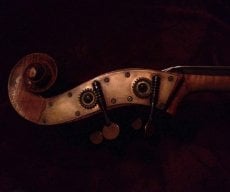
I give it overnight for most repairs. When it is a broken neck, I agree with Steven...I think it needs some reinforcement, but there are many luthiers who disagree. Perhaps it would be smart to remove the fingerboard and add a dowel...but maybe not.

But Hide glue sets up in two phases: first, it gels, and becomes pretty solid. Then, as it actually dries, it shrinks and pulls even tighter. I remember a friend making "obscure" glass by painting very thick, hot hide glue onto heavy plate glass, then slipping the whole mess into a big padded envelope. As the glue dried, you could hear the "Ping! Pinnng!" as the surface of the glass was literally being pulled off by the shrinking glue. The end result looked very much like the surface of a hand-flaked arrowhead. Pretty impressive.
I have really enjoyed your comments. I read a lot about hot hide glue but nobody seems to mention what gram strength to use. I know 192 seems most redily available but i also have 315 and others into the 500's are available. I read where the higher strength HHG's are not any better because the absorbtion rate is too great. So I am getting ready to do a repair just below the pegbox and would welcome any thoughts on the correct gram strength.

Many thanks. Scott Bellavia
 
Since the $8 investment and ten minutes of your time, combined with almost every single person here suggesting you use hot hide glue is not enough.....look at it like the objective is not this instrument. This instrument is merely a training ground at no personal expense for your to learn how to use hot hide glue so when (not if) your next "real instrument with a real repair" comes up, you'll already have the skills and materials needed and save yourself that $100 luthier's fee....
This is why I use hide glue for furniture repair. Maybe my next speaker too.
 
  • Like
Reactions: james condino