• TalkBass has been independent since 1998. Add your voice.
    Create a free account to reply to discussions, view embedded media, and browse with fewer display ads.
    Join freeLog in
    Want zero display ads or expanded classifieds tools? Compare plans.

Coil completely burnt: is a problem of too distorted sound?

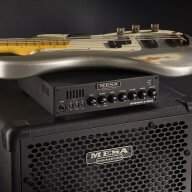
I'm disposed to recone it again to have that sound :D next time you go into a music shop try Mesa Boogie cabs. Their only bad thing its their weight. But Now I know they can burn

Just get 2 of those 15's and be done with it. They are great sounding cabs. Even some of the newer Mesa branded "Black Shadow" or whatever they're calling it shares a good bit of tonal characteristics of the old EV's. Hell, they probably are a spinoff of the old EV's if not even a relabeled version of the same damn thing (with price adjusted upward to recoup the cost of those highly expensive Mesa labels of course :smug: ).
 
flay me alive if i'm wrong, but in my book distortion adds compression, making the signal less dynamic and thus, at high volumes give the hardware within the cabs more to chew.
Plus, with a fuzz activated it is hard to tell whether the speaker farts out or not.

Another approach to that might be your sound. If you're all bottom end and a few highs for articulation, the signal is hard to get as loud as it is needed when playing in an environment that calls for distorted bass. My guitards play with 25 and 30 Watts into 2x12 cabs. I use 500 Watts into 4x12.That's the only way (for me) to get a fat low end and crisp highs with a scooped mid section. The guitar cabs are hardly working with the amps set well below 12 o'clock on the master while my rig is pumping air like an industrial fan.
 
OK. So, now you know to turn it up until it smells bad, and then turn it down a little.

The voice coil is already chipped before it smells burnt.

Power handling ratings refer to signals with +6dB crest. Heavy distorted signals don't have any crest. There is no number of power handling for distorted signals. IMO I'd suggest power handling at most 1/3 of rated handling for distorted sounds.
 
i've completely burnt the coil of my Mesa Powerhouse 1x15. The man who fixed it told me "less power please!" But I use it together with a 2x10 (both 8ohm) with a Mesa 400+ or a Mesa MPulse 600, never more than 3.5 of volume. What's the problem? Some friends say to me " too much overdrive, too much fuzz" yes I often use distorted sounds but is it really possible to burn the coil with too much distortion? I use Fulltone bassdrive, ZVez Wolly Mammuth, EBS microbass, sometimes od and fuzz together (!) but I don't do it anymore!

Your friends are idiots. If that was the case, guitar players would be wrecking speakers every rehearsal and every gig.

Are you boosting lows? That eats up power very quickly and is hard on speakers. Also, the position of the volume knob doesn't really have that much bearing on how much power is being fed to the drivers. That depends on a lot of factors.
 
The voice coil is already chipped before it smells burnt.

Power handling ratings refer to signals with +6dB crest. Heavy distorted signals don't have any crest. There is no number of power handling for distorted signals. IMO I'd suggest power handling at most 1/3 of rated handling for distorted sounds.

I was only joking when I advised the OP to turn it up until it smells bad, and then turn it down a little. Its like telling someone to tighten a bolt until it breaks, and then back off a half a turn.
 
There's a huge amount of misunderstanding about what kills speakers. If you're running a clean uncompressed signal it's very difficult to get the average power level high enough to overheat the voice coil because the signal from a bass guitar is so dynamic, unless the amp has a vastly higher power output than the loudspeaker's power handling rating.

If you're running any kind of distorted tone then it's much much easier to blow speakers - the distorted tone in itself has a higher average power compared to its peak power, so you can get more out of an amp without clipping it. Furthermore, if you're already running a dirty tone it's much harder to hear if the amp is clipping, so you can push the average level higher still by clipping the amp.

Furthermore, push the amp hard enough and you'll get more and more mids and treble out of it but you'll begin to lose lows. Why would this be a problem for power handling? The thermal power handling of a loudspeaker is simply how fast the voice coil can get rid of heat without getting so hot the insulation on the wire or the adhesive fails. The main way a high power full-range loudspeaker or woofer gets rid of heat from the voice coil is by pumping air through the motor using vents that suck and blow air past the voice coil. Most bass guitar drivers have a hole in the centre of the magnet and if you push high power through them you feel warm air blowing out of that hole on every note.

What causes that warm air to be blown out of the motor vent? The woofer moving forward sucks cool air in whilst the woofer moving back blows warm air out. The more low frequency content in your sound, the greater the distance the woofer moves forwards and backwards and therefore the more air passes through the motor and the better the voice coil is cooled.

So our overdriven sounds are more prone to overheating and blowing speakers because:

1. They have higher average power
2. They hide amp clipping so allow you to drive your amp harder
3. They often have less bottom so cause less cone excursion and therefore worse cooling
4. They also hide the audible warning signs of loudspeaker damage

So although highpass filters will reduce cone excursion and allow you to get more out of a loudspeaker that's running clean bass and reduce power demands on your amp, when you're running properly dirty bass sounds then you'd be better off letting cone wobble happen to try to keep the loudspeaker voice coil cool.
 
There's a huge amount of misunderstanding about what kills speakers. If you're running a clean uncompressed signal it's very difficult to get the average power level high enough to overheat the voice coil because the signal from a bass guitar is so dynamic, unless the amp has a vastly higher power output than the loudspeaker's power handling rating.

If you're running any kind of distorted tone then it's much much easier to blow speakers - the distorted tone in itself has a higher average power compared to its peak power, so you can get more out of an amp without clipping it. Furthermore, if you're already running a dirty tone it's much harder to hear if the amp is clipping, so you can push the average level higher still by clipping the amp.

Furthermore, push the amp hard enough and you'll get more and more mids and treble out of it but you'll begin to lose lows. Why would this be a problem for power handling? The thermal power handling of a loudspeaker is simply how fast the voice coil can get rid of heat without getting so hot the insulation on the wire or the adhesive fails. The main way a high power full-range loudspeaker or woofer gets rid of heat from the voice coil is by pumping air through the motor using vents that suck and blow air past the voice coil. Most bass guitar drivers have a hole in the centre of the magnet and if you push high power through them you feel warm air blowing out of that hole on every note.

What causes that warm air to be blown out of the motor vent? The woofer moving forward sucks cool air in whilst the woofer moving back blows warm air out. The more low frequency content in your sound, the greater the distance the woofer moves forwards and backwards and therefore the more air passes through the motor and the better the voice coil is cooled.

So our overdriven sounds are more prone to overheating and blowing speakers because:

1. They have higher average power
2. They hide amp clipping so allow you to drive your amp harder
3. They often have less bottom so cause less cone excursion and therefore worse cooling
4. They also hide the audible warning signs of loudspeaker damage

So although highpass filters will reduce cone excursion and allow you to get more out of a loudspeaker that's running clean bass and reduce power demands on your amp, when you're running properly dirty bass sounds then you'd be better off letting cone wobble happen to try to keep the loudspeaker voice coil cool.

+1!!
 
IMO there is some misunderstanding as well about the meaning of Power Handling.
The number of a rated Power Handling does not tell that a speaker may be powered this way without any impact. The rated number of Power Handling represents a scenario where each number of electrical and mechanical properties of a speaker will NOT change by greater value then 10%.

A very lot of TB members are familiar with the science of TS-Paramters. So try to imagine a loudspeaker that shows a deviation of nearly 10% for Qes or Qms right after the speaker was stressed with rated RMS Power for a while (2 hours). That's what rated Power Handling stands for.

Off Topic this moment,
the so called Peak Power Handling is a pure theoretical number because this number is derived by doubling the power which was received by the 2 hours testing procedure. As this Peak number is only calculated so there is no information available how long the speaker can withstand Peak Power.
 

Latest posts