You thought they were made with unburnium? They are like any other piece of equipment, they have limits.

TalkBass has been independent since 1998. Add your voice.
Create a free account to reply to discussions, view embedded media, and browse with fewer display ads.
Join free Log in
Want zero display ads or expanded classifieds tools? Compare plans.

There's a huge amount of misunderstanding about what kills speakers. If you're running a clean uncompressed signal it's very difficult to get the average power level high enough to overheat the voice coil because the signal from a bass guitar is so dynamic, unless the amp has a vastly higher power output than the loudspeaker's power handling rating.
If you're running any kind of distorted tone then it's much much easier to blow speakers - the distorted tone in itself has a higher average power compared to its peak power, so you can get more out of an amp without clipping it. Furthermore, if you're already running a dirty tone it's much harder to hear if the amp is clipping, so you can push the average level higher still by clipping the amp.
Furthermore, push the amp hard enough and you'll get more and more mids and treble out of it but you'll begin to lose lows. Why would this be a problem for power handling? The thermal power handling of a loudspeaker is simply how fast the voice coil can get rid of heat without getting so hot the insulation on the wire or the adhesive fails. The main way a high power full-range loudspeaker or woofer gets rid of heat from the voice coil is by pumping air through the motor using vents that suck and blow air past the voice coil. Most bass guitar drivers have a hole in the centre of the magnet and if you push high power through them you feel warm air blowing out of that hole on every note.
What causes that warm air to be blown out of the motor vent? The woofer moving forward sucks cool air in whilst the woofer moving back blows warm air out. The more low frequency content in your sound, the greater the distance the woofer moves forwards and backwards and therefore the more air passes through the motor and the better the voice coil is cooled.
So our overdriven sounds are more prone to overheating and blowing speakers because:
1. They have higher average power
2. They hide amp clipping so allow you to drive your amp harder
3. They often have less bottom so cause less cone excursion and therefore worse cooling
4. They also hide the audible warning signs of loudspeaker damage
So although highpass filters will reduce cone excursion and allow you to get more out of a loudspeaker that's running clean bass and reduce power demands on your amp, when you're running properly dirty bass sounds then you'd be better off letting cone wobble happen to try to keep the loudspeaker voice coil cool.
Thanks to Mesa Boogie and please, read what I wrote at the beginning of this thread. What do you think was wrong in my settings? I don't have so much lows but I use often B string, I play with pick and I take uo eq around 300-400 Hz to have strong percussive sound (pick take some midlows away). I have a little bit of compression at the beginning of my effect chain but I don't use the limiter at the end ( eg that one in Mpulse 600)

IMO there is some misunderstanding as well about the meaning of Power Handling.
The number of a rated Power Handling does not tell that a speaker may be powered this way without any impact. The rated number of Power Handling represents a scenario where each number of electrical and mechanical properties of a speaker will NOT change by greater value then 10%.
A very lot of TB members are familiar with the science of TS-Paramters. So try to imagine a loudspeaker that shows a deviation of nearly 10% for Qes or Qms right after the speaker was stressed with rated RMS Power for a while (2 hours). That's what rated Power Handling stands for.


Aarghhh!!! More misinformation! Where did you get this idea?
I'll address this tomorrow...


Only members of the Grumpy Old Farts Club know what a field coil driver is...........
flay me alive.
If the problem is the power, well Mesa Boogie match badly the equipment: isn't 1x15+2x10 a classic rig ? Is 3 of volume too much?
If the problem is the distorted sound... Well I'll have to change cones again and again because I need distorted sound, and i can't switch on and off lows during a song to cool driver with high cone movement, really, the ZVex Wolly Mamuth has a lot of lows and also EBS micorbass can have them. Anyway I've been using that cab for 5 years 6 hours a week plus some gigs, I can change the cone in other 5 years


Overdrive doesn't kill speakers. Not on its own. It might hide the sound of the speaker failing, but overdrive itself is fine. Otherwise guitarists would be blowing out speakers every day.
I play overdriven basically all the time, and I've never blown a speaker *knocking on wood*.
What kills speakers is too much power.
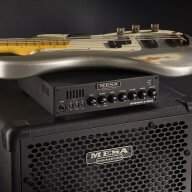
Only declared parameters by Mesa is power handling, 400W for 1x15 and 600 W for 2x10, both 8ohm. I spoke about my gear some posts ago, read please
Overdrive on it's own does not kill speakers, but it's more easy with overdrive if somebody wants to do it.
On a bass guitar gear it is not a problem at all to overpower the rated handling of the cab whereas in a guitar combo the power handling of the speaker should be significantly higher then the power of the amplifier.
Different applications and different sounds lead into different needs for the power handling of the system.
I'm not even sure what you're saying. Yeah, it's easy to overpower the rated handling of a cab, if you don't have enough cab for the power you're putting out.
Not all guitarists play through combos, either. The ones I play with use head + cab, and lots of overdrive, and play at high volume, but none of us have wrecked any speakers.