• TalkBass has been independent since 1998. Add your voice.
    Create a free account to reply to discussions, view embedded media, and browse with fewer display ads.
    Join freeLog in
    Want zero display ads or expanded classifieds tools? Compare plans.

Compare ALL Rotosound strings!

Is Rotosound your first string choice?

  • Yes

    Votes: 38 33.0%
  • No

    Votes: 77 67.0%

  • Total voters
    115
According to their scale length guide, the "extra long" is 39.25" in winding length. Are you talking about any specific model?
As far as I can tell Rotosound only makes a 5 string set extra long scale in stainless round wound, not a six string set in extra long scale. If you care to point me to a specific string set that comes in that winding length stainless round wound, then I am more than all ears... :thumbsup:
 
As far as I can tell Rotosound only makes a 5 string set extra long scale in stainless round wound, not a six string set in extra long scale. If you care to point me to a specific string set that comes in that winding length stainless round wound, then I am more than all ears... :thumbsup:

Ok, now I know who you are... You did have a thread a short while ago about "SS rounds for 36" scale". I recommended Ken Smith and they didn't quite work for you.

Sorry, I don't know of any specific 6-string sets offered by Rotosound in extra long.
 
  • Like
Reactions: etherealme
Ok, now I know who you are... You did have a thread a short while ago about "SS rounds for 36" scale". I recommended Ken Smith and they didn't quite work for you.

Sorry, I don't know of any specific 6-string sets offered by Rotosound in extra long.
Well, the Ken Smith Rock Master Lights are on there now and I am getting used to them. I may try to go up to the medium lights. The B is fine. The rest of the gauges just don't share the same "zing" as other sets such as the Rotosound 66 swing SS sets.
 
actually they don't have that much tensione. for example, two weeks ago I mounted a set of 77 (45-105) on a Classic 50 Precision Bass, and did the right setup (neck relief, action ecc).

after a week I decided to try rounds, picked up a set of Ernie Ball nickel 45-105, strung the bass and... the neck relief didn't change.
I only had to move the saddles to intonate, but not for the action either.

a few days later I tried the Swing66 in the Sheehan gauge (43-110), and the neck relief diminished a bit, so they have an overall tension that is less than Ernie Ball's 45-105 gauge and Jazz 77's 45-105 gauge.

however, the Jazz77 are stiff, or I should say "less flexible", so they feel stiffer and tense, but in terms of lbs/kgs they don't pull more than a standard 45-105 set.

returning in topic:

I'm a long time user of Swing66 since I first tried them without knowing anything about strings; I went to a shop, asked for some bass strings (it was in 2008, I've been playing guitar in the past 10 years) and they gave me a set of Roto (paper package with the lion), 45-105 standard set.

I hated them at first, for the roughness and the harsh sound, but after a few days I discovered that I loved them.

did many circles around string brands, tried every possible gauge, type ecc... and then I ended up using mostly the Sheehan set, due to the overall balanced tension that I really like.

the sound is the same as the standard set, but I love the 110 E string and the lighter G, they make me feel "home" and safe while playing.
ah! I love how they age, so they can stay on a bass for very long time, retaining the mid growl making them the most "mix friendly" strings for my taste.

other strings I tried sound good only when new, but lose most of the frequencies ending up being like rubber bands.
the swing66 set keeps a nice growl on the mid/hi mids, making the strings "seem" bright, but not too metallic.

just to understand better, I don't like DR Hi Beam (too scooped and to brittle when new) and Pro Steel (too heavy on the highs).
I prefer looser tension on my strings. Plus, I'm not a flatwound guy because the music I play doesn't call for them. OK, many people on TB say that you should at least have a P Bass with flats (and preferably a tortoise shell pickguard). But that's just not my vibe, even with the Rotosound 77s that Steve Harris has been using for over 40 years.
 
  • Like
Reactions: Wyrdlow
  • Like
Reactions: HaphAsSard
First let me say that all of the following is about Rotosound's LONG scale sets. Their short scale sets are all ABYSMAL in my opinion, total junk.


Roto 66 steel roundwounds (orange): The classic Rotos that most people think of when they say "Rotos". I love them. Unlike most bass players I use them for their broken-in, mellow tone. These strings have a reputation for being very bright though. Basically the Entwistle/Squire tone which is what most players seem to want from these strings. But once they mellow out they are actually fatter/warmer sounding than many other roundwounds. Very unique mids. If you want the fresh, BRIGHT "out-of-the-box" tone of these strings you will need to replace them at least twice a month because they mellow out VERY fast. Which is great news for me but it can be expensive in the long run if you want that fresh, classic Roto-brightness.

Roto 66 nickel plated steel roundwounds (blue): Slightly warmer than the 66 steels out of the box but they don't mellow out nearly as fast as the steels in my experience. In the long run I actually find them brighter than their steel counterparts. They do have the characteristic Roto-tone but not quite as aggressive or unique in the mids as the steels IMO. I like them, but not quite as much as the 66 steels.

Roto 55 steel pressurewounds (green): Very similar to the 66s but stiffer (when comparing the same gauges) and maybe a tad more "polite" sounding. I prefer the more supple, "bouncier" feel/dynamics of the 66s. Be aware that the 55s are rougher under the fingers than other pressurewounds. Probably not a good choice if you're playing fretless and want a roundwound(ish) tone/feel without eating up your fingerboard. In my experience the 55s stay bright considerably longer than the 66s so they might be an option if you want the Roto 66 steel brightness and can live with a slightly stiffer feel than the 66s.

Roto 77 monel flats (red): Very stiff, high tension. Very low output (monel). But the tone is absolutely gorgeous! Fantastic mids! They can be a bit frustrating because the D+G-strings mellow out quite fast whereas the E+A stay bright for practically forever. This makes them sound extremely unbalanced when practicing alone but for some reason they always seems to work great in a band/mix.

Roto 88 Tru Bass nylon tapewounds (yellow): I didn't like them at all. Too floppy/clacky for my taste and they never seemed to intonate properly. I prefer other brands for tapewounds.

Roto 99 PSD steel, exposed core (pink): I think these may be discontinued? Probably for a good reason because you had to install the ball ends yourself and it was an absolute nightmare! You basically had to ruin one set to get the measurements (and the technique) right and then install another set properly. Once they were installed they delivered on their promise of an ULTRA-bright piano-like tone. But definitely not worth the hassle IMO.

Ultramag Alloy 52 (black): I can't comment on these as no store in my hemisphere seems to ever get my preferred gauges (45-105) in stock. I expect them to have the typical Alloy 52 mid forward tone though.

Rotobass (nickel plated steel): The color of the packaging varies with the gauges (and stupidly overlaps with the color of their other strings). This is Rotosounds's cheapest strings. I've seen some claims that these are Roto 66 nickels without the silk but I'm just not hearing it. They don't sound like Roto 66 nickels and they don't last nearly as long in my experience. I actually contacted Rotosouns about this, because I couldn't believe the claims people made about these strings and the Roto rep told me these strings use a "different spec wire" than Roto 66 nickels. They're decent strings but in my opinions they don't really have the unique tone of the 66s.

This is MY personal opinion of these strings. Others may experience them differently (different basses/rigs).
 
Last edited:
I recently did a setup and the tech guy put rotosound 66 nickel, when he offered these, i was skeptical but i said ok...
These strings sound and feel great!!! I even went ahead and change them for my regular Dunlop super brights set, but suddenly the Dunlop's sounded weak and thin...put the roto's back on and was very pleased.

Really recommend them.
 
  • Like
Reactions: Wyrdlow
I recently did a setup and the tech guy put rotosound 66 nickel, when he offered these, i was skeptical but i said ok...
These strings sound and feel great!!! I even went ahead and change them for my regular Dunlop super brights set, but suddenly the Dunlop's sounded weak and thin...put the roto's back on and was very pleased.

Really recommend them.

The Dunlop Super Brights are very popular but like you I find them lacking in the lows. They aren't very bright either, except when they're brand new. They should be called Super Mids because that's what they're really all about. The have this kinda nasal mid focused character that makes a neck pickup take a step towards a bridge pickup tone. I can totally understand why some people like this "growly" tone but I prefer a fuller tone with more heft in the lows. Like Rotos (and many others too).
 
  • Like
Reactions: booch29
The Dunlop Super Brights are very popular but like you I find them lacking in the lows. They aren't very bright either, except when they're brand new. They should be called Super Mids because that's what they're really all about. The have this kinda nasal mid focused character that makes a neck pickup take a step towards a bridge pickup tone. I can totally understand why some people like this "growly" tone but I prefer a fuller tone with more heft in the lows. Like Rotos (and many others too).
Agreed, the Dunlop's are all about the mids.
 
Plus, they were way too tense for me.

actually they don't have that much tensione. for example, two weeks ago I mounted a set of 77 (45-105) on a Classic 50 Precision Bass, and did the right setup (neck relief, action ecc).

after a week I decided to try rounds, picked up a set of Ernie Ball nickel 45-105, strung the bass and... the neck relief didn't change.
I only had to move the saddles to intonate, but not for the action either.

a few days later I tried the Swing66 in the Sheehan gauge (43-110), and the neck relief diminished a bit, so they have an overall tension that is less than Ernie Ball's 45-105 gauge and Jazz 77's 45-105 gauge.

however, the Jazz77 are stiff, or I should say "less flexible", so they feel stiffer and tense, but in terms of lbs/kgs they don't pull more than a standard 45-105 set.

returning in topic:

I'm a long time user of Swing66 since I first tried them without knowing anything about strings; I went to a shop, asked for some bass strings (it was in 2008, I've been playing guitar in the past 10 years) and they gave me a set of Roto (paper package with the lion), 45-105 standard set.

I hated them at first, for the roughness and the harsh sound, but after a few days I discovered that I loved them.

did many circles around string brands, tried every possible gauge, type ecc... and then I ended up using mostly the Sheehan set, due to the overall balanced tension that I really like.

the sound is the same as the standard set, but I love the 110 E string and the lighter G, they make me feel "home" and safe while playing.
ah! I love how they age, so they can stay on a bass for very long time, retaining the mid growl making them the most "mix friendly" strings for my taste.

other strings I tried sound good only when new, but lose most of the frequencies ending up being like rubber bands.
the swing66 set keeps a nice growl on the mid/hi mids, making the strings "seem" bright, but not too metallic.

just to understand better, I don't like DR Hi Beam (too scooped and to brittle when new) and Pro Steel (too heavy on the highs).

The way this dialogue reads to me it seems string tension and string stiffness or flexibility are being interchanged/conflated. The two characteristics certainly correlate about Roto 77 flats but they're two different aspects of the same strings.

045-105 RS77LD are quite stiff strings.

They're also certainly not low (or moderate) tension unless you consider 214 pounds/97 kg of tension to be low tension for a 4-string set of 045-105. ;)

Rotosound 77LD Jazz flats aren't my first choice but they're one of my preferred choices because I have three different basses to fit out with strings.
 
Last edited:
  • Like
Reactions: MrAB4003
Good write up! Like you I thought the steels sounded much better after they mellow out. on hunt for a string that sounded like that right off the rip.

First let me say that all of the following is about Rotosound's LONG scale sets. Their short scale sets are all ABYSMAL in my opinion, total junk.


Roto 66 steel roundwounds (orange): The classic Rotos that most people think of when they say "Rotos". I love them. Unlike most bass players I use them for their broken-in, mellow tone. These strings have a reputation for being very bright though. Basically the Entwistle/Squire tone which is what most players seem to want from these strings. But once they mellow out they are actually fatter/warmer sounding than many other roundwounds. Very unique mids. If you want the fresh, BRIGHT "out-of-the-box" tone of these strings you will need to replace them at least twice a month because they mellow out VERY fast. Which is great news for me but it can be expensive in the long run if you want that fresh, classic Roto-brightness.

Roto 66 nickel plated steel roundwounds (blue): Slightly warmer than the 66 steels out of the box but they don't mellow out nearly as fast as the steels in my experience. In the long run I actually find them brighter than their steel counterparts. They do have the characteristic Roto-tone but not quite as aggressive or unique in the mids as the steels IMO. I like them, but not quite as much as the 66 steels.

Roto 55 steel pressurewounds (green): Very similar to the 66s but stiffer (when comparing the same gauges) and maybe a tad more "polite" sounding. I prefer the more supple, "bouncier" feel/dynamics of the 66s. Be aware that the 55s are rougher under the fingers than other pressurewounds. Probably not a good choice if you're playing fretless and want a roundwound(ish) tone/feel without eating up your fingerboard. In my experience the 55s stay bright considerably longer than the 66s so they might be an option if you want the Roto 66 steel brightness and can live with a slightly stiffer feel than the 66s.

Roto 77 monel flats (red): Very stiff, high tension. Very low output (monel). But the tone is absolutely gorgeous! Fantastic mids! They can be a bit frustrating because the D+G-strings mellow out quite fast whereas the E+A stay bright for practically forever. This makes them sound extremely unbalanced when practicing alone but for some reason they always seems to work great in a band/mix.

Roto 88 Tru Bass nylon tapewounds (yellow): I didn't like them at all. Too floppy/clacky for my taste and they never seemed to intonate properly. I prefer other brands for tapewounds.

Roto 99 PSD steel, exposed core (pink): I think these may be discontinued? Probably for a good reason because you had to install the ball ends yourself and it was an absolute nightmare! You basically had to ruin one set to get the measurements (and the technique) right and then install another set properly. Once they were installed they delivered on their promise of an ULTRA-bright piano-like tone. But definitely not worth the hassle IMO.

Ultramag Alloy 52 (black): I can't comment on these as no store in my hemisphere seems to ever get my preferred gauges (45-105) in stock. I expect them to have the typical Alloy 52 mid forward tone though.

Rotobass (nickel plated steel): The color of the packaging varies with the gauges (and stupidly overlaps with the color of their other strings). This is Rotosounds's cheapest strings. I've seen some claims that these are Roto 66 nickels without the silk but I'm just not hearing it. They don't sound like Roto 66 nickels and they don't last nearly as long in my experience. I actually contacted Rotosouns about this, because I couldn't believe the claims people made about these strings and the Roto rep told me these strings use a "different spec wire" than Roto 66 nickels. They're decent strings but in my opinions they don't really have the unique tone of the 66s.

This is MY personal opinion of these strings. Others may experience them differently (different basses/rigs).
 
Rotos are classic, great strings IMO. Lately, I've been using BS66 (Billy Sheenah signature) sets. Love the tighter and brighter sounding E, and the overall better tension balance.
I always liked Rotosound strings, but with the old paper packaging, it could happen sometimes that you get a dead string. They changed packaging several years ago. Now they are packed in sealed plastic and even add a small bag of silica gel. No more problems with DOA strings.
 
Good write up! Like you I thought the steels sounded much better after they mellow out. on hunt for a string that sounded like that right off the rip.

Thanks!:thumbsup:

Luckily for us the steels mellow out relatively fast. :D This has always been the most common complaint with Roto 66s.

I forgot to mention one thing though, about the 77s:

Roto 77 flats are completely different to any other flats. They are brighter than most flats, but not in a harsh way (like D'Addario Chromes...). Their dynamics/"feel" is also completely different to other flats. You can forget about the "bouncy" dynamics and thump you get from classic flats like LaBellas. Roto flats are STIFF. And that brings me to the important part:

If you set up Roto flats with the same action as you would with other strings they will be VERY hard on your hands. Lots of people complain about this. But the stiffness allows you set the action of Roto flats lower than most other strings without any issues like fret buzz. This is crucial with Roto flats. If you set them up like other strings they will be very hard on your hands but when set up properly they are absolutely amazing. Gorgeous mids!

Of course you can get lighter gauge sets too but in my opinion the 45-105 set is the one to get. The lighter gauge sets don't sound quite as nice to me and will also need a higher action than the 45-105 set.
 
Thanks!:thumbsup:

Luckily for us the steels mellow out relatively fast. :D This has always been the most common complaint with Roto 66s.

I found that they only lose their uppermost zing and clang quite quickly, but the nice clear upper mids and treble last for quite a while. This is how I like them the most, a little broken in. When I gigged, I'd change the strings the day before and play them for about an hour the night before the gig, just to kill that somewhat harsh brightness.
 
  • Like
Reactions: J_WELF and Wyrdlow
I found that they only lose their uppermost zing and clang quite quickly, but the nice clear upper mids and treble last for quite a while. This is how I like them the most, a little broken in. When I gigged, I'd change the strings the day before and play them for about an hour the night before the gig, just to kill that somewhat harsh brightness.

Yeah, I totally agree. Roto 66 steels sound absolutely spectacular in that "semi broken-in" phase. Unfortunately this only lasts for 1-2 weeks of regular playing. Luckily I love them when they've mellowed out completely too. Fresh out of the box they are way too bright for my taste. Entwistle and Squire would probably disagree though.;) I think Chris Squire actually changed his strings before every gig. It's certainly a tone that has shaped the history of rock but it's too bright for me.
 
  • Like
Reactions: J_WELF and Wyrdlow
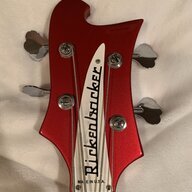
Always Rotos! :D RS66 on the Rick, RS77 flats on the Precisions and the HB fretless, and RS88 nylons on the electro-acoustic. When I get round to a violin bass it'll get the 88s as well.
I have tried lots others over the years but gave up eventually - I was always disappointed one way or another.
"I know what I like, and I like what I bloody well know!":laugh:
I did try Maxima Gold and thought they were brilliant, but they disappeared. I've recently heard they're back as Optima Gold, so I may well give them a try again.
 
  • Like
Reactions: MrAB4003
I believe all the great Roto players (Entwistle, Squire, Sheenah, Geddy Lee...) would change strings for every gig. Techs would take care for that. AFAIK, even Steve Harris, who's playing flats would do the same.
When I gigged, I also did it, but we only played live, like twice a month. Nowadays, I could live with a much more broken in sound for an occasional jam session, but for recording, they have to be fresh.

Many people say that SS (and particularly Rotos) die faster than NPS strings, but I don't find it to be true. They last about the same time, which could be from couple of hours to a couple of weeks, depending on the conditions and body chemistry.
 
Last edited by a moderator:
The way this dialogue reads to me it seems string tension and string stiffness or flexibility are being interchanged/conflated. The two characteristics certainly correlate about Roto 77 flats but they're two different aspects of the same strings.

that's what I wanted to point out.

if a set of Ernie Ball Hybrid Slinky has the same tension, that doesn't mean that it will have the same flexibility, due to the different construction.

stiffness/flexibility is how a string bends. the tension is the pull expressed in Kgs/Lbs, and this last information can be easily noticed with the truss rod movements.

so, IMHO the Jazz77 just have an average tension, but a stiff feeling due to less flexibility.

another example? the BS66 have less tension than a set of Ernie Ball Hybrid, because once I mounted them, the truss rod had to be loosened.
however the Swing66 have more stiffness/less flexibility, so I had to lower the saddles on the G and D.

last example: everybody says that the La Bella 0760M are extreme in tension, but... they have the same tension as a Regular Slinky set of Ernie Ball (50-105).
few years ago I used to string my basses with Regular slinky, then I decided that one needed flats, and I went directly to the La Bella 52-110, which I like.

well, the truss rod didn't move (even after 7 years), but I had to rearrange the saddles. yes, the La Bella are stiff, less flexible (the outer wrapping is flat, so it's harder to flex/bend), but the actual tension wasn't higher.

a few months ago I decided to try the Jazz77 (45-105) on this particular bass, switched from La Bella, and had to loosen the truss rod and raise the saddles.

so the tension is less than the La Bella Jamerson or the Regular Slinky. they are just stiff strings compared to rounds of a similar gauge, which is normal.

if you want flat with more flexibility, go with D'Addario Chromes, they are softer.
 
  • Like
Reactions: Wyrdlow
that's what I wanted to point out.

if a set of Ernie Ball Hybrid Slinky has the same tension, that doesn't mean that it will have the same flexibility, due to the different construction.

stiffness/flexibility is how a string bends. the tension is the pull expressed in Kgs/Lbs, and this last information can be easily noticed with the truss rod movements.

so, IMHO the Jazz77 just have an average tension, but a stiff feeling due to less flexibility.

another example? the BS66 have less tension than a set of Ernie Ball Hybrid, because once I mounted them, the truss rod had to be loosened.
however the Swing66 have more stiffness/less flexibility, so I had to lower the saddles on the G and D.

last example: everybody says that the La Bella 0760M are extreme in tension, but... they have the same tension as a Regular Slinky set of Ernie Ball (50-105).
few years ago I used to string my basses with Regular slinky, then I decided that one needed flats, and I went directly to the La Bella 52-110, which I like.

well, the truss rod didn't move (even after 7 years), but I had to rearrange the saddles. yes, the La Bella are stiff, less flexible (the outer wrapping is flat, so it's harder to flex/bend), but the actual tension wasn't higher.

a few months ago I decided to try the Jazz77 (45-105) on this particular bass, switched from La Bella, and had to loosen the truss rod and raise the saddles.

so the tension is less than the La Bella Jamerson or the Regular Slinky. they are just stiff strings compared to rounds of a similar gauge, which is normal.

if you want flat with more flexibility, go with D'Addario Chromes, they are softer.


String tension is an objective value expressed in pounds.

Rotosound RS77LD Jazz flats (045-105)--214.41 pounds.

GHS 3050M P flats (045-105)--184.6 pounds.

GHS ML3075 brite flats (052-1030)--192.2 pounds.

A custom set of 045, 065, 085, 105 D'Addario Chromes--206.76 pounds.


GHS 4M-NB Balanced Nickel Rounds (044-106)--184.2 pounds.

Rotosound RS66LD Swing 66 (045-105)--181.97 pounds.

The average of these six example string sets--none of which are marketed as low-tension string sets--is 194 pounds.

For a low tension reference consider La Bella LTF-4A flats (042-100)--134.9 pounds, or TI JF344 Jazz Flats (043-100)--140.18 pounds.


If 214.41 pounds of tension from a set of 045-105 strings qualifies as average then I have to ask, compared to what sample?
 
Last edited:
  • Like
Reactions: michael_t
I believe all the great Roto players (Entwistle, Squire, Sheenah, Geddy Lee...) would change strings for every gig. Techs would take care for that. AFAIK, even Steve Harris, who's playing flats would do the same.
When I gigged, I also did it, but we only played live, like twice a month. Nowadays, I could live with a much more broken in sound for an occasional jam session, but for recording, they have to be fresh.

Many people say that SS (and particularly Rotos) die faster than NPS strings, but I don't find it to be true. They last about the same time, which could be from couple of hours to a couple of weeks, depending on the conditions and body chemistry.
Steve Harris is a new strings every gig man, yes. :thumbsup: