• TalkBass has been independent since 1998. Add your voice.
    Create a free account to reply to discussions, view embedded media, and browse with fewer display ads.
    Join freeLog in
    Want zero display ads or expanded classifieds tools? Compare plans.

Compressor question...

If I suddenly get a spike in low end with a sustained note, is my sustain/attack level the problem?

I'm getting a spike after about 3 or 4 seconds, on some notes, not all notes/strings.

Am I doing something wrong here?

Settings below:

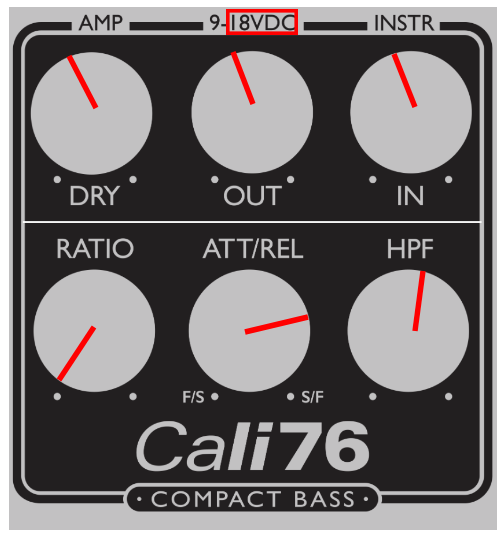
Cali76 Bass Settings.png
 
Sounds like it might be a low end resonance in your room. Are you using an amp? On a stage?

The attack and release don't get anywhere near 3 to 4 seconds, so I don't think it would be creating that effect. I usually adjust mine to give a little thump to each note, somewhere near yours.

Your HPF looks quite high - can't remember the range of the knob, but maybe drop that all the way down and see if that evens out your low end.

If your signal drops below the threshold (controlled by In) then the pedal will stop compressing, which might give you that bloom. So maybe increase the In knob so that more of your signal is being compressed.

You have Dry and Out about the same, so a 50% blend of dry and compressed signal. I usually go with a higher ratio when blending like that. It's all personal taste though.
 
Is the solution to increase the attack then?
Look at your knob

1747781525078.png

It is an attack/release knob which is odd
usually attack and release are separated

If you crank this knob you are not increasing in the attack!

I'm guessing the F/S position - the "min" position = "Fast attack, Slow release"
while S/F - the "max" position = "Slow attack, Fast release"

so if you "max" this knob you'll get a slowly blooming note like you are hearing.
turn it all the way "down" for a fast attack.

very unintuitive
 
I don't have a Cali, but two of my friends do. As I've recorded a lot of music I have some experience with compressor types, so here's what I sent them a while ago.

Attack and release on a 1176 style compressor are always super fast. The Cali is 0.3ms to 2.0ms attack range and 32ms to 276ms release range. Minimum ratio is always 4:1 (just like a 1176). Hearing the difference between 0.3ms and 2ms attack can be very difficult: it's the difference between hearing the initial transient of a pop when slapping or hearing a slightly more mellow attack. If you want to test this: add a loop pedal, record a short phrase and slowly turn the attack/release button with the dry button turned down. Listen closely how it changes the attack, and listen for pumping effects. A fast attack can cut off the initial transient, but a slow release as well (ie it's too slow to get back to the initial position before the next note). But as soon as you start blending your signal with the dry signal, it's even harder to hear. You can do do pretty outrageous compressor settings with the blend on 50%. You just get more oomph in your sound from the compressor signal. You don't really hear the compressor anymore, it feels more like saturation. By the way, the HPF (20 to 350Hz) only affects the internal sidechain of the compressor: in your position it doesn't feed the portion of the audio <150-200Hz into the compressor so a sudden boost of low end (thumb muting a low B for instance) doesn't affect the compressor that much. This prevents the compressor from overcompressing the signal. The low end on a bass can be intense sometimes (especially around 80-100Hz) so leaving it out of the input for the compressor leads to a more transparent sound.

In general: for evening out you choose faster attack times, for more punch you choose longer attack times.

To summarize: with your current settings you're going for a moderately punchy percussive sound. You're keeping your transients (dry button is slightly opened) and you're preventing low end from affecting the compressor to much. First thing I'd try is: turn down the att/rel button so you get a faster attack and a more evened signal. Because you're mixing it with the dry signal, you won't lose your attack. Second thing is: check your (damping) technique. Compressors even out a signal, volumewise, so they also emphasize stuff you normally wouldn't hear. For instance, I don't play a lot of 6 string (primarily 5), but I always have to pay attention to the low B on a 6 when I'm moving up on the neck. Normally you don't hear that low badly muted B but as soon as I turn on the compressor, the signal is evened out (low signals are louder, loud signals are lower) and my bad 6 string muting technique is emphasized. :D

I'm not fully convinced your issue is related to the compressor, to be honest. Or it must be faulty. The current settings are moderate and shouldn't cause that effect.
 
Last edited:
  • Like
Reactions: Motown971 and tpa
It could be for a number of reasons. If it always happens to you in the same room, you'll have to adapt to it, not the other way around. Try the compressor at the end or beginning of the chain; be careful with the drive and EQ sections.
On both of my pedalboards, I have independent HPFs before compression, which make the bass signal reaching the compression more manageable. On one, I have a Broughton first in the chain, and a Cali v1, then the drive...
And on the other, I have a Cali v2 after the drive section, and a Genzler HPF/LPF-EQ, and finally, a chorus and tuner.
In your case, I would first try lowering the HPF, lowering the input and leveling it with the output, and not having the compressor boost, especially if you have a drive that might be sensitive to the bass. Lower the Att/Rel a bit. If that doesn't help, I would add a bit of clean signal, and the ratio would increase slightly.
 

Attachments

  • 17478138100462585294964786295978.jpg
    17478138100462585294964786295978.jpg
    1,023.6 KB · Views: 9
if it happens in the lower registers and not in the upper registers then the hpf is set too high. as your mid/high frequencies are dropping below the threshold in the side chain the compression stops. manual says hpf is 0 to 400hz so i think ur sidechain is set around 200hz which is quite high.

if the issue is across the board though, look into increasing the in gain and reducing the out gain to match volume as well see if that helps as the sidechain is possibly cutting too early as it doesnt hit the threshold.