Alas, current parlance is based on an older two-term opposition where you tended to only have "long" (Fender scale i.e. 34") vs. "short" (more or less 30"). Both worked as standards, in that the three main Fender models made up the bulk of the market but most of the competition adopted the other scale (up to at least the mid-Sixties).
In other words, "long" and "short" were only such relative to each other, and "long", in particular, was not "longer than average/standard", but the standard in and of itself, and overwhelmingly so come the Seventies.
"Medium scale" appeared much later (not an expert, but I'd venture early Eighties in Japan? Could be wrong), and equals a length right in between the two older standards, i.e. 32", hence:
- it definitely doesn't equal "standard" or the "norm" (it being rarer than short, let alone long);
- its winding length requirement is 34~35.5" and even the longest MS strings are usually not long enough for 34" scale basses, unless a little peeling of the silk reveals that the exposed section reaches the nut untapered and is therefore OK (silk can be removed without ill effects, even completely unless it's on a black nylon tapewound, where it is needed to hold the tape in place).
[The above omits the further complicating issue of string-anchoring being often far enough from the bridge saddles (e.g. string-thru-body or separate tailpiece) to require a different conventionally-labelled string set than the actual scale would lead you to think (medium or even long instead of short). Always check the actual lower and upper length requirement of your bass (ball-end stop to nut, and to first tuner) against the winding length (ball to silk or taper) of the string as disclosed by the manufacturer.]

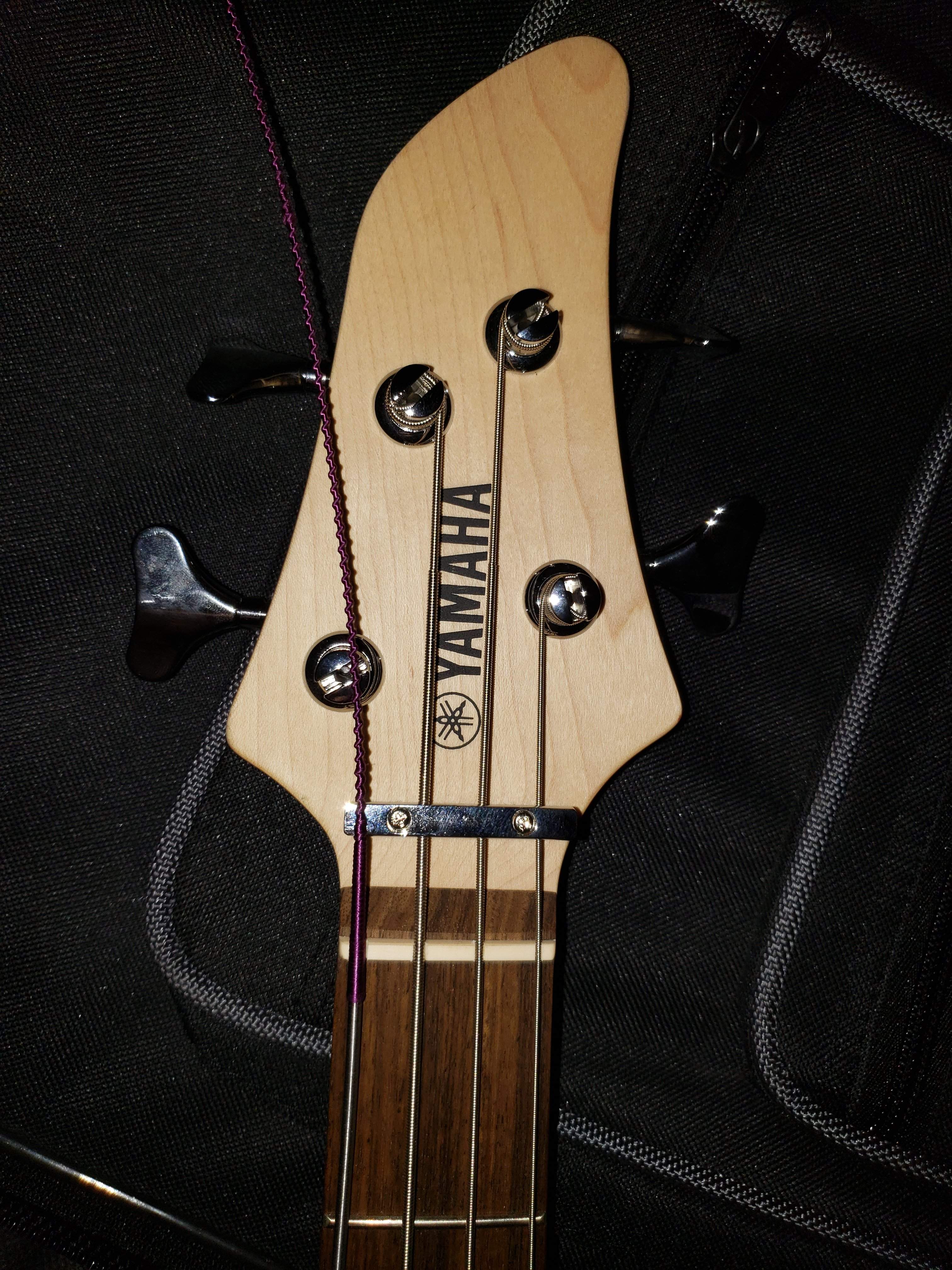





 Come to think of it, "baby grand" is just as oximoronic as "piccolo bass". OTOH, arguing against usage is even more onic...