• TalkBass has been independent since 1998. Add your voice.
    Create a free account to reply to discussions, view embedded media, and browse with fewer display ads.
    Join freeLog in
    Want zero display ads or expanded classifieds tools? Compare plans.

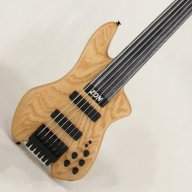
Conversion to headless bass?!

This question might be completely out there, but has anybody ever converted a "standard" neck (say, a fender jazz bass) to a headless?

Essentially, I mean remove the headstock and replace the bridge with a headless bridge, and put the string holder thingy up on the end of the neck.

possible or ridiculous?

I am currently researching the possibility of converting my six string bass to headless.Hipshot makes some conversion kits.The availability of double ball end strings for six string bass may put a stop to my endevour.
 
I am currently researching the possibility of converting my six string bass to headless.Hipshot makes some conversion kits.The availability of double ball end strings for six string bass may put a stop to my endevour.

Have no fear!....

Quoted from Hipshot's site:

....dual string option(you may choose to use standard or double ball bass strings) and all the quality that you have come to expect from Hipshot.

Very interesting.

:D
 
Have no fear!....

Quoted from Hipshot's site:

....dual string option(you may choose to use standard or double ball bass strings) and all the quality that you have come to expect from Hipshot.

Very interesting.

:D

Yes.I found that out after I had E-Mailed Hipshot.Now the next issue is will the Hipshot headpiece cover up my trusrod openings?I notice that their website has no pictures of converted Headless basses.Everything else.But no headless bass conversions.I need measurements and tech data before I order anything.
 
After receipt of an E-mail from Hipshot,they have confimed what I had suspected.The headless conversion kits are orginally made for basses with the truss rod opening at the end(near the neck pickup).But they can be used on basses with the truss rod opening at the headstock(such as my bass) by simply placing it about a half inch away from the nut so as to allow for truss rod access.Also I noted the lack of pics of the headpiece on headless basses.They will be posting some pics shortly.
 
Don't cut off the head..

Use the tuner holes already drilled for the strings, insert some fancy clips and just change the bridge. You'll have the feel of a headless with a classical look.

Normal headless basses/guitars imo look a bit ugly.

I'm glad that I like the looks of a headless bass because they tend to be short enough to fit in guitar cases and gig bags. Not to mention that if you can be somewhat of a klutz like me the chances of knocking into the drummer's cymbals or a wall are reduced.
 
  • Like
Reactions: Fonkamex
If you want to look at a headstock option for a string hole on the headstock, look up Maziomix's thread on "the uber jazz" thread. Apparently he made them.

One thing you may want to consider is if the trussrod adjustment is on the headstock or at the heel. If the adjustment is at the headstock, you may need to use another style headpiece, to lock the strings down. If you use brass, it won't be too hard to fashion one (Brass is alot softer and easy to work with)....... if the rod is at the heel, you could lop off the headstock and fit a standard headless headpiece to it.
 
One problem with headless conversions is that bridge/tuner combos are very expensive in comparison to normal hardware. I was thinking about a conversion that would use string ferrules at the "head" end (after removing the headstock, angling the cut back a bit and putting the ferrules in at an angle back towards the body) and small regular bass tuners behind a regular string-through bridge.

Not quite headless (no spiffy micrometer thumbscrews) so I think the best term for this design is "bass-ackwards".
 
Less wood = less tone... Right?
It'd be like playing a bass with a capo on, the sound will be much thinner.
That's just my opinion, but I do hate bumping the headstock night after night on the other hand...

I'm curious, does your bass sound much thinner when you fret it, too? Because that's exactly what capoing is.

I'm skeptical of the view that more wood = more tone.