• TalkBass has been independent since 1998. Add your voice.
    Create a free account to reply to discussions, view embedded media, and browse with fewer display ads.
    Join freeLog in
    Want zero display ads or expanded classifieds tools? Compare plans.

Double Bass Cracked Tuner Post

Hi all,

I have always been an electric bassist, worked abit on some basses and have not did any repairs on double basses. I saw a broken double bass on a used forum and and wanted to ask if my instinct of using wood glue and clamps make sense here and if there are any things i should be looking out for. Any responses will be great appreciated, below are the picture of the bass.
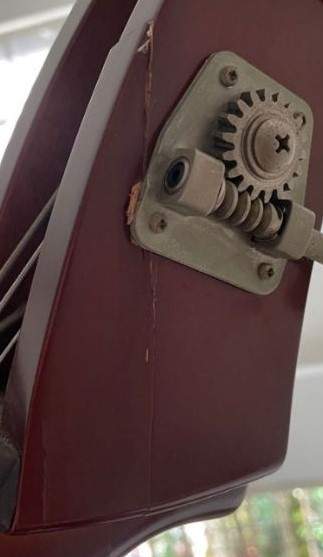
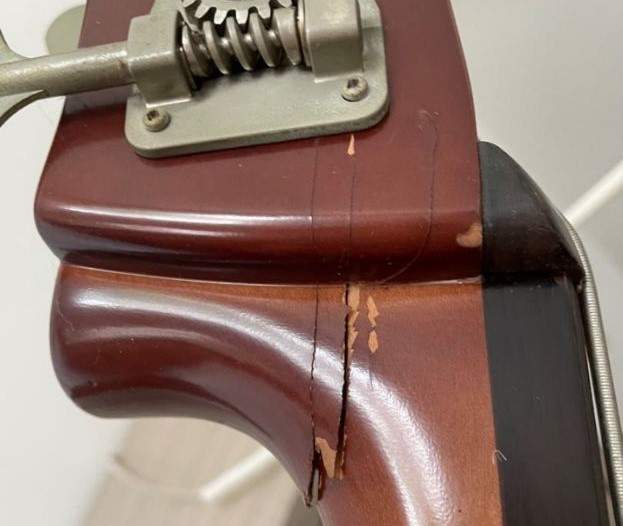
ab2bad09-7cd2-4841-86a4-fdc68d761640.jpg
a6e63eb2-e323-4c3e-ab86-7557cceec007.jpg

Thank you very much,
Jun
 
Nope. Wood glue and clamps won't do it. Assuming this is a relatively inexpensive bass, I'd pull the fingerboard, inject some epoxy into the cracks, put a stainless steel bolt through the neck just below the nut and clamp. You're halfway there. For the crack in the pegbox, even trickier. You carve out wood that straddles the crack. Kind of pond shaped. Deepest at the crack and feathered up. Then you must "chalk fit" a piece of similar wood- probably maple- until it fits tight. grain should run north/ south. Glue and clamp. Then reattach fingerboard. Note- do not use wood glue. Use Hot Hide Glue. Typically, HHG is used extensively on DB repair for a couple reasons. It is reversable by heating and/or humidity and on carved basses, and a seam will "pop" as compared tp taking wood with it. Epoxy is acceptable in certain instances but NEVER for fingerboard or seam work. You may have bitten off a little more than you can chew on this one. Disclaimer- I am not a professional luthier but an avid hobbyist. I'd be interested in those more knowledgeable than me have to say. Good Luck!
 
I am still learning, but my 2c is as follows: I had a bass with a crack like that that I nursed for several years. I tried wood glue before I knew better and it didn't hold. When the head stock eventually snapped off cleanly (it's just a matter of time for you, too, mate), I was able to use the strongest hide glue (!!!) I could order and cleanly clamp that joker back together to make the whole crack/seam disappear. It's been rock solid ever since. So --- (at your own risk, obviously) --- I'd take the strings off (and maybe even the hardware) and try to force the break if I were you. Make sure you have at least 6 quality clamps on hand of different sizes because you might have to get clever with the clamping. There's nothing more satisfying than successfully completing a job that seems outside of your skill set. Take your time, go slow.
 
Last edited:
Nope. Wood glue and clamps won't do it. Assuming this is a relatively inexpensive bass, I'd pull the fingerboard, inject some epoxy into the cracks, put a stainless steel bolt through the neck just below the nut and clamp. You're halfway there. For the crack in the pegbox, even trickier. You carve out wood that straddles the crack. Kind of pond shaped. Deepest at the crack and feathered up. Then you must "chalk fit" a piece of similar wood- probably maple- until it fits tight. grain should run north/ south. Glue and clamp. Then reattach fingerboard. Note- do not use wood glue. Use Hot Hide Glue. Typically, HHG is used extensively on DB repair for a couple reasons. It is reversable by heating and/or humidity and on carved basses, and a seam will "pop" as compared tp taking wood with it. Epoxy is acceptable in certain instances but NEVER for fingerboard or seam work. You may have bitten off a little more than you can chew on this one. Disclaimer- I am not a professional luthier but an avid hobbyist. I'd be interested in those more knowledgeable than me have to say. Good Luck!
Removing the fingerboard on a bass like this is risky because it might not come off cleanly. Then aligning it perfectly when putting it back on (if it can be salvaged) might be a challenge.
If it were my bass, I’d remove the machine and see if the crack will close when clamped. If so, I’d glue it with hide glue and run a 1/2” oak dowel through the back of the scroll button, almost through the fingerboard. Then prepare the inside of the pegbox cheek for a reinforcing patch. The stress will pull the scroll forward so the latter might not be necessary.
Regardless the glue, the gap must close well. Squeezing epoxy in a poorly fitting joint won’t fix it.
 
Removing the fingerboard on a bass like this is risky because it might not come off cleanly. Then aligning it perfectly when putting it back on (if it can be salvaged) might be a challenge.

Slight derail here, but regarding the alignment, what is your opinion if, prior to removing the fingerboard, one drills four small (almost invisible) pilot holes through the fingerboard at the corners just below the nut and at the very end of the neck and on down into the neck a bit?? Then the fingerboard can be removed and upon re-installation small guide pins could be inserted into the pilot holes to help with alignment.
 
  • Like
Reactions: zootsaxes
It is a yamaha silent bass, SLB200 most probably, i have successfully bid it at around 200 USD but have not made the payment yet, still thinking if it is repairable and at what cost before deciding.
I know I could fix it and wouldn’t hesitate. At that price it seems like an easy decision.
 
  • Like
Reactions: zootsaxes
1. Take off the strings. The neck shouldn't have any tension and the strings will for sure get in the way of any clamps. Take off the tuners for the same reason.
2. See whether the crack in pic #2 will close up without any glue.
3. If it's a Yamaha SLB, it should be easy to turn it upside down (so the "scroll" is sitting on the floor).
4. Practice without glue ("dry clamping") so that you know where the clamps will work when you actually glue.
5. Pour hot hide glue into the crack, work the crack back and forth so the glue penetrates, and clamp.

With the bass upside down, gravity is your best friend. The glue has nowhere to go but deep down into the gap. And also maybe on your floor. Use newspaper on the floor.
 
1. Take off the strings. The neck shouldn't have any tension and the strings will for sure get in the way of any clamps. Take off the tuners for the same reason.
2. See whether the crack in pic #2 will close up without any glue.
3. If it's a Yamaha SLB, it should be easy to turn it upside down (so the "scroll" is sitting on the floor).
4. Practice without glue ("dry clamping") so that you know where the clamps will work when you actually glue.
5. Pour hot hide glue into the crack, work the crack back and forth so the glue penetrates, and clamp.

With the bass upside down, gravity is your best friend. The glue has nowhere to go but deep down into the gap. And also maybe on your floor. Use newspaper on the floor.

And the next day, drill a 3/8” to 1/2” hole through the back of the scroll, stopping at the fingerboard and glue in a long grain oak dowel of the same size. Put a point on the dowel to match the drill bit.
 
And the next day, drill a 3/8” to 1/2” hole through the back of the scroll, stopping at the fingerboard and glue in a long grain oak dowel of the same size. Put a point on the dowel to match the drill bit.

Aw, jeepers Greg, we were having such a nice time until this happened! ;)

As time goes by I'm becoming less comfortable with instrument repairs that are visible and that introduce new variables (e.g., new types of wood).

Here's why:

1) IF the gluing and clamping goes well, extra reinforcement shouldn't be needed (a strong hide glue joint is stronger than the wood surrounding it). IF the gluing and clamping goes really well, the repair might be close to invisible. I'd just glue it then play it for a couple of months and see if the gluing (alone) suffices.

2) If you insert a dowel through the back it's going to be visible. For some people it's not a deal breaker but it definitely lowers the value of the instrument. If some reinforcement is absolutely needed, I'd take off the fingerboard and hide it.

3) Not sure about this point, maybe others can speak to it more, but I'm wondering about mixing oak and maple. If they're reacting to humidity, for example, I suspect that they'll disagree about how much to shrink or expand. So then one might destabilize the other...
 
Aw, jeepers Greg, we were having such a nice time until this happened! ;)

As time goes by I'm becoming less comfortable with instrument repairs that are visible and that introduce new variables (e.g., new types of wood).

Here's why:

1) IF the gluing and clamping goes well, extra reinforcement shouldn't be needed (a strong hide glue joint is stronger than the wood surrounding it). IF the gluing and clamping goes really well, the repair might be close to invisible. I'd just glue it then play it for a couple of months and see if the gluing (alone) suffices.

2) If you insert a dowel through the back it's going to be visible. For some people it's not a deal breaker but it definitely lowers the value of the instrument. If some reinforcement is absolutely needed, I'd take off the fingerboard and hide it.

3) Not sure about this point, maybe others can speak to it more, but I'm wondering about mixing oak and maple. If they're reacting to humidity, for example, I suspect that they'll disagree about how much to shrink or expand. So then one might destabilize the other...

Paul,

You are so dedicated to number your points. I’m too lazy.

Yes, hide glue is very strong, but it’s also brittle and the stress pulling that scroll forward WILL pull that scroll right off. There are several cracks in there and it may not be easy to get glue into all of them before it starts to gel. It might be good to heat it with a hair dryer and wick some warm water in there to ‘prime the pump’. That will help get glue in and extend the open time. A dowel is necessary. You might have a point on oak vs maple and I don’t care enough to argue. Sure, use maple. Now, if I were doing this repair, I’d try to remove the fingerboard. However, is it glued with hide, PVA or some combination glue like some Asian manufacturers use on tennis shoes? Also, the lacquer at the fingerboard joint will likely be damaged. If the fingerboard comes off cleanly, can the OP align it perfectly when putting it back on? If the angle is right I just pull the nut but I don’t think that would work here. Too many variables.
Making a recommendation to someone who has never done this type of repair is what I’m doing.
 
  • Like
Reactions: zootsaxes
Too many variables. Making a recommendation to someone who has never done this type of repair is what I’m doing.

It is a complicated repair, no doubt with a number of strategies that could work. Didn't somebody say "ask 5 luthiers for an opinion and you'll get 9 definite answers"?

Putting some type of reinforcement under the nut, heading down and left in pic #2, might also work. I have been using carbon fibre more and more, as it seems to be quite stable. That's assuming the glue job on the cracks went as well as possible. And working underneath the nut has the advantage of being hidden, so you're not constantly reminded of the repair.

Woodworking skill is definitely a necessity. If the repair goes badly then the neck will be in much worse shape than if nothing had been done to it.
 
Last edited: