

You technique looks very.....right angled. Everything is oriented and moving perpendicular to the string. If I were to design a machine to play bass, I think I'd make it move like your fingers.
My technique looks a lot different - right hand in particular. My fingers are seldom lined up perpendicular to the string. Why? Well, the two fingers I use to pluck strings are different lengths - if I play with my hand perpendicular to the strings, my middle finger has to curl up more, and it doesn't work as well in that position. So, when I'm doing alternate plucking, my hand is tipped over so that both fingers are in more similar shapes - each one curls up about the same amount. That helps me with consistency, and therefore speed - not that I'm a speed demon, but I work my technique so that speed (or rather my lack of it) is not an issue. Good ergonomics doesn't always look...so lined up.
There are times when my fingers line up more perpendicular to the strings. I play a lot of octaves - two strings apart from each other, the higher string gets plucked by my middle finger, the lower one by my index finger. To do that, I need to align my wrist more like yours.
My point is you're a human, not a machine. At some point, you will find places where a different technique (that might look less...."formal") works better. Music is about communicating with sound. How you get there isn't as important as that you get there. There are a lot of shredders that play guitar with perfect ergonomics - economy of motion is huge if you want to play fast. There's also Keith Richards, who looks like the poster child for poor ergonomics - he makes playing guitar look hard - he's always bent over, twisting his hands in ways that look unnatural. Yet his way works, and has for decades. So, loosen up a bit, make music the goal, and technique a tool, not a goal in and of itself.
My technique looks a lot different - right hand in particular. My fingers are seldom lined up perpendicular to the string. Why? Well, the two fingers I use to pluck strings are different lengths - if I play with my hand perpendicular to the strings, my middle finger has to curl up more, and it doesn't work as well in that position. So, when I'm doing alternate plucking, my hand is tipped over so that both fingers are in more similar shapes - each one curls up about the same amount. That helps me with consistency, and therefore speed - not that I'm a speed demon, but I work my technique so that speed (or rather my lack of it) is not an issue. Good ergonomics doesn't always look...so lined up.
There are times when my fingers line up more perpendicular to the strings. I play a lot of octaves - two strings apart from each other, the higher string gets plucked by my middle finger, the lower one by my index finger. To do that, I need to align my wrist more like yours.
My point is you're a human, not a machine. At some point, you will find places where a different technique (that might look less...."formal") works better. Music is about communicating with sound. How you get there isn't as important as that you get there. There are a lot of shredders that play guitar with perfect ergonomics - economy of motion is huge if you want to play fast. There's also Keith Richards, who looks like the poster child for poor ergonomics - he makes playing guitar look hard - he's always bent over, twisting his hands in ways that look unnatural. Yet his way works, and has for decades. So, loosen up a bit, make music the goal, and technique a tool, not a goal in and of itself.


 I really had to consciously work on getting the classical guitar technique out of both of my hands over a couple of years. The plucking hand was harder to get under control than the fretting hand. Someone previously mentioned "curling" of the plucking fingers, which I think hit the nail on the head. It's precisely the dreaded tirando that I had to unlearn:
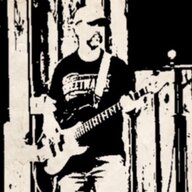




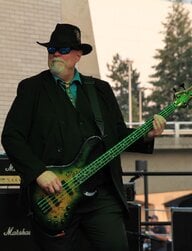

 . I mean it's not that bad, but it looks a little awkward. Study up on floating thumb technique imo, also the best video I found on right hand technique came from Scott Devine. I
 I'd stop trying to get ahead of yourself and focus on developing that right hand.. getting every motion down pat at a slow tempo before speeding it up. It's working for you now, but develop the good habits early rather than correct yourself later on. Fixing bad habits can be difficult.


