Hello,
I replaced my end pin yesterday and my E + A strings. This is the first time I completely detuned my instrument, so getting it back into tune was a challenge.
The challenge was in how I could wind up the strings in the scroll without having overlap. The thing is, the hole for the string was always to the side of where the string would fit on the nut. So if I wound the string on the side of the groove for it, I wouldn't have enough space to wind all of the string for me to get the string in tune. I didn't want to cut excess strings either.
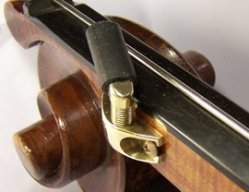
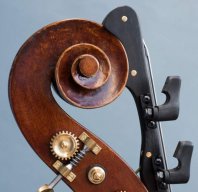
This is what I did, I wound up my string to the side opposite where the nut groove would be, and let it drop diagonally to the nut, and straight down to the bridge and tail piece. None of the strings touch each other, neither is there any overlap in the winding, just a criss-cross arrangement of my four strings in the scroll.
I know that this approach is not what most people go for, but can anyone come up with a good reason why I shouldn't do this? What I thought about were two things that I should consider. The first, is what will happen to the sound wave vibrating on the string, and the second is what would happen when I tune up every day. It actually should be easier to tune the strings this way, because, as any good physics student would tell you, only the horizontal component of the string 'vector' would be what would under tension (think if its easier to pull a heavy box with a rope perpendicular to the ground, or at an angle). So what will happen to the vibrating wave? Nothing bad. Less energy should be able to make it pass the nut, which means that my strings should actually be louder now (think of attaching a rope to a wooden or brick wall and how much of pulse wave would be reflected back to you depending on the material of the wall or the tension attaching the rope).
danke.
I replaced my end pin yesterday and my E + A strings. This is the first time I completely detuned my instrument, so getting it back into tune was a challenge.
The challenge was in how I could wind up the strings in the scroll without having overlap. The thing is, the hole for the string was always to the side of where the string would fit on the nut. So if I wound the string on the side of the groove for it, I wouldn't have enough space to wind all of the string for me to get the string in tune. I didn't want to cut excess strings either.
This is what I did, I wound up my string to the side opposite where the nut groove would be, and let it drop diagonally to the nut, and straight down to the bridge and tail piece. None of the strings touch each other, neither is there any overlap in the winding, just a criss-cross arrangement of my four strings in the scroll.
I know that this approach is not what most people go for, but can anyone come up with a good reason why I shouldn't do this? What I thought about were two things that I should consider. The first, is what will happen to the sound wave vibrating on the string, and the second is what would happen when I tune up every day. It actually should be easier to tune the strings this way, because, as any good physics student would tell you, only the horizontal component of the string 'vector' would be what would under tension (think if its easier to pull a heavy box with a rope perpendicular to the ground, or at an angle). So what will happen to the vibrating wave? Nothing bad. Less energy should be able to make it pass the nut, which means that my strings should actually be louder now (think of attaching a rope to a wooden or brick wall and how much of pulse wave would be reflected back to you depending on the material of the wall or the tension attaching the rope).
danke.