• TalkBass has been independent since 1998. Add your voice.
    Create a free account to reply to discussions, view embedded media, and browse with fewer display ads.
    Join freeLog in
    Want zero display ads or expanded classifieds tools? Compare plans.

D'Addario Chromes vs. Rotosound Monel flats

If you go with Chromes I recommend the lighter gauge (40-95) or medium gauge (45-100). I played the 55-110's for a while and they lacked articulation and depth.
That depends on how you tune your bass. I have 50-105 gauge Chromes and they are fantastic for D Standard. There’s plenty of articulation and depth.

You might be right for standard tuning.

It would be swell if those who reply take some extra milliseconds to specify which gauges (or sets) they actually have experience with, for each of the two.
I also have 45-105 gauge 77s tuned to D Standard, so they might be similar in tension to the 40-100 gauge 77s.
 
Last edited:
  • Like
Reactions: mmmelatonin
I play both of them of different basses and I love them both.

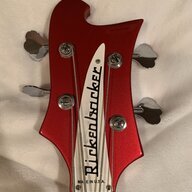
The Chromes are brighter than the 77s, which are lower output. But I also have the Chromes on one of my Rickenbacker 4003s, which are bright basses to begin with. The 77s are on my MIA P Bass, which can get pretty bright too. Those strings NAIL the Steve Harris tone. Neither set has a muffled tone unless you turn your tone knobs down.

They’re my two favorite flatwound string sets, so I can’t pick a winner. But really it depends on the basses you put them on. A string-bass pairing is like a food-wine (or other beverage) pairing.
do you have any idea how either would behave on a jazz? im gonna put 1970's replica pickups off a gen 1 highway one btw that's probably important to mention
 
do you have any idea how either would behave on a jazz? im gonna put 1970's replica pickups off a gen 1 highway one btw that's probably important to mention
I had the 77s on my old Jazz Bass a decade ago. I took them off after 7 years because they lost their brightness and articulation. I should have taken them off sooner.

I never tried Chromes on a Jazz Bass. But they are really bright on my Ric 4003, which can do everything a Jazz Bass can but better IMO.
 
  • Like
Reactions: mmmelatonin
Both are stiff. Both are brighter than most other flats (at least out of the box). None of them are particularly thumpy, even after they mellow out.

That's where the similarities end.

Roto flats have a much rougher surface. They are sort of between other flats and roundwounds. D'Addario Chromes have a much smoother surface, like most flats.

Roto flats have a very strong mid presence, and are quite bright when new. Not "zingy" bright, but "upper mids" bright. The brightness of Chromes is a much "narrower", clanky/metallic sort of brightness. Basically "the D'Addario tone". Compared to the Rotos the brightness of Chromes is more about string noise/clank than an actual tonal upper mid presence. Both will mellow out over time.

Rotos can be set up with lower action than most other strings without introducing fretbuzz. The heavier gauges they also NEED to be set up with a lower action than most strings. If not, they will be very hard on your fretting hand. D'Addario Chromes work best with a "standard" setup, like most other strings of similar gauges.

Roto flats have a noticeably lower output than other strings (due to the monel wrapping). The output is even lower than pure nickel strings. D'Addario Chromes have a normal output, maybe even slightly higher than average.

Out of the box Rotos sound almost like roundwounds. They mellow out over time, and will eventually sound closer to other flats, but the strings typically mellow out very differently. The E+A-strings stay bright for a long time, while the D+G-strings mellow out relatively fast. A fresh set of D'Addario Chromes sound like flats with added "clank" and mellow out more evenly across the strings.


Ok, that's the objective differences. Now for my highly subjective opinions:


Personally I love Roto flats. The mids of Roto flats are simply gorgeous! But I think of Roto flats more as an alternative to roundwounds, than an alternative to other flats. They're totally unique.

Personally I hate D'Addario Chromes. I find them extremely inarticulate. I also find them too clanky when they're new and dull sounding when they mellow out. EXCEPT the short scale sets, where the stiffness is counteracted by the lower scale/tension. Chromes are much "livelier" on short scale basses. I actually like Chromes on short scale basses. They're not my favorites, but I like them.

With Rotos it's the opposite. I don't like the short scale Roto flats at all. In fact, I find them utterly useless. Far too floppy and buzz like crazy with anything close to normal action (at least with MY playing style).

So basically, I love Rotos and hate Chromes on long scale basses, but like Chromes and hate Rotos on short scale basses.

I can't predict which ones YOU will prefer though. These strings are so TOTALLY different that you will 100% definitely prefer one over the other.
Wow, this is great advice. Thank you for taking the time! I habe often read Rotos 77 are great with jazz basses. Now I‘m going to give it a try.
 
  • Like
Reactions: mmmelatonin
Both are stiff. Both are brighter than most other flats (at least out of the box). None of them are particularly thumpy, even after they mellow out.

That's where the similarities end.

Roto flats have a much rougher surface. They are sort of between other flats and roundwounds. D'Addario Chromes have a much smoother surface, like most flats.

Roto flats have a very strong mid presence, and are quite bright when new. Not "zingy" bright, but "upper mids" bright. The brightness of Chromes is a much "narrower", clanky/metallic sort of brightness. Basically "the D'Addario tone". Compared to the Rotos the brightness of Chromes is more about string noise/clank than an actual tonal upper mid presence. Both will mellow out over time.

Rotos can be set up with lower action than most other strings without introducing fretbuzz. The heavier gauges they also NEED to be set up with a lower action than most strings. If not, they will be very hard on your fretting hand. D'Addario Chromes work best with a "standard" setup, like most other strings of similar gauges.

Roto flats have a noticeably lower output than other strings (due to the monel wrapping). The output is even lower than pure nickel strings. D'Addario Chromes have a normal output, maybe even slightly higher than average.

Out of the box Rotos sound almost like roundwounds. They mellow out over time, and will eventually sound closer to other flats, but the strings typically mellow out very differently. The E+A-strings stay bright for a long time, while the D+G-strings mellow out relatively fast. A fresh set of D'Addario Chromes sound like flats with added "clank" and mellow out more evenly across the strings.


Ok, that's the objective differences. Now for my highly subjective opinions:


Personally I love Roto flats. The mids of Roto flats are simply gorgeous! But I think of Roto flats more as an alternative to roundwounds, than an alternative to other flats. They're totally unique.

Personally I hate D'Addario Chromes. I find them extremely inarticulate. I also find them too clanky when they're new and dull sounding when they mellow out. EXCEPT the short scale sets, where the stiffness is counteracted by the lower scale/tension. Chromes are much "livelier" on short scale basses. I actually like Chromes on short scale basses. They're not my favorites, but I like them.

With Rotos it's the opposite. I don't like the short scale Roto flats at all. In fact, I find them utterly useless. Far too floppy and buzz like crazy with anything close to normal action (at least with MY playing style).

So basically, I love Rotos and hate Chromes on long scale basses, but like Chromes and hate Rotos on short scale basses.

I can't predict which ones YOU will prefer though. These strings are so TOTALLY different that you will 100% definitely prefer one over the other.
I’ve used both and this description is 100% spot on. My current favourite strings on a P are the lighter gauge Rotosounds. They tend to be accused of losing their brightness very quickly but that’s only because they have a roundwound-like brightness at first. In my experience they settle into a really nice flatwound tone after around a month or so of constant playing, and they remain really snappy and lively even after the initial brightness is gone. Their slightly rougher texture is also great if you find normal flats too smooth. I find flats a bit too slippery sometimes and I like a little resistance so I really like the texture. Tension-wise the lighter gauge set feels a little more stiff than the Chromes but the difference isn’t drastic. The heavier gauge (45) are too much for me but I find the 40’s pretty much perfect.
 
what didn't you like about the chromes? asking because i'm buying pickups off a highway one
The ECB84 set, 40-60-80-100... The 40G stayed too bright and twangy while the 100E went all thuddy and lost definition. They have a metallic hi-mid edge to the tone, which I didn't care for.

Fender 9050L (45-60-80-100) solved the issue of a twangy G. The 100E is clearer with better definition. I also like their low-mid grind better than the Chromes' hi-mid clank.
 
The ECB84 set, 40-60-80-100... The 40G stayed too bright and twangy while the 100E went all thuddy and lost definition. They have a metallic hi-mid edge to the tone, which I didn't care for.

Fender 9050L (45-60-80-100) solved the issue of a twangy G. The 100E is clearer with better definition. I also like their low-mid grind better than the Chromes' hi-mid clank.

Agreed. Fender flats are like a better version of D'Addario Chromes. Both are definitely "modern" flats and not nearly as dark/thumpy as "old school" flats like GHS and LaBellas, but the Fenders are slightly fatter sounding than Chromes and have less metallic clank. They definitely share some similarities (which I guess isn't surprising when both are made by D'Addario) but they're different enough that I hate Chromes but like Fender flats. It's a shame Fender flats aren't available for short scale. I think they would have been really nice on a short scale bass, if they offered them in the same gauges as Chromes rather than the ultra-low gauges that many string manufacturers seem to think is right for short scale...

Chromes have actually been my "secret weapon" on cheap short scale basses with poor quality, soft necks. The stiffness of Chromes can significantly reduce fret buzz on poor quality short scale basses where other "normal" strings buzz like crazy with a normal setup/action.

But on a long scale bass.... I wouldn't use Chromes if I got them for free. (Just my personal opinion of course.)
 
just to add to this topic, Rotosound Flatwounds have a different "actual" gauge compared to the labelled one:

I've measured different sets, and the 45-105 set is actually a 50-70-85-105, and the 50-110 set is a 55-75-90-110.

so it should be compared to the Chromes ECB82, the 50-105 set. that's why Rotosound feel tighter and harder compared to other sets in the same "labelled" gauge.

Does this mean a less muffled sounding tone?

Rotosound are middier, and when new they are more brighter in a mid-oriented way. Chromes are brighter on the highs. the tone of Rotosound is tighter on the bass frequencies compared to the bass-heavy Chromes.
 
just to add to this topic, Rotosound Flatwounds have a different "actual" gauge compared to the labelled one:

I've measured different sets, and the 45-105 set is actually a 50-70-85-105, and the 50-110 set is a 55-75-90-110.

so it should be compared to the Chromes ECB82, the 50-105 set. that's why Rotosound feel tighter and harder compared to other sets in the same "labelled" gauge.


Rotosound are middier, and when new they are more brighter in a mid-oriented way. Chromes are brighter on the highs. the tone of Rotosound is tighter on the bass frequencies compared to the bass-heavy Chromes.
oh interesting. i do tend to like a heavier gauge so i still think i'd like the "45" set. I dig in a lot anyways so I don't mind having to go harder on the right hand and being able to go lower action + less tinny sound is worth it.
 
Anyone tried both so can give a comparison? I hear the chromes are brighter because they're stainless steel as opposed to the monel with high nickel content. Does this mean a less muffled sounding tone? If anyone has good youtube videos comparing them I'd be interested to see as well. Also other things like tension and smoothness I'd be interested in hearing about from someone who's actually used them.
Having used both, I find they're totally different. Yes, they're in a similar ballpark being flatwounds, but within that ballpark theyre about as far from each other as you can get. People have said here that Rotosounds have a rougher feel at first which is true, but consistent use should iron that out. Chromes feel more similar to LaBella's, being polished stainless steel as opposed to monel.

Yes, the Rotosounds are lower output, but what I've liked to do in the past is put them on active basses like StingRays. This tempers them and makes it easier to dial in an amp that also has to handle a passive bass during the same show, but it's also a really unique tone. Not super inspiring when playing alone, but in a mix (especially when recording) they afford the bass a presence that will cut through just about anything, be it a full brass section or cranked tube amps.

The Chromes were brighter at first, but settled into a pretty typical flatwound tone. I didn't like them quite as much as LaBella's, which are my go-to flat for sitting in the mix. LaBella's are just so much smoother and to me sound better.
 
Having used both, I find they're totally different. Yes, they're in a similar ballpark being flatwounds, but within that ballpark theyre about as far from each other as you can get. People have said here that Rotosounds have a rougher feel at first which is true, but consistent use should iron that out. Chromes feel more similar to LaBella's, being polished stainless steel as opposed to monel.

Yes, the Rotosounds are lower output, but what I've liked to do in the past is put them on active basses like StingRays. This tempers them and makes it easier to dial in an amp that also has to handle a passive bass during the same show, but it's also a really unique tone. Not super inspiring when playing alone, but in a mix (especially when recording) they afford the bass a presence that will cut through just about anything, be it a full brass section or cranked tube amps.

The Chromes were brighter at first, but settled into a pretty typical flatwound tone. I didn't like them quite as much as LaBella's, which are my go-to flat for sitting in the mix. LaBella's are just so much smoother and to me sound better.
I decided on the rotosounds and the biggest thing ive noticed is how clear the high end is. cuts right through everything and rings like a bell. the low end is noticably lower output for some reason but that can be sorted out with eq. i also really enjoy how i can dig in without it sounding overly harsh like it did with rounds.
 
I decided on the rotosounds and the biggest thing ive noticed is how clear the high end is. cuts right through everything and rings like a bell. the low end is noticably lower output for some reason but that can be sorted out with eq. i also really enjoy how i can dig in without it sounding overly harsh like it did with rounds.
I really came to appreciate why Steve Harris abides by his signature Rotosounds during my time in a hard rock cover band. I was primarily using Rotosound rounds at the time but I found I could play songs fingerstyle that I'd previously reserved for pick playing with the Roto flats.
 
  • Like
Reactions: mmmelatonin