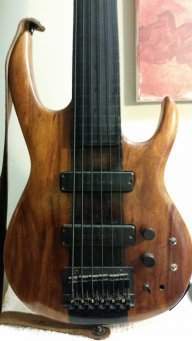
I had a Fender 24 that sounded awesome. However, it had two dead spots. It bothered me. That was my first Fender.

TalkBass has been independent since 1998. Add your voice.
Create a free account to reply to discussions, view embedded media, and browse with fewer display ads.
Join free Log in
Want zero display ads or expanded classifieds tools? Compare plans.


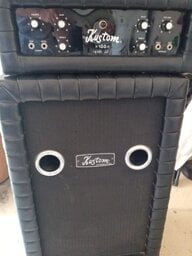
So Anyway, you'll also need to upgrade your car's shocks when you take the Fathead bass to a gig.This will add to the neck dive.



Boy, do I stand corrected, and I grew up in Texas never knowing horses had feathers . . .Horsefeathers. Yes, carbon fiber is stiffer, but it's also 3x the density of maple. If you want to take the resonance frequency of a bass neck from approximately 50 Hz (the lowest resonant mode is one that typically doesn't affect basses, but it does show up on headless designs sometimes) to past 20 kHz, you would need a modulus of elasticity of about 10 to the 18th power Pa (assuming similar density) - that surpasses anything we have available on Earth, or that we know of in the cosmos. There's a square root in the math, and higher stiffness materials are also typically denser than wood, which means even diamond, which is the best we have in terms of stiffness falls very far short of what's required for your goal. All that means, for something the size and shape of a bass neck, it's gonna resonate in the audio spectrum.
All necks (even the Kramer aluminum ones I had in the past) have areas on the neck where there is reduced sustain. Whether or not you call something a dead spot is an arbitrary subjective judgement.
And, by the way, as wood does age, that dead spot that "appeared or disappeared" magically? Yeah, it can actually happen. One of the good things about a roasted neck is, since it is already aged, if it's good to start with, chances are you are good for the duration. If it has a dead spot, however, it's yours for life.
If you have a bass that has a bothersome dead spot, my suggestion is try tuning it to D standard - that'll often mitigate it enough to where it's not a problem. If you have a bass that (to your perception) doesn't have a dead spot, my suggestion is don't go looking for one. Once you find it (it is there to some degree), it's impossible to forget that it's there.
Oh, and no, making a bass with a neck through or glued in neck doesn't get around the Physics. It'll still have "areas of reduced sustain" if not outright dead spots. No getting around it.
No probkem - that myth about bass necks with no resonances in the audio range makes the rounds from time to time. Lots of folks get taken in by it.Boy, do I stand corrected, and I grew up in Texas never knowing horses had feathers . . .


The worst dead spot I've ever encountered was also on a headless bass (graphite to boot). And that's not the only headless bass with a dead spot that I've played.The absolute worst dead spot (by far) I have ever encountered was on a headless bass. The open A string was a dull thud - it had no sense of pitch whatsoever.
A cantilevered beam (a bass neck is one of those) has a a bunch of resonances - the lowest one (frequency wise) has it's lone antinode at the end of the beam. If you make a headless, and that resonance is the same frequency as an open string, it's a very bad thing. Basses with headstocks don't have any notes where the string is "fretted" at the end of the neck - the nut is nowhere near the end of the neck, so....they are immune to that resonance.The worst dead spot I've ever encountered was also on a headless bass (graphite to boot). And that's not the only headless bass with a dead spot that I've played.

I'd rather have a dead spot than a heavy neck/headstock though. Only one note is les punchy, but an unbalanced bass makes the whole playing experience unpleasant.If you find one particularly objectionable you can add mass to minimize or relocate the dead spot to be less obvious. The '80's saw a variety of brass or steel plates to add headstock mass. The Fathead was one thatcomes to mind.
View attachment 7422212


Those aren't your only options. Counterweight, for one. Several other remedies are available. I think Fender has a lightweight clamp to move dead spots also.I'd rather have a dead spot than a heavy neck/headstock though. Only one note is les punchy, but an unbalanced bass makes the whole playing experience unpleasant.
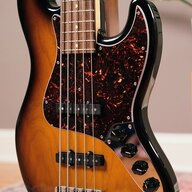
I live in a dry climate and often have to tighten screws in my basses and wood-shell drums after they arrive. The wood dries out a bit and shrinks.I’ve been pretty successful at mitigating dead spots over the years by tightening the neck, bridge and headstock hardware. It’s often surprising how “incomplete” the assembly process sometimes is. Also, changing strings can make a significant difference - especially if you’re reducing the tension of a string with a dead spot.
I live in a place with pretty extreme humidity swings. The winters here are very dry while the summers are very humid. I’ve never noticed any change in the dead spots on my basses. And I’m pretty sure both of my MusicMan StingRays had dead spots in the usual Fender zone.Ah well that raises another interesting question, do dead spots happen, or are they found in Winter or Summer?
So perhaps humidity changing, interesting.
Or are they consistent?