
Enjoy the benefits of a premium membership!
Upgrade Account
-
TalkBass has been independent since 1998. Add your voice.
Create a free account to reply to discussions, view embedded media, and browse with fewer display ads.
Join free Log in
Want zero display ads or expanded classifieds tools? Compare plans.
You are using an out of date browser. It may not display this or other websites correctly.
You should upgrade or use an alternative browser.
You should upgrade or use an alternative browser.
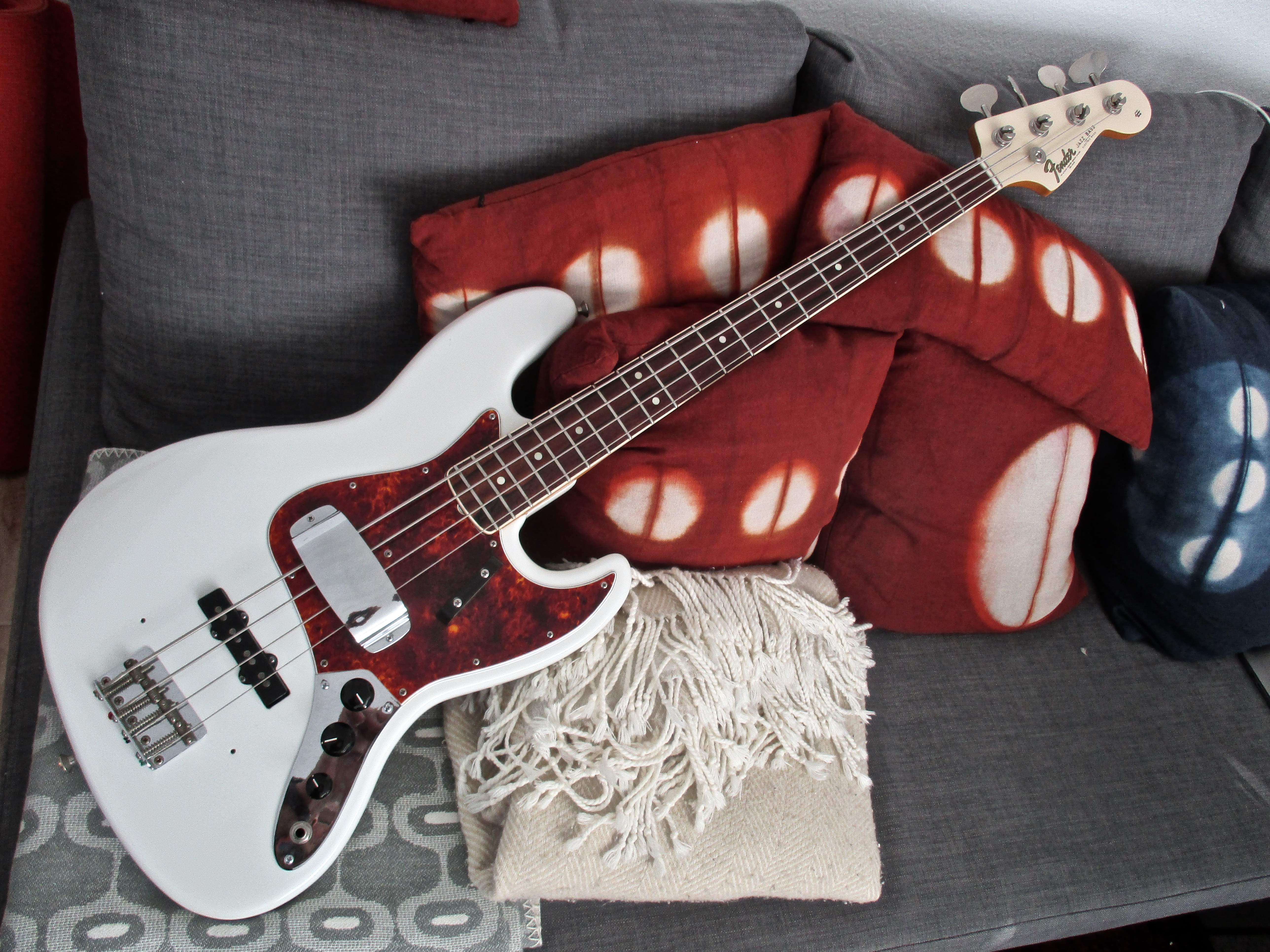
Deep Thoughts on Jazz Basses
- Thread starter The Bass Clef
- Start date
More options
Who Replied?
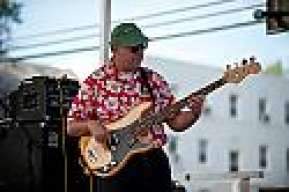
I pretty much always run both pickups on full and I use the tone knob to get the right amount of clarity, or definition, or whatever you call it for the line I’m playing... usually tone is about 1/2 way up for fingers or pick, and about 3/4 to full for slappy stuff. If I want the Jaco finger punch, I’ll pluck over the bridge p/u and it gets me in that world. I don’t solo the bridge p/u like Jaco though, the full blast “zipper” just isn’t my thing. If it’s yours, please by all means, zip away. I’d say 95% of my playing is over the neck p/u (and both p/us volumes on full). That’s just THE sound of a Jazz bass for me, and what I feel is the best sound I pull out of a Jazz for the majority of normal everyday playing.
I look at a P Bass as a simple, one trick pony because it is, and it does that one trick wonderfully. And I look at a Jazz as more of a 3 trick pony... neck p/u solo’ed is the ”P Bass impersonation”. It’s cool. I’d rather have a P Bass, but it’ll do. Both p/us is THE jazz bass tone. Period. (insert obligatory “your mileage may vary” here, as not to offend someone who feels differently about their Jazz Bass tone). And then there’s the solo bridge p/u “Jaco zipper”. All the different volume knob combos in-between are basically irrelevant in the mix of the band, to me anyway. It’s those 3 that pop out as the clear “tricks” that a Jazz Bass does... And for me, the middle “trick” is the only one that I really care to use. I love that trick.
I'm a P guy at heart but when I do play one of my Js, I run it with both pickup volumes and the tone control wide open for that bright, scooped sound 90% of the time or with the neck pickup only and tone wide open the rest. I tend to use my Js in more intimate, lower volume settings but use my Ps when I want that midrange "bark" that cuts so well in bigger room, louder settings.
Last edited:

Yup,I’ve been playing Jazz Basses for 50 years, my favorite tones are different blendings of the volume controls with the front pup around 8 and the rear around 6 or 7, I get a fuller sound than just the front pup only, actually my least favorite is with both dimed the bottom end disappears and that “ clacky” sound that so many Jazz haters reference appears. YMMV IMHOI think you nailed the Jazz and P bass in your description, but left out an important part with the Jazz. Its a part I still need to work with and master...
On the 2 Jazz basses I own I noticed there's a blending area full of rich, warm, gooey sounds that can only be accessed when neither pickup is on 10. When I fiddle between 2 and 8 with both pickups, I get very different sounds and a lot more versatility out of the bass than I do when either of the pickups is dimed.
Only problem for me with that is that its tough to nail the same exact tone and volume twice. My favorite Jazz bass tones lie in that area though.

A P-bass a one trick pony? ... Because of what, pickups?
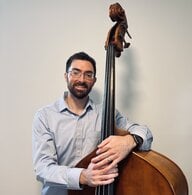
... You don’t play upright do you? ... They don’t rely on pickups to sound.
... The fretboard is the canvas and the bass the paints. ... The rest is up to the hands and the mind to create. Don’t rely on one over the other or you’ll miss the point of expression over creation.
... You don’t play upright do you? ... They don’t rely on pickups to sound.
... The fretboard is the canvas and the bass the paints. ... The rest is up to the hands and the mind to create. Don’t rely on one over the other or you’ll miss the point of expression over creation.

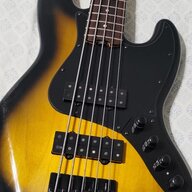
Although i like P's and MM's, there's something about Jazz Basses i can't live without them.
The same applies to the Telecaster guitars, which i consider the best guitar tone ever, when both pickups are on.
It's so true you can notice most Stratocaster players i've met they modify their switches to enable neck and bridge pickups only, emulating the Tele tone.
Just to put a small (and nice) comparison between them:
The same applies to the Telecaster guitars, which i consider the best guitar tone ever, when both pickups are on.
It's so true you can notice most Stratocaster players i've met they modify their switches to enable neck and bridge pickups only, emulating the Tele tone.
Just to put a small (and nice) comparison between them:
My J has Model J's so it's a tad different sounding, but still, I have kinda two approaches on a J I go to: with a pick for clangy grinding rock in a guitar-based setting I run it full wide open. The scoop works for me here--a little pocket for the guitars to sit in while I clank along on top with a big wide low end. For fingerstyle RnB, fingerfunk, hip hop, whatever---I roll back the bridge PU a lot, maybe 1/2 way. Tone usually dimed in both settings (I forget it's there, unlike a P where I play with the tone knob alot).

- Jun 30, 2010
- 49,588
- 221,963
- Disclosures
- musician/artist/owner - Gildaxe
I always use both pu's slightly favoring either the N or B depending on the song/tonal need. Tone control is usually in the upper middle register, sometimes full treble, never full bass. Right hand is most usually over the B pu with a pick and palm-muting and finger-style depending on the song/tonal need. I've played over the neck heal for an upright effect when needed. Tonal versatility is in the fingers - a J (and a nice rig) allows for the nuance to be realized.
I pretty much always run both pickups on full and I use the tone knob to get the right amount of clarity, or definition, or whatever you call it for the line I’m playing... usually tone is about 1/2 way up for fingers or pick, and about 3/4 to full for slappy stuff. If I want the Jaco finger punch, I’ll pluck over the bridge p/u and it gets me in that world. I don’t solo the bridge p/u like Jaco though, the full blast “zipper” just isn’t my thing. If it’s yours, please by all means, zip away. I’d say 95% of my playing is over the neck p/u (and both p/us volumes on full). That’s just THE sound of a Jazz bass for me, and what I feel is the best sound I pull out of a Jazz for the majority of normal everyday playing.
I look at a P Bass as a simple, one trick pony because it is, and it does that one trick wonderfully. And I look at a Jazz as more of a 3 trick pony... neck p/u solo’ed is the ”P Bass impersonation”. It’s cool. I’d rather have a P Bass, but it’ll do. Both p/us is THE jazz bass tone. Period. (insert obligatory “your mileage may vary” here, as not to offend someone who feels differently about their Jazz Bass tone). And then there’s the solo bridge p/u “Jaco zipper”. All the different volume knob combos in-between are basically irrelevant in the mix of the band, to me anyway. It’s those 3 that pop out as the clear “tricks” that a Jazz Bass does... And for me, the middle “trick” is the only one that I really care to use. I love that trick.
I'm with you on most of these points. I've gigged J-type basses regularly over the last few years and I often found myself soloing the neck pickup so much that I realized the P Bass sound is what's in my head for most of what I do. Maybe 80% of my playing. The other 20% usually involves me rolling in the bridge pickup. With my P/J I suppose I can call this the "J-J impersonation". It's not a Jazz with both pickups rolled up all the way, but it'll do and it works in the mix. If my 80-20 were the opposite, I think I'd still be favoring a Jazz of some sort.

- Aug 21, 2003
- 11,588
- 18,607
- Disclosures
- A-Designs Mike Lull GK Tsunami Cables GHS Strings RMI Basswitch Nordstrand Pickups Darkglass
I have thing like most of for J basses as well...But if it’s not over the top aggressive ceramic or Neodymium pickups and I’m just playing Alinco then I’m playing that ha bass in series.
Big singles in series sound killer IMHO.
Big singles in series sound killer IMHO.
It's so true you can notice most Stratocaster players i've met they modify their switches to enable neck and bridge pickups only, emulating the Tele tone.
Where you at?
I've played guitar for 40+ years, known a hundred guitar players and about that many Strats, never seen one with that mod in the wild.
Me, I pick up a Tele when I want that sound.

Disclaimer - did not read entire thread. OP is missing one simple, and one slightly more complicated, choice:
1). Neck pup at 100%. Bridge pup at about 80%??? You hear it - the sound fills out, and any hum goes away. Imo - the best stock jazz tone available. Never have both pups on full.
2). Rewire your jazz with a push/pull pot in the first slot - to give you parallel/series options. In parallel - standard jazz. In series - a significant midrange boost that punches you through the mix with the authority of a P bass but with a little more... something. High end/attitude? Not sure. All I know is I bought a cheap $200 Squier Jazz frankenbass (VM neck, affinity body) here off of TB classifieds. The great VM5 bound/blocked neck paired with an alder body (hate the soft maple of the stock Squier VM). I rewired it with CTS pots/switchcraft jack with the intent of having a passive backup bass. Stock cheap pups sound really good. Brought it to practice and my classic rock band freaked. They love the tone in series position - seriously, one singer keeps raving about the it. That has NEVER happened before. It weirds me out but ok.... My backup cheap POS is quickly becoming my main player. I think anyone playing a jazz in a rock band type setting should investigate the series pickup mod. It’s really good.
1). Neck pup at 100%. Bridge pup at about 80%??? You hear it - the sound fills out, and any hum goes away. Imo - the best stock jazz tone available. Never have both pups on full.
2). Rewire your jazz with a push/pull pot in the first slot - to give you parallel/series options. In parallel - standard jazz. In series - a significant midrange boost that punches you through the mix with the authority of a P bass but with a little more... something. High end/attitude? Not sure. All I know is I bought a cheap $200 Squier Jazz frankenbass (VM neck, affinity body) here off of TB classifieds. The great VM5 bound/blocked neck paired with an alder body (hate the soft maple of the stock Squier VM). I rewired it with CTS pots/switchcraft jack with the intent of having a passive backup bass. Stock cheap pups sound really good. Brought it to practice and my classic rock band freaked. They love the tone in series position - seriously, one singer keeps raving about the it. That has NEVER happened before. It weirds me out but ok.... My backup cheap POS is quickly becoming my main player. I think anyone playing a jazz in a rock band type setting should investigate the series pickup mod. It’s really good.

Here is my subjective opinion.
Precision gets the bronze medal. It has a great low-middy sound which works in many musical situations, but I need the bridge pickup more often than not.
Jazz gets the silver medal for versatility. All is good and well until I need that genuine wide split P pickup sound.
PJ (with active/passive option) gets the gold medal.
Precision gets the bronze medal. It has a great low-middy sound which works in many musical situations, but I need the bridge pickup more often than not.
Jazz gets the silver medal for versatility. All is good and well until I need that genuine wide split P pickup sound.
PJ (with active/passive option) gets the gold medal.
- Passive neck pickup: Genuine P sound
- Passive bridge pickup: Genuine Jaco-ish sound
- Active PJ blend with slight bass + mid boost: The accidental back-seat child of Mr. StingRay and Ms. Jazz

I play my jazz generally looking for a harsh, vintagey P-bass sound with neck pickup full, bridge pickup at 1/3 and tone at 2/3.
With the particular pickups this bass is provided with (Fender PV ‘64), the resulting tone can very well compete with many vintage-sounding P-basses and, actually, being clearer sounding than many of them.
I’m currently experimenting with my parts P-bass (USA parts with a jazz bass neck) and a couple of vintage-sounding pickups, SD SPB-1 and EMG GZR, using the same strings (TI JF344) on both basses.
The P is slightly “bassier” but the jazz is clearer and “growlier”; still looking to test new pickups on the P soon.
However, I prefer playing the jazz in this sort of P-emulation mode

With the particular pickups this bass is provided with (Fender PV ‘64), the resulting tone can very well compete with many vintage-sounding P-basses and, actually, being clearer sounding than many of them.
I’m currently experimenting with my parts P-bass (USA parts with a jazz bass neck) and a couple of vintage-sounding pickups, SD SPB-1 and EMG GZR, using the same strings (TI JF344) on both basses.
The P is slightly “bassier” but the jazz is clearer and “growlier”; still looking to test new pickups on the P soon.
However, I prefer playing the jazz in this sort of P-emulation mode

For me, the Sadowsky preamp brings the bass to life. I prefer an on board preamp, and recently tried the Fender Ultras and Sadowsky MetroExpress, and for me, I preferred the Sadowsky, by far.
IME, @The Bass Clef ’s OP is fairly apropos to the passive Jazz Bass; with the caveat that many players using the passive J have pretty specific other things happening in the signal chain downstream of the bass to get it to sit up and sing.
About a decade ago I stopped fiddling with the passive J signal chain, and just started putting Sadowsky preamps in all of my J’s. Except my ‘62; that will always remain stock in my care. The onboard Sadowsky preamp opens up a lot of possibilities; and my final mod (once you’ve perverted the bass, why stop there?) was to install Delano JMVC pickups. That combination of Sadowsky preamp and Delano JMVC’s gives me access to almost any classic bass sound I want. I can still get the J growl, no problem; but, I also get legit P tones (not almost P tones) and the “Jaco Zipper” thing isn’t thin any more. So, all those tones work in busy mixes; which is the main issue with the passive tones.
View attachment 3706079
View attachment 3706080
Anyhow, we all play different kinds of gigs and have different needs and preferences. Whether you tend towards purity of the passive J or regard it as a breadboard for improvement, the tones are all in there. It’s a great axe.
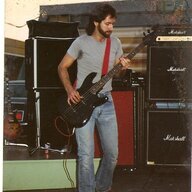
Having played 6 string treble guitars all my life, I learnt early on to NOT dime the volumes on the guitar. All the magic happens in between. This knowledge translated to my bass playing. Never do I dime the volume on the bass. Actually a very good exercise is to turn your amp up till it's too darn loud and adjust your volume on your guitar thus forcing yourself to explore the tone possibilities within the instrument itself. I realize I'm preaching to the choir but if you haven't tried this...you need to.I've always run my volume at about 3/4 and tone around 1/2. Occasionally adjusting tone depending on the song. It just always sounded better to me that way and gives me the flexibility to increase or decrease volume as needed. I've been doing it ever since I started playing over 40 years ago. I recently read an interview with Carol Kaye in which she said she always runs her volume around 3/4 as well.

Jazzes and Ps both have pickups that are made out of magnets stuck into bobbins with wire wrapped around them. It’s a simple design for both basses with nothing fundamentally different about them except for the shapes of the pickups. I’d really like to know how you came to the conclusion that a P offers more touch sensitivity than a Jazz? Of course a P has a different tone (which I equally like) than a Jazz, but if I play either bass lightly or harder, the resulting sound responds to my touch. Exactly how is a P different to you in that regard?
Disclaimer 1: I am writing this early and I'm on a deficit of coffee thus far.
Disclaimer 2: I'm not knocking J basses. I like what they do. Just pointing out that they really aren't more versatile overall than a P. In some respects they are actually less.
It isn't about pickup construction. It's about the fact that a P has a single pickup in the "sweet spot". Try soloing the neck pickup on your J and play around with extreme changes in where you pluck the strings as well as with how much you dig in (amp set flat of course). Then turn both the pickups on and try the same thing. The solo'd pickup will get a wider variation due to how you play it. Now take a P bass and try those extreme variations of how you pluck the strings. The sweet spot gets a bigger variation than the neck pickup on a J. Plus the timbre of a single pickup bass changes as well as the volume more than with a two pickup instrument. While you can indeed just solo a pickup for a J, the fact that the P is in the sweet spot makes it much more noticeable. Digging in on a J bass gets more volume. Digging in on a P gets more volume yes, but the timbre changes more also.
I should probably state that I usually play with a rather light touch. Back when my dynamics level was higher volume overall, I noticed less of a difference. I was digging in more constantly. Now my baseline is much less pressure while still ramping up when needed.
Disclaimer 1: I am writing this early and I'm on a deficit of coffee thus far.
Disclaimer 2: I'm not knocking J basses. I like what they do. Just pointing out that they really aren't more versatile overall than a P. In some respects they are actually less.
It isn't about pickup construction. It's about the fact that a P has a single pickup in the "sweet spot". Try soloing the neck pickup on your J and play around with extreme changes in where you pluck the strings as well as with how much you dig in (amp set flat of course). Then turn both the pickups on and try the same thing. The solo'd pickup will get a wider variation due to how you play it. Now take a P bass and try those extreme variations of how you pluck the strings. The sweet spot gets a bigger variation than the neck pickup on a J. Plus the timbre of a single pickup bass changes as well as the volume more than with a two pickup instrument. While you can indeed just solo a pickup for a J, the fact that the P is in the sweet spot makes it much more noticeable. Digging in on a J bass gets more volume. Digging in on a P gets more volume yes, but the timbre changes more also.
I should probably state that I usually play with a rather light touch. Back when my dynamics level was higher volume overall, I noticed less of a difference. I was digging in more constantly. Now my baseline is much less pressure while still ramping up when needed.
That’s all well and good, but this thread is about finding your sweet spot on a Jazz Bass. Denying that a Jazz bass also has an equally effective sweet spot, just because you’ve found that sweet spot on your P, does not mean that that it doesn’t exist on a Jazz. So naturally, I would have to say to you, perhaps you have not spent enough time with a Jazz to find yours. That’s essentially the reason I started this thread in the first place. Most everyone on this thread seems have a different spot they like to pluck, in combination with their own favorite pickup/tone settings, that gives them this sweet spot on a Jazz... The spot and particular setting that allows them to get the sounds they require to use the instrument to the fullest dynamically, responsively, artistically, etc... That allows the instrument to become the perfect tool for them to get the tones that are in their head to sound through the speakers.
For a P bass, I think Leo determined the best place to position the pickup to bring out the tone of the instrument in the best way, so a lot of that work is done because a P doesn’t have the variable of another pickup to blend with. I think a Jazz is more complicated, and it usually takes more experimentation to find that sweet spot that works for you personally, because the Jazz has so many more tones in it’s arsenal than a P.
Over the years, I’ve found that sweet spot on a Jazz that’s just right for me, and I also appreciate that there are other pickup/tone settings, besides my main sweet spot, that I can also use effectively on a Jazz bass in certain musical contexts when I need them (which a P Bass does not have - thus my “one trick pony” comment). So, I absolutely believe both basses have their sweet spot (which are not the same for everybody), and they are equal, just different. And the way to find them differs too.


