
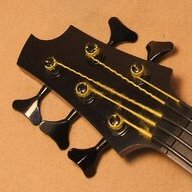
So here is one way to design a bass (or guitar or ????). I've drawn many designs over the years both full size, little scribbles on note pads etc. If I get to the point of wanting to actually build a design then a full size drawing is my best choice.
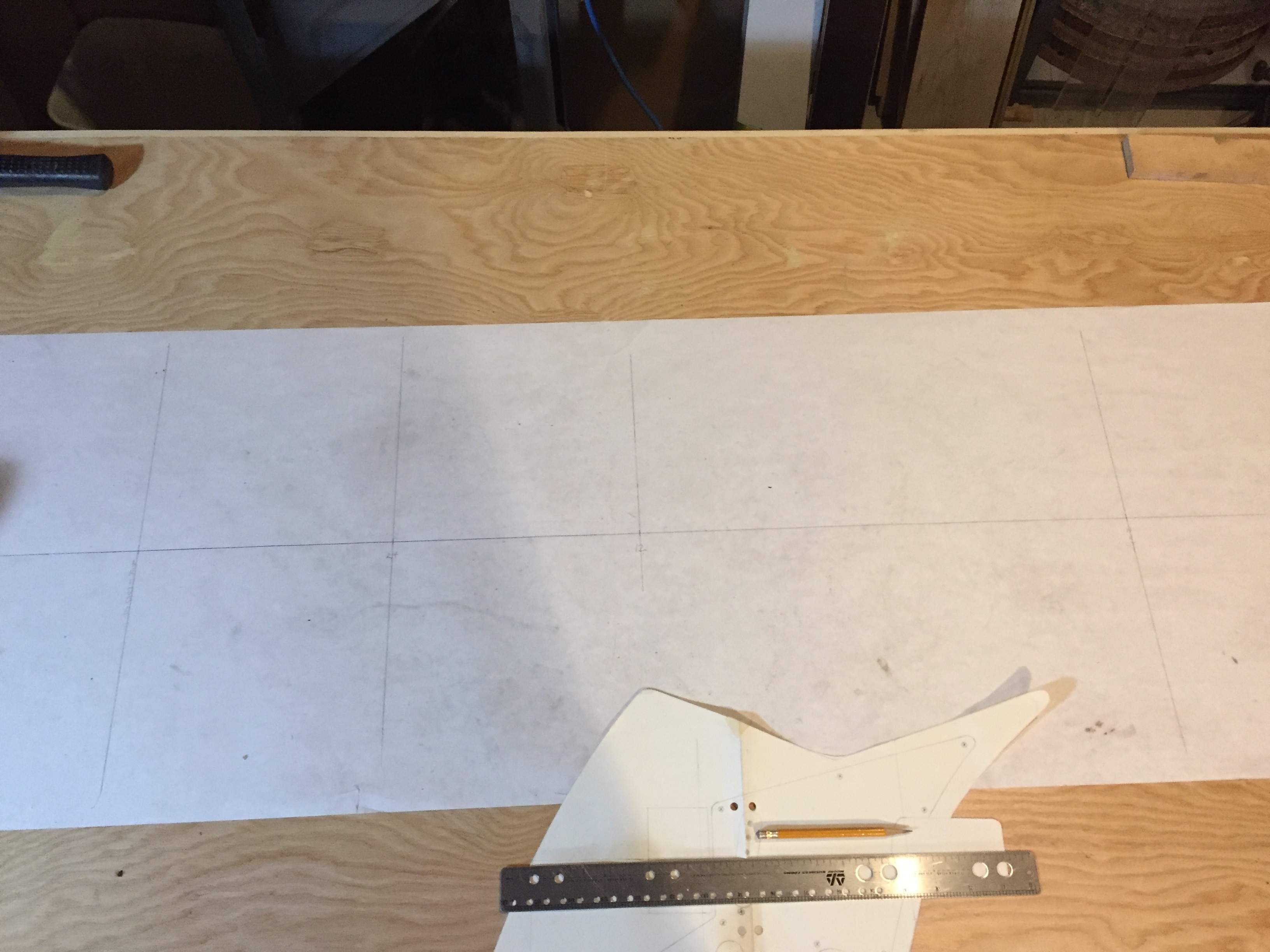
So I start with a large piece of paper (or other suitable drawing surface) about 52" long and around 18" wide. I've taped smaller pieces together before but I have a roll of paper for the time being. On this is drawn a center line. The perpendicular lines, from left to right are the bridge, 24th fret, 12th fret and nut. For this example I am using a 34" string length. The 12th is halfway and the 24th is 1/4 or 3/4 depending on which end to start from.
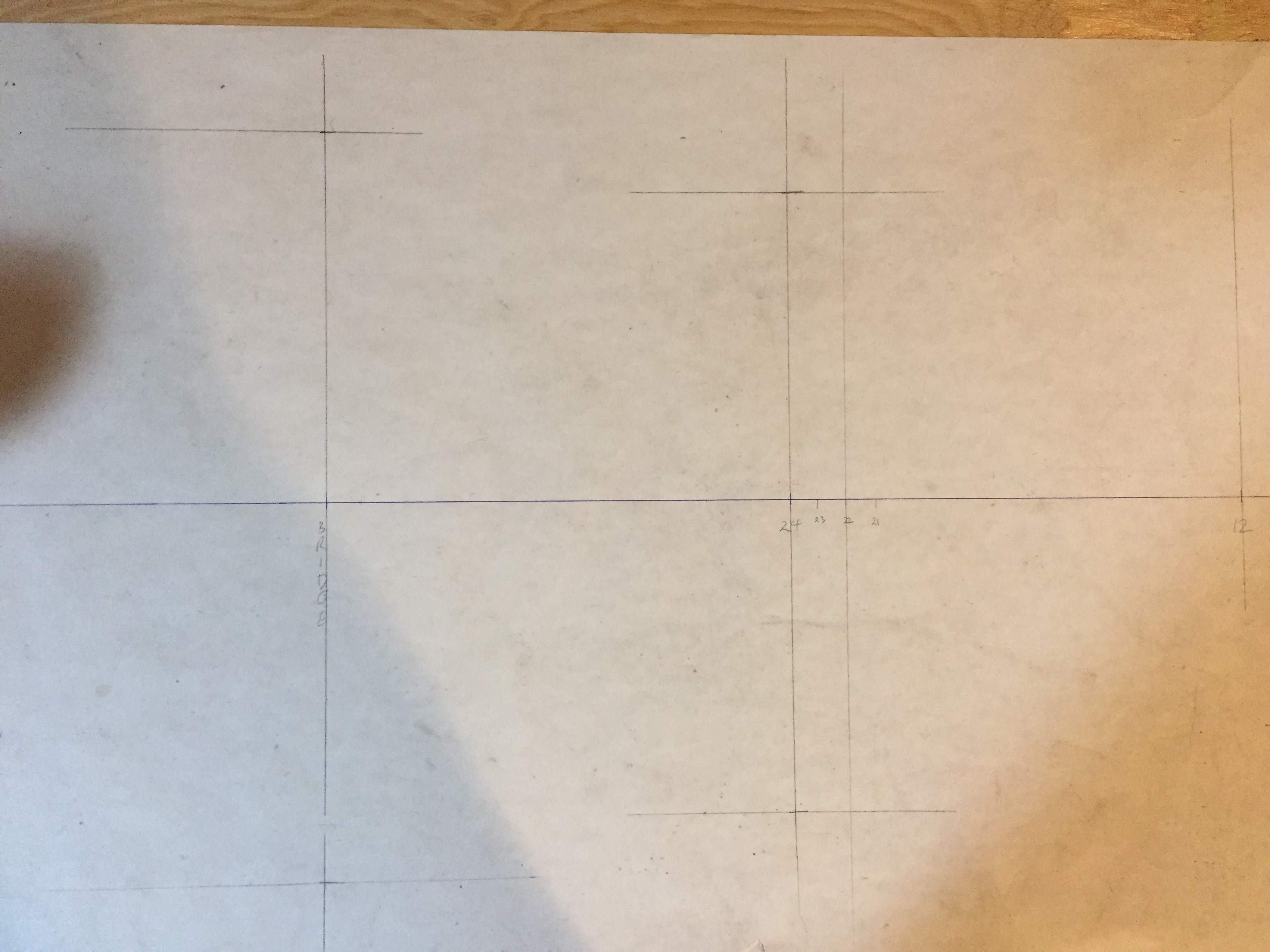
Next I draw in some width guide lines. For this drawing I decided on 13.5" for a lower bout width (marked at the bridge location) and 2" narrower for the upper horns (marked at the 24th fret location). These are just references and the actual widths can and may vary.
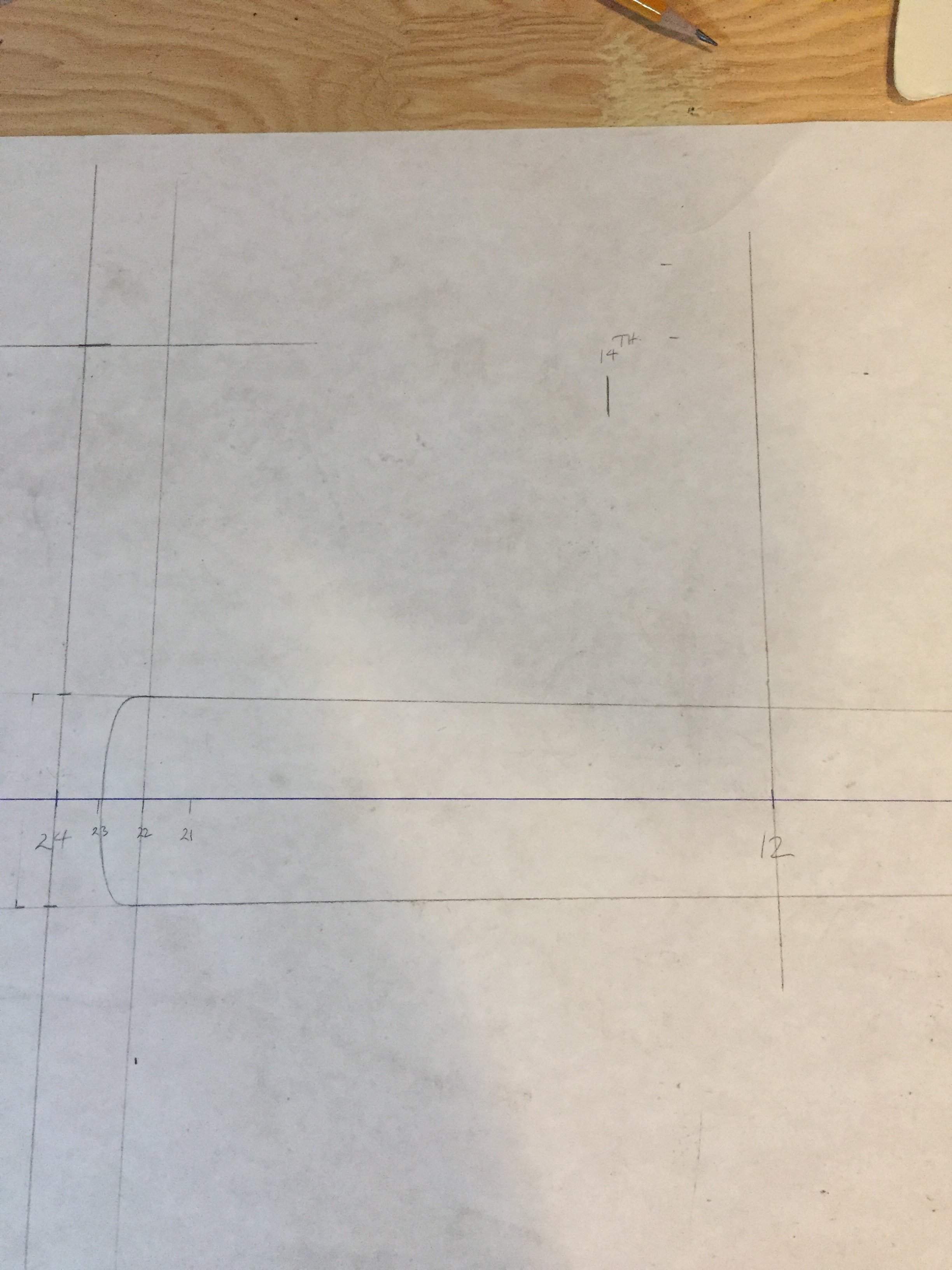
Next I mark the nut width and the heel width and draw in the fretboard sides. I decided to go with 22 frets on this example so I marked the 22nd fret. Undecided whether this will be bolt on or neck through so I carried the fingerboard lines down through past the bridge.
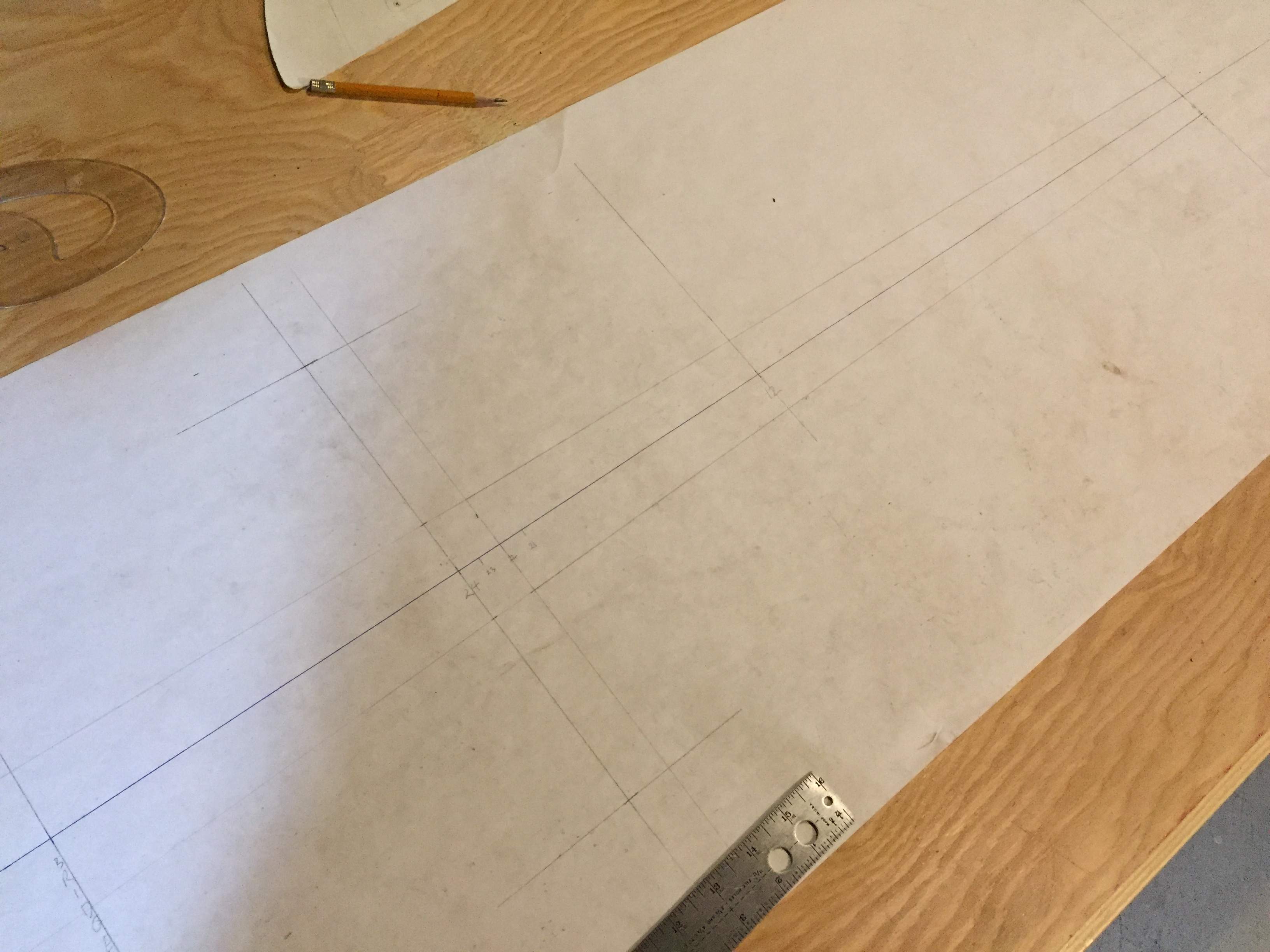
I drew the end of the fingerboard rounded for this but it could be straight. I put the end at 1/2' from the 22nd fret for this and usually use 3/8" for a flat one. I also put a small line at the 14th fret position as that's usually the minimum I will end a horn and have a strap mount. Depending on design I have fallen between this mark and the 12th fret. If your design can carry it further toward the nut end fine as long as its aesthetically pleasing.
Next step is drawing in a bridge. I drew a generic size (ala Fender) and a dashed outline of a Badass/Kickass/hipshot bridge. Not much is larger except for Rics style. Draw in what ever you are using. Typically I adjust the saddles forward as much as possible and locate the "G" saddle pretty much at the 34" mark. This usually leaves the front edge of the bridge about 1/4" ahead of the bridge line. Some bridges available may need to be positioned differently.
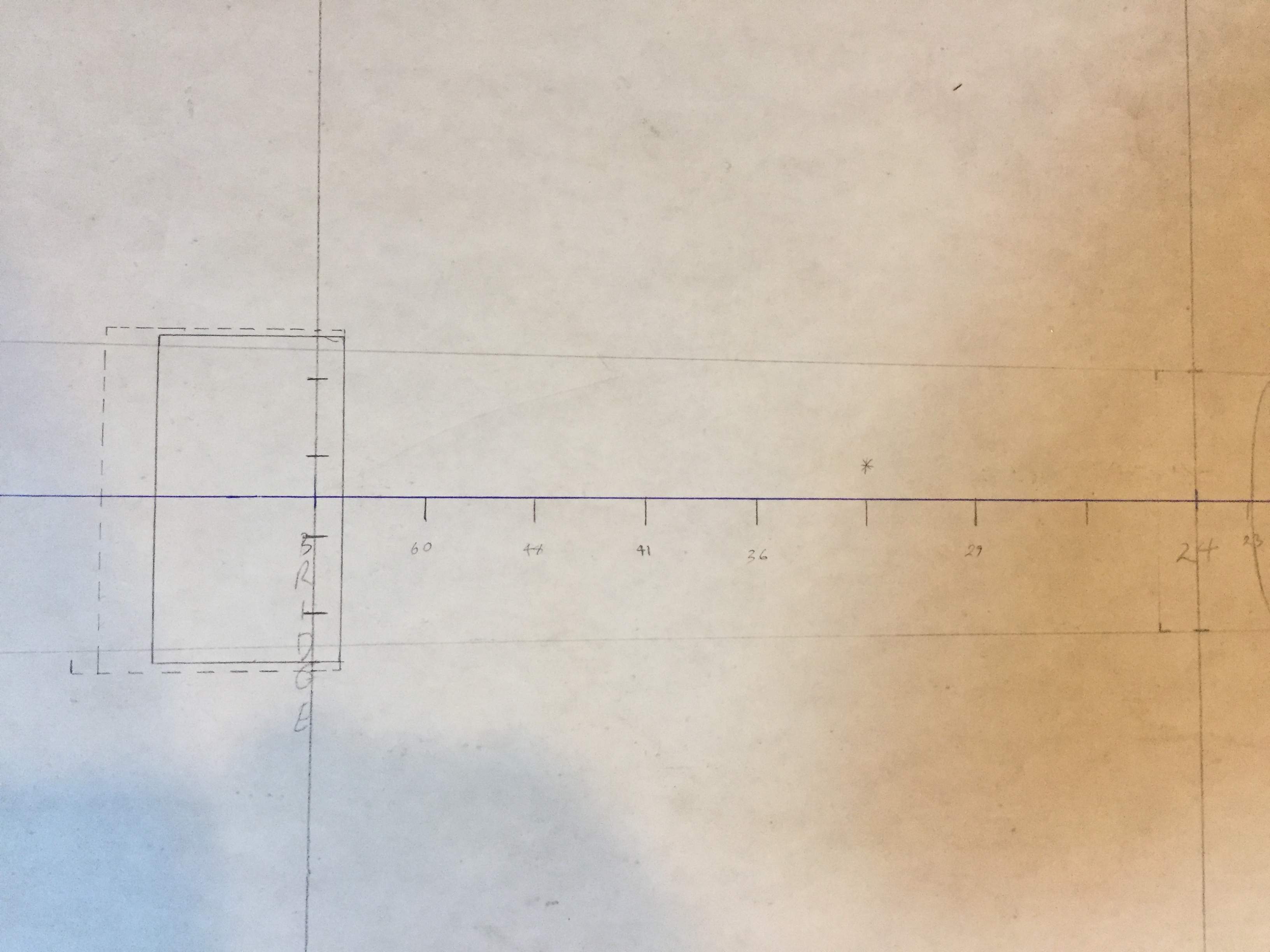
Lastly I draw in pickup position references between the 24th fret and bridge line. I split this up into eight equal segments. The one marked with the asterisk is where most P-bass style pickups are approximately located. That should give you starting point with all the references you need.
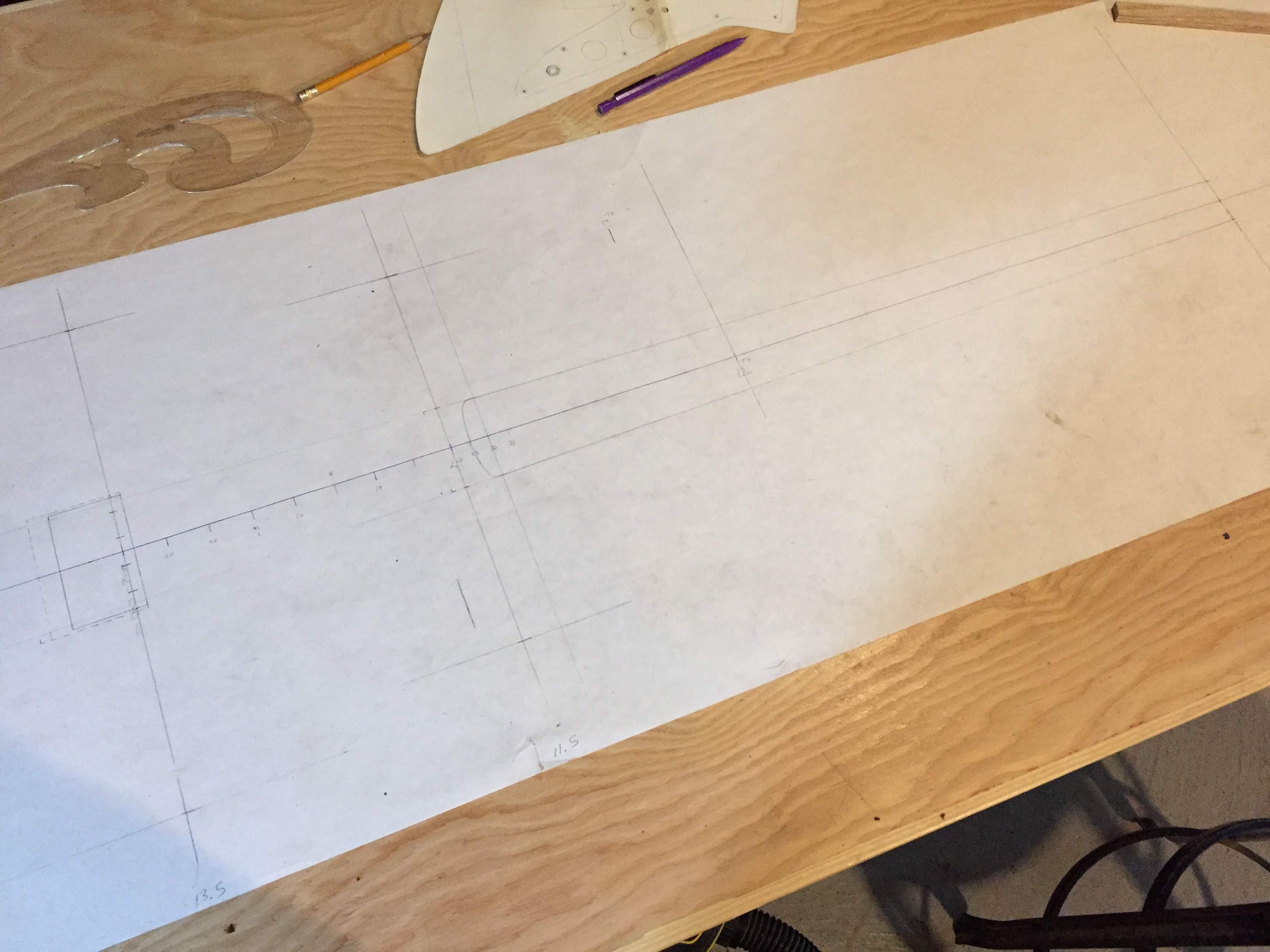
This can work for different string lengths, 5 or 6 string, whatever. If you need dimensions visit your local store and bring a tape measure (use appropriate consideration of course). Of course most manufacturers give a lot of specs for their models anyway so finding out is not a big problem these days.
So I start with a large piece of paper (or other suitable drawing surface) about 52" long and around 18" wide. I've taped smaller pieces together before but I have a roll of paper for the time being. On this is drawn a center line. The perpendicular lines, from left to right are the bridge, 24th fret, 12th fret and nut. For this example I am using a 34" string length. The 12th is halfway and the 24th is 1/4 or 3/4 depending on which end to start from.
Next I draw in some width guide lines. For this drawing I decided on 13.5" for a lower bout width (marked at the bridge location) and 2" narrower for the upper horns (marked at the 24th fret location). These are just references and the actual widths can and may vary.
Next I mark the nut width and the heel width and draw in the fretboard sides. I decided to go with 22 frets on this example so I marked the 22nd fret. Undecided whether this will be bolt on or neck through so I carried the fingerboard lines down through past the bridge.
I drew the end of the fingerboard rounded for this but it could be straight. I put the end at 1/2' from the 22nd fret for this and usually use 3/8" for a flat one. I also put a small line at the 14th fret position as that's usually the minimum I will end a horn and have a strap mount. Depending on design I have fallen between this mark and the 12th fret. If your design can carry it further toward the nut end fine as long as its aesthetically pleasing.
Next step is drawing in a bridge. I drew a generic size (ala Fender) and a dashed outline of a Badass/Kickass/hipshot bridge. Not much is larger except for Rics style. Draw in what ever you are using. Typically I adjust the saddles forward as much as possible and locate the "G" saddle pretty much at the 34" mark. This usually leaves the front edge of the bridge about 1/4" ahead of the bridge line. Some bridges available may need to be positioned differently.
Lastly I draw in pickup position references between the 24th fret and bridge line. I split this up into eight equal segments. The one marked with the asterisk is where most P-bass style pickups are approximately located. That should give you starting point with all the references you need.
This can work for different string lengths, 5 or 6 string, whatever. If you need dimensions visit your local store and bring a tape measure (use appropriate consideration of course). Of course most manufacturers give a lot of specs for their models anyway so finding out is not a big problem these days.
Last edited:

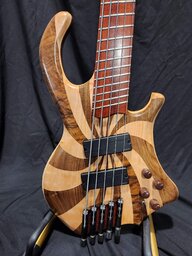

 . How about turning the headstock on its side
 ? Bring the tuners in from opposite sides and have the buttons facing back


 .
.


