• TalkBass has been independent since 1998. Add your voice.
    Create a free account to reply to discussions, view embedded media, and browse with fewer display ads.
    Join freeLog in
    Want zero display ads or expanded classifieds tools? Compare plans.

Difficulties executing techniques

Absolutely you need to acquire good physical technique and there is lots of great advise about that to be had. Something often overlooked by less experienced players (and sometimes by more experienced ones too) is that if you can't hear it in your head well enough to sing it accurately all the physical chops in the world won't help you play it musically. Trying to force your body to do something not perfectly focused in your mind's ear is a frustrating road to stumble down.
 
I don't like those stretches either in lower positions of the neck. As others have said, instead of stretching, shift your whole hand. You can also play the 5th fret note on the open G string instead so no stretch or shift is even necessary. Many ways to go about it!

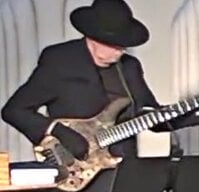
This is going to seem really weird to a lot of folks, but relative to shifting and moving around, what seems to really help is this ↓↓↓↓↓↓.... It doesn't interfere with fingering and removes a lot of the friction on the fingerboard and "stiction" on the back of the neck....↓↓↓↓↓

glove_bass.jpg
 
With all due respect, i think you are trying to solve a problem that doesn't exist by wearing a glove. If you have a serious problem with your thumb sticking to the back of the neck, then clean the back of the neck or buy a bass with natural sanded wood for the neck. If the finger noise on the strings is a really serious problem, get flatwounds. But the reality is people have been playing basses with a glossy finished neck and roundwounds for decades and it really isn't a hurdle that can't be solved with proper playing technique.

But if it works for you, go for it. I just don't want to have to wear a glove all the time when i play. I also think that would interfere when playing a fretless bass and change your tone for the worse.
 
  • Like
Reactions: IamGroot
I have started to learn scales and chords for my bass and I've only had it for 3 weeks or so. Upon carrying out the C major scale my hand has a really tough time dealing with the 2nd fret to the 5th fret stretch. Will this be something I get used to over time or am I just too tiny for the bass?

I'm also having a difficult time with keeping my pick (yeah yeah laugh it up) between the 2 pickups. I find my self drifting up to the top pickup more often than not, and upon repositioning it just feels VERY foreign to me to keep my hand that way. Any help at all would be greatly appreciated!
You're using your pinky right? Cause it should almost fall right on the fret without stretching at all.
 
This is going to seem really weird to a lot of folks, but relative to shifting and moving around, what seems to really help is this ↓↓↓↓↓↓.... It doesn't interfere with fingering and removes a lot of the friction on the fingerboard and "stiction" on the back of the neck....↓↓↓↓↓

View attachment 2991406

I can't imagine the iron grip required to create the levels of friction/'stiction' that need a glove to overcome. Just relax your hands...
 
This is going to seem really weird to a lot of folks, but relative to shifting and moving around, what seems to really help is this ↓↓↓↓↓↓.... It doesn't interfere with fingering and removes a lot of the friction on the fingerboard and "stiction" on the back of the neck....↓↓↓↓↓

View attachment 2991406

Did you get the idea from Scott’s bass lessons? If so...he has a neurological condition that necessitates the gloves. He wouldn’t be wearing the gloves if he didn’t need to.
 
  • Like
Reactions: Jewce
You're using your pinky right? Cause it should almost fall right on the fret without stretching at all.

Not sure what you mean?

Did you get the idea from Scott’s bass lessons? If so...he has a neurological condition that necessitates the gloves. He wouldn’t be wearing the gloves if he didn’t need to.

Yeah... And I know Scott had Focal Dystonia. I know full well what that is as I got it in my face (trumpet player). I wanted to see what he was experiencing and I really like how it feels. I don't really play that way, but I'm tempted to. It quiets string squeak, helps a little in muting and surprisingly doesn't interfere with playing at all.

And as for the Michael Jackson comment... Wouldn't you love to be that cool too?! I'll bet that all of the folks who have criticized it never tried it. Got money?
 
Not sure what you mean?


Yeah... And I know Scott had Focal Dystonia. I know full well what that is as I got it in my face (trumpet player). I wanted to see what he was experiencing and I really like how it feels. I don't really play that way, but I'm tempted to. It quiets string squeak, helps a little in muting and surprisingly doesn't interfere with playing at all.

And as for the Michael Jackson comment... Wouldn't you love to be that cool too?! I'll bet that all of the folks who have criticized it never tried it. Got money?

Focal Dystonia in your face? Yikes! That sounds unpleasant, and had to be extremely frightening until you knew what the diagnosis was.

I worked with someone who came down with Bell’s Palsy, which I guess is almost the opposite problem. She totally thought she had had a stroke.
 
Focal Dystonia in your face? Yikes! That sounds unpleasant, and had to be extremely frightening until you knew what the diagnosis was.

I worked with someone who came down with Bell’s Palsy, which I guess is almost the opposite problem. She totally thought she had had a stroke.

Bell's Palsy and Focal Dystonia of the face are quite similar, the difference being there is no drooping with FD. You lose control of he small muscles, particularly around the obicularis oris, but the larger muscles are largely unaffected. Essentially the brain becomes unwired from the face. As a trumpet player, because of how the situation presents itself, my playing went from sounding like a professional to sounding like a 6th grader in about 3 weeks. Sadly it took about 8 years to get 90% of my playing back. So, yeah... unpleasant. I'm told 1% of musicians get hit with FD and somehow it knows to hit their playing. Violinists, guitarists, pianists, etc get it in their hands. Brass players get it in the face.

Getting back to my "suggestion" about the glove, I was surprised as to how well it works. My guess is that Scott is past his FD episode but continues to use it because he likes it. I've seen him play in recent videos without it. As a side anecdote... I have a trumpet player friend (who coincidentally has recorded with Rod Stewart) and injured his right hand. Obviously he had to go on earning a living so he played left handed. His right hand healed, but continued to play left handed (and is not a lefty). Sometimes you stumble on stuff that works either by necessity or curiosity.
 
Not sure what you mean?


Yeah... And I know Scott had Focal Dystonia. I know full well what that is as I got it in my face (trumpet player). I wanted to see what he was experiencing and I really like how it feels. I don't really play that way, but I'm tempted to. It quiets string squeak, helps a little in muting and surprisingly doesn't interfere with playing at all.

And as for the Michael Jackson comment... Wouldn't you love to be that cool too?! I'll bet that all of the folks who have criticized it never tried it. Got money?
Thinking of all the cool bass players who play with a glove on..
 
Hey BassChase, welcome to the low end!

No, you are not too tiny, because no one is. There are some fine bass players with very tiny hands out there. Also some with short arms. People find ways.

About keeping the pick between the pickups: keep it where you want. This depends on what sounds good to your ear, and what feels good to your arm. Not on where someone else said to keep it.

Good luck, and keep us posted!
Agreed on not being concerned about pick, or finger drift up towards the neck.
There is nothing in writing that says you must stay between the pickups.
Location between the bridge and neck have some affect on tone.
Many people change up where they pick or finger depending on the tone they want.

You are at, what in the grand scheme of things, is like the first few minutes of the beginning of the universe.
There is so much more cool stuff ahead of you to learn, even if you only do this solely for your own enjoyment.
 
Last edited:
Little late to the party but... don't worry about your picking hand drifting, just play and where it lands is where it lands. It's more about being consistently in the same space than the space itself.

Stretch wise it will come over time to a point. I had to play guitar a little while to get the stretch and strength started before being comfortable on the bass and in the end still prefer a short scale bass because I simply cannot go 1-4 on a 34" scale. On the 30" it's a stretch but doable.
 
...
Location between the bridge and neck have some affect on tone.
Many people change up where they pick or finger depending on the tone they want.

You are at, what in the grand scheme of things, is like the first few minutes of the beginning of the universe.

...

Right hand position, along with a whole bunch of other right-hand subtleties, can and does have a significant impact on tone. But I wholeheartedly agree that, for someone starting out, just allowing your inevitable inconsistency to happen is the right thing to do. Use your ears rather than your eyes and you will discover all of the possibilities for yourself and how your hands best allow you to exploit them. In the early days, trying to stick with a 'best' approach will just cause you to miss a whole bunch of other possibilities, one of which just might be your unique voice...
 
Last edited:
  • Like
Reactions: Old Garage-Bander
Not sure what you mean?


Yeah... And I know Scott had Focal Dystonia. I know full well what that is as I got it in my face (trumpet player). I wanted to see what he was experiencing and I really like how it feels. I don't really play that way, but I'm tempted to. It quiets string squeak, helps a little in muting and surprisingly doesn't interfere with playing at all.

And as for the Michael Jackson comment... Wouldn't you love to be that cool too?! I'll bet that all of the folks who have criticized it never tried it. Got money?
I wasn't talking to you. I was talking to the OP. Hence the quoted reply. From 2 to 5, if he's using his pinky, his fingers should fall almost on the frets without stretching. Like, at all. 2 3 4 5 index, middle, ring, pinky. You dont need big hands to play bass. In fact, I know a 4' 4" woman that plays an upright bigger than her. But, I wasn't talking to you. I don't know why you replied to that comment. On the glove thing, I don't think I could play well at all if I couldn't feel the strings. And the sticky neck can be fixed in 10 minutes with some sand paper. Maybe less
 
Both of the things mentioned in your OP will get easier.

Until you build up independent finger strength that 4 fret stretch on the tail end is tough. After a few months my pinkie practically has the strength to lift a Volkswagen... though, it hurt a bit to get there.

And when I first started trying to use a pick it wasn't pretty... trying to keep it in the sweet spot between the humbuckers was tricky, plus I kept bumping my volume knob with my hand somehow.

Anyway, 15-30min a day practicing things (or until slightly fatigued) does cumulative wonders a few months down the road.
 
  • Like
Reactions: IamGroot
Both of the things mentioned in your OP will get easier.

Until you build up independent finger strength that 4 fret stretch on the tail end is tough. After a few months my pinkie practically has the strength to lift a Volkswagen... though, it hurt a bit to get there.

And when I first started trying to use a pick it wasn't pretty... trying to keep it in the sweet spot between the humbuckers was tricky, plus I kept bumping my volume knob with my hand somehow.

Anyway, 15-30min a day practicing things (or until slightly fatigued) does cumulative wonders a few months down the road.
Good recommendations. If you have trouble stretching, move higher up the neck where the span is smaller, say the 5th fret, until you are more comfortable.
 
Good recommendations. If you have trouble stretching, move higher up the neck where the span is smaller, say the 5th fret, until you are more comfortable.
Yea, my fave positions to play are 5-7, and that could help get one used to it in the beginning, but those lowest 3 positions are still gonna take some stretching to get used to. Holding the bass at a 45' angle will help tremendously.