• TalkBass has been independent since 1998. Add your voice.
    Create a free account to reply to discussions, view embedded media, and browse with fewer display ads.
    Join freeLog in
    Want zero display ads or expanded classifieds tools? Compare plans.

diy kits

Hi all,
some of you may remember im the old guy who had a stroke and took up bass and was asking about combos for my man cave well im sorted and well happy.
But now as a project i fancy building a bass but not well tooled up i have seen a self assembly kit on Amazon that looks quite easy i just wondered if anyone has any experience of these kits.
thanks all.
ps and thanks to all of you for your comments regarding my stroke your all very kind
 
While I haven't built a bass from scratch (as in carving my own body, shaping a neck, inserting frets, etc.) I have assembled and modded numerous basses over my two decades of playing bass.

1) Start modding an existing bass FIRST
If you pick up the bass and it works (tunes up ok, electronics work, acceptable fret buzz) then you know you're starting from a solid foundation. If anything else is thrown off, you can easily backtrack or revert and see where you messed up. Pick up a cheapo (relatively speaking these days) Squier Affinity bass in ok-ish condition and have at.

2) Learn to "fix" before modding
Action too high? Fret buzz? Scratchy pots or noisy electronics? Once you learn to fix an existing problem, it'll go a long way in improving your workmanship on your own assemblies. Just like above, you'll learn how to cover or resolve your mistakes before they become a dealbreaker of an issue. Try something with mild problems first, it'll help your end product and improve your confidence when you're ready to tackle a larger project.

3) Never, EVER throw any functional parts away
This is just good advice for crafting in general, but you never know if/when you'll be able to re-use something. This philosophy has saved my bacon on many occasions, just keep your stuff organized and it won't turn out as detrimental as most people assume.

4) Know what your goals are and spend accordingly
Bit of a controversial topic, but everyone's needs are different and so is their expectations. While I'm most assuredly not a tonewood affirmer, there is such a thing as bad quality parts or wood and it can have an affect on the end product in looks or sturdiness. The kit you're referring to is going to be largely cheap wood, questionable QC, and probably not the most stable either. You get what you pay for to a certain extent. It's about goals and expectations....you aren't going to hear a clearly demonstrable difference between a basic bent metal bridge vs a Badass III (if both are adjusted the same), but the Badass is more adjustable and better made. If that's what you're after, the extra cost may be worth it.

Painting the bass body or do you want the wood grain to show? That'll make a huge difference on wood quality choice if visuals are important. Going after a particular tone? Choice of pickups and their placement on the body will be massively important to how the end product turns out.

5) Try swapping before doing scratch assemblies
Common ones are neck swaps, since they aren't exactly rocket science but take some finesse to do them correctly. I prefer Jazz necks, so I typically swap those onto my P-basses and adjust accordingly. Make sure the neck relief is good, frets aren't buzzing, and that intonation is properly adjusted. Try the same with pickups, electronics, bridges maybe, etc. If you come away with two functional basses, that's a good litmus test for where your skills truly are.


Sorry it was so wordy, but hope it helped!


Tl;dr - Mod cheap functional basses first, try swapping parts, and don't throw anything away. Also Ibanez and Squiers are fantastic modding platforms IMO. Likely to find some really solid Ibanez basses for reasonable prices on the used market. Especially the older P/J SR basses.
 
0
While I haven't built a bass from scratch (as in carving my own body, shaping a neck, inserting frets, etc.) I have assembled and modded numerous basses over my two decades of playing bass.

1) Start modding an existing bass FIRST
If you pick up the bass and it works (tunes up ok, electronics work, acceptable fret buzz) then you know you're starting from a solid foundation. If anything else is thrown off, you can easily backtrack or revert and see where you messed up. Pick up a cheapo (relatively speaking these days) Squier Affinity bass in ok-ish condition and have at.

2) Learn to "fix" before modding
Action too high? Fret buzz? Scratchy pots or noisy electronics? Once you learn to fix an existing problem, it'll go a long way in improving your workmanship on your own assemblies. Just like above, you'll learn how to cover or resolve your mistakes before they become a dealbreaker of an issue. Try something with mild problems first, it'll help your end product and improve your confidence when you're ready to tackle a larger project.

3) Never, EVER throw any functional parts away
This is just good advice for crafting in general, but you never know if/when you'll be able to re-use something. This philosophy has saved my bacon on many occasions, just keep your stuff organized and it won't turn out as detrimental as most people assume.

4) Know what your goals are and spend accordingly
Bit of a controversial topic, but everyone's needs are different and so is their expectations. While I'm most assuredly not a tonewood affirmer, there is such a thing as bad quality parts or wood and it can have an affect on the end product in looks or sturdiness. The kit you're referring to is going to be largely cheap wood, questionable QC, and probably not the most stable either. You get what you pay for to a certain extent. It's about goals and expectations....you aren't going to hear a clearly demonstrable difference between a basic bent metal bridge vs a Badass III (if both are adjusted the same), but the Badass is more adjustable and better made. If that's what you're after, the extra cost may be worth it.

Painting the bass body or do you want the wood grain to show? That'll make a huge difference on wood quality choice if visuals are important. Going after a particular tone? Choice of pickups and their placement on the body will be massively important to how the end product turns out.

5) Try swapping before doing scratch assemblies
Common ones are neck swaps, since they aren't exactly rocket science but take some finesse to do them correctly. I prefer Jazz necks, so I typically swap those onto my P-basses and adjust accordingly. Make sure the neck relief is good, frets aren't buzzing, and that intonation is properly adjusted. Try the same with pickups, electronics, bridges maybe, etc. If you come away with two functional basses, that's a good litmus test for where your skills truly are.


Sorry it was so wordy, but hope it helped!


Tl;dr - Mod cheap functional basses first, try swapping parts, and don't throw anything away. Also Ibanez and Squiers are fantastic modding platforms IMO. Likely to find some really solid Ibanez basses for reasonable prices on the used market. Especially the older P/J SR basses.
brilliant thankyou
 
  • Like
Reactions: tidbits
I have built numerous kits over the last 20 years, with the bulk of them being in the last three years (10 completed in that last three year timespan with 3 more in progress).

While guitar kits from Stewmac are supposedly really good, the only options for bass builds are Chinese made kits. If you are willing to put in the work, you can turn out a good, playable instrument.

I have found on the kits that all of them require fretwork. These are great to learn how to do that on due to the lower cost of them. Lots of videos out there on YouTube. Including some that show you how to make your own tools that are much cheaper than buying. Every kit I have bought over the last three years have require the frets to be leveled, crowned and polished. All of them.

I have also discovered that the stock hardware and pickups are similar to low end offerings from the major brands (Think sub-$300 instruments.) However, in a lot of cases for my builds, I chucked most of the hardware in my parts box and bought better stuff.

I currently have three bass builds on my bench. They are taking me longer than I like because I seriously suck at solid finishes. Give me stains, dyes and Tru Oil finishes any day and I can make them look fantastic. But solid color spray finishes are my bane. I still make a good effort at them, though.
 
  • Like
Reactions: mmon77
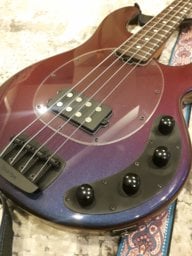
Kevinindabassment covered all the bassics. I would add that wood quality is very variable. Cheap Basswood is a sanding nightmare, with lots of contaminants like silica, yuk! I have built a kit with Okume (the first pic), I liked that. Either way don't underestimate the amount of sanding you will have to do. The other lesson i learned is to pre drill all screw holes even if they were pre drilled already. Stripped and broken screws are not fun. Also be aware that if you want to have threaded bolts for your neck joint remember to get the best quality inserts you can, hard Maple is really hard! The purple Jazz now has black screws and black tapewounds on it now, looks much better. Good luck!
 

Attachments

  • IMG_0671.JPG
    IMG_0671.JPG
    1.2 MB · Views: 4
  • 20180409_214841.jpg
    20180409_214841.jpg
    1,022.6 KB · Views: 5
  • 20180409_214903.jpg
    20180409_214903.jpg
    1.1 MB · Views: 6
wondered if anyone has any experience of these kits.
I built a jazz bass from a Solo JBK-1 kit, plus some aftermarket pickups, pickguard, bridge, and various electronic components. The Solo kit was a great starting place, even though much of it went unused in the final build. I would highly recommend the process of building from a kit for anyone so inclined, I found it very rewarding, and now I have a uniquely decorated jazz bass to play as well. I also had some great help from other TBers when I had some questions about the wiring. I don't have any comparison between Solo and other kits though, as I've only built the one kit. The Solo kit seemed as advertised, no complaints.

 
  • Like
Reactions: N4860
Kevinindabassment covered all the bassics. I would add that wood quality is very variable. Cheap Basswood is a sanding nightmare, with lots of contaminants like silica, yuk!
This is a definite problem, but on the other hand cheap basswood is great for shaping as long as you can set things up to mitigate the dust issues that come along with it. A friend of mine made a highly figured basswood guitar a while back and we were able to make a cheap little pressure box connected to a shop vac that worked great.
 
Never done a kit, but I built quite a few basses from parts. I basically trawled eBay for cheap random body's and necks, and put together things I found interesting. A couple of them ended up as my main gigging bass for a few years even though I had access to more expensive stuff.

I've very little skill in woodworking, but was able to put things together pretty easily. If you stick to 4 string Fender shaped objects then pretty much most body's and necks are compatible. Occasional sanding and extra routing required to make things fit, and for the pickups I wanted (pick guards hide a lot of mess!). I

I think the key skill was knowing how to do a setup at the end to get the best of whatever I put together and make it playable.

f you can find bodies and/or necks pre-loaded with parts you can get a bargain, even if its not the highest quality - If you treat it as a fun project then there's not a lot can go wrong.
 
  • Like
Reactions: JC BASS 91
Hi all,
some of you may remember im the old guy who had a stroke and took up bass and was asking about combos for my man cave well im sorted and well happy.
But now as a project i fancy building a bass but not well tooled up i have seen a self assembly kit on Amazon that looks quite easy i just wondered if anyone has any experience of these kits.
thanks all.
ps and thanks to all of you for your comments regarding my stroke your all very kind
I'd suggest a company like precision guitar kits instead: Bass - Precision Guitar Kits

They're very high quality (made in Canada), have fantastic fretwork, and when complete, will compare favourably with more boutique brands.
 
  • Like
Reactions: urkel3000
While I haven't built a bass from scratch (as in carving my own body, shaping a neck, inserting frets, etc.) I have assembled and modded numerous basses over my two decades of playing bass.

1) Start modding an existing bass FIRST
If you pick up the bass and it works (tunes up ok, electronics work, acceptable fret buzz) then you know you're starting from a solid foundation. If anything else is thrown off, you can easily backtrack or revert and see where you messed up. Pick up a cheapo (relatively speaking these days) Squier Affinity bass in ok-ish condition and have at.

2) Learn to "fix" before modding
Action too high? Fret buzz? Scratchy pots or noisy electronics? Once you learn to fix an existing problem, it'll go a long way in improving your workmanship on your own assemblies. Just like above, you'll learn how to cover or resolve your mistakes before they become a dealbreaker of an issue. Try something with mild problems first, it'll help your end product and improve your confidence when you're ready to tackle a larger project.

3) Never, EVER throw any functional parts away
This is just good advice for crafting in general, but you never know if/when you'll be able to re-use something. This philosophy has saved my bacon on many occasions, just keep your stuff organized and it won't turn out as detrimental as most people assume.

4) Know what your goals are and spend accordingly
Bit of a controversial topic, but everyone's needs are different and so is their expectations. While I'm most assuredly not a tonewood affirmer, there is such a thing as bad quality parts or wood and it can have an affect on the end product in looks or sturdiness. The kit you're referring to is going to be largely cheap wood, questionable QC, and probably not the most stable either. You get what you pay for to a certain extent. It's about goals and expectations....you aren't going to hear a clearly demonstrable difference between a basic bent metal bridge vs a Badass III (if both are adjusted the same), but the Badass is more adjustable and better made. If that's what you're after, the extra cost may be worth it.

Painting the bass body or do you want the wood grain to show? That'll make a huge difference on wood quality choice if visuals are important. Going after a particular tone? Choice of pickups and their placement on the body will be massively important to how the end product turns out.

5) Try swapping before doing scratch assemblies
Common ones are neck swaps, since they aren't exactly rocket science but take some finesse to do them correctly. I prefer Jazz necks, so I typically swap those onto my P-basses and adjust accordingly. Make sure the neck relief is good, frets aren't buzzing, and that intonation is properly adjusted. Try the same with pickups, electronics, bridges maybe, etc. If you come away with two functional basses, that's a good litmus test for where your skills truly are.


Sorry it was so wordy, but hope it helped!


Tl;dr - Mod cheap functional basses first, try swapping parts, and don't throw anything away. Also Ibanez and Squiers are fantastic modding platforms IMO. Likely to find some really solid Ibanez basses for reasonable prices on the used market. Especially the older P/J SR basses.
That may have been wordy, but it's solid advice.

I know nothing about bass kits, never bought or tried one. But I've heard plenty of stories from folks that have bought them and found them less than satisfactory.

Buying a used bass as a starting point is a great way to learn. My first attempt was assembling a Squier Mustang from parts. Neck from here, body from there, etc. I learned alot. My last project was buying someone else's project and completely reworking it to be my own. That took alot of time, lots of moments of confusion and creative cursing but I ended up with something I love.

Just my 2 pennies.