Enjoy the benefits of a premium membership!
Upgrade Account
-
TalkBass has been independent since 1998. Add your voice.
Create a free account to reply to discussions, view embedded media, and browse with fewer display ads.
Join free Log in
Want zero display ads or expanded classifieds tools? Compare plans.
You are using an out of date browser. It may not display this or other websites correctly.
You should upgrade or use an alternative browser.
You should upgrade or use an alternative browser.
Do you play differently on a 4-string vs a 5-string?
- Thread starter Botre
- Start date
More options
Who Replied?
I approach a 5-string as a 4-string with extra low notes, meaning I play a 5-string like I would a four string with note and locational choices, except with respect to the low E flat, D, C#, C and B. I generally leave the (fretted) E, and upwards alone. That has always worked well for me as a player, and in terms of tone. Other people do differently.Hey all,
For those who switch between 4- and 5-string basses, do you notice changes in how you approach lines or note choices?
Or does it feel natural after a while regardless of string count?
Interested to hear your experiences.
Thanks
Botle


I now play 5 string exclusively because I can do more on 5 than I could on 4**. NOTE: this does not mean "five extra notes"! Most of the B string is in 4 string territory. When I don't need lower notes I often move a song five frets up (from where I played it on 4) so that "home" is on the B string instead of the E: this allows greater range up top in that fingering position.
On that note: for me, the greatest value of 5 string isn't those low notes, it's having that 2 octave range in each fingering position. This reduces the amount of necessary position shifting. Of course it still allows optional position shifting! I might still go up the neck for tone alone: e.g. to play a fill on the D and A strings, rather than the G and D. And while I often succeed in setting up a good B string, I do sometimes choose the E string if notes happen to sound better there.
**I would never ever claim that 5 is better than 4. I'm simply highlighting the fact that 5 string has greater range.
When properly set up and intonated, a B string can be usable to the 12th fret and sometimes beyond. I play the low B at and above the 5th fret as often as I do below. So, I think of five string as five string, rather than "four plus one"... except perhaps in the upper register, where the thicker strings don't perform as well.
On that note: for me, the greatest value of 5 string isn't those low notes, it's having that 2 octave range in each fingering position. This reduces the amount of necessary position shifting. Of course it still allows optional position shifting! I might still go up the neck for tone alone: e.g. to play a fill on the D and A strings, rather than the G and D. And while I often succeed in setting up a good B string, I do sometimes choose the E string if notes happen to sound better there.
**I would never ever claim that 5 is better than 4. I'm simply highlighting the fact that 5 string has greater range.
Not really. I was taught early on to use the B string as a 'spice', not to rely on it all the time... so I play 5-string pretty much the same way I play 4-string, and use the B where necessary for effect.
When properly set up and intonated, a B string can be usable to the 12th fret and sometimes beyond. I play the low B at and above the 5th fret as often as I do below. So, I think of five string as five string, rather than "four plus one"... except perhaps in the upper register, where the thicker strings don't perform as well.


JazznFunk
Supporting Member
When properly set up and intonated, a B string can be usable to the 12th fret and sometimes beyond. I play the low B at and above the 5th fret as often as I do below. So, I think of five string as five string, rather than "four plus one"... except perhaps in the upper register, where the thicker strings don't perform as well.
My 5'ers are always set up and intonated properly - all strings usable anywhere on the neck at a moment's notice. Laklands have the best B-strings in the biz. I'll use the B up high if I'm doing double/triple stops and I want an inversion that really demands the low B to voice properly. My early teachers advocated arpeggios and position shifts using the entire neck, for familiarity and facility, even after I picked up a 5 string a year into my bass playing journey. Neither approach is right or wrong, but I can definitely tell when a player relies on the B in one or 2 positions too much, and the advice I was given to be selective in its use was from a pretty prominent player. Most of the studio guys in Nashville, etc that I studied for years don't overuse the B either. Save it for the opportune moment. YMMV though.

I play BEAD 4s - when I play 5s, I use chords/double stops that I dont with the 4s

Adding a string is likely to reduce your fluency for a period of time. My belief is we use several processes that should be mostly automated when we to play an instrument. These processes rely on sort of a mental map of the fingerboard. The map provides references so you know where you are. If you add a B string, references to the E string will be off, which can cause you to play the wrong notes. I.E. you might reach for a F# on the E string and hit a C# on the B string.
I believe how much of a hit you take can depend on how you approach music. If you play by ear and think in terms of intervals and fret boxes, the degradation is likely to be less sever. If you think in terms of note names, I think the degradation will be more significant.
I transitioned two times to instruments with one additional string. I started on a 4-string and later transitioned to 5-string. About three years later, I transitioned to 6-string.
When I first started the transition to 5, I used only the E,A,D,G strings and I still tended to get lost a bit. My tendency was to be off my one string when I needed to play on the E or A string. Probably took a couple of weeks to overcome this. I practiced using notes on the B string and eventually approached the bass like a 4 with an extra string. I would say it took about 2 months to get comfortable and 2 years for my fluency top get back to where it was when I started the transition. However, even after a few years, I still approached the instrument like a 4 string with an extra string.
The transition for the 6 was pretty much the same. I would say it took close to a decade before I really felt like a naturalized 6-string bassist. A 6-string has been my primary bass guitar since about 1995. At this point I am more comfortable with 6-strings than 5 or 4. I can play a 5 or 4, but I miss the low B and/or high C, even if I don't need to play notes on them.
Additionally when I use a 4 or 5, I have to stop more to figure out how to play technical lines. The reason is the optimal fingering pattern changes when you change the number of strings. With a 6-string, you tend to favor playing across the neck. With a 4-string it necessary to shift up and down the neck. My automated processes are now optimized around 6-string fretboard logic, which breaks down if you don't have 6 strings.
Could I play all three? Yes, but there is a price to pay. I find that if I spend any significant time on either a 4 or 5 that is starts to degrade my fluency on the 6. I prefer to maintain the highest fluency on the 6-string, so I tend to play it pretty much exclusively.
Muting
The muting technique I used on 4-string seemed to work fine on 5-string. When I first picked up the 6-string I frequently had problems keep string from ringing unintentionally. I would say it took a couple of years to expand and refine my muting technique. Now I rarely have to think about controlling the strings. It just happens.
Should you play a 4, 5, 6, etc? Entirely your choice. This is one of those YMMV things. IMHO, primarily consider the type of music you play.
I wanted to play 5 because there are songs that require the extra range. Additionally, it's fairly common to transpose songs down because a given vocalist cannot sing in the original key. The low B allows you to continue playing the original bass pattern without having to invert the line. Sometimes this matters a lot and sometimes it doesn't.
I wanted to play 6 because a big part of my job was to do jazz trio gigs, where I was expected to solo over changes. I find the high C very useful for this. I have played some pop songs that I thought were probably played originally on a 6, but they have been pretty rare. So, for me the low B is essential and the high C is nice to have.
When I first started playing the 6, there were some things that were easier to do with less strings. Over the years, as I have become more fluent on the 6 that has become less true. I feel the B and C string almost never have any negative impact on my performance. There were times when I had to put in the work to get the job done to my satisfaction, but I don't ever remember thinking that I needed less strings because I can't play well enough on the 6. My playing is far more impacted if the bass is missing the C and/or B.
I believe how much of a hit you take can depend on how you approach music. If you play by ear and think in terms of intervals and fret boxes, the degradation is likely to be less sever. If you think in terms of note names, I think the degradation will be more significant.
I transitioned two times to instruments with one additional string. I started on a 4-string and later transitioned to 5-string. About three years later, I transitioned to 6-string.
When I first started the transition to 5, I used only the E,A,D,G strings and I still tended to get lost a bit. My tendency was to be off my one string when I needed to play on the E or A string. Probably took a couple of weeks to overcome this. I practiced using notes on the B string and eventually approached the bass like a 4 with an extra string. I would say it took about 2 months to get comfortable and 2 years for my fluency top get back to where it was when I started the transition. However, even after a few years, I still approached the instrument like a 4 string with an extra string.
The transition for the 6 was pretty much the same. I would say it took close to a decade before I really felt like a naturalized 6-string bassist. A 6-string has been my primary bass guitar since about 1995. At this point I am more comfortable with 6-strings than 5 or 4. I can play a 5 or 4, but I miss the low B and/or high C, even if I don't need to play notes on them.
Additionally when I use a 4 or 5, I have to stop more to figure out how to play technical lines. The reason is the optimal fingering pattern changes when you change the number of strings. With a 6-string, you tend to favor playing across the neck. With a 4-string it necessary to shift up and down the neck. My automated processes are now optimized around 6-string fretboard logic, which breaks down if you don't have 6 strings.
Could I play all three? Yes, but there is a price to pay. I find that if I spend any significant time on either a 4 or 5 that is starts to degrade my fluency on the 6. I prefer to maintain the highest fluency on the 6-string, so I tend to play it pretty much exclusively.
Muting
The muting technique I used on 4-string seemed to work fine on 5-string. When I first picked up the 6-string I frequently had problems keep string from ringing unintentionally. I would say it took a couple of years to expand and refine my muting technique. Now I rarely have to think about controlling the strings. It just happens.
Should you play a 4, 5, 6, etc? Entirely your choice. This is one of those YMMV things. IMHO, primarily consider the type of music you play.
I wanted to play 5 because there are songs that require the extra range. Additionally, it's fairly common to transpose songs down because a given vocalist cannot sing in the original key. The low B allows you to continue playing the original bass pattern without having to invert the line. Sometimes this matters a lot and sometimes it doesn't.
I wanted to play 6 because a big part of my job was to do jazz trio gigs, where I was expected to solo over changes. I find the high C very useful for this. I have played some pop songs that I thought were probably played originally on a 6, but they have been pretty rare. So, for me the low B is essential and the high C is nice to have.
When I first started playing the 6, there were some things that were easier to do with less strings. Over the years, as I have become more fluent on the 6 that has become less true. I feel the B and C string almost never have any negative impact on my performance. There were times when I had to put in the work to get the job done to my satisfaction, but I don't ever remember thinking that I needed less strings because I can't play well enough on the 6. My playing is far more impacted if the bass is missing the C and/or B.
"Overuse the B string"? Assuming low B is properly set up and intonated, then overuse would apply only to the notes below low E. Even then, the guiding principle is "choose correct notes", and at that point fretboard becomes irrelevant: that is to say, 8th fret B string is functionally equivalent to 3rd fret E string.Most of the studio guys in Nashville, etc that I studied for years don't overuse the B either. Save it for the opportune moment. YMMV though.
For at least a decade now sub-E bass lines have become common in songs of all genres, but I agree: I use plenty of caution when playing oldies/trad stuff. Never say never, though: if I'm playing "Pride and Joy" for the 186th time, I may well entertain myself by walking up to low E.

For better and worse I'm a numbers/relative position guy, so going from 4 to 5 may well have been less difficult for me -- but after 20 years on 4, it still took months for me to get gig-ready on 5.If you play by ear and think in terms of intervals and fret boxes, the degradation is likely to be less sever. If you think in terms of note names, I think the degradation will be more significant.
Possibly related: at first it was far easier for me to learn brand new songs on 5 than it was to transfer songs I'd played for years on 4. With the old chestnuts, "muscle memory" would kick in and I'd often be off by a string. New songs were a fresh start: I could map them in my brain using all 5 strings. My solution to getting competent on 5 was to immerse myself in 5 string (not touching my 4), and I stuck with learning new-to-me songs. After I got comfy on 5 with the new tunes, I had fewer brain farts when playing tunes I could play in my sleep on 4.

I've had a 5er for 25 years now so pretty easy to switch back and forth. All my basses have different pickup configurations so my picking hand position depends on the bass. For gigs, I usually suss out what bass I can use and rehearse using that bass. Sometimes, I'll de-tune a string so I can just play with a 4 in a night - but again, practice makes perfect.

yes, absolutely!
I'm entirely competent on 4 string
I suck on 5 string
I'm entirely competent on 4 string
I suck on 5 string

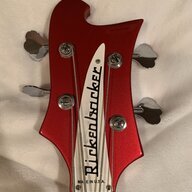
I only own 4 string basses, but I often play 5 and 6 string basses in music stores (only to remember how much I love 4 strings). So I'll tell you my observations.Hey all,
For those who switch between 4- and 5-string basses, do you notice changes in how you approach lines or note choices?
Or does it feel natural after a while regardless of string count?
Interested to hear your experiences.
Thanks
Botle
I don't notice many changes in how I play bass lines on a 5 or 6 vs. a 4. I try to use the B string as tastefully as possible when playing a 5 or 6, but I sometimes forget and shift around like I'm used to on a 4. I don't like the timbre of most notes when they're played on the B string, especially on the higher frets. So I play what sounds best to my ears and what works for the song, of course. On a 6, I try to use the high C string for chords and playing higher bass lines. But the timbre sounds a little off as well. It's closer to a piccolo bass than an actual bass.
I also noticed that the more strings there are on a bass, the slower I play. Playing a 6 is like driving a semi truck. It's doable, but I'm a lot slower than normal. I'm sure I can become faster if I owned a 6 and practiced on it often. Playing a 5 is like driving a car that I'm not used to. But playing a 4 is like driving a sports car or my car. I can go fast, play fluidly and easily, and feel more comfortable.
I would love to play a Kubicki in D Standard (my normal tuning), so I can go down to low C with the flip of a switch!My Kubickis are a lazy man's way of reaching the most needed low notes on a 4. Don't even have to think about transposing. Just gotta remember to set the clasp back on for standard mode.

JazznFunk
Supporting Member
"Overuse the B string"? Assuming low B is properly set up and intonated, then overuse would apply only to the notes below low E. Even then, the guiding principle is "choose correct notes", and at that point fretboard becomes irrelevant: that is to say, 8th fret B string is functionally equivalent to 3rd fret E string.
For at least a decade now sub-E bass lines have become common in songs of all genres, but I agree: I use plenty of caution when playing oldies/trad stuff. Never say never, though: if I'm playing "Pride and Joy" for the 186th time, I may well entertain myself by walking up to low E.
You keep digging in on this point about 'assuming the low B is properly set up and intonated' thing, which has zero bearing on how and when one chooses to use the low B.... it just ensures that when one does, the thing is in tune with the rest of the instrument. Where that COULD be an issue is that on some basses, the B string can sound or feel weak or tonally different compared with the other 4, depending on the construction of the bass. I've owned and played 5'ers in the past that had this issue, and it definitely DID affect how and where I chose to (or not to) use the B. My Laklands don't have that issue. They're consistent in open and closed positions, all the way up and down. I guess if I really wanted to spend time limiting myself to a couple of positions on the 5 I could do it, but after almost 30 years, I don't see a need to.
And yes, 'overusing the B string' IS a thing. As in, one has to consider whether or not it feels and sounds right to use the 'correct note' in the octave/register available on the B string, or if it would sound/feel better voiced elsewhere. So maybe just because the 5'er allows you to play almost everything in one or 2 positions without shifting, the question is.... should you, just because it's there? Does it sound good? Or is it being played that way for convenience. Bottom line: does it sound right tonally? I think we're on the same page but maybe in different paragraphs.
Last edited:
You keep harping on this 'assuming the low B is properly set up and intonated' thing, which has zero bearing on how and when one chooses to use the low B.... it just ensures that when one does, the thing is in tune with the rest of the instrument. Where that COULD be an issue is that on some basses, the B string can sound or feel weak compared with the other 4, depending on the construction of the bass. I've owned and played 5'ers in the past that had this issue, and it definitely DID affect how and where I chose to use the B. My Laklands don't have that issue. They're consistent in open and closed positions, all the way up and down.
And yes, 'overusing the B string' IS a thing. As in, one has to consider whether or not it feels and sounds right to use the 'correct note' in the octave/register available on the B string, or if it would sound/feel better voiced elsewhere. So maybe just because the 5'er allows you to play almost everything in one or 2 positions without shifting, the question is.... should you, just because it's there? Does it sound good? Or is it being played that way for convenience. Bottom line: does it sound right tonally? I think we're on the same page but maybe in different paragraphs.
You're right that we mostly agree in principle though less so in semantics. Re semantics: "Properly set up and intonated" is just my way of saying that the bass has a quality B string, such as on your Laklands, my Sadowsky/Zon/Keith, etc. End result: no significant difference between 3rd fret E and 8th fret B, and therefore no reason to avoid 8th fret B unless it's less convenient than 3rd fret E -- for instance, when you want to easily reach that phat low D.

Nowhere did I say or imply that B string should take preference over E string. I simply don't understand why you essentially say the opposite. To put it another way: if the B can be overused -- that is, misused -- then so can any other string. Sure, there will be slight tonal differences between the same note played on different strings -- but this true across all strings, not just B versus E. As I originally noted I do occasionally shift position for tone, but for me it's mostly to avoid the G. I usually get my B strings right*, so there isn't enough tonal difference between it and the E for me to avoid the B -- except perhaps in the top register, but other strings can misbehave up there.
*If the B isn't right, then either I screwed up the installation or (more likely) got a dud string. Duds happen.
TL;DR: I don't understand why 5 string should be considered "4 string plus 1". Sure, sub-E notes should be used with caution, but someone who abuses low notes is probably abusing the entire fretboard.
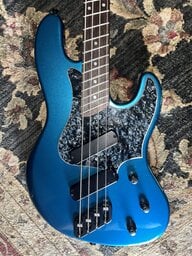

I tend to play the five string more like an electric vs an upright than the four string. My tendency is to play across the strings in lower positions and move up the neck on the G string, like we usually play on upright. I’m trying to break that tendency and play electric more like an electric, that is using all strings across the fingerboard in middle and upper positions, and for some reason on the five string it feels more natural to do that. I have no idea why.
The five is still very much a work in progress for me. I don’t play it outside of the practice room yet.
The five is still very much a work in progress for me. I don’t play it outside of the practice room yet.

I have my wife’s 4 string available at any time, but we never play it anymore. No reason to since there’s perfect 4 strings within our various 5 strings lol.
If I were to go switch back and forth, I couldn’t see it being an issue, but like other have said, the 5 affords me to play higher up on the neck and have more range without shifting. That being said, depending on the song, I may treat any of our 5 strings like a 4 with an extra string and not even touch it. “Riff” based music tends to make me approach it this way.
If I were to go switch back and forth, I couldn’t see it being an issue, but like other have said, the 5 affords me to play higher up on the neck and have more range without shifting. That being said, depending on the song, I may treat any of our 5 strings like a 4 with an extra string and not even touch it. “Riff” based music tends to make me approach it this way.