• TalkBass has been independent since 1998. Add your voice.
    Create a free account to reply to discussions, view embedded media, and browse with fewer display ads.
    Join freeLog in
    Want zero display ads or expanded classifieds tools? Compare plans.

Do you prefer active or passive basses?

Do you prefer active or passive basses?

  • active

    Votes: 88 38.3%
  • passive

    Votes: 142 61.7%

  • Total voters
    230
What's the difference? I know the difference, electrically/electronically, but what's the diff in sound? Many bassists say they prefer one over the other, but what's driving the preference? Does one or the other have more dynamic range, for instance? Or IS there any across-the-board, consistent difference other than the different kinds of EQ available?

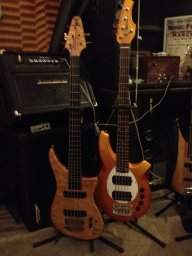
Both my basses (Alembic Epic 5 and Bongo 5 HHP) are active.

 
What's the difference? I know the difference, electrically/electronically, but what's the diff in sound? Many bassists say they prefer one over the other, but what's driving the preference? Does one or the other have more dynamic range, for instance? Or IS there any across-the-board, consistent difference other than the different kinds of EQ available?

Both my basses (Alembic Epic 5 and Bongo 5 HHP) are active.

Passive is more organic, natural, warm, smooth, tender...
 
I don't believe in owning a lot of basses, I try to keep it to 1 or 2 that can cover a wide range. when I try out a bass i'll sit down with it and see what sort of tones I can get out of it, if i'm turning the knobs and nothing's happening then i'm just not interested. that's why I picked up my corvette, can go from a low end heavy, chest shaking thunder up to a bright jazzy tone or mid range slap and it can do it all damn well.

why would I settle for a (or many) passive bass(es) when there are such great actives out there? it just seems efficient to me
 
Over the years, I've been a HUGE active fan. BUT as time has moved on, I find my tastes are changing.
I play in a cover band that does mostly classic rock and I find my passives getting more and more time at rehearsal. Just today my guitarist said he liked the sound from my brand-new Schecter Model T better than any other bass I've brought to rehearsal over the past 18 months.
Right now, I own 7- 4 stringers and for the first time EVER since Ive owned more than one bass, my passives outnumber my actives 4-3 and 2 of my actives are presently up for sale/trade in our classifieds.
 
It may sound stupid but I have a hard time considering seriously an instrument that need a battery to work.

sorry, epic fail :D

d5-25.jpg
 
I like active. I started out with a passive P-bass with a Jazz neck, but when I first played an active bass I was impressed with the improvement in headroom and clarity. IMO, active is a definite improvement - especially compared to the older passive PUs. And I do not care for passive tone controls which are LP/treble cut.

All my basses are currently active. I would not mind a passive Jazz - assuming the PUs had some gain and did not make noise.

On my guitars, however, I prefer passive PUs - but noiseless alternatives like parallel humbucking switches, and split coils (like Fralin P92s or Duncan Vintage Rails) are most welcome improvements. And I usually remove the tone knob and go volume only if I mod the PUs.
 
Passive is more organic, natural, warm, smooth, tender...

And you forgot total lack of added hiss.

But this question really can't be answered without being a dork. How can there be "one" answer here. I've tried to think of which way I usually run my basses with the active-passive switch. Well that depends. Usually the ones like my Ken Smith where the switch is just an "emergency feature" and the EQ quits if you go passive, are run active...except in an emergency.

On the other hand my G&Ls tend to be usually (but certainly not always) run in passive mode to reduce noise and on them the EQ does still work in passive.