I have only had to read maybe six times in my life . Last year I had a gig and I didn't know one of the tunes and was able to play the song because I could see the chart from the keyboardist Pad . The last recording session I had , I thought I knew my part and I really didn't ,they ended up having to write a chart for me .......got lucky .

Enjoy the benefits of a premium membership!
Upgrade Account
-
TalkBass has been independent since 1998. Add your voice.
Create a free account to reply to discussions, view embedded media, and browse with fewer display ads.
Join free Log in
Want zero display ads or expanded classifieds tools? Compare plans.
You are using an out of date browser. It may not display this or other websites correctly.
You should upgrade or use an alternative browser.
You should upgrade or use an alternative browser.
Do you read sheet music?
- Thread starter Peter - Oregon
- Start date
-
- Tags
- sheet music sight reading
More options
Who Replied?
I read standard music notation and chord notation. When I was active I was pretty proficient reading bass clef. I have enough ability with treble clef to work up melodies. My ability to read treble clef is stronger than my ability to read TAB.
These days I mostly read down jazz standard from the Real Book. Here's an example.
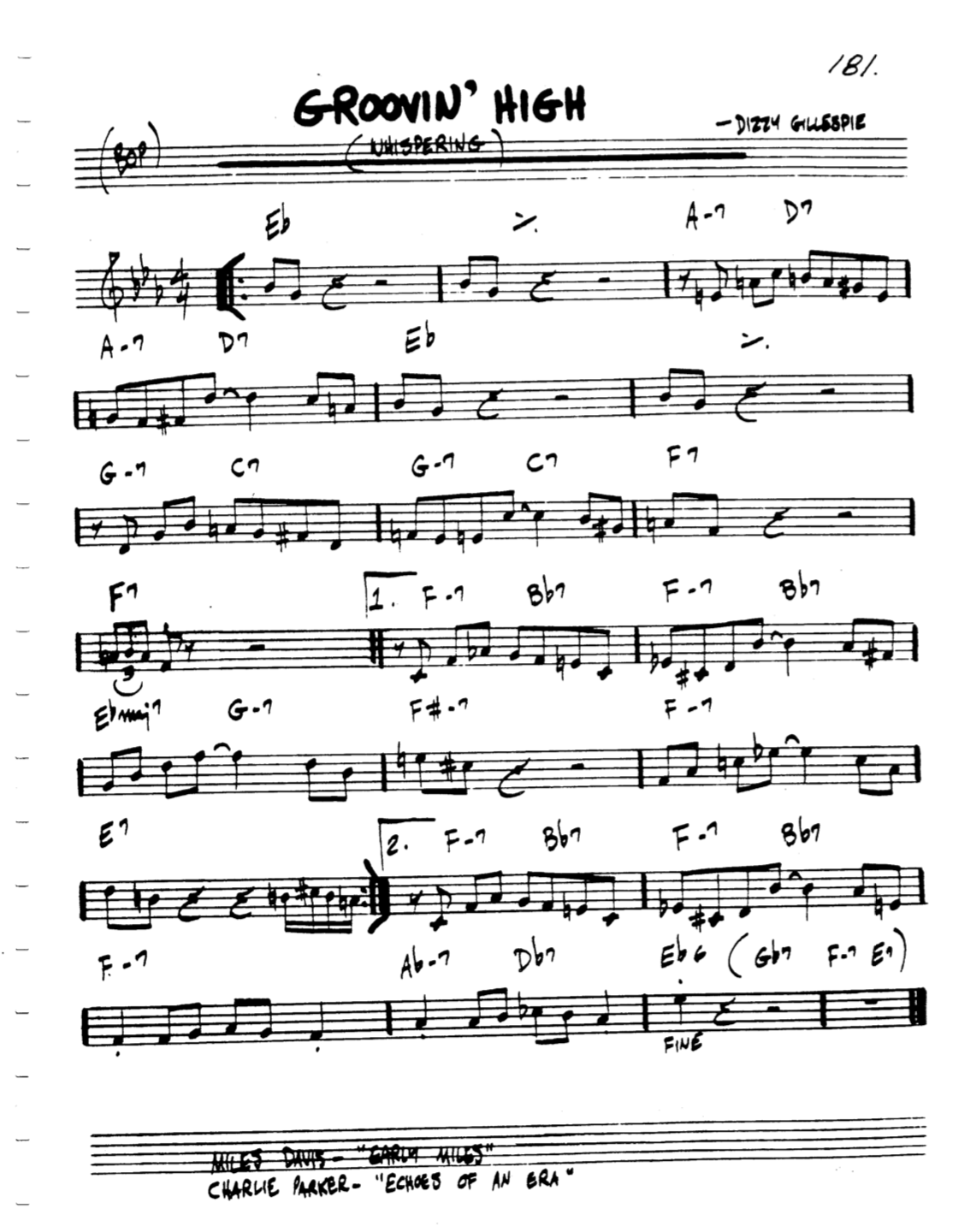
I play a 6-string bass and have the melody played in pretty well above the 12th fret.
Doesn't the Real Book have a Bass Clef version?

Yes.Doesn't the Real Book have a Bass Clef version?
I’ve got a few real books in bass clef and a few in treble clef. Also a couple in Eb and Bb


Doesn't the Real Book have a Bass Clef version?
Yeah they made a C bass clef version

I personally feel it's better to have the C treble clef book. Some of the reasons:
1. It's good to be able to read treble, so it gives you an opportunity to learn and practice. 2. Bassist are rarely expected to play melodies....although it can be cool. 3. Most proficient players who use a Real Book can read off the C treble book (so you can share). This includes piano and keys, but also a lot of horn players. I have probably seen sax players use the C book more than Bb or Eb. Eb is pretty rare.
Of course real jazzers don't use the Real Book
 .
.
Of course real jazzers don't use the Real Book
yeah. That’s what iReal Pro is for. LoL.
Yes and no
i played trumpet, majored in it in fact. So I’m an excellent treble clef reader. I took my share of piano lessons, so I can decode bass clef- but it’s slow.
one of my pandemic projects was learning walking bass from transcription and other bass lines in standard notation. I got a little better, and it probably helped me musically. But I found it wasn’t really supporting my long term goals (ie nothing I want to do requires reading) so I haven’t worked on it in a while.
i played trumpet, majored in it in fact. So I’m an excellent treble clef reader. I took my share of piano lessons, so I can decode bass clef- but it’s slow.
one of my pandemic projects was learning walking bass from transcription and other bass lines in standard notation. I got a little better, and it probably helped me musically. But I found it wasn’t really supporting my long term goals (ie nothing I want to do requires reading) so I haven’t worked on it in a while.
I have that book, but I can't remember reading it (no joke meant). I should go back and revisit it.Hey there!
My brother in law had similar issues after having a lemon size brain tumor removed. Something that helped him with memorization is this book:
Moonwalking with Einstein: The Art and Science of Remem…
Our brain is an incredible machine and even on our best days, we don’t come remotely close to tapping its full potential.
Best of luck and keep keeping on!
I read for 12 years on reed instruments, then stopped when I picked up bass. When I went to jazz school I had to re- learn to read. When I got into horn arranging, I had to learn to transpose. Most of the time, especially with rock bands and some R&B bands, reading isn't needed. But if there are funk tunes with horns, yes, reading.
Reading will help develop your ear.This is the issue I am trying to avoid. I definitely like being able to read music, but really need to work on training my ear.
If anyone has suggestions on how to to do so, I’m all ears!

Yup.
Took saxophone lessons from 4th grade through high school, learned to read treble clef.
Started bass about halfway through high school, dove right into classical and jazz lessons on upright and electric, learned to read bass clef.
Took up piano several years ago, learned to read both at the same time ...
Took saxophone lessons from 4th grade through high school, learned to read treble clef.
Started bass about halfway through high school, dove right into classical and jazz lessons on upright and electric, learned to read bass clef.
Took up piano several years ago, learned to read both at the same time ...
About six months ago I went in for memory testing, as I was afraid I might be getting early onset Alzheimer's or something, as my memory seemed to be getting noticeably worse. I tested in the bottom one percent for short-term memory, so there's that. I am interested to see what my new bass teacher suggests once he gets to know me.Hey there!
My brother in law had similar issues after having a lemon size brain tumor removed. Something that helped him with memorization is this book:
Moonwalking with Einstein: The Art and Science of Remem…
Our brain is an incredible machine and even on our best days, we don’t come remotely close to tapping its full potential.
Best of luck and keep keeping on!
I am trying to learn enough music theory to read a written score. Can anyone here help me with this one?
View attachment 5302736
I once saw a Zappa score that looked like this. Crazy passages with goofy directions how to play it
with some nonsensical lyrics.

I played trombone in elementary school through high school, bass in jr high and took piano lessons and some basic music theory in college so yes.
I was never great at reading both staffs at once and used my good ear to cheat myself from properly buckling down and deeply learning to read quickly and accurately, especially with tricky rhythmic notation.
Never too late I guess.
I was never great at reading both staffs at once and used my good ear to cheat myself from properly buckling down and deeply learning to read quickly and accurately, especially with tricky rhythmic notation.
Never too late I guess.
Wondering if any of you have favorite books and/or software for learning bass clef, fretboard, theory, etc.I have been playing bass for three years or so. I played alto sax in HS, and read sheet music well then. I am 61 now, and that ability disappeared long ago. A TBer brought up the topic, and I have been curious. For you, has learning to (again)been worth the effort?
I always thought good old Mel Bay was great for learning to read music.
I have been playing bass for three years or so. I played alto sax in HS, and read sheet music well then. I am 61 now, and that ability disappeared long ago. A TBer brought up the topic, and I have been curious. For you, has learning to (again)been worth the effort?
I am like you in that it has been years since I read sheet music in order to play an instrument, although I would often read it when singing in choir. This of course doen't really require knowing what the notes are as much as it is recognizing intervals. I ave started relearning the bass clef to play along with hymns at church in my praise band gig. I think it is worth the effort as it is forcing me to learn the fretboard better and is therefore making me a better bassist.

I really like the stuff at TalkingBass by Mark J Smith. His stuff is linear and to the point with LOTS of printable lesson info. His Sight Reading program is the foundation of his site.Wondering if any of you have favorite books and/or software for learning bass clef, fretboard, theory, etc.
Also using the tried and true Hal Leonard Bass Method by @basswhisperer , Ed Friedland.

Man, if I couldn’t read, there’re a lot of songs I wouldn’t have figured out how to play. To me, reading is a crutch because my “play by ear” skills SUK. It’s a slow process for me, but it helps with learning for when my go-to (YouTube) method lacks resources.


