

Enjoy the benefits of a premium membership!
Upgrade Account
-
TalkBass has been independent since 1998. Add your voice.
Create a free account to reply to discussions, view embedded media, and browse with fewer display ads.
Join free Log in
Want zero display ads or expanded classifieds tools? Compare plans.
You are using an out of date browser. It may not display this or other websites correctly.
You should upgrade or use an alternative browser.
You should upgrade or use an alternative browser.
Do you think thumb rests will ever come back in style?
- Thread starter MAJOR METAL
- Start date
More options
Who Replied?

How does “being in style” influences what you would like to see in an instrument? If is not in style, will you deprive yourself of using a thumb rest?
Don’t get me wrong, I would never recommend using a device that’d limit the use of all fingers in your instrument, and having the thumb “resting” will narrow many possibilities; yet, if that’s what you want… who cares what anyone (including myself) thinks?
Don’t get me wrong, I would never recommend using a device that’d limit the use of all fingers in your instrument, and having the thumb “resting” will narrow many possibilities; yet, if that’s what you want… who cares what anyone (including myself) thinks?

Some of the Fenders still come with one.
The “international color” basses do.
You can always add one.
Leo failed anatomy which is why he accidentally put the first thumb bars on the wrong side of the bass. Lots of otherwise smart TBers will say there’s another reason but they’re incorrect.
The “international color” basses do.
You can always add one.
Leo failed anatomy which is why he accidentally put the first thumb bars on the wrong side of the bass. Lots of otherwise smart TBers will say there’s another reason but they’re incorrect.
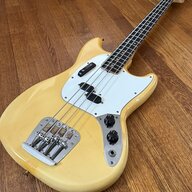
It’s a little known fact that Leo put the so called “tug bar” below the G to prevent slap bass playing. He hated slap bass. It drove him nuts. When he sold Fender to CBS in 1965, Leo stipulated in the contract that the tug bar must remain below the G string as a slap guard for 9 years. Then, in 1974, having fulfilled their contractual obligation, CBS executives gave the long anticipated order to move the tug bar slap guard to above the E string to be used as a thumb rest. Finally, free of the restrictive anti-slap engineering control designed by Leo Fender, bassists started beating their instruments mercilessly with their thumbs. Much bass slapping ensued in the years since 1974. In the mid 1980s, the execs at Fender were surprised by research data showing the thumb rest was rarely ever used due to the preponderance of bassists slapping instead of plucking their basses, so the thumb rest was removed as a cost saving measure thereby saving the company from a most certain looming bankruptcy. Leo recognized he lost the “war against slap” years prior to Fender removing the thumb rest and had already designed the Stingray to cash in on the slap trend that he predicted would last until he invented punk rock the following year.
You’re welcome.
You’re welcome.

They never "went out".
That's my story and I'm sticking to it.
That's my story and I'm sticking to it.

If you want one, install one where it works for you and use it. Otherwise, who cares?
This tracks.It’s a little known fact that Leo put the so called “tug bar” below the G to prevent slap bass playing. He hated slap bass. It drove him nuts. When he sold Fender to CBS in 1965, Leo stipulated in the contract that the tug bar must remain below the G string as a slap guard for 9 years. Then, in 1974, having fulfilled their contractual obligation, CBS executives gave the long anticipated order to move the tug bar slap guard to above the E string to be used as a thumb rest. Finally, free of the restrictive anti-slap engineering control designed by Leo Fender, bassists started beating their instruments mercilessly with their thumbs. Much bass slapping ensued in the years since 1974. In the mid 1980s, the execs at Fender were surprised by research data showing the thumb rest was rarely ever used due to the preponderance of bassists slapping instead of plucking their basses, so the thumb rest was removed as a cost saving measure thereby saving the company from a most certain looming bankruptcy. Leo recognized he lost the “war against slap” years prior to Fender removing the thumb rest and had already designed the Stingray to cash in on the slap trend that he predicted would last until he invented punk rock the following year.
You’re welcome.

I made a personal decision to not think about this. Ever.



The ones on the bottom are good for getting knuckle and finger bruises when you decide to slap. the ones up top are okay. To me it's like using pomade or gabardine.

I’m N/I, but it was never a question of in style or not. I just don’t like them.
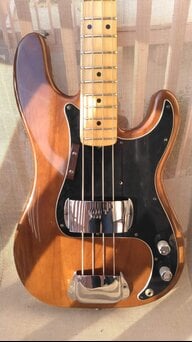
The B string made the thumb rest obsolete.

I sold custom exotic wood thumbrests on Reverb for a while. I'm a big fan of the "tug bar" setup (on the "wrong" side for thumb playing).
I did this when I bought a P-bass and hated the hollow plastic thumbrest. It now has African ebony thumbrest polished with wood wax.
I did this when I bought a P-bass and hated the hollow plastic thumbrest. It now has African ebony thumbrest polished with wood wax.

They never went out because they never were in, like tighty whities or oatmeal, they just have existed a long time

Are we saying "tug bar" to mean the block below the strings and "thumb rest" for above? Definitions seem to be going both ways in this thread.
The below-strings bar was to give some leverage/resistance for the thumb pluck in order to give it some force. Pick players don't need it, nor do finger-style players. Many finger players don't need the top bar, either. There are other places they can rest their thumbs in order to achieve leverage.
The below-strings bar was to give some leverage/resistance for the thumb pluck in order to give it some force. Pick players don't need it, nor do finger-style players. Many finger players don't need the top bar, either. There are other places they can rest their thumbs in order to achieve leverage.
They never went out because they never were in, like tighty whities or oatmeal, they just have existed a long time
Plenty of sixties Japanese basses had them, and plenty of American basses as well. Looks pretty "in" to me.
Plenty of sixties Japanese basses had them, and plenty of American basses as well. Looks pretty "in" to me.
suspenders have been around along time too and plenty of old guys wear them, doesnt mean that they are “in”.
Im not knocking them btw, I think they look cool on some basses and not on others


