Hopefully yes but less freedom of expression within China we might never know the true state of affairs there.In all fairness, this is more than 10 years ago. I imagine (and hope) conditions have changed since then.

Enjoy the benefits of a premium membership!
Upgrade Account
-
TalkBass has been independent since 1998. Add your voice.
Create a free account to reply to discussions, view embedded media, and browse with fewer display ads.
Join free Log in
Want zero display ads or expanded classifieds tools? Compare plans.
You are using an out of date browser. It may not display this or other websites correctly.
You should upgrade or use an alternative browser.
You should upgrade or use an alternative browser.
Does it matter where it's made?
- Thread starter Cycleops
- Start date
More options
Who Replied?
In my opinion it's all about mass production and the marge set at quality control.
If you play them all, you'll find gems even better than "the real thing".
Take your time to do your own QC and you'll end up with the best you can find, at the right price.
If you play them all, you'll find gems even better than "the real thing".
Take your time to do your own QC and you'll end up with the best you can find, at the right price.
As a newcomer to basses and the hype that makers use to promote their brand I can't help thinking that those selling premium priced offerings particularly from the US are having a tougher time persuading us to buy their products. Does a US made instrument sound and feel five to ten times better than one made in the far east? And is the finish any better or worse?
Chinese and far eastern makers are now producing products that are light years away from the ones they offered 25/30 years ago and quality seems comparable with top end Fenders and other US or Western brands. Do people like having the kudos of a non far eastern instrument despite being little real difference?
What do you all think?
I have good experience with asian made instruments. I we talk "budget" or "entry level" most of them do call for your inner handyman to be really nice - mainly a little fretwork, neck adjustment, stringing setup, being prepared to replace a jack socket, repair bad solder etc. Most of these virtues you should master anyway to some extent. And I guarantee you that also professional musicians know that this is part of instrument service, so many have a technician/instrument maker to take care of these things.
Some structural weaknesses may not be apparent from new, such as neck twisting tendency, which might arise from badly cut or badly dried wood for the neck. BUT all of this has nothing to do with country of origin. It has to do with expense cutting.
As others have said: the general quality of asian made instruments is fine. My only gripe with this - and this probably only matters to people of my generation - is that this is also why the traditional instrument makers - not only US but anywhere, UK, Germany, Spain etc. are under pressure these days, and they seem to handle the situation differently. IMO Gibson has completely lost its former pride, Fender is better going since they are already have some production in cheap (low income and/or local wood supply) areas.
As to my personal sentiments I feel a special irrational enjoyment and pride about my Europe and US made instruments.
Preferably no matter price or origin of instrument you have to do your own quality control on reception. If you can't do it yourself, ask someone to help, and if not OK, return it immediately. Most instrument webshops have good return policies no matter the country of origin or price range of the instrument.
This is how it works nowadays, the final quality control has been outsourced to the end customer.
Last edited:
Read this and rethink your analogy:Does a Ferrari drive and feel five to ten times better than a car made in Asia?
https://www.google.com/url?sa=t&rct...ility-250690&usg=AOvVaw1Z42hK3Ivw0YYxD7rGBuRm
Considering the top 10 of reliable cars is owned by the Asian market.

@BeefPie84 , I think Fender and EBMM both pay decent, and I’m sure it varies based on what part of the production you’re involved in. The last three basses I bought were a US Fender, a Custom Shop Fender, and an EBMM Caprice. I didn’t buy them because of where they were made or the business model of those two companies, but those things contributed to me feeling satisfied with the purchases. They were also three great basses!
Again, I would never criticize someone for buying a cheaper or (moreso?) mass produced instrument. I’ve owned them as well, enjoyed them, and will likely own several more before I’m done buying basses. Companies save a lot of money by building factories overseas, paying workers less, using slightly lower quality components, not exposing themselves to the environmental and labor laws of the US, etc etc etc. I find that business model to be a little douchey, but saying that doesn't diminish the quality product. If it’s good, it’s good, regardless of where it was made or what it costs.
Again, I would never criticize someone for buying a cheaper or (moreso?) mass produced instrument. I’ve owned them as well, enjoyed them, and will likely own several more before I’m done buying basses. Companies save a lot of money by building factories overseas, paying workers less, using slightly lower quality components, not exposing themselves to the environmental and labor laws of the US, etc etc etc. I find that business model to be a little douchey, but saying that doesn't diminish the quality product. If it’s good, it’s good, regardless of where it was made or what it costs.

The majority of what you are paying for when you buy made usa vs china is labour.
Things I used to think but was proven wrong by owning lower end instruments:
- Lower end instruments use low quality wood so they are need more adjustment.
- The difference is not apparent until you play in loud volumes (who ever came up with that one has serious bias)
- you need to make all kinds of upgrades to make low end instruments sound good.
I no longer discriminate by country of origin.
Things I used to think but was proven wrong by owning lower end instruments:
- Lower end instruments use low quality wood so they are need more adjustment.
- The difference is not apparent until you play in loud volumes (who ever came up with that one has serious bias)
- you need to make all kinds of upgrades to make low end instruments sound good.
I no longer discriminate by country of origin.

And how would one measure and quantify “character”?.............but the US made instruments have more character.........
And objectively at that?

I was quoting someone else who said Far East. You are right that, although there are still loopholes and they’re definitely not yet as good, Japan are getting a little better, they even made new laws concerning all the illegal, or illicit importation of wood in 2016. They’re now supposedly focusing on diminishing the use of “high-risk” wood sourcing. Of course the law doesn’t actually enforce anything, it appears it just tries to encourage companies not to use improperly sourced lumber but use domestically sourced. So, not really any better there, no.I understand your sentiment but do you include country like Japan in the ‘Far East’ mix? I tend to think the makers from Japan would have a pretty good environmentally sustainable incentives in place now (at least as good as any Western countries). The whole notion of viewing Far East as one entity seems a little too misinformed IMO.
Their safety probably isn’t worse than Fender in the 50s where you saw photos with people routing wood with no goggles and no shirt, so safety is relative - factory conditions may likely be better than China but I couldn’t say for sure.
I also wasn’t considering eastern Russian instruments, if applicable, but I would 100% expect they use whatever wood they use and i would have to wonder about factory conditions too. Russia imports wood to Japan through China, and is one of the “high risk” sources of wood cited by Japan.
Last edited:
I’d just like to say that this is an interesting thread.

I have a grandson who traveled to China before he got married. It was a dream of his and he even learned the language. When he got there he realized one thing-- China is becoming very Westernized. They want all the things we take for granted. There are so many Buicks over there-- and they have their own Asian influenced MacDonalds. Point is-- grandson said they didn't seem to be suffering but rather living well. And he didn't take any special tours-- he went by himself.
Whether you buy Asian or not, the bass will still be made. And due to CNC technology the builds and cuts are within very close tolerances. The vendor determines the wood and age of the wood. I'm not a luthier but in my hands the 'cheaper' Asian basses are quite nice for the price. I did play a USA Music Man not too long ago and yes-- it was heavenly and buttery both in feel and sound. I'm on the retirement road and when I do take that step I hope Ernie Ball is making more lefty basses (in other colors besides black LOL) and I'll be proud to own a US made Music Man.
Whether you buy Asian or not, the bass will still be made. And due to CNC technology the builds and cuts are within very close tolerances. The vendor determines the wood and age of the wood. I'm not a luthier but in my hands the 'cheaper' Asian basses are quite nice for the price. I did play a USA Music Man not too long ago and yes-- it was heavenly and buttery both in feel and sound. I'm on the retirement road and when I do take that step I hope Ernie Ball is making more lefty basses (in other colors besides black LOL) and I'll be proud to own a US made Music Man.
I think it depends very much on region. Some cities manufacture very expensive items and their wages, standard of living, and cost of living are pretty high. When General Electric brought some high end appliance manufacturing back to the USA, one of the big factors was labor costs which had risen to essentially parity with lower cost states. Manufacturing is wealth production and either workers keep a big chunk of that wealth, or quality stays crappy and the free world manufacturing will move to greener pastures. I do disagree that basses will be built regardless of whether consumers buy them; that "my decisions/behavior doesn't really matter 'cause it's gonna happen either way" argument has been used to justify much evil. Make your decisions according to your own morals; if you need to justify it, it's probably not the right decision.I have a grandson who traveled to China before he got married. It was a dream of his and he even learned the language. When he got there he realized one thing-- China is becoming very Westernized. They want all the things we take for granted. There are so many Buicks over there-- and they have their own Asian influenced MacDonalds. Point is-- grandson said they didn't seem to be suffering but rather living well. And he didn't take any special tours-- he went by himself.
Whether you buy Asian or not, the bass will still be made. And due to CNC technology the builds and cuts are within very close tolerances. The vendor determines the wood and age of the wood. I'm not a luthier but in my hands the 'cheaper' Asian basses are quite nice for the price. I did play a USA Music Man not too long ago and yes-- it was heavenly and buttery both in feel and sound. I'm on the retirement road and when I do take that step I hope Ernie Ball is making more lefty basses (in other colors besides black LOL) and I'll be proud to own a US made Music Man.
I think it depends very much on region. Some cities manufacture very expensive items and their wages, standard of living, and cost of living are pretty high. When General Electric brought some high end appliance manufacturing back to the USA, one of the big factors was labor costs which had risen to essentially parity with lower cost states. Manufacturing is wealth production and either workers keep a big chunk of that wealth, or quality stays crappy and the free world manufacturing will move to greener pastures. I do disagree that basses will be built regardless of whether consumers buy them; that "my decisions/behavior doesn't really matter 'cause it's gonna happen either way" argument has been used to justify much evil. Make your decisions according to your own morals; if you need to justify it, it's probably not the right decision.
Actually I wasn't justifying my position-- I was stating my view. And there was no argument here. We were talking about the build quality of basses from Asia. I don't recall the subject changing to moral issues-- actually bordering on political, which I avoid like the plague.
The short answer-- if you don't like my point of view, keep moving on. There's plenty of content here that's more enjoyable.
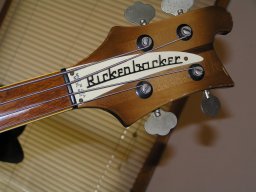
When you get an instrument in your hands and you can't put it down, when it sings to you and you don't play it as much as use it as a conduit for music to flow through, that's character. The USA made instruments I own seem to have that, the imports do, too, but not as much. They're fine instruments, but they aren't quite as special.And how would one measure and quantify “character”?
And objectively at that?
Some call that “Mojo”When you get an instrument in your hands and you can't put it down, when it sings to you and you don't play it as much as use it as a conduit for music to flow through, that's character. The USA made instruments I own seem to have that, the imports do, too, but not as much. They're fine instruments, but they aren't quite as special.
I don’t,however.
Mojo, character, THE ONE, whatever you call it, some instruments have it, others don't. I try to hang on to those instruments whenever they are available. The odd thing is that the bass you love (the one that makes you feel inspired), may leave the next person feeling cold and unimpressed. Their favorite bass may not do anything for you, either. It's a very personal experience.Some call that “Mojo”
I don’t,however.
There is little to no difference.
As you said,the quality of foreign made basses has drastically increased over the last 30 some years.
Primarily due to CNC advances.
I tend to choose six string non traditional styles.
Which tend to be lower in price overall.
But not lower in quality.
Let me add that the cost of labor is significantly lower in Asian countries. The base materials are fairly close in cost, not as high of a percentage when comparing the cost difference of wood as opposed to the cost of labor. Finished components, electronics are much better than ever, but hardware doesn’t seam to quite up to scratch in some cases.
All that said, if you are are happy with your instrument that is the point, not the cost.

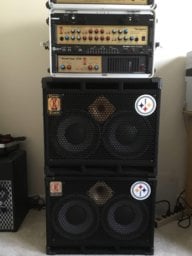
Two bass heads and 3 bass cabs - all USA
Two of four basses - USA
Would love to have the US Lakland DJ5, but at triple the cost of the Skyline, it was the difference between owning one or not. Plus I now have a bass that was played by the legendary Dr. Cheese.
I try to buy American in most cases, and when I can... support American labor.
Two of four basses - USA
Would love to have the US Lakland DJ5, but at triple the cost of the Skyline, it was the difference between owning one or not. Plus I now have a bass that was played by the legendary Dr. Cheese.
I try to buy American in most cases, and when I can... support American labor.

Chinese and far eastern makers are now producing products that are light years away from the ones they offered 25/30 years ago and quality seems comparable with top end Fenders and other US or Western brands. Do people like having the kudos of a non far eastern instrument despite being little real difference?
What do you all think?
For some people, quality is something more than the tangible physical properties like the wood, the finish or even the sound. It's in the brand. It's in the feeling of authenticity you get when you see 'Made in USA' on the instrument but don't get when you see 'Made in China'. It's an illusion, but it does have a real value.

Yes, But having stated a definitive, you must shop around in various stores and get your hands on an actual instrument. It has been my experience that a few less expensive instruments sound and play as well as, and at times surpass highly expensive instruments. It all boils down to your personal taste. Have fun exploring.