• TalkBass has been independent since 1998. Add your voice.
    Create a free account to reply to discussions, view embedded media, and browse with fewer display ads.
    Join freeLog in
    Want zero display ads or expanded classifieds tools? Compare plans.

Does stringing thru-body change string tension?

getBAK

Supporting Member
Sep 21, 2006
2,123
3,938
San Jose, CA
www.levijack.com
Bass: Yamaha BBP-35

After years of running D'Addario Tapewounds I switched over to a set of the new LaBella IAM polished strings. I usually top-load, but the silks weren't lining up well with the low-b tuner/nut, so I decided to take advantage of the BBP's 45deg tru-body angle.

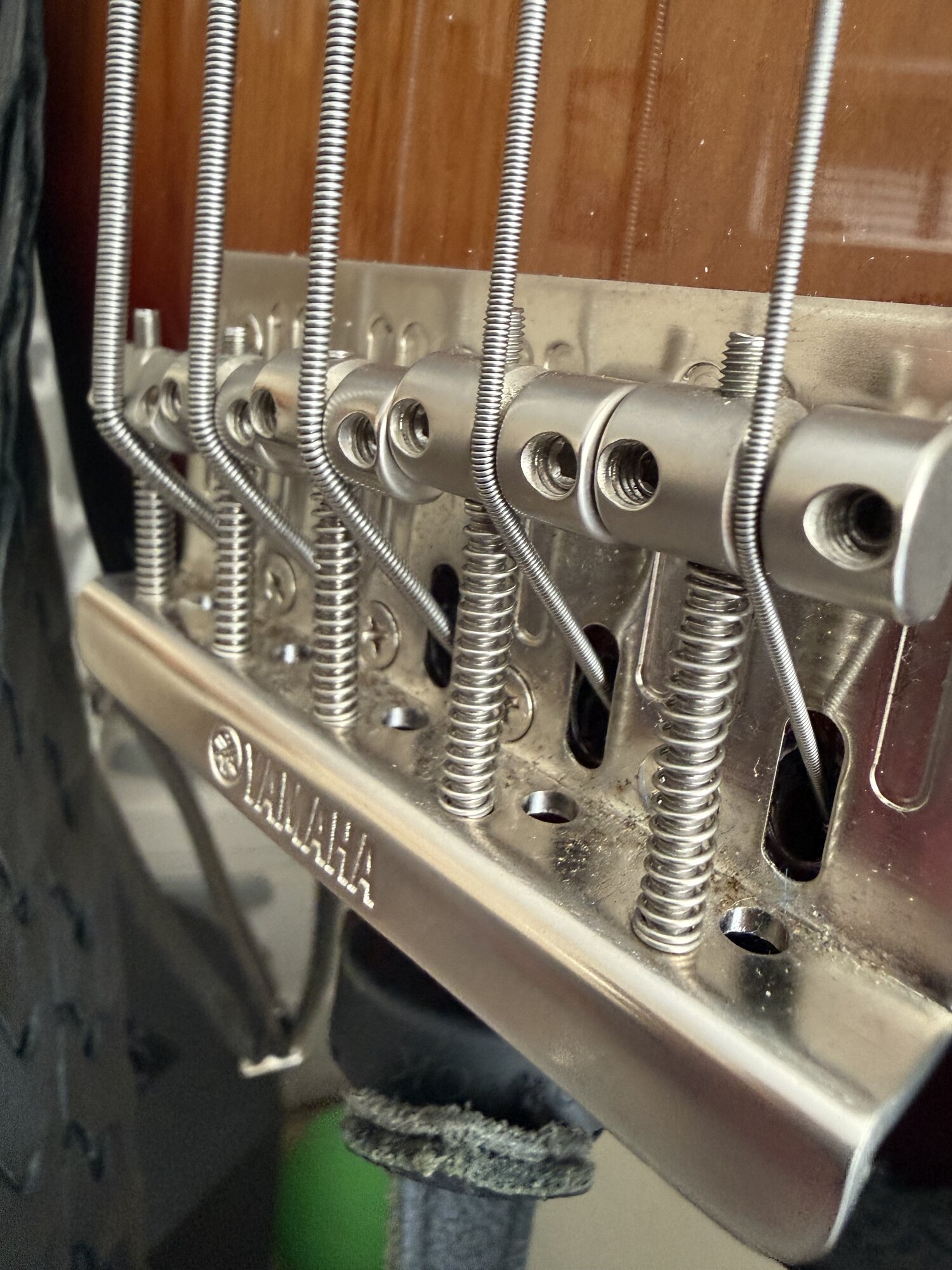
Strings lined up great, and took the thru-body transition great (pics below).
The next day the neck bowed like crazy, and required some pretty significant truss rod adjustment to bring back into spec (~.012@9th fret) My only conclusion is that the LaBella's are higher tension. But both are 'modified' round wounds, so I'm not sure how they could be so different.

The only other variable is the thru body stringing... but I can't really think of how this could change the tension this much.
Thoughts?

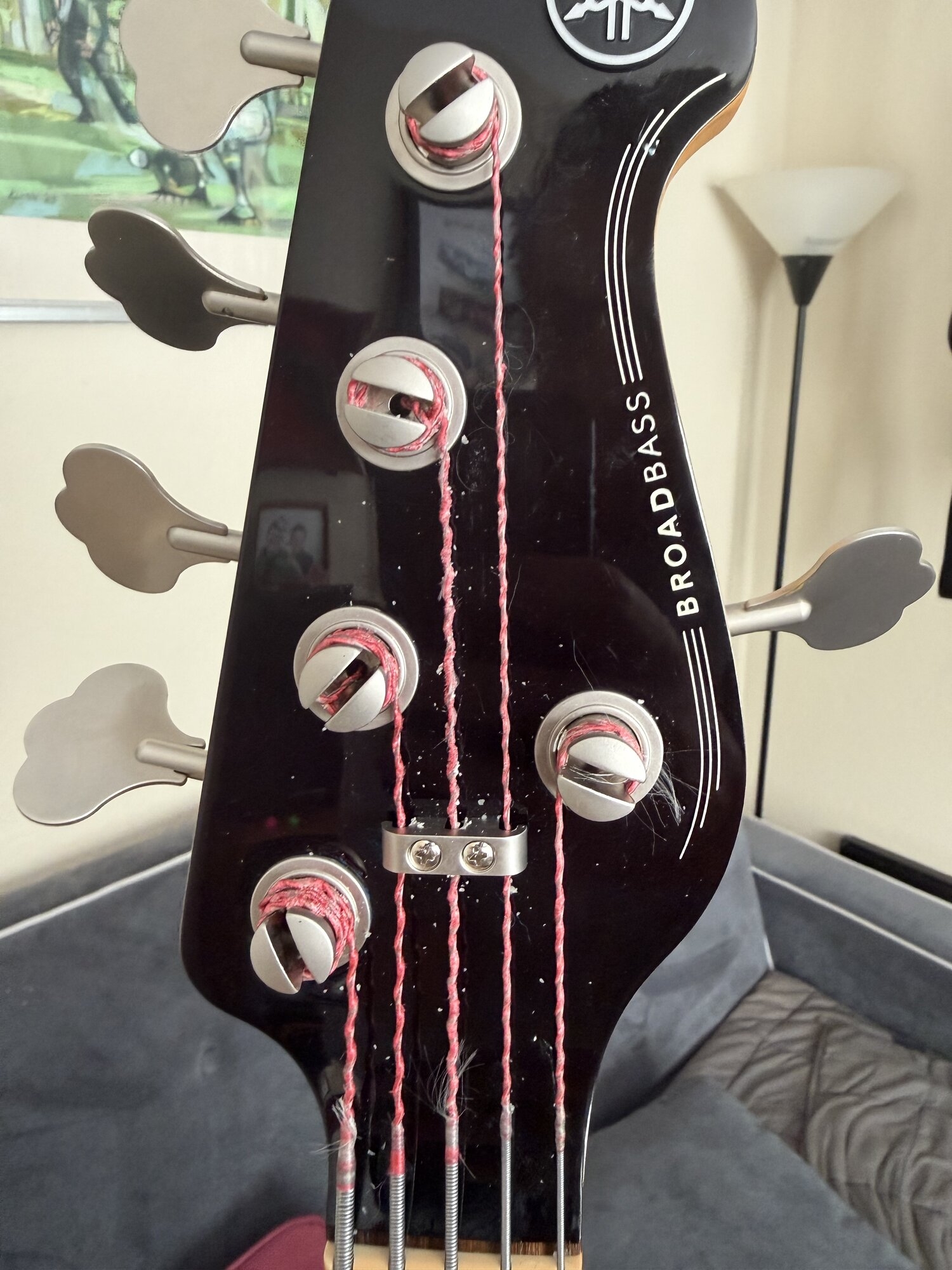
IMG_1494.jpeg


IMG_1493.jpeg


IMG_1492.jpeg
 
No, not really. String tension refers to the tension between the nut and bridge saddles. Theoretically, the small amount of extra string that runs from behind the nut to the capstans, and behind the saddles to the ball ends can impact the 'tension' of the string, but at these super short lengths and heavy string thicknesses, that variation is virtually unmeasurable and statistically insignificant.

If you had three extra feet of string on both ends behind the nut/saddle points, then sure, you'd notice some variation as the strings stretched and reverberated while you played. :smug:

Basically, the primary difference is the strings themselves. :thumbsup:
 
Speaking as someone with D'Addario tapewounds on my electric (a different Yamaha) these past 13 years, I understand them to be smaller round-wounds with the tape over that's bringing them to "roughly normal" bass string diameter. As such, they are lower tension than full-sized round wounds of the same outer diameter barring some really odd material choices. They are distinctly different than "famously fat" tapewounds such as Rotosounds.

So it's not surprising that replacing tapes with rounds of the same overall outer diameter would result in higher tension.

String tension should have approximately nothing to do with afterlength at either end - it's a matter of string mass, bridge to nut distance, tuning, and Scotty saying "I Canna' change the Laws of Physics, Jim!"
 
Last edited:
There's nothing even slightly weird about this. Of course all-metal strings are going to be higher in tension than tapes, unless they are very light tension strings. These are 45–103, which is pretty standard, not what I'd expect to be a low tension set.
 
Yes, echoing the post above. The tapes are lower tension than the rounds you put on. Also you have to consider the core. Hex core will be higher tension than round core.

I have D'Addario Black tapes on my SR1350B and they are fairly low tension, slightly lower than the XL rounds that used to be on the bass.

Like they say in the videos, you should check your neck any time you change to new type of strings.
 
Is your "B" saddle upside down on purpose? Note it's flat (across the top) and the others are round. The flat is to follow the contour of the bridge plate when it's set down low.
 
Last edited:
I'd think it's the difference in the string sets rather than the tailpiece/string-through variance.

One surefire way to check:

IF D'Addario obliges by making a longer length set of their tapewounds that you were using that will work in a string-through install, try them next time and see where you're at. I can't think of a better A/B comparison than that.
 
The b-string saddle in installed that way on purpose - I called when I first got the bass and the Yamaha luthiers say it's supposed to add sustain to my Low B but changing the break angle (or similar, it's been a couple of years). I thought it would be a problem at first, but I've never broken a string on this bass.

Totally makes sense on the tape wounds being smaller diameter on the steel side. Sounds like it's more like the LaBella's are normal tension and I've been running low tension for years.
 
Last edited:
Tension is the amount of pulling force exerted by the string when tuned to pitch.

Tension is not necessarily related to string gauge. For a given metallurgy and construction, there is a correlation, but you’re comparing two entirely different constructions, and possibly metallurgies.

Round cores do not necessarily have less tension than hex cores. Round cores have more flexibility, which is not the same as tension.

Tension is defined by the speaking length of string - just what’s between the bridge saddles and the nut (or zero fret), and pitch. Anything behind the bridge saddles or beyond the nut is irrelevant to tension.
 
  • Like
Reactions: lowplaces