• TalkBass has been independent since 1998. Add your voice.
    Create a free account to reply to discussions, view embedded media, and browse with fewer display ads.
    Join freeLog in
    Want zero display ads or expanded classifieds tools? Compare plans.

Double Bass Does this exist?

I am sceptical about any improvement in sound by using something like this. When I sit, my left knee supports the bass close the edge of the left C-bout. When I stand, it pushes against near the right C-bout. I don't see any energy loss. Even if your playing position has your knee closer to the center of the back, I think the damping effect would be minimal. The back, flat or round, is hard. It doesn't move much. Put your hand on the middle of the back and pluck some strings. Yes, you feel some vibration, but nothing like from the top. If your playing position involves having your knee close to the center of a round back, then maybe this is something to consider. I still think it would have a very minimal effect though.
 
I am sceptical about any improvement in sound by using something like this. When I sit, my left knee supports the bass close the edge of the left C-bout. When I stand, it pushes against near the right C-bout. I don't see any energy loss. Even if your playing position has your knee closer to the center of the back, I think the damping effect would be minimal. The back, flat or round, is hard. It doesn't move much. Put your hand on the middle of the back and pluck some strings. Yes, you feel some vibration, but nothing like from the top. If your playing position involves having your knee close to the center of a round back, then maybe this is something to consider. I still think it would have a very minimal effect though.
My left knee does in fact touch the middle of the back and I can heart a difference in the sound (resonance) when I move my knee off the back. Yeah, difference is minimal, and probably not worth worrying about, but it's nice to know that there are options out there.
 
I can't speak about devices like this on double bass, but on guitar, mandolin and banjo there are similiar devices. The most familiar modern name for guitar and mandolin targeted devices is ToneGard, while devices of similar function on banjos have been around as resonator devices for more than a century..

I have a ToneGard on each of my main playing mandolins. On my all of my main playing banjos I have resonator devices. These devices all separate the body of the players from the instruments, but they also add vibrating mass. In the case of banjos and resonators, they also add a back table which creates echo and tone changes.

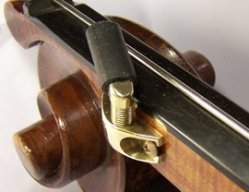
The knee rest described in the link does function similarly to the ToneGard. If I were looking for knee separation on my double bass I'd very likely get one or make something similar.

Just a note though. If you can feel vibration through a device like this while playing, your body is still muting the instrument to some extent. The device along with whatever mass it adds becomes a vibrating extension of the instrument. So it may help, but it won't completely eliminate muting by the body.

Maybe a better point of view about this is that one way or another the body of the player becomes part of the instrument and contributes to the total of sounds and tones that are produced.

That said, one of the primary reasons that I use ToneGards on my mandolins is to protect the finish of the backs of those instruments. Sound enhancements or not, I like it to keep my instruments nice.
 
  • Like
Reactions: John DeWitt
Yes, may be small difference, but all these marginal gains can add up to a significant improvement in sound and volume. So far I have noticed marginal gains by replacing the stiff wire tail gut with braided steel and the moser flexible bridge adjusters. I have heard that certain types of end-pin can make a difference, especially wooden or brass pins. Also correct set-up, good bow and I'm sure there are others factors which can make a small but noticeable improvement.
 
  • Like
Reactions: John DeWitt