In the body, neck, or fingerboard, does having a straight grain mean better stability, sustain, etc.?
Or is it purely aesthetics?
Or is it purely aesthetics?

TalkBass has been independent since 1998. Add your voice.
Create a free account to reply to discussions, view embedded media, and browse with fewer display ads.
Join free Log in
Want zero display ads or expanded classifieds tools? Compare plans.
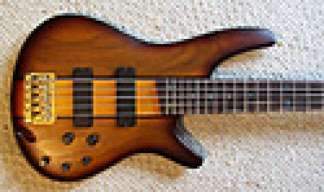

Hmm.No.
I put multiple layers and varying orientations together and some woods are a second to balsa for hardness and grain
......and others are construction and remodeled home cut-offs in Douglas Fir and Hemlock and pine with and without knots.
Wood makes absolutely no difference, grain nor density nor type of wood.
Don't fall into the hype that wood matters at all.
Flame-on woodbois!

Hmm.
What if a bass had no wood or body, and was made with metal rods with welded on metal plates to attach the bridge, pick-ups, knobs, strap pins, cord plug, and a metal pipe as the neck where the fretboard was screwed on top with the nut and then another metal plate where the headstock would be so you could screw on the pegs. So, the metal pipe would strong enough to hold the tension of the strings. It would kind of be like the Yamaha silent guitar, but it would be a bass and there would no wood.
So, would this sound better or the same as a low-end Squier or a high-end custom Sadowsky?

PDGood said:I doubt anyone would think grain affects sustain - there are even arguments if wood affects it. But certainly on the neck stability matters. Quarter sawn is ideal and common sense will tell you that if you want a piece of wood to stay straight, having a straight grain increases your chances over highly figured, burled wood. Of course lots of builders use those things and make nice instruments because there are other ways to keep a neck straight. But me personally, I want straight grain all the way on a neck and fingerboard.

Hmm.
What if a bass had no wood or body, and was made with metal rods with welded on metal plates to attach the bridge, pick-ups, knobs, strap pins, cord plug, and a metal pipe as the neck where the fretboard was screwed on top with the nut and then another metal plate where the headstock would be so you could screw on the pegs. So, the metal pipe would strong enough to hold the tension of the strings. It would kind of be like the Yamaha silent guitar, but it would be a bass and there would no wood.
So, would this sound better or the same as a low-end Squier or a high-end custom Sadowsky?

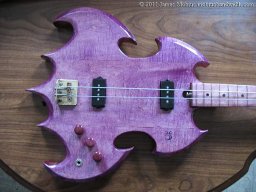
You've described the Gittler guitar. There were a few basses made.
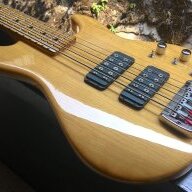
didn't know they made basses. you can see Andy Summers of the Police playing on in the video for Synchronicity. I thought it was a prop when I first saw it, then found out via a guitar mag it was real! intriguing.
I have to say I'm surprised to hear people say type of wood has zero effect on sound. I know people have held that view, but I also know some people think that's bunk. and say things like, my old alembic, which had a mahogany body with a maple top, the tone, was allegedly affected by these woods, warmer sound courtesy of the mahogany, some high end temperament/brightness added via the maple top. sounded reasonable to me. having heard for years no argument to the contrary. pardon me if it takes me a while to let go of that idea without doing any research myself. maybe for my next bass I'll make a body out of pine, and another from mahogany and maple and do some recording to compare. harder woods certainly won't ding as easily as pine for example.


If you quote, we'll all know who you are responding to.Do you need help with the big words?

Thank you. Not involved in the ongoing debate, just wanted clarification