• TalkBass has been independent since 1998. Add your voice.
    Create a free account to reply to discussions, view embedded media, and browse with fewer display ads.
    Join freeLog in
    Want zero display ads or expanded classifieds tools? Compare plans.

Double Bass Dominant 7ths?

Dec 29, 2015
672
500
It seems that when you reach a certain level at Double Bass and want to get exams, you need to know and be able to play these Dominant 7ths.
Strange things, you have to count the 5th note above to get a start.
I'd be very grateful if someone can explain how they are formed, what they are and what their use is?
Are they the notes that AREN'T in the arpeggio or what?
In arco work, has anyone found them useful?
Thanks.
 
  • Like
Reactions: Robert Sabin
I'm really not clear what you're asking.

First of all, yes, there are chords called "dominant 7th chords". For example, in the key of C, G is the dominant and the dominant 7th would be the G7 chord, made up of G B D F.

I don't see what "getting exams" has to do with it. Most of Western music is formed around the relationships of the tonic, subdominant (F in the key of C) and dominant (G in the key of C) chords.

If what you want to know is how to spell the dominant chord of a given key, it's the major triad up a fifth from the key you're in, plus a flat seventh (thus C-->G, GBD F (not F#).

I don't know what "in arco work" has to do with it; this is how music is constructed whether you're playing Mozart or Beethoven arco on the double bass, or playing "Be-Bop-A-Lula" on the Fender Stratocaster guitar or Trinkt Briderlakh! on clarinet.
 
It seems that when you reach a certain level at Double Bass and want to get exams, you need to know and be able to play these Dominant 7ths.
Strange things, you have to count the 5th note above to get a start.
I'd be very grateful if someone can explain how they are formed, what they are and what their use is?
Are they the notes that AREN'T in the arpeggio or what?
In arco work, has anyone found them useful?
Thanks.
How familiar are you with basic music theory?

Seventh chords are chords made up of a root, a 3rd (major or minor), a 5th (perfect, augmented or diminished), and a 7th (major, minor, or diminished). (the intervals are measured from the root).

Aming those, "dominant 7th" chords are made up of a root (R), a majord 3rd (M3), a perfect 5th (P5), and a minor 7th (m7). They are called "dominant 7th" because they first appeared in music (about 350 years ago) as chords built on the 5th degree (V) of the scale, which is called the "dominant". The interplay between the tonic (I) and the dominant (V) has been the backbone of most of western music, from barock to bebop.

There are various other kind of 7th chords; the most frequenty used are:
- the major-major 7th chord (R M3 P5 M7)
- the minor 7th chord (R m3 P5 m7)
- the half-diminished chord (R m3 d5 m7)
- the fully diminished chord (R m3 d5 d7)
("d" stands for diminished).

Hope that helps.

I strongly suggest to find a teacher, or if you are enclined to self-study, to buy a good book about basic music theory.
 
It seems that when you reach a certain level at Double Bass and want to get exams, you need to know and be able to play these Dominant 7ths.
Strange things, you have to count the 5th note above to get a start.
I'd be very grateful if someone can explain how they are formed, what they are and what their use is?
Are they the notes that AREN'T in the arpeggio or what?
In arco work, has anyone found them useful?
Thanks.

I learned the 7th chords from harmonizing the Major and Minor keys. Dom7s normally functions as a V chord, but not always.

The chord tones in the Dom7 chord shape have a defined interval relationship to the root:
root, major 3rd, perfect 5th, minor 7th.​

In major, harmonic minor, and melodic minor, this shape occurs over the V chord.

In natural minor the shape occurs over the III chord.

C major and A minor are relative keys. The V chord in C major is G,B,D,F...(G7).

If you use the natural minor form, the dominant shape G,B,D,F occurs over the VII chord.

In minor keys, the dominant V7 chord is formed by raising the 7th degree of the scale a half step. In A minor, this means the G is raised to G#. The resulting V7 chord is E,G#,B,D (E7). If you do not raise the 7th degree you get a minor v7 chord E,G,B,D (Emin7)

A natural minor: A,B,C,D,E,F,G
A harmonic minor: A,B,C,D,E,F,G#
A (jazz) melodic minor: A,B,C,D,E,F#,G#

So while the chord tones of a dominant 7 always have the same intervals. The scale form you play over the chord can vary.

Let look at parallel keys for this.

A minor A,B,C,D,E,F,G
A Major A,B,C#,D,E,F#,G#

The dominant V7 chord in both keys is E,G#,B,D (E7)

In A major, the diatonic mode is Mixolydian: E,F#,G#,A,B,C#,D
chord tones in bold

In A harmonic minor, the diatonic mode is Phrygian dominant: E,F,G#,A,B,C,D
In A melodic minor, the diatonic mode is Mixolydian b6: E,F#,G#,A,B,C,D

Notice the E7 chord tones are the same for all three, but the diatonic modes are different.
 
  • Like
Reactions: J R Knots and Paps
I'm really not clear what you're asking.

First of all, yes, there are chords called "dominant 7th chords". For example, in the key of C, G is the dominant and the dominant 7th would be the G7 chord, made up of G B D F.

I don't see what "getting exams" has to do with it. Most of Western music is formed around the relationships of the tonic, subdominant (F in the key of C) and dominant (G in the key of C) chords.

If what you want to know is how to spell the dominant chord of a given key, it's the major triad up a fifth from the key you're in, plus a flat seventh (thus C-->G, GBD F (not F#).

I don't know what "in arco work" has to do with it; this is how music is constructed whether you're playing Mozart or Beethoven arco on the double bass, or playing "Be-Bop-A-Lula" on the Fender Stratocaster guitar or Trinkt Briderlakh! on clarinet.
I've got along just fine as an amateur arco bassist without knowing what a dominant 7th cord was all about.
At one stage, I could even play them in any key to get a Double Bass exam, but never realized why I was doing it, what it was all about or what difference it would make to my playing.
So, what is the benefit of being able to play these cords on bass?
I'm still not clear why it's called a dominant 7th as this cord is based around the 5th?
 
I've got along just fine as an amateur arco bassist without knowing what a dominant 7th cord was all about.
At one stage, I could even play them in any key to get a Double Bass exam, but never realized why I was doing it, what it was all about or what difference it would make to my playing.
So, what is the benefit of being able to play these cords on bass?
I'm still not clear why it's called a dominant 7th as this cord is based around the 5th?

It's called dominant 7 because of the way the chord shape typically functions. As I mentioned previously, this shape normally functions as a V chord, which is very active and wants to resolve to a chord with a tonic function.

Here is a video that should help you understand what dominant means.


By arco bassist, I assume you mean you are playing classical, rather than jazz or some other commercial style. IMHO, if this is accurate, the value of being able to recognize and play the dominant 7 shape is somewhat limited.

For a jazz or commercial player, you often read chord symbols and improvise your own bass line. So you need to know the shapes for all of the 7th chords, rather than just the dominant 7 shape. This knowledge is foundational, and you need to know quite a bit more to improvise a good bass line.

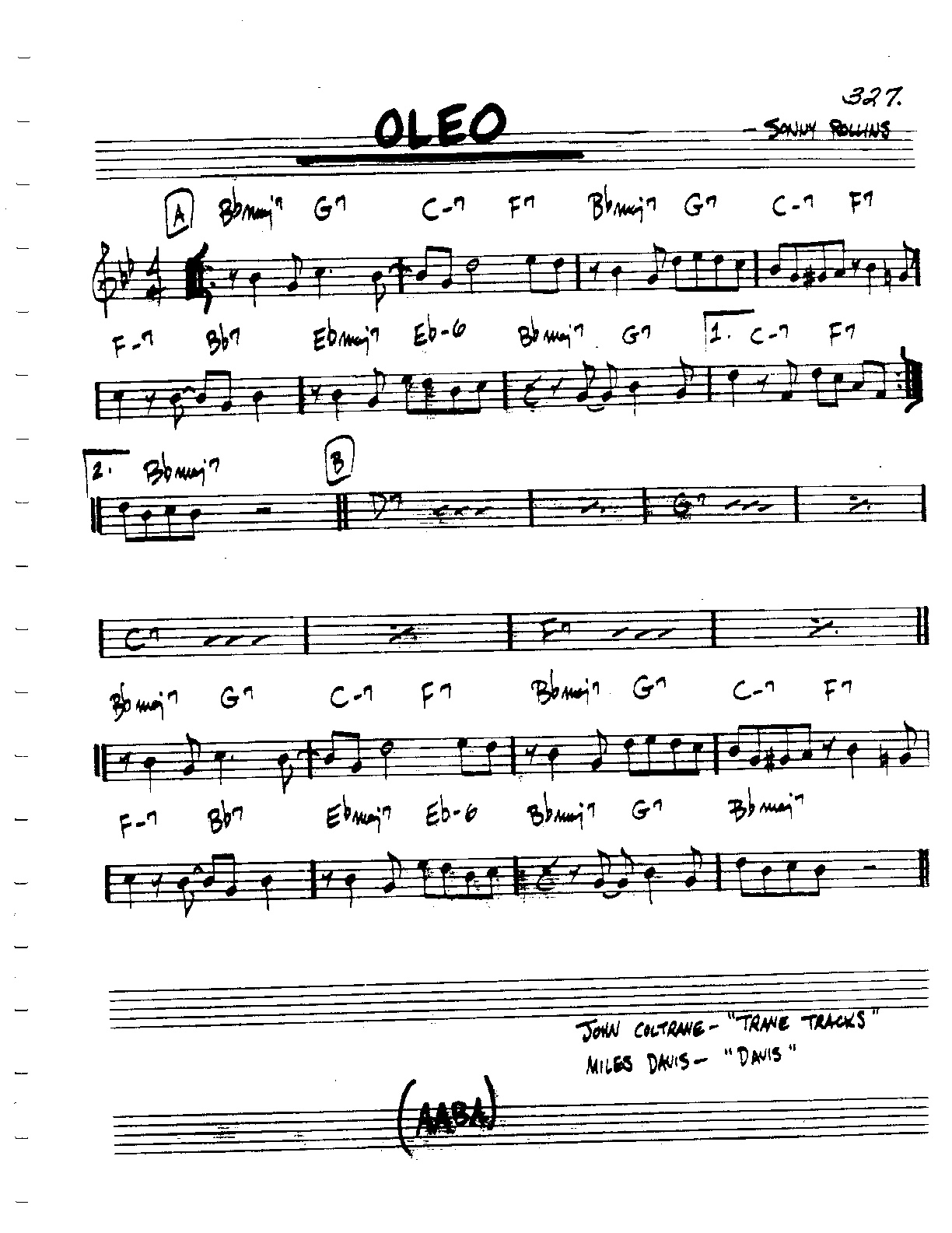
Here is an example of a lead sheet with chords
oleo.jpg

This song is based on rhythm changes 1,6,2,5.
upload_2024-1-8_18-45-40.png

A dominant 7 (G7) is substituted for the 6 chord. In Bb major this would normally be Gminor7. The G7 functions as the dominant to the 2 chord (C-7). In the key of C minor, the V chord is G7. We would label this G7 chord V of ii. The term for this type of substitution is secondary dominant.

When learning to walk, an incremental approach is often used. You could play just the roots to start. For example you might see D7 and play |D,D,D,D|. After that you might play combination of root and 5th|D,D,A,D|. Next you choose from root, 3rd, and 5th |D,D,F#,A|. Finally you choose between root, 3rd, 5th, and 7th |D,D,F#,C#|

I use three terms to categorize the motion in walking bass lines. When you only play chords tones, like in the last paragraph, I use the term arpeggiated. The second category is linear. A linear walking bass line moves stepwise alternating between chord tones and none chord tones. It's sort of like playing scales. When you first start learning to walk, the none chord tones should be diatonic, meaning they belong to the key center. This means you need to have some idea for how the chord is functioning, which tells you the key center.

Example of linear: If you are playing over the following ii V chords |E-7|A7| in D major, you might play something like |E,E,F#,G|A...| As you see, you are playing stepwise up from E to land on the root of the next chord (A).

The third type of pattern is hybrid, which includes both arpeggiated and linear elements. For example you might continue the previous line with |E,E,F#,G|A,C#,E,A| The first measure is linear and the second measure is arpeggiated.

In my experience, people tend to express a preference for linear lines. But some songs use almost pure arpeggiated lines.
 
Last edited:
It seems that when you reach a certain level at Double Bass and want to get exams, you need to know and be able to play these Dominant 7ths.
Strange things, you have to count the 5th note above to get a start.
I'd be very grateful if someone can explain how they are formed, what they are and what their use is?
Are they the notes that AREN'T in the arpeggio or what?
In arco work, has anyone found them useful?
Thanks.

Scale degrees have names. The first note of the scale is called the Tonic, the second the Supertonic, and so on, with the fifth scale degree called the Dominant.

https://cdn.learnjazzstandards.com/wp-content/uploads/2016/09/C-major-scale-harmonized.jpg

In this picture, you'll see that the only seventh chord that has the intervals Major 3rd, Perfect 5th, and Minor 7th above the root of the chord is the one built on scale degree #5, hence the name Dominant 7th chord. It's just a name, a shorthand for this particular collection of M3, P5, and m7. You could also call it a "minor-major" seventh chord, referring to the quality of the third and the seventh above the bass, respectively.

I use the 2nd edition of "Harmony and Voice Leading" by Edward Aldwell and Carl Schachter in teaching music theory to my private students - it's an old edition that's usually available for $5-10 on ebay. The first 5 chapters are the material of a first-year college course in music theory.

-S-
 
  • Like
Reactions: SteveCS and Paps
I disagree on the limited merit of being able to identify chords as a classical bassist. I was always taught as a general rule to "lean in" to dissonance
and play them more stridently than consonant sounds (in context that varies, but when reading down a new piece in a group it tends to help). Most times you'll find the most dissonant sounds are built over chords functioning as a dominant 7th. By making your root note (or colour tone, if you happen to have one) stand out a little, you'll provide the rest of the sections with a more clear center to tune to, since they are likely playing more complex notes, and could use the help.

The truth is, if you've been playing in orchestras you already know this sound. Being aware of it will only allow a deeper appreciation of the music you are playing, and therefore, a better realization of the music.

Its called a dominant 7th because its built on the 5th (the dominant) and contains its 7th (the 4th of the key). This creates a tritone (a diminished 5th interval) between the chords 3rd and 7th (the 7th and 4th of the key). That tritone is a very important interval because it was avoided in western music for a very long time, even considered the "Diabolis en Musica" or the devils note by the church. Composers realized the value in this interval to create instability, so that the final arrival at the tonic would be even more profound, and were very creative in their ability to hide this interval in the orchestration. The dominant 7th is essentially the gateway in the western world for more complex harmony and modulation beyond the diatonic chords of the major scale.

This is at least my simple understanding. TBH although I did very well in music school, I retained very little of classical history and theory, but I feel it informed my working understanding, and seems to serve me well as I studied Jazz after music school.
 
In natural minor the shape occurs over the III chord.
That's likely a typo: the III chord of natural minor is a major seventh chord (R M3 P5 M7), not a dominant 7th cord.

For example, in A natural minor (the minor relative of C major, all white keys on piano), the III chord is CMaj7 (C E G B), not C7 (C E G Bb).
 
Last edited:
That's lilely a typo: the III chord of natural minor is a major seventh chord (R M3 P5 M7), not a dominant 7th cord.

For example, in A natural minor (the minor relative of C major, all white keys on piano), the III chord is CMaj7 (C E G B), not C7 (C E G Bb).

:facepalm: I rewrote a section (see bold) to correct my error, but apparently I missed deleting that line:

In natural minor the shape occurs over the III chord.

C major and A minor are relative keys. The V chord in C major is G,B,D,F...(G7).

If you use the natural minor form, the dominant shape G,B,D,F occurs over the VII chord.
 
  • Like
Reactions: Paps and Papageno
I've got along just fine as an amateur arco bassist without knowing what a dominant 7th cord was all about.
At one stage, I could even play them in any key to get a Double Bass exam, but never realized why I was doing it, what it was all about or what difference it would make to my playing.
So, what is the benefit of being able to play these cords on bass?
I'm still not clear why it's called a dominant 7th as this cord is based around the 5th?
I assume you had some training and tooks exams in classical double bass.

If you only ever play music entirely written out (not merely chord symbols) by someone else (composer or arranger), you may well consider (as it seems you do) that you don't need any knowledge or understanding of the music put on your music stand (besides being able to read it).

As soon as you want to compose, improvise, or arrange music, then you need to understand the nuts and bolts of how music is structured in the genre you're interested in. Harmony is a most essential constituent of western music, from barock to bebop, and the dom7 chord is a cornerstone of harmony. Tonic and dominant chords are to music what verbs and nouns are to language.

Even if you are only performing pre-composed music as most classical players do, having some deep understanding of harmony is immensely valuable, as it enables you to understand the composer's musical intention, and will provide a guide for the interpretation of the music.

If really your music instructors have had you pass exams on playing dom7 arpeggios without understanding what you were playing and why you were playing it, then that's a major failure or their teaching. Unfortunately, it seems that such a caricature of classical music training is still around in some places: training people to be readers of music, not musicians... (I know what I'm talking about; I've had that caricature of music education, but that was quite long ago, and I've done my homework since then...).
 
Last edited:
  • Like
Reactions: the_Ryan and Wasnex
I disagree on the limited merit of being able to identify chords as a classical bassist. I was always taught as a general rule to "lean in" to dissonance

Understanding chord function can definitely be useful for phrasing. But I think most classical musicians develop phrasing using an intuitive approach more so than actually performing harmonic analysis. It's likely that their intuition was informed by studying theory, but my perception is most classical musicians forget the intellectual aspects of theory. I have actually discussed this with several professionals classical players and the vast majority could not spell a dominant 7, or any other 7th chords for that matter.

In contrast, most professional jazz musicians can spell wide variety of 7th chords and will strive for proficiency in all keys.
 
  • Like
Reactions: Paps and Papageno
It seems that when you reach a certain level at Double Bass and want to get exams, you need to know and be able to play these Dominant 7ths.
Strange things, you have to count the 5th note above to get a start.
I'd be very grateful if someone can explain how they are formed, what they are and what their use is?
Are they the notes that AREN'T in the arpeggio or what?
In arco work, has anyone found them useful?
Thanks.
You say you don't know what a dominant 7th chord is and what its use is.

I bet you actually can recognize very well when you hear a dominant chord (whether triad or 7th is not so important for that matter), although you did not not know how to name it. In any piece of (western) music, whether a Mozart sonata, a jazz standard, or a nursery rhyme, you certainly can identify what happens at the very end of the tune, when the music lets you know that the tune is about to end: that penultimate chord you hear, that screams for the last chord to finally come in, is the dominant chord (the final chord is the tonic chord). This is the perfect authentic cadence (V-I), that I am certain any person from a western cultural background, but without any music education, is able to recognize unmistakably. Likewise, when you hear the music come to a temporary pause, but with a clear feeling of suspension telling you that the music has to continue afterwards, then what you hear is a half-cadence (pausing on a dominant chord rather than a tonic chord).

It is not necessary to be able to name things to recognize them and understand their meaning and implications on some intuitive level. Being able to name them is helpful however in order to communicate with others, and to organize your thinking about them.
 
Last edited:
  • Like
Reactions: SteveCS and Paps
Wow, thanks for all the help and detailed responses. It's very impressive to see such knowledge!
I did music theory up to probably an intermediate level, but my theory level was behind my playing.
I got the impression that to get to grips with more advanced theory, an ability to play the piano would be a great help. I'm also very impressed at the detail of music jazz players etc bring into their music. This is an area I have no experience in. I will print this thread and keep it as I feel I have got a sound lecture on this subject!
 
  • Like
Reactions: Papageno
I'm still not clear why it's called a dominant 7th as this cord is based around the 5th?

The problem is that numbers are often used to simultaneously (and erroneously in my view) refer to scale degrees with respect to the key and with respect to notes in a chord. The problem with this idea is that the numbers and pitches to which they refer only coincide for the tonic chord. For all other cohords within the key they are different. The information you need has already been provided - mainly posts 3 and 8 from @Papageno and @Steve Freides

IIRC, dominant 7th arpeggios kick in at ABRSM grade 4, so you can safely ignore most* of the jazz harmony and substitution stuff above - it will only serve to confuse and distract at this stage.

* The mention of chord function is worth thinking about. When you play your dominant 7th arpeggios, you will notice that they start on the 5th (dominant) degree of the key but resolve onto the TONIC. In C you will play G, B, D, F, G, F, D, B and end on C. You need to get the sound of that resolution into your head - it is a Perfect Cadence and is a primary musical building block.
 
  • Like
Reactions: Paps and Papageno
Wow, thanks for all the help and detailed responses. It's very impressive to see such knowledge!
I did music theory up to probably an intermediate level, but my theory level was behind my playing.
I got the impression that to get to grips with more advanced theory, an ability to play the piano would be a great help. I'm also very impressed at the detail of music jazz players etc bring into their music. This is an area I have no experience in. I will print this thread and keep it as I feel I have got a sound lecture on this subject!
If you have some interest in digging deeper into music theory and harmony, here is a web site with free and excellent information on music theory.
 
  • Like
Reactions: Paps
I got the impression that to get to grips with more advanced theory, an ability to play the piano would be a great help.

You're right about that.

My grandfather was a professional pianist and conductor who lost all his money in the Great Depression, and my father therefore decided, for that reason and also because it was the 1960's, that I should not follow in my grandfather's footsteps but rather learn to play the guitar instead. (He said it was more portable and better for meeting girls - he was, I must admit, right about both those things. )

That I didn't start piano at a young age has been a hindrance to me my entire professional life and remains so to this day. I started only in college, and play well enough to teach piano and be a church organist, but it's just not the same - I play guitar with a fluency that I am now, in my late 60's and still practicing, only just approaching as a pianist.

When I was a music student, everyone who was a performance major had to take some sort of piano instruction and pass some sort of exam for their secondary piano playing. That's a solid idea still, and there's no reason any adult musician who doesn't play the piano can't get started now, which is what I recommend you do.

-S-
 
...
I don't see what "getting exams" has to do with it.
...

Following a structured path and doing exams along the way may not be for everyone but it is a time-proven path that remains as valid and effective as ever. If someone chooses to follow that path who is anyone to question that?

Back on topic, here's what the UK Associated Board of the Royal Schools of Music has to say about it:

"Playing scales and arpeggios is important for building strong technical skills such as reliable finger movement, hand position, co-ordination and fingerboard fluency. It also helps to develop pitch and interval awareness, familiarity with keys and their related patterns, and control of tone. This leads to greater confidence and security when sight-reading, learning new pieces and performing – from a score or from memory, as a solo musician or with others."


Scales and arpeggios are mandatory elements in the practical exams in all grades, with dominants introduced at Grade 4 and diminished at Grade 5. So for someone on that path there is no option. As you can see from the ABRSM reasoning, there is rather more too it than "rote learning and reguritation to order" which some believe to be the sole purpose of these formal paths.
 
  • Like
Reactions: Paps