• TalkBass has been independent since 1998. Add your voice.
    Create a free account to reply to discussions, view embedded media, and browse with fewer display ads.
    Join freeLog in
    Want zero display ads or expanded classifieds tools? Compare plans.

Don't like PJ's?

Right on!
I love a PJ bass!
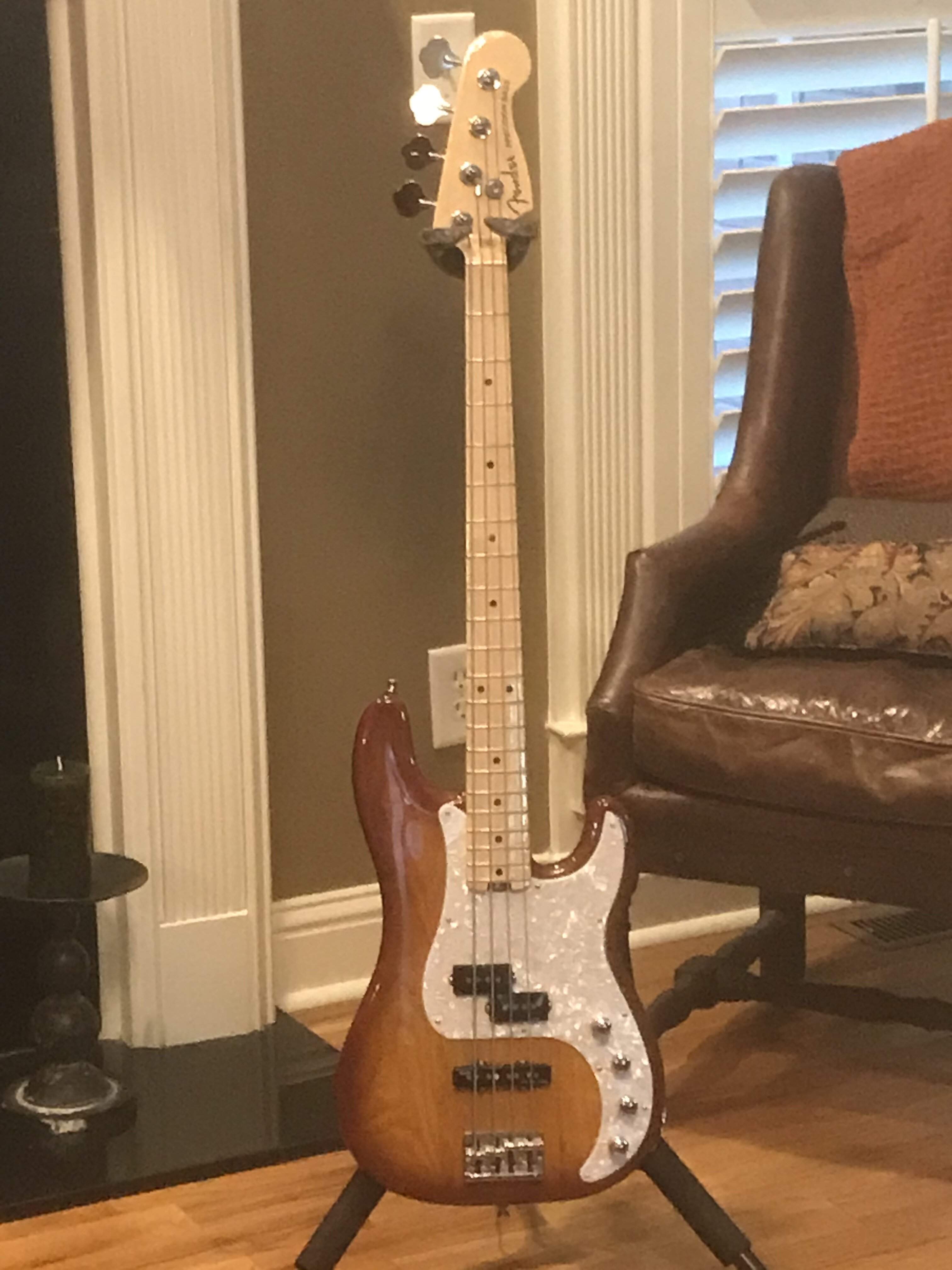
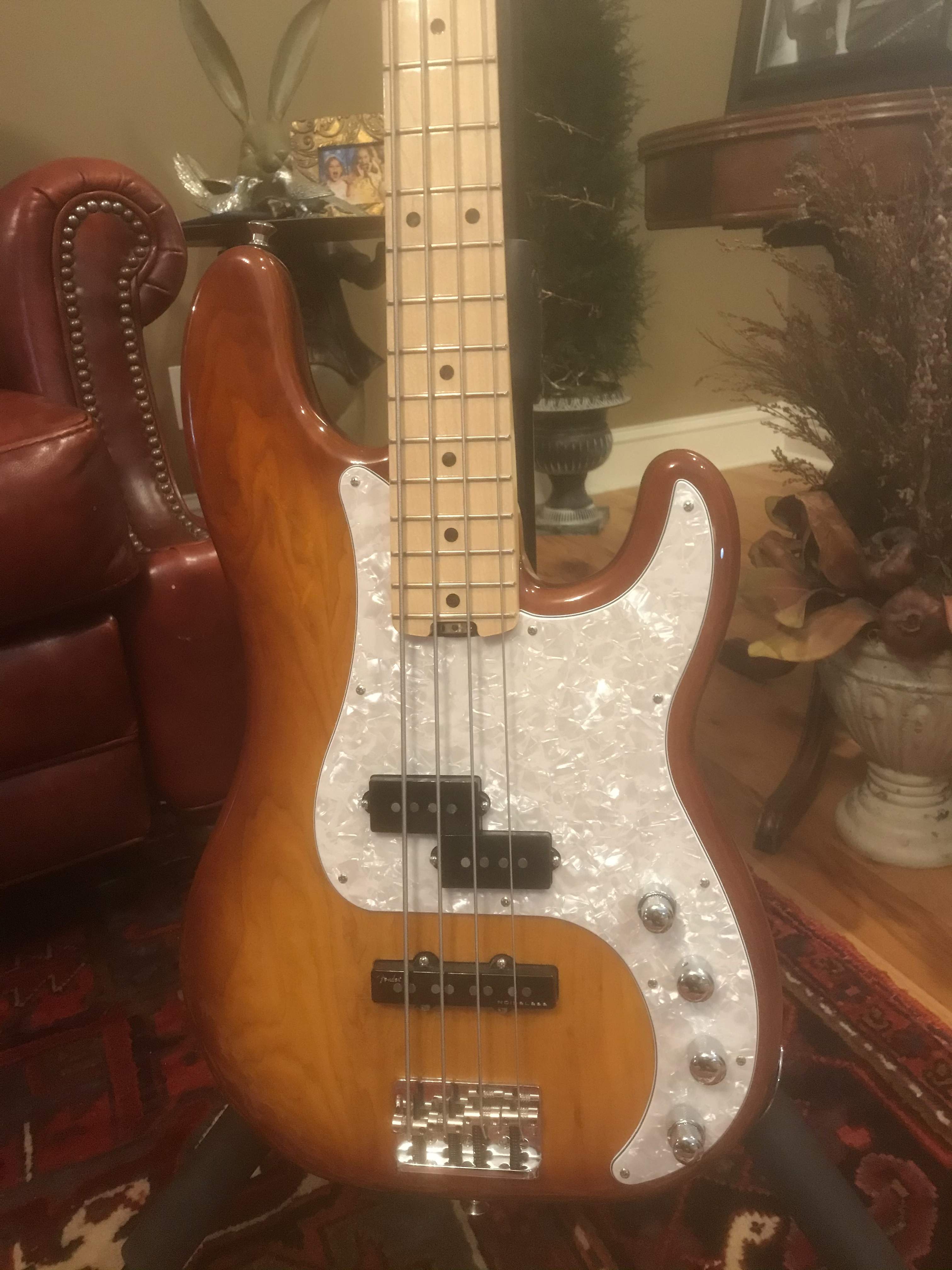
I only have one but I use it a lot. And it’s got a great P Bass sound (active and passive) with the P Bass soloed.
And it’s got a great burpy J Bass found with the bridge J. Pickup soloed ((active and passive).
And yeah I totally love the sound of both pickups blended.
Here’s a couple pics of mine (it also has Nordstrand preamp).
C62131D7-45FA-4B28-B390-F90A016E4619.jpeg
22CF5C2A-0A43-4BC0-AAF2-A1F6BFE9CE86.jpeg
 
When I was looking for a P, I wanted a P and not a PJ.

I think the only argument one can present against the PJ is that one part of the appeal of the P bass is the simplicity. One pickup, two knobs, the rest is in the fingers (or it isn't).

I did not want a bass that can do more than that. I did not want a bass that has 24 frets. And 6 strings. I wanted the bare minimum, which is a P bass IMHO.
 
I’m 50/50 on PJs. It’s a matter of preferences and tradeoffs.

I think a regular PJ (with the classic P orientation) is a great choice if you want a P sound, and a solo bridge J sound, in one bass. Both sounds are classic and distinct. The sound of both pups on is, in its own way, a classic sound too, but IMO/IME isn’t great, and I particularly dislike the DG side. While more pronounced on some PJs than others, I find it that all suffer in this regard.

what I find works better for the “both pups on” sound is a reverse P. But then you lose the classic P sound. It’s off only so slightly, but you can hear the difference.

Speaking of hearing differences, I’m one of those that will say a soloed P on a PJ doesn’t sound like a P unless you have a switch to turn off the J (or select pickups). The extra loading does dampen the sound a bit, and I can hear it. It’s a small difference, but it’s there. Aside from a switch, I wonder if higher resistance pots might also do the trick?

but at the end of the day, I think that for me, a PP or a bass with two soapbars would work better. In particular, I think that Nordstrand Big Splits do what I’ve always wanted PJs to do.
I'm not sure I agree with the whole extra loading thing, but if you need an extra bridge pickup, double reverse p is the way.

An extra loading is bound to be offset by differences in single pickups. I find the assumption that all pbasses sound the same somewhat absurd.
 
I've never owned a PJ but I'm not above carving a hole in an old Allparts P-body and giving it a try. So, which J-pup position would be the most useful? The "70s closer-to-the-bridge position, or the standard position that is a bit closer to the neck. Or, will it really make any difference since it's only about 1/4" either way?
B.

my two cents: if you’re after soloing/favoring the J pickup, 60s sound would have some more body; but for blended tones (both pups on), I find it that 70s perhaps blends better. Whether the difference matters to you…well, you need to find out for yourself :)

edit: also important - the 70s position is about halfway between the bridge and the pickguard, and is thus centered in the space between. It may look better that way to you.

I'm not sure I agree with the whole extra loading thing, but if you need an extra bridge pickup, double reverse p is the way.

An extra loading is bound to be offset by differences in single pickups. I find the assumption that all pbasses sound the same somewhat absurd.

true enough… I just find it that I’m particularly sensitive to the resonant peak and find lots of tonal variety messing with resistance and capacitance to shape it. To me, this is the most likely factor in the P vs PJ debate. I find it much less plausible that extra magnetic pull or routing affects the sound that audibly. But yeah, on the grand scheme of things, we’re talking 95% vs 100%, and other factors like the particular pickups models and strings are very important. These are also very important when it comes to assessing the effect of loading - the slight difference in damping will be perhaps unnoticeable with old strings (or flats) on a dark pickup.
 
  • Like
Reactions: JimmyM and BLDavis
You know I have had just about every combination of pickups and I find myself going back to a PJ 80% of the time and the other 20% is a PP setup.
Just fortunate to have found the pickup setup I really enjoy the sound of.
 
  • Like
Reactions: JimmyM
Since I came back to playing in 2015, and became a TB member, the subtleties and nuances of the bass sound tapestry have become more apparent and well argued.

When I was younger and didn’t care, I played whatever through whatever and gigged a lot more than now. But I always seem to come back to a PJ.

Favoring a jazz neck, I built a parts PJ with Aguilars and have been pretty happy with it. It was my main for a few years and it’s probably headed back to that spot as my band is adding in more covers to play longer gigs we can line up locally.

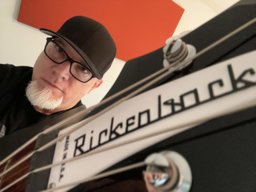
Anyhoo, I have every confidence the PJ will cover my “basses.” I had switched entirely to a Ric 4003s for our originals to really lean into and own a specific sound for “our” tunes, but that simply won’t work covering others.

The PJ does the trick for me. 100% rolled to neck gives me a great P sound. 100% bridge with neck rolled off to the sweet spot gives me a nice burpy and aggressive J tone. Both on full have a sound of their own which I use more and more. So that’s my PJ story and I’m stickin’ with it.
 

Attachments

  • 83449ED8-C6CD-412C-8E21-A72B80AD09AA.jpeg
    83449ED8-C6CD-412C-8E21-A72B80AD09AA.jpeg
    1.3 MB · Views: 50
I was looking for a P5 when a Mike Lull PJ5 came up at a great price, so I grabbed it. I usually run with the J off and with TI flats and foam under the strings IMO that's a fantastic P bass tone. When I dial up the J it's in support of the P. Adds a little cut to the tone. Always a great sound at any pickup combination.
 
  • Like
Reactions: JimmyM