
Enjoy the benefits of a premium membership!
Upgrade Account
-
TalkBass has been independent since 1998. Add your voice.
Create a free account to reply to discussions, view embedded media, and browse with fewer display ads.
Join free Log in
Want zero display ads or expanded classifieds tools? Compare plans.
You are using an out of date browser. It may not display this or other websites correctly.
You should upgrade or use an alternative browser.
You should upgrade or use an alternative browser.
Double Bass Double stops on bowed double bass
- Thread starter the exile
- Start date
-
- Tags
- bowed double double bass
More options
Who Replied?

@the exile Welcome to TB.
Copy the Direct Link, a .png file.
Insert that link as an Image (click the landscape photo image box, & paste link).
[Invalid or Expired Link Removed]
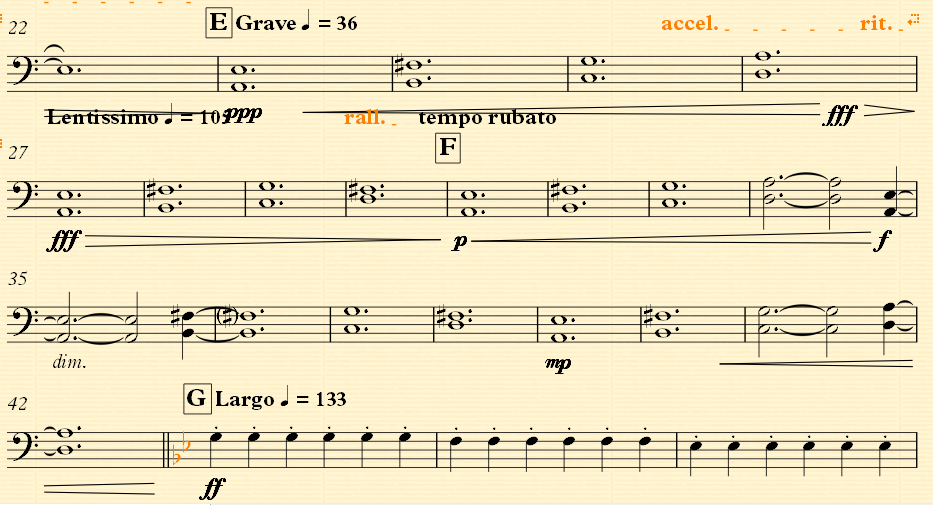
Much obliged Groove Doctor.


Looks very playable in theory. The only problem would be tuning. If there is more than 1 bass player in the ensemble, they will likely divide the notes between them unless told to do otherwise. Dividing will produce a more even, organ-like quality and the tuning will be more reliable.
Looks very playable in theory. The only problem would be tuning. If there is more than 1 bass player in the ensemble, they will likely divide the notes between them unless told to do otherwise. Dividing will produce a more even, organ-like quality and the tuning will be more reliable.
Thanks for this Dbass926. So such double stopping would be okay in an orchestral score but amateur players might struggle with it a bit? (In my score the double basses have already been divided into two parts...so hence the requirement that this part be played as double stops otherwise it would, in effect, be three parts - which would be to many).
Last edited:
Hi - just wondered if any orchestral double bass players would have any issues playing the following bowed double stops.
Cheers.
It's all playable by a single bass player. The question is, how in tune do you need it, and how much time are you willing to pay for to achieve that degree of acceptable intonation?
If you are recording this, it might be cheaper to hire another bass player or cellist and split the part...versus what it may cost to do multiple takes or extensive editing to get it perfectly in tune.
Last edited:
It's all playable by a single bass player. The question is, how in tune do you need it, and how much rehearsal time are you willing to pay for to achieve that degree of acceptable intonation?
Might be cheaper to hire another bass player or cellist and split the part if you are recording this. (Then again, I hear ProTools can do amazing things.)
Thanks Carl. My intention is for an orchestral performance and possible recording.
I have found several places in Stravinsky's 'Rite of Spring' where the double basses play double stops - e.g. the aggressive chords at the augurs of spring - dances of the young girls - see Invalid Link Removed.
Last edited:
- Jan 24, 2002
- 2,117
- 950
- Disclosures
- NS Design / AER Endorsing Artist
These are all certainly possible. However, it is absolutely correct that it should be marked "divisi" for any section. The chances of having perfect intonation in a section are significantly lowered if everybody plays double stops, and the quality of tone will suffer. It will actually sound louder as divisi.
When I've played the Rite of Spring, and anything else like this, the section would often divide the parts regardless of the composer's instruction. The passage you've linked to is kind of OK since it stays on one note, and the chord is complex enough that intonation is perhaps less significant.
When I've played the Rite of Spring, and anything else like this, the section would often divide the parts regardless of the composer's instruction. The passage you've linked to is kind of OK since it stays on one note, and the chord is complex enough that intonation is perhaps less significant.
These are all certainly possible. However, it is absolutely correct that it should be marked "divisi" for any section. The chances of having perfect intonation in a section are significantly lowered if everybody plays double stops, and the quality of tone will suffer. It will actually sound louder as divisi.
Thanks for this Paul.
If I did not mark the part as non divisi then I would, in effect, have the Cb divided into three parts (since there are two parts for the cb - one of which has these two note chords). Wouldn't that be going too far?
When I've played the Rite of Spring, and anything else like this, the section would often divide the parts regardless of the composer's instruction. The passage you've linked to is kind of OK since it stays on one note, and the chord is complex enough that intonation is perhaps less significant.
I have read that this is very common amongst string players.

6 beats of fortississimo at 32 beats per minute playing a low double stop? Anyone have a longer bow I can borrow?
I've performed many pieces where the bass parts are divided into more than two parts. In fact, the beginning of Rite of Spring is divided 6 ways in the basses. You'd be well within the norm by dividing the bass section by player if you so chose. As others have alluded to, the notes are long, the dynamics are loud - this music would require using more than one bow. All of these factors indicate that the parts should be divided.
That being said, yes, it is physically possible to perform this line for one player. These are vanilla double stops and with the exception of the difficulty of tuning parallel fifths, this wouldn't present any significant hurdles to performance if it has to be a 2 way divisi.
That being said, yes, it is physically possible to perform this line for one player. These are vanilla double stops and with the exception of the difficulty of tuning parallel fifths, this wouldn't present any significant hurdles to performance if it has to be a 2 way divisi.
The other thing you might want to consider, leaving aside technical issues, is the clarity. Don't forget the bass is a transposing instrument, sounding an octave lower than written.
The fifths will all sound pretty open and clear in that range but the D maj. thirds may be a bit thick and murky that low. Thirds sound noticeably clearer once you get up to having the higher note on the G string.
All depends on the sound you want.
The fifths will all sound pretty open and clear in that range but the D maj. thirds may be a bit thick and murky that low. Thirds sound noticeably clearer once you get up to having the higher note on the G string.
All depends on the sound you want.


- Jan 24, 2002
- 2,117
- 950
- Disclosures
- NS Design / AER Endorsing Artist
Thanks for this Paul.
If I did not mark the part as non divisi then I would, in effect, have the Cb divided into three parts (since there are two parts for the cb - one of which has these two note chords). Wouldn't that be going too far?
It's fine. Unless you're writing for a specific group, you can assume a section of 8 basses. You could mark the other line as "top desk" or "3 soli" and the bottom line divisi gli altri, for example. That puts 2-3 players on the line not shown, and 5-6 players dividing your power chords here.
6 beats of fortississimo at 32 beats per minute playing a low double stop? Anyone have a longer bow I can borrow?
6 beats of fortississimo at 32 beats per minute playing a low double stop? Anyone have a longer bow I can borrow?
I've performed many pieces where the bass parts are divided into more than two parts. In fact, the beginning of Rite of Spring is divided 6 ways in the basses. You'd be well within the norm by dividing the bass section by player if you so chose. As others have alluded to, the notes are long, the dynamics are loud - this music would require using more than one bow. All of these factors indicate that the parts should be divided.
That being said, yes, it is physically possible to perform this line for one player. These are vanilla double stops and with the exception of the difficulty of tuning parallel fifths, this wouldn't present any significant hurdles to performance if it has to be a 2 way divisi.
Thanks.
Do string players employ special bowing to give at least a semblance of one long continuous note even if they have to play it with more than one bow length? I've always wondered about that.
It's fine. Unless you're writing for a specific group, you can assume a section of 8 basses. You could mark the other line as "top desk" or "3 soli" and the bottom line divisi gli altri, for example. That puts 2-3 players on the line not shown, and 5-6 players dividing your power chords here.
Thank you.
The other thing you might want to consider, leaving aside technical issues, is the clarity. Don't forget the bass is a transposing instrument, sounding an octave lower than written.
The fifths will all sound pretty open and clear in that range but the D maj. thirds may be a bit thick and murky that low. Thirds sound noticeably clearer once you get up to having the higher note on the G string.
All depends on the sound you want.
I was after a thick sound in those thirds. Thanks for the advice.
- Jan 24, 2002
- 2,117
- 950
- Disclosures
- NS Design / AER Endorsing Artist
Yes. We try to change the bows smoothly, and a good section will attempt to stagger the changes so everything folds into a continuous sound.Do string players employ special bowing to give at least a semblance of one long continuous note even if they have to play it with more than one bow length? I've always wondered about that.


