• TalkBass has been independent since 1998. Add your voice.
    Create a free account to reply to discussions, view embedded media, and browse with fewer display ads.
    Join freeLog in
    Want zero display ads or expanded classifieds tools? Compare plans.

Ebonol Fingerboard Care..

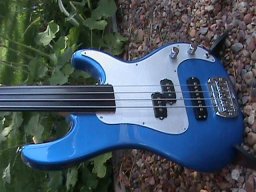
Ive look up and down on this site and every other one looking for a fix. My fretless jazz bass has an ebonol fretboard. The problem is that its a very dull looking material. Now i know Ebonol isn't porous, so lemon oil wont do much to it. So what exactly would make this fretboard shine? Ive applied lemon oil to it before, and it still looks very dull. And i have no experience when it comes to epoxy :hmm: help?
 
Well I had never heard of Ebonol before your post. You've helped me learn my new thing of the day. From what I can find its a paper base phenolic resin material...plastic. If it acts like normal phenolic it should buff out to a high gloss. Think old black phones. Just don't get it too hot, its a thermoset plastic, so it won't melt, but will burn/scorch instead. You could try sanding it with micro mesh. I've used that to gloss out acoustic finishes before I bad a buffer.
 
Welcome to TB johnny. One of my fretless basses has an ebonol board, dull in some places, shiny in others. To be honest, it doesn't bother me. Since ebonol is more like a plastic material, I don't think any oils are going to affect it. If it really bothers you, my only other thought would be to try to polish it in some way with a low abrasive jeweler's compound. You could end up dulling it even more though, so you should experiment on something else similar to the ebonol. JMO.
 
Leave it alone! It's a graphite resin that should not be sanded and will not absorb oil. It's the same material bowling balls are made from, so some pledge or even water, might be fine, but that's it.

Ebonol is usually naturally shiny so I don't know why you have this problem.

Take it to be bowling alley and give'er a polish in the machine. No, i'm not sure on how to shine her up. I have the same issue with my fretless.
 
use some naphtha to remove the lemon oil that's smeared on top of that (totally non-absorbent) ebanol.

then, keep it clean with the same guitar polish as you'd use on the rest of the instrument and stop worrying about it. (water on a paper towel works great.)

there is no "care" or "maintenance" for ebanol, it's bulletproof.
 
Hmm, I'll try out the bowling ball polishing technique. And yes, the dullness is usually cause by finger oils and the strings rubbing against the fingerboard, in my case anyway. I have a friend who has a very very glossy ebonol fretboard that recommended the polishing technique. Nothing close to an epoxy-ied fingerboard, but close enough.Thanks for the help fellas! Much appreciated!
 
johnnyneptune said:
Hmm, I'll try out the bowling ball polishing technique. And yes, the dullness is usually cause by finger oils and the strings rubbing against the fingerboard, in my case anyway. I have a friend who has a very very glossy ebonol fretboard that recommended the polishing technique. Nothing close to an epoxy-ied fingerboard, but close enough.Thanks for the help fellas! Much appreciated!

EDIT: I was also wondering if anyone knows how to get a better "mwah" factor off of ebonol fretboards. On mine, you really only hear it when you play close to where the neck meets the body, away from the neck and bridge pups. But even that gets uncomfortable after a while. I heard epoxy helps alot, but im completely unexperienced with that, as i mentioned lbefore. Any tips?
 
EDIT: I was also wondering if anyone knows how to get a better "mwah" factor off of ebonol fretboards. On mine, you really only hear it when you play close to where the neck meets the body, away from the neck and bridge pups. But even that gets uncomfortable after a while. I heard epoxy helps alot, but im completely unexperienced with that, as i mentioned lbefore. Any tips?

proper setup with low action and lighter gauge strings.

edit: plus good right hand plucking technique.
 
I also heard steel wool does the trick. Anyone had experience with that?

Keep steel wool away from your bass, unless you are prepared to tape everything up, thoroughly. Otherwise tiny bits of it will find their way into your pickups, pots etc. and wreak havoc.

Some of the already suggested bowling ball methods would be OK. I'd think automotive buffing compound would work as well.
 
EDIT: I was also wondering if anyone knows how to get a better "mwah" factor off of ebonol fretboards....
The fretboard material really doesn't matter too much, but harder materials generally work better. And you've got about the hardest fingerboard available, aside from metal.
'Mwah' on a fretless is analogous to fret 'buzz' on a fretted bass, if you think about it. It's the string vibrating against areas of the fretboard that are just slightly upstream of your 'fretting' finger. Folks reduce fret buzz by increasing action, and/or relief, and dressing frets if needed.
On a fretless, increase 'Mwah' by making the neck arrow-straight (truss rod adjustment-very little or no relief), and reducing action at the bridge as much as is practical. You may find that once you get the action down to a certain point, you get 'fret-out' - certain areas of the neck just won't hold a note (it goes "yeeoung", and the note dies quickly), while other areas 'Mwah' gloriously. This is due to high and low spots on the fingerboard, just like low and high frets. At this point, if you feel the need to go that low, fingerboard planing/sanding is in order, to eliminate high/low spots.
Hope this helps!
 
there is no "care" or "maintenance" for ebanol, it's bulletproof.

I've asked the folks at Modulus Graphite at least twice (because I either forgot their answer the first time, or couldn't believe it) how to care for the phenolic fingerboards on their basses, and they essentially said "Um, care? What kind of care do you need to do?"."

Upon further prodding they seemed to (reluctantly) suggest cleaning it with either Windex or dishsoap...but they really sounded like they'd never even considered the issue.
 
Ebonite is hard vulcanized rubber. It is used for bowling balls.

Ebonol is resin impregnated paper. It is used for fingerboards.

Two very different materials.

Cleaning an ebanol fingerboard is the same as wood. A little bit of naphtha and a rag will do the trick. There is no need to burnish with steel wool or other abrasives. They will scratch the surface. Polish with wax if desired.
 
Armor-All contains silicones. Silicone will interfere with touch up and refinishing efforts. Once the bench is contaminated, it will spread to every guitar brought into the shop.

Not recommended.
 
  • Like
Reactions: RSBBass