
Enjoy the benefits of a premium membership!
Upgrade Account
-
TalkBass has been independent since 1998. Add your voice.
Create a free account to reply to discussions, view embedded media, and browse with fewer display ads.
Join free Log in
Want zero display ads or expanded classifieds tools? Compare plans.
You are using an out of date browser. It may not display this or other websites correctly.
You should upgrade or use an alternative browser.
You should upgrade or use an alternative browser.
Empress Effects Buffer+
- Thread starter Morniac
- Start date
More options
Who Replied?


They do exactly what they're supposed to do. I use all of the features except the noise reduction. Let me know if you have specific questions and I'll try to answer them.lol
and??what is your opinion bout them
The features I use most are the mute and the tuner out, which facilitates having an always-on tuner. The pad helps equalize between the outputs of different guitars or basses. I don't use the boost much, which is an end-of-chain pristine boost -- but it's there and can provide a silly amount of boost.
Idiosyncrasies: As it's a buffer (two, actually), it's best placed after some vintage fuzzes, Uni-Vibes, etc. The I/O on the left side is a bit crowded and could cause some cabling challenges.
My main Buffer+ has been in nearly daily use ever since they were first released. No issues whatsoever. I don't gig, but that's 9(?) years of working flawlessly. HTH.
Idiosyncrasies: As it's a buffer (two, actually), it's best placed after some vintage fuzzes, Uni-Vibes, etc. The I/O on the left side is a bit crowded and could cause some cabling challenges.
. HTH.
i heard that the pedal makes the sound more....computerish.
is this true?
i think the best place should be in front of all the pedals and logical at the end...

I used this pedal for a long time with great success, but since I have other "always-on" pedals with the right impedance values nowadays, I don't feel like I need a buffer.
i think a buffer pedal is a must.I used this pedal for a long time with great success, but since I have other "always-on" pedals with the right impedance values nowadays, I don't feel like I need a buffer.
For home practice or gigs.
Its not about the tone (like other pedals) but more for the ...quality of the sound
Computerish? Not at all to my ears. They are clean, clear buffers running at 20V or so. The first buffer can have the typical effect of brightening things. This actually is due to eliminating some cable capacitance that tends to roll off high end, generally speaking. The first buffer should be at the beginning of the chain to reduce capacitive load on the pickups. However, some effects don't like seeing a low output impedance and sound better before any buffers (most passive pickups have high output impedance while buffers have low output impedance).i heard that the pedal makes the sound more....computerish.
is this true?
i think the best place should be in front of all the pedals and logical at the end...
The second buffer can go at the end of the chain, or earlier if desired. The second buffer is much less important unless one has a mile of cable between the board and the amp. In the case of the Buffer+, the second buffer is part of the boost circuit.
If we're talking bass here, I'd need to do some experimenting before I was convinced that a buffer is necessary. An input buffer is essential to my guitar sound, and I'm using my guitar board with a couple of added pedals for bass. One of those pedals is an HP/LP filter. On bass, I don't want or need the higher frequencies that are essential to preserve for guitar. [Disclaimer: I'm a P-Bass-with-the-tone-rolled-part-way-off kind of guy. Someone playing up the neck on a 6-string bass with tweeters may have the opposite view.]
That said, I'm building a dedicated bass board. On it is my spare Buffer+ as I'm reliant on its features after using one for about nine years now.
That said, I'm building a dedicated bass board. On it is my spare Buffer+ as I'm reliant on its features after using one for about nine years now.
Always-on pedals already buffer your signal. Compressors, preamps, noise gates, etc may act like that. If one has a high impedance input and low impedance output, you might not need an additional buffer in the chain.i think a buffer pedal is a must.
For home practice or gigs.
Its not about the tone (like other pedals) but more for the ...quality of the sound
However, not all pedals are equal. If your ears tell that the additional buffer makes you sound better, use it by all means. Long cables, inferior pedals, etc might be valid reasons for that.
When I A/B my signal chain with/without a buffer, my ears tell me that I don't need it. YMMV.

i think a buffer pedal is a must.
For home practice or gigs.
Its not about the tone (like other pedals) but more for the ...quality of the sound
what buffer would you recommend for a pedal board of a few gains, mods, and pre amps?

I really like mine, and the only thing I don't use is the noise reduction as it rolls off a bit of high end. The boost is great and is added at the end of the chain, but also adds a touch of high end zing, but it also adds a little "something" to the other frequencies that I like. IIRC, this is a dual buffer that buffers at the input and output.
I have not noticed it making my bass sounding computerish. It wouldn't be on my pedalboard if it did that.
The main thing I don't like about is that the jacks are too close together and makes using right angle patch cable a little tricky, especially if using the tuner out jack. I wish they had a slightly larger version OR spaced out the jacks better.
I have not noticed it making my bass sounding computerish. It wouldn't be on my pedalboard if it did that.
The main thing I don't like about is that the jacks are too close together and makes using right angle patch cable a little tricky, especially if using the tuner out jack. I wish they had a slightly larger version OR spaced out the jacks better.
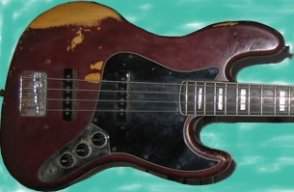
If you have a bass with active electronics you already have a buffer - the pre-amp circuit in the bass acts as a buffer.
You don’t want too many buffers in your chain. A good mix of a few good buffers and many true bypass pedals is great.
Beware some small older pedals with poor quality buffers. Many OC-2s have some very sketch buffers. On a buffered pedal my understanding is that the buffer is engaged whether the pedal is bypassed or not, otherwise there would be a pop when the pedal was engaged.
This is also the case for true bypass pedals - the circuit is powered whether the pedal is engaged or not to avoid a pop when engaging the pedal. This is why the current draw for a pedal changes only slightly between engaged and disengaged.
You don’t want too many buffers in your chain. A good mix of a few good buffers and many true bypass pedals is great.
Beware some small older pedals with poor quality buffers. Many OC-2s have some very sketch buffers. On a buffered pedal my understanding is that the buffer is engaged whether the pedal is bypassed or not, otherwise there would be a pop when the pedal was engaged.
This is also the case for true bypass pedals - the circuit is powered whether the pedal is engaged or not to avoid a pop when engaging the pedal. This is why the current draw for a pedal changes only slightly between engaged and disengaged.

Do buffers really make a difference on bass? It really seems to be a requirement for guitar when using long cable runs as most if not all of the signal loss seems to be in the higher frequencies.
I suppose that if you tend to favor a very bright tone and run very long cables that a buffer then would be valuable in a bass signal chain.
I suppose that if you tend to favor a very bright tone and run very long cables that a buffer then would be valuable in a bass signal chain.
This was the final argument for me switching to Evidence Audio Monorail/SIS patch cables, something I'd already been considering. The work perfectly on my Pedaltrain boards. That might seem to be an expensive solution if the only reason is to accommodate the Buffer+, but the cables sound good and I've never had one fail.The main thing I don't like about is that the jacks are too close together and makes using right angle patch cable a little tricky, especially if using the tuner out jack. I wish they had a slightly larger version OR spaced out the jacks better.
The tuner output is a significant feature for me. It allows me to run my tuner always-on, which can be handy. For silent tuning, I simply hit the Buffer+'s mute.

Do buffers really make a difference on bass?
Basses have more inductance on average than guitars, though there is a lot of overlap. As we use cables with the same capacity, a buffer is actually more important to maintaining our tone than it is on guitar. If you always play with your tune control completely off, or if you always plug your bass directly into an amp, you may not hear a difference, but for the rest of us, it's a good idea to have a buffer or other buffered pedal somewhere on your pedalboard.
you may not hear a difference, but for the rest of us, it's a good idea to have a buffer or other buffered pedal somewhere on your pedalboard.
What an oddly passive aggressive tone you got going on there…
I’m not saying bass players can’t benefit from a buffer, I’m just going by my very limited knowledge on the topic and the few audio tests I’ve ran across online and looking to expand my knowledge.
Would running with an always on compressor fill the same role as a buffer?
That's quite an edit you made to his comment. Go back and read the full sentence and there's nothing aggressive about it.What an oddly passive aggressive tone you got going on there…
I’m not saying bass players can’t benefit from a buffer, I’m just going by my very limited knowledge on the topic and the few audio tests I’ve ran across online and looking to expand my knowledge.
Would running with an always on compressor fill the same role as a buffer?
Would running with an always on compressor fill the same role as a buffer?
Absolotely not
Different job


