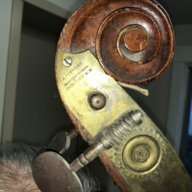
I chose a very simple way to attach my tail piece:
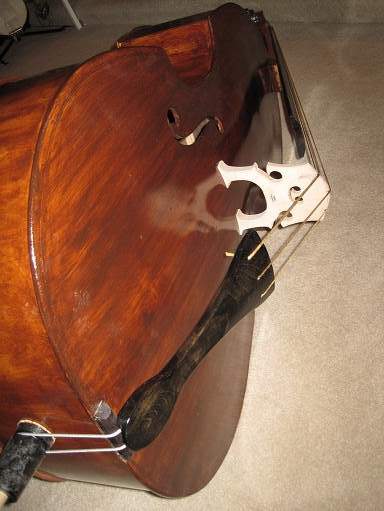
I turned the socket out of hard maple as follows:
The socket has a 1" diameter dowel that goes inside the tail block (untapered). It's just snug enough to stay in place, not tight by any means (and not glued of course). When the socket is in place, the dowel is flush with the surface of the tail block (inside), so nothing protrudes into the body of the bass. The side that contacts the ribs is lined with cork (hide-glued) - I was thinking of possible vibration/rattling. Non-issue.
Then there is a 2" hole on the other side of that socket that accepts a 3/4 size dowel. Again, just snug, not tight. It stays in place when i carry the bass. I use a rubber crutch tip on that on hardwood floors, and take it off when playing on carpet.
Obviously the end pin is not adjustable, but takes about 15 seconds to cut a new one of different height and carry more than 1 along. I use just 1 size anyway.
BTW, my tail block is about 2" thick, and I actually glued 2 pieces together, with their grain at 90 degrees to prevent splits.
Oh, and I slightly angled the tail piece hole, so that the bass leans back a little when the pin is perpendicular to the floor - in the opposite direction of the pull of the tail piece cable. The socket is shaped to accommodate this angle and have a flat contact surface.
The tail piece is attached via shielded braided cable, crimped within the cavity of the tail piece.
I see absolutely no drawbacks to this whatsoever. But it sounded too simple, and I'm wondering if there are any objections to this setup?
George
I turned the socket out of hard maple as follows:
The socket has a 1" diameter dowel that goes inside the tail block (untapered). It's just snug enough to stay in place, not tight by any means (and not glued of course). When the socket is in place, the dowel is flush with the surface of the tail block (inside), so nothing protrudes into the body of the bass. The side that contacts the ribs is lined with cork (hide-glued) - I was thinking of possible vibration/rattling. Non-issue.
Then there is a 2" hole on the other side of that socket that accepts a 3/4 size dowel. Again, just snug, not tight. It stays in place when i carry the bass. I use a rubber crutch tip on that on hardwood floors, and take it off when playing on carpet.
Obviously the end pin is not adjustable, but takes about 15 seconds to cut a new one of different height and carry more than 1 along. I use just 1 size anyway.
BTW, my tail block is about 2" thick, and I actually glued 2 pieces together, with their grain at 90 degrees to prevent splits.
Oh, and I slightly angled the tail piece hole, so that the bass leans back a little when the pin is perpendicular to the floor - in the opposite direction of the pull of the tail piece cable. The socket is shaped to accommodate this angle and have a flat contact surface.
The tail piece is attached via shielded braided cable, crimped within the cavity of the tail piece.
I see absolutely no drawbacks to this whatsoever. But it sounded too simple, and I'm wondering if there are any objections to this setup?
George