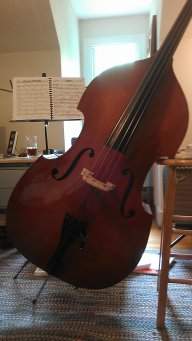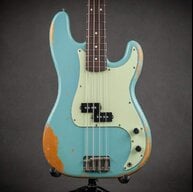
I have seen these little things mentioned here and there on TB, but I thought I'd share a report after trying it out on a gig.
As jazz band directors, we sometimes get together to have reading sessions where we sit around and read through new (and sometimes old) charts to see if they are right for our groups. A lot of times, we do this at our state band conventions. A friend of mine put a reading session together and I was asked to play bass. We sight read about 15 charts in about 90 minutes. (I still call this a gig, since there are typically 40-50 other directors sitting in the audience. I have had much smaller audiences on some of my "real" gigs.) Anyway, I knew that most of these charts were going to be standard swing tunes, so I decided to throw on one of these:
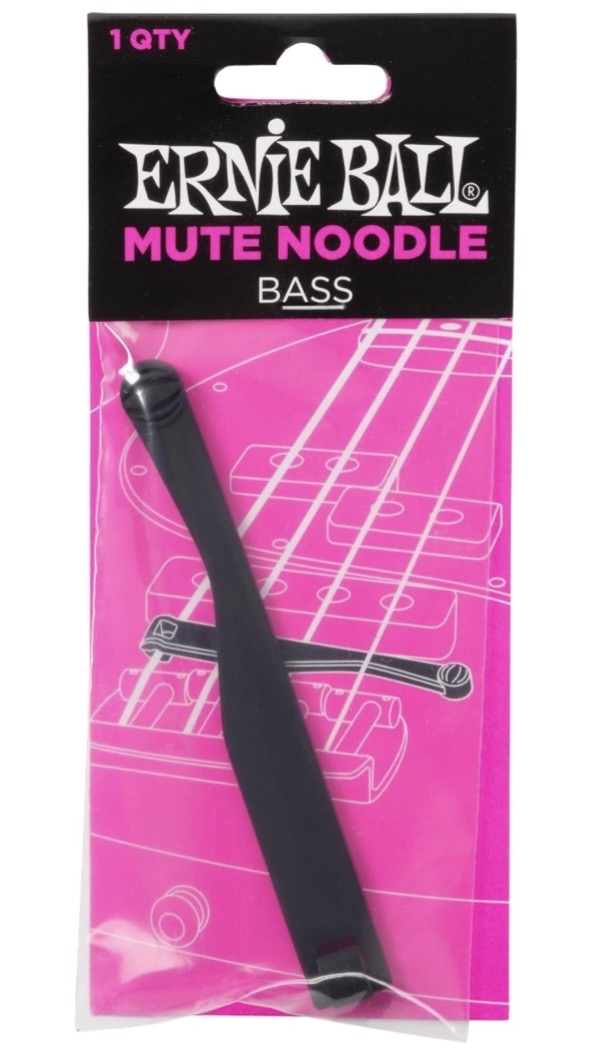
For those who have not tried it, it is made out of similar material to a rubber bracelet. You just sort of weave it through your strings.
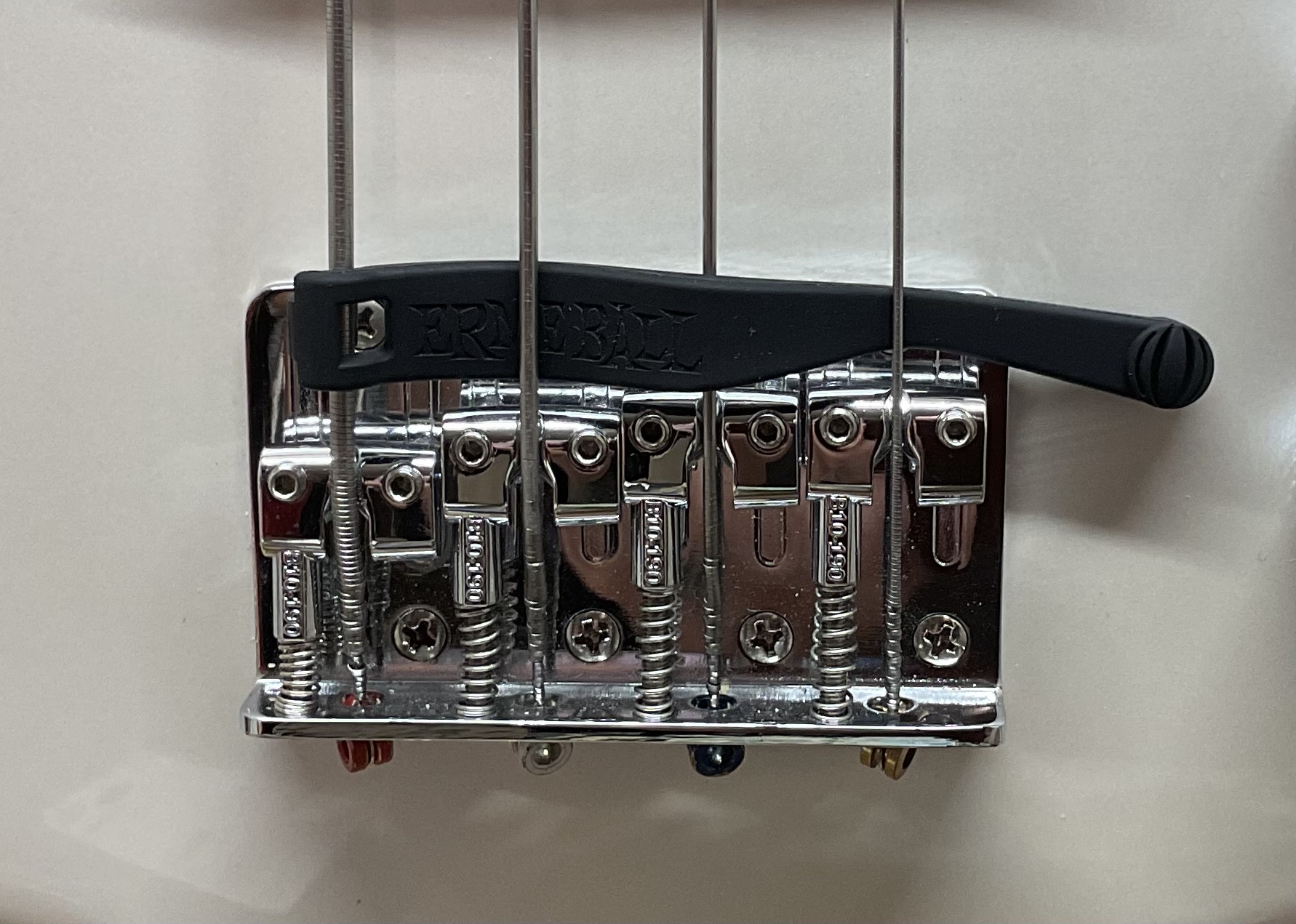
For the record, I use LaBella Low Tension Flats. With the noddle on it sounds similar to having a chunk of foam shoved in between the strings and the body, but it is a little different. Sustain was a bit better than foam. The articulation sounded about the same, but did not have the "plink" sound that you get with a stiff piece of foam. I had the muting qualities without the articulation change. One unique aspect is that it is much thinner on the G string side than the E string side. I think I had decent dynamic balance between all four strings. This is probably the biggest positive I see with the noodle vs. foam.
Did it sound like an upright bass? No. Did it sound like my normal electric bass? Not really. Was it an improvement? For the swing charts we were playing, I would say yes. Do I prefer this to foam? The jury is still out, but I will certainly try it again.
I left it on the whole set. Not a single person noticed (or cared). Although I did get a couple of "kudos" after the gig about my sight reading, no one said a word about my tone. I asked a buddy of mine what he thought about my tone and he just shrugged. I was humbly reminded that absolutely no one gives a rip about a bassist's tone unless they are covering something else up. No one obsesses over tone like we do.
Has anyone else tried this? Did you love it, hate it, or was it just "meh"?
As jazz band directors, we sometimes get together to have reading sessions where we sit around and read through new (and sometimes old) charts to see if they are right for our groups. A lot of times, we do this at our state band conventions. A friend of mine put a reading session together and I was asked to play bass. We sight read about 15 charts in about 90 minutes. (I still call this a gig, since there are typically 40-50 other directors sitting in the audience. I have had much smaller audiences on some of my "real" gigs.) Anyway, I knew that most of these charts were going to be standard swing tunes, so I decided to throw on one of these:
For those who have not tried it, it is made out of similar material to a rubber bracelet. You just sort of weave it through your strings.
For the record, I use LaBella Low Tension Flats. With the noddle on it sounds similar to having a chunk of foam shoved in between the strings and the body, but it is a little different. Sustain was a bit better than foam. The articulation sounded about the same, but did not have the "plink" sound that you get with a stiff piece of foam. I had the muting qualities without the articulation change. One unique aspect is that it is much thinner on the G string side than the E string side. I think I had decent dynamic balance between all four strings. This is probably the biggest positive I see with the noodle vs. foam.
Did it sound like an upright bass? No. Did it sound like my normal electric bass? Not really. Was it an improvement? For the swing charts we were playing, I would say yes. Do I prefer this to foam? The jury is still out, but I will certainly try it again.
I left it on the whole set. Not a single person noticed (or cared). Although I did get a couple of "kudos" after the gig about my sight reading, no one said a word about my tone. I asked a buddy of mine what he thought about my tone and he just shrugged. I was humbly reminded that absolutely no one gives a rip about a bassist's tone unless they are covering something else up. No one obsesses over tone like we do.
Has anyone else tried this? Did you love it, hate it, or was it just "meh"?