

Enjoy the benefits of a premium membership!
Upgrade Account
-
TalkBass has been independent since 1998. Add your voice.
Create a free account to reply to discussions, view embedded media, and browse with fewer display ads.
Join free Log in
Want zero display ads or expanded classifieds tools? Compare plans.
You are using an out of date browser. It may not display this or other websites correctly.
You should upgrade or use an alternative browser.
You should upgrade or use an alternative browser.
Experimental Fully Modular Bass Rig.
- Thread starter Flux Jetson
- Start date
More options
Who Replied?
Two things:
1. I have fallen deeply and unabashedly in love with your rig, and perhaps you for being its creator.
2. SO SUBBED!
1. I have fallen deeply and unabashedly in love with your rig, and perhaps you for being its creator.
2. SO SUBBED!
Wow ... thanks you guys! I mean REALLY thanks! I still have some work to get done on it. Shees, just wiring the "DC Squid" will take a full day. Squid is the wiring harness that supplies DC power to each module. I could just slap it in there and be good with it, but that ain't me. I'll carefully route each power lead and loom it up using Spiral Loom and zip ties. Attention to detail can make or break a project like this.
As for my end goals tone-wise. Well, I absolutely LOVE 70's rock bass tones. There's a trick to getting "the Geddy" out of any bass guitar, it is roughly the same trick that Chris Squire (Yes) and many many others use. It involves distortion ... not just electronic distortion, but tonal distortion caused by fret buzz and low action thrown in with electronic distortion. After it's distorted you have to shave off the top end to capture the round, smooth, wonderfully expressive harmonics. That's where these filters come into play.
(For this example I'm talking about just one pickup channel here): I can set up one filter to be a bandpass to boost the upper mids. And another filter can be tuned as a Notch to scoop out the unwanted bandwidths. And yet another filter can be set as a Low Pass to roll-off the upper-uppity-ups to remove the click and clack. Don't forget that these synth filters have completely tunable resonance amounts as well as just tuning the frequencies! What remains is this perfectly tunable and shapable tonal graph that provides precisely whatever tone the room or the song calls for. And that's just ONE PICKUP!
When I use a foot control to sweep to the other pickup, the filters will change their modes and character to suit that pickup's needs, again all by using another foot control placed right next to the pickup sweeper (both can be used at once very easily if they are close enough to each other) - all based on the needs of the song, the room, whatever.
I'll also be doing "envelope follower" type sounds (a-la Funk), as well as many different distortional types. The music I'll be using this rig for is a fusion of 70's progressive rock, modern rock, ambient Tangerine-Dreamy stuff, and funk-rock. It is all instrumental - lots of phrase looping. A duo with my wife on her highly prized 1977 Rhodes electric piano that we're also processing the livin' shyte out of. We have two Boss RE-20 space echos, both with foot-control madness going on, as well as two Boss DD-20 Gigadelays, as well as the Line 6 M13 and her Line 6 M9. We also have a few classic modulators (Electro Harmonix Electric Mistress and Poly Chorus).
So I guess this musical project is a throwback to the "Acid Rock" of the 70's. I grew up (musically) on the likes of Emerson, Lake, and Palmer - Pink Floyd - Yes - UK - Tangerine Dream - Klaus Schulze - and of course Rush. Unfortunately Rush was tragically killed in a horrible accident right after Power Windows was released (heheh - obviously I like the early Rush stuff - back when it was all about SciFi themes and such).
I played synths and the Hammond for years and years. You'll note that my rig includes a 1962 Hammond A102 and a Leslie powered by a DIY Marshall amp, combined with the Modular Synth, two guitars, the custom 2-channel bass rig outlined in this thread, and a custom uber-tricked out guitar converted to slide-use only. Loads of FX, delays, loopers, etc. And jsyk, this modular synth only weighs about 45 pounds total. I've been building all of my own FX for years, my own amps, as well as my own guitars, and even a few basses. So this new project ties my life experiences together in a singular focus. It's time to do this.
So if you'll imagine this guy (Keith Emerson) ...
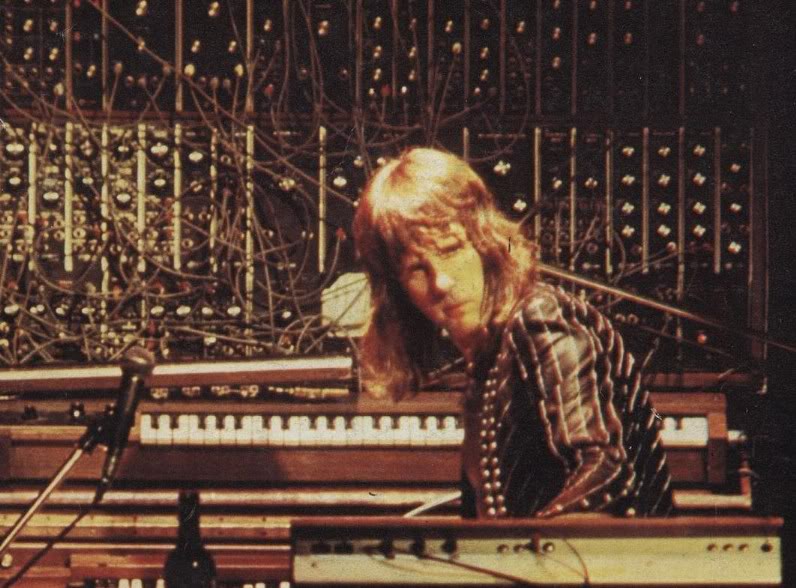
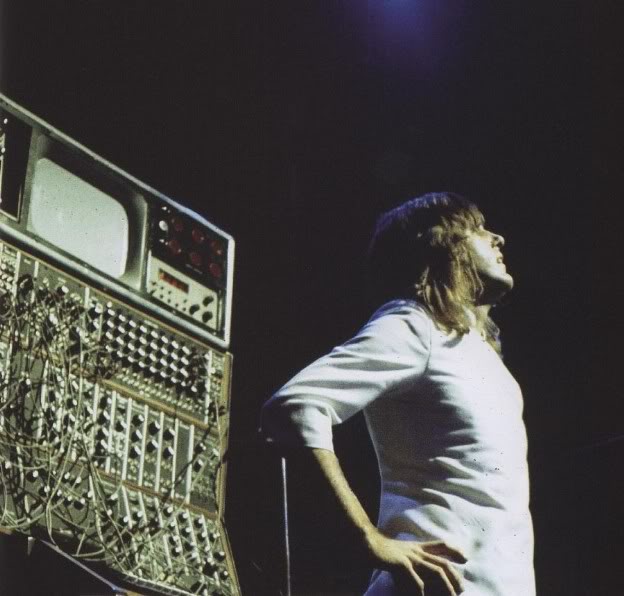
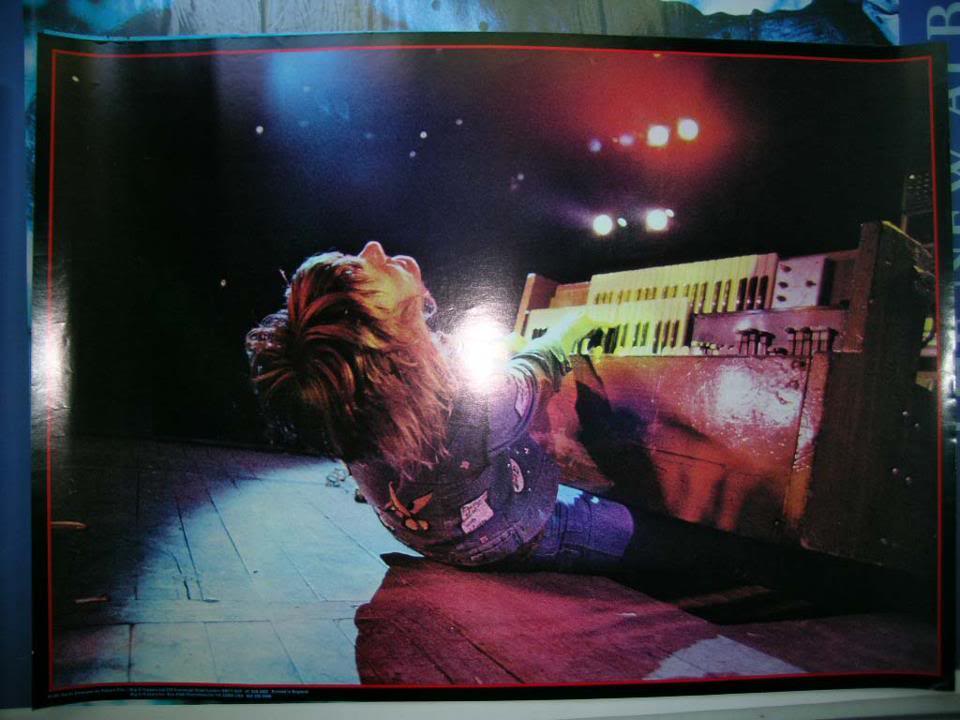
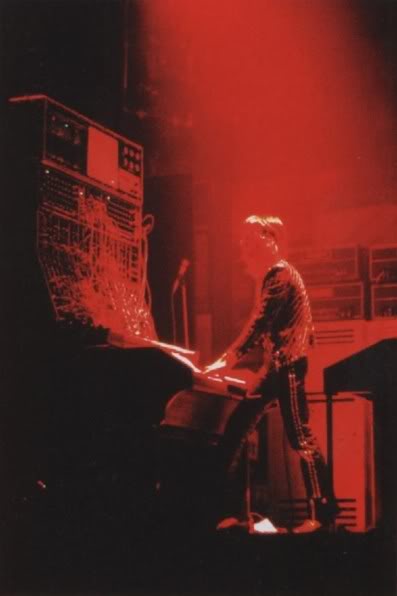
Combined with the likes of Jeff Beck and his "human FX pedal" style of guitar playing.
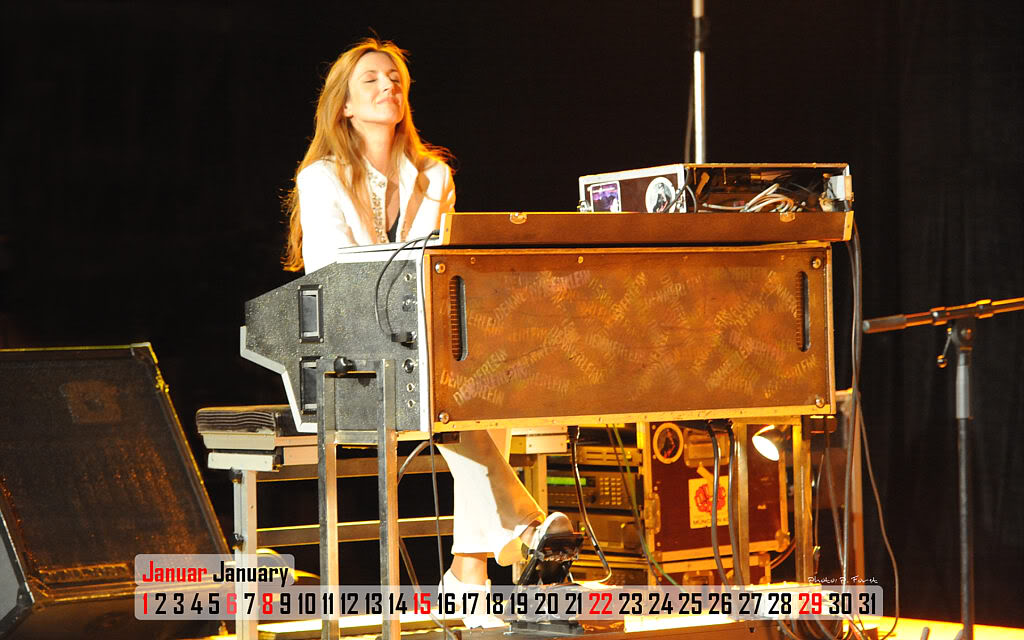
Combined with the chops and musical styles of German organist Barbara Dennerlein (her Hammond chops are amazing! She does bass lines with her feet that many (most?) bass players WISH they could pull off - check her out on You Tube - her footwork is incredible!)
And of course this chap ...

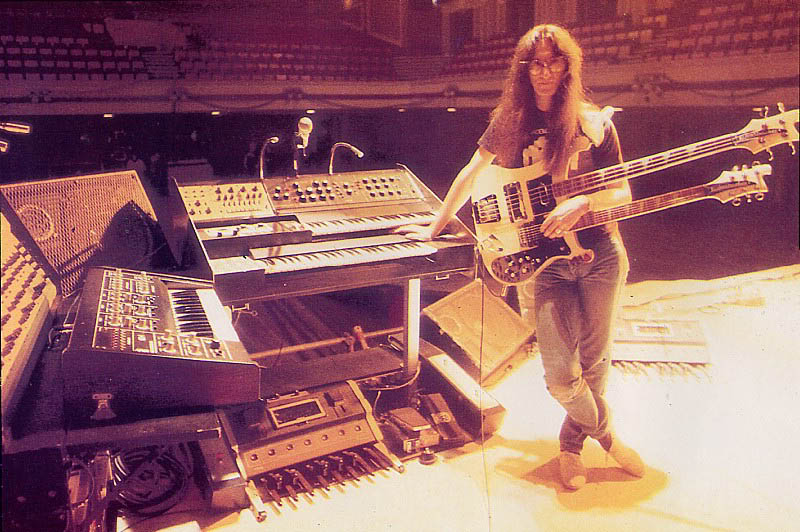
Along with the bass stylings of Billy Sheehan - you begin to get the idea.
Now, please know that I DO NOT equate myself with any of these fabulously talented people. These people are who influence me and have influenced my music for decades.
I've already built eleven guitars from Warmoth parts and other parts as well, so I have a little experience with putting this all together.
We (my wife and I) plan on getting our setlists practiced up and playing in small local joints .. for the singular reason of playing out .... that's it. We're not trying to prove anything, or kill the world with our bad-assed selves (ahem) ... we just love playing live. And we also HATE being in bands. I'm 52 you guys, I've had it ~up-to-here~ with the drama and the hassles of being in a band. So if we bring anyone else in to the project, it might be a 2nd bassist, and/or perhaps a drummer. We also plan on doing reocrdings in our home studio. Again, just for fun. We've no plans on getting "signed" or any of those lofty ideas. We just want to play together live again. Anyone that wants to involve themselves with us can't be one of those players that takes themselves seriously - if the phrase "when we make it" is even uttered ONCE, they're excused from the project. If we get to play out three or four times a year, I'll be friggin on fire with joy! We already play nearly every day here in our home studio. Our home is basically a studio that happens to have two bedrooms a kitchen and two bathrooms. This is a light hearted attempt at having the most fun we've ever had in our lives. End of sentence.
I love playing the synth, the Hammond, the bass, and the guitar. I already own all of those plus the amp systems that go with them. For playing out I'll just use VST's for Hammond sounds ... I have two of them already so that will be easy enough, as well as seven computers.
No, I'm not rich, I'm just an incurable pack rat and I save everything. So I have a lot of good gear accumulated from many many musical projects over the years. Time to roll it all up into a huge two-piece musical "fatty" and do this thing that I've always wanted to do.
So I'll use this thread as a running newsletter and keep everyone posted on the gear construction, as well as posting audio demo clips and MAYBE videos. I've never posted a You Tube video in my life so that's yet another thing I'd need to learn how to do. Time is mine enemy!
Thanks again for all of the super positive encouragment. I'll do what I can to keep you all entertained.
As for my end goals tone-wise. Well, I absolutely LOVE 70's rock bass tones. There's a trick to getting "the Geddy" out of any bass guitar, it is roughly the same trick that Chris Squire (Yes) and many many others use. It involves distortion ... not just electronic distortion, but tonal distortion caused by fret buzz and low action thrown in with electronic distortion. After it's distorted you have to shave off the top end to capture the round, smooth, wonderfully expressive harmonics. That's where these filters come into play.
(For this example I'm talking about just one pickup channel here): I can set up one filter to be a bandpass to boost the upper mids. And another filter can be tuned as a Notch to scoop out the unwanted bandwidths. And yet another filter can be set as a Low Pass to roll-off the upper-uppity-ups to remove the click and clack. Don't forget that these synth filters have completely tunable resonance amounts as well as just tuning the frequencies! What remains is this perfectly tunable and shapable tonal graph that provides precisely whatever tone the room or the song calls for. And that's just ONE PICKUP!
When I use a foot control to sweep to the other pickup, the filters will change their modes and character to suit that pickup's needs, again all by using another foot control placed right next to the pickup sweeper (both can be used at once very easily if they are close enough to each other) - all based on the needs of the song, the room, whatever.
I'll also be doing "envelope follower" type sounds (a-la Funk), as well as many different distortional types. The music I'll be using this rig for is a fusion of 70's progressive rock, modern rock, ambient Tangerine-Dreamy stuff, and funk-rock. It is all instrumental - lots of phrase looping. A duo with my wife on her highly prized 1977 Rhodes electric piano that we're also processing the livin' shyte out of. We have two Boss RE-20 space echos, both with foot-control madness going on, as well as two Boss DD-20 Gigadelays, as well as the Line 6 M13 and her Line 6 M9. We also have a few classic modulators (Electro Harmonix Electric Mistress and Poly Chorus).
So I guess this musical project is a throwback to the "Acid Rock" of the 70's. I grew up (musically) on the likes of Emerson, Lake, and Palmer - Pink Floyd - Yes - UK - Tangerine Dream - Klaus Schulze - and of course Rush. Unfortunately Rush was tragically killed in a horrible accident right after Power Windows was released (heheh - obviously I like the early Rush stuff - back when it was all about SciFi themes and such).
I played synths and the Hammond for years and years. You'll note that my rig includes a 1962 Hammond A102 and a Leslie powered by a DIY Marshall amp, combined with the Modular Synth, two guitars, the custom 2-channel bass rig outlined in this thread, and a custom uber-tricked out guitar converted to slide-use only. Loads of FX, delays, loopers, etc. And jsyk, this modular synth only weighs about 45 pounds total. I've been building all of my own FX for years, my own amps, as well as my own guitars, and even a few basses. So this new project ties my life experiences together in a singular focus. It's time to do this.
So if you'll imagine this guy (Keith Emerson) ...
Combined with the likes of Jeff Beck and his "human FX pedal" style of guitar playing.
Combined with the chops and musical styles of German organist Barbara Dennerlein (her Hammond chops are amazing! She does bass lines with her feet that many (most?) bass players WISH they could pull off - check her out on You Tube - her footwork is incredible!)
And of course this chap ...
Along with the bass stylings of Billy Sheehan - you begin to get the idea.
Now, please know that I DO NOT equate myself with any of these fabulously talented people. These people are who influence me and have influenced my music for decades.
I've already built eleven guitars from Warmoth parts and other parts as well, so I have a little experience with putting this all together.
We (my wife and I) plan on getting our setlists practiced up and playing in small local joints .. for the singular reason of playing out .... that's it. We're not trying to prove anything, or kill the world with our bad-assed selves (ahem) ... we just love playing live. And we also HATE being in bands. I'm 52 you guys, I've had it ~up-to-here~ with the drama and the hassles of being in a band. So if we bring anyone else in to the project, it might be a 2nd bassist, and/or perhaps a drummer. We also plan on doing reocrdings in our home studio. Again, just for fun. We've no plans on getting "signed" or any of those lofty ideas. We just want to play together live again. Anyone that wants to involve themselves with us can't be one of those players that takes themselves seriously - if the phrase "when we make it" is even uttered ONCE, they're excused from the project. If we get to play out three or four times a year, I'll be friggin on fire with joy! We already play nearly every day here in our home studio. Our home is basically a studio that happens to have two bedrooms a kitchen and two bathrooms. This is a light hearted attempt at having the most fun we've ever had in our lives. End of sentence.
I love playing the synth, the Hammond, the bass, and the guitar. I already own all of those plus the amp systems that go with them. For playing out I'll just use VST's for Hammond sounds ... I have two of them already so that will be easy enough, as well as seven computers.
No, I'm not rich, I'm just an incurable pack rat and I save everything. So I have a lot of good gear accumulated from many many musical projects over the years. Time to roll it all up into a huge two-piece musical "fatty" and do this thing that I've always wanted to do.
So I'll use this thread as a running newsletter and keep everyone posted on the gear construction, as well as posting audio demo clips and MAYBE videos. I've never posted a You Tube video in my life so that's yet another thing I'd need to learn how to do. Time is mine enemy!
Thanks again for all of the super positive encouragment. I'll do what I can to keep you all entertained.
I just realized that I may have been unclear about something. Once I figure out which filters will work best with the foot sweepable pickup selection and filter testing, the "bass rig" will be a LOT simpler than the full-blown analog synth you see in the pictures. It won't have five oscillators, or many of the other modules. It will most likely only have two filters per pickup, and a couple-few routing modules. More than likely once I get the configuration decided upon the whole thing for the bass will fit in two of the rack adaptors and be housed in a rack, taking up only 10u of rack space.
The whole synth setup will remain a synth and FX unit, but the bass rig will only be comprised of a few filters, some routing stuff, and the panning modules. The custom modular synth is being used as a test bed to determine what I will actually need for the 2-channel bass modular bass rig, which will be a separate critter from the modular synth altogether. However I can still interpatch the two setups if I find I need to do so for various sounds.
The whole synth setup will remain a synth and FX unit, but the bass rig will only be comprised of a few filters, some routing stuff, and the panning modules. The custom modular synth is being used as a test bed to determine what I will actually need for the 2-channel bass modular bass rig, which will be a separate critter from the modular synth altogether. However I can still interpatch the two setups if I find I need to do so for various sounds.
You could post this at diystompboxes.com . There are plenty of people there who like rackmount modular synths (you'd better stock up on gutshots first though!).

And I thought I was crazy for all the synth stuff I buy when I call myself a bassist. You have become my enabler.
I'll be powering up the 3 filters (2 "state variable" filters that can be setup as Low Pass, High Pass, Notch, and Band Pass all with simultaneous outputs if desired, and one Moog-type "Ladder" low-pass filter) and the modules needed for just the bass experiments tonight. I've been playing so much today that my hands are hurtin'! Not my fingertips, the back sides of my hands. I've finally found a tuning setup that I really like (D-G-B-D) and I've just been hacking away at it today! Heheh ..
So I'll be connecting power to the 3 filters and the routing modules in just a bit to give this a whack. I can't wait to hear this stuff with three voltage controlled filters in the setup! Using an oscillator in the works will alow me to automatically sweep one or more of the filters so I'll have a phaser-sortof thing happening too.
Then I gotta figure out exactly how I'm going to record some of this for you folks! I have a small camera that does like 10 minutes of video, but you'd be hearing whatever the funky onboard cam-mic picks up. I also have a full-on DAW - so I'm not sure which way I'll go about doing this yet.
What's up with Sound Cloud? Is that like photobucket but instead of hosting pictures it hosts audio files?
So much to get done! Yikes!!!
So I'll be connecting power to the 3 filters and the routing modules in just a bit to give this a whack. I can't wait to hear this stuff with three voltage controlled filters in the setup! Using an oscillator in the works will alow me to automatically sweep one or more of the filters so I'll have a phaser-sortof thing happening too.
Then I gotta figure out exactly how I'm going to record some of this for you folks! I have a small camera that does like 10 minutes of video, but you'd be hearing whatever the funky onboard cam-mic picks up. I also have a full-on DAW - so I'm not sure which way I'll go about doing this yet.
What's up with Sound Cloud? Is that like photobucket but instead of hosting pictures it hosts audio files?
So much to get done! Yikes!!!

What's up with Sound Cloud? Is that like photobucket but instead of hosting pictures it hosts audio files?
So much to get done! Yikes!!!
Yes, it's pretty much like PB but with audio files. You can upload up to 2 hours for free, I think. An issue I've found with it is that I got a strange modulated, underwater-like sound, but I don't know what format/bitrate that was (facepalm). It seems to work well for other people though.
Thanks Pollinator95. I'll investigate that. I also have some access to a friend's website, he said he'd let me use some bandwidth to post some audio demos if I needed it. I may take him up on it.
Ok, I wired power to three filters, the Instrument Interface, and the VCa (essentially the output amplifier). I used my trusty Y2K Cort A4, Elixir medium guage strings, and the Baer ML112 (still waiting on the Carvin BRX10.2).
I set it up thusly (the "Q" numbers are the module model numbers from the manufacturer, which is Arrick Robotics - aka Synthesizers Dot Com).
** Instrument Interface to interject the bass into the system (Q118)
** Filter #1 = Hi Pass filter (Q107).
** Filter #2 = Notch filter (Q107).
** Filter #3 = Moog-style Ladder Low Pass filter, both 12db per octave slope and 24db per octave slope (Q150).
** VCA to set the output level it sent out to the Mackie M1400i (Q108).
I should tell you that these filters are all passive, they do not boost or add gain to the signal, they only remove bandwidths.
FILTER #1 - Bass band - Hi Pass mode: I used Filter #1 to remove some of the booming bottom if various setups required it. It was all too easy to adjust it to shave off the very low booming bottom that this setup could provide. It was easy to "tune the room". Note that I could have also used this filter in NOTCH MODE and tuned it really low to notch-out the boomings right around 80hz just as easily. I didn't get that far with it though.
FILTER #2 - Midrange band - Notch mode: Filter #2 was used to ~scoop~ some of the middle ground out, by using the "Frequency" control on F2 I could very easily move the scoop around to any place in the bandwidth I wanted to put it. By adding some RESONANCE to F2 I could narrow the width of the notch, and by reducing the RES I could widen the notch. With these State Variable filters by Arrick Robotics (aka "Synthesizers Dot Com") when you select NOTCH mode, the filter is a 6db (single pole) filter - in other words it has a very gradual slope to it. By adding some RESONANCE I was able to make that slope more steep, thereby narrowing the overall width of the notch (or "scoop"). This filter was highly effective. It produced a very wide range of tonal offerings and was very easy to change the character and overall tone of the bass, and especially helpful when changing pickups.
FILTER #3 -Trebel band - Low Pass mode: F3 was mostly used in the 12db (two pole) setting. I used it to roll off the upper freqs. I play pretty agressively so I used F3 to remove the clicks and clacks. If I put F3 in 24db mode (four pole) that makes the filter have a very steep slope, so you can adjust the frequency to pass everything except the clicks and clacks .. really able to get right up next to the fret click frequency very closely and remove pretty much "just that" and leave everything below the clicks audible. But I actually liked the warmer sound of the 12db mode (two pole) better. It was very simple to roll off just the undesireable clicks and fret buzzing and leave the beautiful upper tone intact. It made me sound like a better player than I actually am.
OVERALL TONE: HOLY FRIGGIN CRAPOLA! The sheer number of tones was staggering. I went through so many different combinations of settings that I went through 3 hours of noodling just trying different settings. This was just too cool. I was able to tweak these filters (without much effort once I got the feel for them) to set up nearly any tone I could imagine. Getting a nice, tight, low end with no "voicy" rock bass tone was pretty simple, and it sounds great like that. Same thing with tweaking-in 70's rock bass sounds ... enhancing the upper-mids was all to easy. P-bass roundness, J-bazz bark, Modern bass low end, Vintage bass muffle, Funk bass punch - truly all of it is there to be had. Once I get this rig tamed and honed down to the few components I will end up needing I can see it being my "forever preamp". I've played so many amps, tried so many tonal solutions - all of them great in their own way. None of them as versatile as this rig is. And to think I'm only using five of the 20 modules!
Gain Structure: Gain was another neat aspect. The sustain was nuts! By adding some resonance here and there I was able to obtain almost silly amounts of sustain. I used a DIY distortion unit as a gain booster, and I was able to obtain nearly "infinite" sustain with the dirtbox in front of the whole works. Using the filters to remove or enhance various frequancy bands of the distorted sounds made for very interesting sounds. Sometimes sounding like it wasn't even distorted, it juat had piles of sustain and that great "gainy" sound that makes the fretboard very touchy and super easy to play pulloffs and hammers and taps. I kinda thought I was going to be dealing with a ton of compression with these filters - nope. Everything was just wonderfully dynamic and responsive. This is stuff for a WAY better player than I am.
DOWNSIDES: Ok, this setup would produce some noise if set in certain ways. Not enough so it could be heard while playing, but during longer rests or silence I could hear noise. If I reduced the RESONANCE settings the noise would reduce greatly. Another thing that contributes to noise is the fact that the filters are mounted right in front of the main power supply. If I move the filters to the upper house (away from the main power supply) that will reduce the noise component a good deal. You already know I'll be doing exactly that soon enough!!
REALTIME TWEAKAGE: Here's the best part. Once I get the 2-channel pickup setup on-line, I'll be able to sweep the pickup blend with a foot controller. While simultaneously tweaking any/all aspects of all three filters with the same foot controller. So I can sweep between pickups, and sweep between filter settings that suit the pickups - all with one foot controller! I have most of the gear to pull that off, the big part being the 2-channel bass needed to do this. But that IS in the works folks! I already have the Pedal Interface module, as well as FOUR foot controllers on hand as I write this. So I'll be getting some preliminary filter setups going with the foot controllers, and I'll just manually change/sweep pickups with my hand like everyone else does for a while untill the Race Bass is built (2 more months or so?).
All in all, this system has proven to be HIGHLY versatile, and I only have about five hours of experience with it so far. I've already begun to compile the list of modules I'll need to construct a dedicated bass-guitar rig that I'll rack mount. That way I can use this Modular Synth as a Synth, and the Bass Rig will be it's own setup.
I actually compared this setup side-by-side with a properly tweaked Line 6 M13. I gotta give a TON of credit to Line 6 ... there were a few times my wife could not distinguish the M13 from the Modular. Other times it was no contest. To me, I think that both are useful in their own manner. I plan on using both in my footsweeping setup. The rig is planned to have at least three sweeper foot controllers just for signal routing control (pickups, dirt/clean, M13/Modular, and 112 cab/210 cab). That is not to mention the foot controllers I'll be using to tweak various aspects of the M13 and the Modular. I'm guessing there will be six, perhaps eight total. Four for routings, and one to tweak th emodular, and one to tweak the M13. This is actually a pretty conservative setup when compared to some player's pedalboards.
That's it for the first report. As I've said I'm trying to get set up to provide audio demos, and MAYBE video demos to help explain it all.
I can answer questions about setting up a small Bass-Only dedicated rig if you need help with that (for those of you that don't want a Modular Synth, but do want what this type of gear offers you as a bass player).
Thanks for reading. (Now it's time to correct the many spelling and grammar errors! Haahaa!)
I set it up thusly (the "Q" numbers are the module model numbers from the manufacturer, which is Arrick Robotics - aka Synthesizers Dot Com).
** Instrument Interface to interject the bass into the system (Q118)
** Filter #1 = Hi Pass filter (Q107).
** Filter #2 = Notch filter (Q107).
** Filter #3 = Moog-style Ladder Low Pass filter, both 12db per octave slope and 24db per octave slope (Q150).
** VCA to set the output level it sent out to the Mackie M1400i (Q108).
I should tell you that these filters are all passive, they do not boost or add gain to the signal, they only remove bandwidths.
FILTER #1 - Bass band - Hi Pass mode: I used Filter #1 to remove some of the booming bottom if various setups required it. It was all too easy to adjust it to shave off the very low booming bottom that this setup could provide. It was easy to "tune the room". Note that I could have also used this filter in NOTCH MODE and tuned it really low to notch-out the boomings right around 80hz just as easily. I didn't get that far with it though.
FILTER #2 - Midrange band - Notch mode: Filter #2 was used to ~scoop~ some of the middle ground out, by using the "Frequency" control on F2 I could very easily move the scoop around to any place in the bandwidth I wanted to put it. By adding some RESONANCE to F2 I could narrow the width of the notch, and by reducing the RES I could widen the notch. With these State Variable filters by Arrick Robotics (aka "Synthesizers Dot Com") when you select NOTCH mode, the filter is a 6db (single pole) filter - in other words it has a very gradual slope to it. By adding some RESONANCE I was able to make that slope more steep, thereby narrowing the overall width of the notch (or "scoop"). This filter was highly effective. It produced a very wide range of tonal offerings and was very easy to change the character and overall tone of the bass, and especially helpful when changing pickups.
FILTER #3 -Trebel band - Low Pass mode: F3 was mostly used in the 12db (two pole) setting. I used it to roll off the upper freqs. I play pretty agressively so I used F3 to remove the clicks and clacks. If I put F3 in 24db mode (four pole) that makes the filter have a very steep slope, so you can adjust the frequency to pass everything except the clicks and clacks .. really able to get right up next to the fret click frequency very closely and remove pretty much "just that" and leave everything below the clicks audible. But I actually liked the warmer sound of the 12db mode (two pole) better. It was very simple to roll off just the undesireable clicks and fret buzzing and leave the beautiful upper tone intact. It made me sound like a better player than I actually am.
OVERALL TONE: HOLY FRIGGIN CRAPOLA! The sheer number of tones was staggering. I went through so many different combinations of settings that I went through 3 hours of noodling just trying different settings. This was just too cool. I was able to tweak these filters (without much effort once I got the feel for them) to set up nearly any tone I could imagine. Getting a nice, tight, low end with no "voicy" rock bass tone was pretty simple, and it sounds great like that. Same thing with tweaking-in 70's rock bass sounds ... enhancing the upper-mids was all to easy. P-bass roundness, J-bazz bark, Modern bass low end, Vintage bass muffle, Funk bass punch - truly all of it is there to be had. Once I get this rig tamed and honed down to the few components I will end up needing I can see it being my "forever preamp". I've played so many amps, tried so many tonal solutions - all of them great in their own way. None of them as versatile as this rig is. And to think I'm only using five of the 20 modules!
Gain Structure: Gain was another neat aspect. The sustain was nuts! By adding some resonance here and there I was able to obtain almost silly amounts of sustain. I used a DIY distortion unit as a gain booster, and I was able to obtain nearly "infinite" sustain with the dirtbox in front of the whole works. Using the filters to remove or enhance various frequancy bands of the distorted sounds made for very interesting sounds. Sometimes sounding like it wasn't even distorted, it juat had piles of sustain and that great "gainy" sound that makes the fretboard very touchy and super easy to play pulloffs and hammers and taps. I kinda thought I was going to be dealing with a ton of compression with these filters - nope. Everything was just wonderfully dynamic and responsive. This is stuff for a WAY better player than I am.
DOWNSIDES: Ok, this setup would produce some noise if set in certain ways. Not enough so it could be heard while playing, but during longer rests or silence I could hear noise. If I reduced the RESONANCE settings the noise would reduce greatly. Another thing that contributes to noise is the fact that the filters are mounted right in front of the main power supply. If I move the filters to the upper house (away from the main power supply) that will reduce the noise component a good deal. You already know I'll be doing exactly that soon enough!!
REALTIME TWEAKAGE: Here's the best part. Once I get the 2-channel pickup setup on-line, I'll be able to sweep the pickup blend with a foot controller. While simultaneously tweaking any/all aspects of all three filters with the same foot controller. So I can sweep between pickups, and sweep between filter settings that suit the pickups - all with one foot controller! I have most of the gear to pull that off, the big part being the 2-channel bass needed to do this. But that IS in the works folks! I already have the Pedal Interface module, as well as FOUR foot controllers on hand as I write this. So I'll be getting some preliminary filter setups going with the foot controllers, and I'll just manually change/sweep pickups with my hand like everyone else does for a while untill the Race Bass is built (2 more months or so?).
All in all, this system has proven to be HIGHLY versatile, and I only have about five hours of experience with it so far. I've already begun to compile the list of modules I'll need to construct a dedicated bass-guitar rig that I'll rack mount. That way I can use this Modular Synth as a Synth, and the Bass Rig will be it's own setup.
I actually compared this setup side-by-side with a properly tweaked Line 6 M13. I gotta give a TON of credit to Line 6 ... there were a few times my wife could not distinguish the M13 from the Modular. Other times it was no contest. To me, I think that both are useful in their own manner. I plan on using both in my footsweeping setup. The rig is planned to have at least three sweeper foot controllers just for signal routing control (pickups, dirt/clean, M13/Modular, and 112 cab/210 cab). That is not to mention the foot controllers I'll be using to tweak various aspects of the M13 and the Modular. I'm guessing there will be six, perhaps eight total. Four for routings, and one to tweak th emodular, and one to tweak the M13. This is actually a pretty conservative setup when compared to some player's pedalboards.
That's it for the first report. As I've said I'm trying to get set up to provide audio demos, and MAYBE video demos to help explain it all.
I can answer questions about setting up a small Bass-Only dedicated rig if you need help with that (for those of you that don't want a Modular Synth, but do want what this type of gear offers you as a bass player).
Thanks for reading. (Now it's time to correct the many spelling and grammar errors! Haahaa!)

I forgot to mention the Cort had all three of it's EQ knobs set "flat" for these tests, the only EQ changes made were done with the filters.
Here's the settings.
The blue cord on the left is straight out of my bass going into the instrument interface. It shows how I patched from the Instrument Interface into Filter #1 and then on to Filter #2 ...
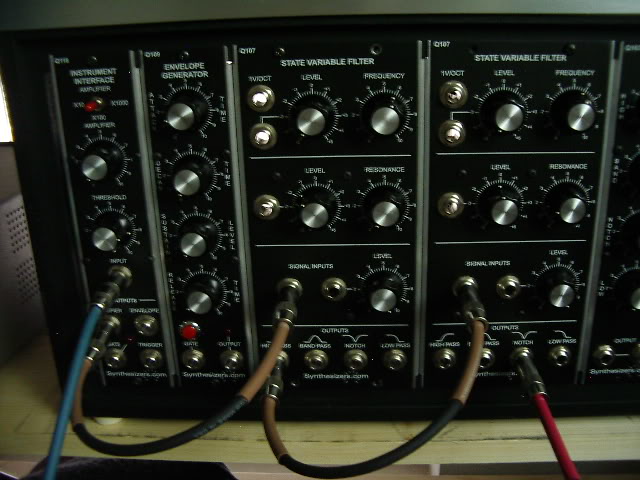
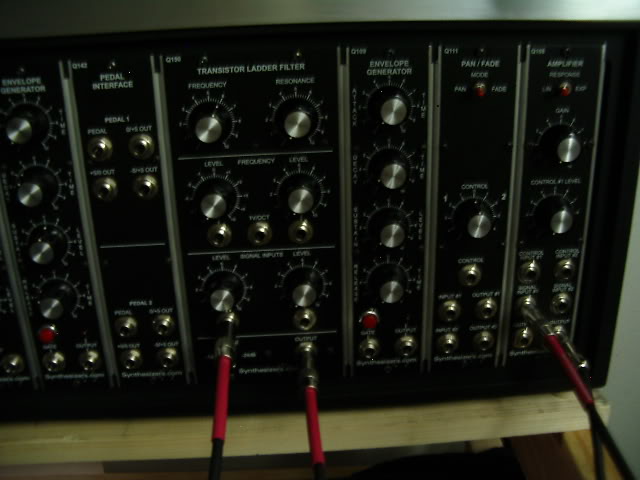
Then it went from Filter #2 to Filter #3, then to the Voltage Controlled Aplifier ("VCA"), then out to the Mackie 1400i (black cord on the far right). The entire patch is done in series, from one module to the next.
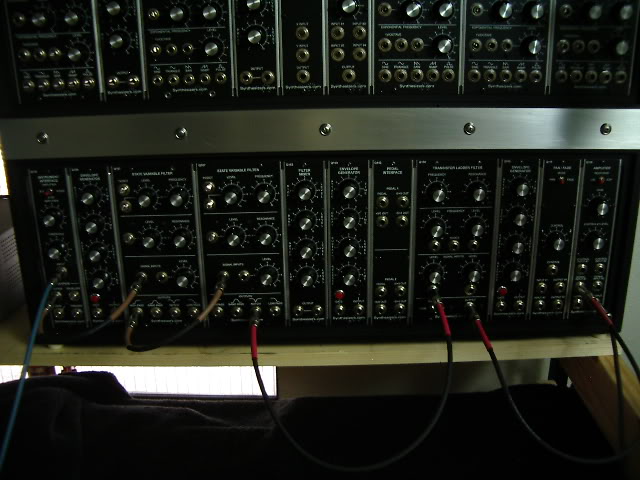
Here's a wide shot of the entire patch. I didn't need to use anything in the upper house, just the five modules I mentioned that are all in the lower house.
Here's the settings.
The blue cord on the left is straight out of my bass going into the instrument interface. It shows how I patched from the Instrument Interface into Filter #1 and then on to Filter #2 ...
Then it went from Filter #2 to Filter #3, then to the Voltage Controlled Aplifier ("VCA"), then out to the Mackie 1400i (black cord on the far right). The entire patch is done in series, from one module to the next.
Here's a wide shot of the entire patch. I didn't need to use anything in the upper house, just the five modules I mentioned that are all in the lower house.

Theres so much going on here.
I can't tell if I love it or hate it.
I don't know whether to laugh or cry.
I can't tell if I have GAS or not.
All I know if my pants feel 2 sizes smaller.

I can't tell if I love it or hate it.
I don't know whether to laugh or cry.
I can't tell if I have GAS or not.
All I know if my pants feel 2 sizes smaller.
Thanks fellas. Like I said, this is stuff that outplays me like kuh-RAZY. Very little compression, tonal range that outruns my skills, great gain structure, dynamic signal processing ... just a lot of positive mojo going on.
And don't let the sheer massiveness of it scare you off. By the time I get it figured out my guess is it will be down to two or three filters, a few routers, and a foot controller ---um .. er five.
The reason I have taken this on is really only one aspect. My whole bass-life I've always struggled with this one stinky issue:
Get the E and A strings sounding good and fat, then the D and G strings sound thin. Tweak it so the D and G strings have Teh Balls and then the E and A strings lose sustain and power. I've never ever owned a bass or a rig that would correct this imbalance. So I set out to use modular synth gear to allow me to use foot controllers to switch pickups mid-riff. That way I could at least have SOME modicum of control over that "you can only have TWO good sounding strings at once" issue.
Well, it blossomed into ~this~. I'm still pursuing my orignal goal of tonal balance over all four strings, but since I've learned that I can not only blend and sweep the pickups with my foot, I can also tweak the EQ at the exact same time with the same foot - I've turned this idea into a quest. To be able to have total control over the electric bass using my fingers, and my feet. With fewer compromises. Instead of simply switching on or off some stomp box, I can actually sweep between filterings while I sweep between pickups. It just can't get any better.
Thanks for sticking with me as I whittle this rough-cut log down to a fine wooden carving.
Like I said, this is stuff that outplays me like kuh-RAZY. Very little compression, tonal range that outruns my skills, great gain structure, dynamic signal processing ... just a lot of positive mojo going on.And don't let the sheer massiveness of it scare you off. By the time I get it figured out my guess is it will be down to two or three filters, a few routers, and a foot controller ---um .. er five.
The reason I have taken this on is really only one aspect. My whole bass-life I've always struggled with this one stinky issue:
Get the E and A strings sounding good and fat, then the D and G strings sound thin. Tweak it so the D and G strings have Teh Balls and then the E and A strings lose sustain and power. I've never ever owned a bass or a rig that would correct this imbalance. So I set out to use modular synth gear to allow me to use foot controllers to switch pickups mid-riff. That way I could at least have SOME modicum of control over that "you can only have TWO good sounding strings at once" issue.
Well, it blossomed into ~this~. I'm still pursuing my orignal goal of tonal balance over all four strings, but since I've learned that I can not only blend and sweep the pickups with my foot, I can also tweak the EQ at the exact same time with the same foot - I've turned this idea into a quest. To be able to have total control over the electric bass using my fingers, and my feet. With fewer compromises. Instead of simply switching on or off some stomp box, I can actually sweep between filterings while I sweep between pickups. It just can't get any better.
Thanks for sticking with me as I whittle this rough-cut log down to a fine wooden carving.
I've had a similar but less drastic problem. Usually it's my E and G. I get one sounding good and the other is thin. I eventually just settled on a mostly flat EQ setting. I think more drastic tone shaping can cause the kind of dead strings you are talking about. Of course the other cure is a good overdrive pedal.
Death by Audio Fuzz War to the rescue!
Death by Audio Fuzz War to the rescue!
In my own experiences OD pedals to the point that the tonal balance is fixed they have to be asserted so heavily to where they completely ~repaint~ the sound. It which point the sound of the bass is lost and covered up by the total reworking the od pedal does to it.
But that's just my own opinion. What works for you - works for you, and there's no sense in arguing that point with someone.
Everyone has their own ideas of ~good~.
In the end, that notion is a good thing. Otherwise life on Earth would be quite boring.
But that's just my own opinion. What works for you - works for you, and there's no sense in arguing that point with someone.
Everyone has their own ideas of ~good~.
In the end, that notion is a good thing. Otherwise life on Earth would be quite boring.


