• TalkBass has been independent since 1998. Add your voice.
    Create a free account to reply to discussions, view embedded media, and browse with fewer display ads.
    Join freeLog in
    Want zero display ads or expanded classifieds tools? Compare plans.

Fatten Up a Live Bass Tone?

"Phat" bass = an emphasis on 250-500 hz to me.

If your amp has the knobs
start by reducing everything but the low mids
until you hear the Phat you like
Then slowly bring up the other frequencies to taste

I'd try that before looking to spend $$ on a solution

I recommend TI's, as they'll be one for the best equipment investments you'll ever make.

Assuming the player actually likes them, and not every one does.
But I love mine! So for me that's truth.
 
Last edited:
  • Like
Reactions: ErikP.Bass
+1 to @oren's suggestion of the Empress Bass Comp. It does some nice compressor style fattening even with the Tone switch off, but that switch adds a "juuuuuuuuust right" amount of color and harmonic content (aka just a smidge of grit) and both sides of that switch sound great. Personal preference will come into play there though... I actually leave the Tone switch off. :cool:

Also take a look at the Origen Effects DCX Bass. Modeled after the UA 610, the best "elevator pitch" I can say is that it brings a fantastic studio fatness to my pedalboard. Pretty amazing pedal that instantly earned a spot on my board, and made a positive enough difference that the sound engineer for my band commented on my sound after I added it. A pleasant side effect of the DCX is that it's actually quite a nice overdrive as well. You can get almost into high gain territory on on the OD side, but the lower gain EQ side is where I live for exactly the type of fattening we're discussing here, and I love the sweet spot right before the gain breaks.

EDIT: Lots of other user feedback in the DCX Bass thread, if anyone's interested as well.

Another less expensive "EQ-y" option along the lines of the DCX is the Aguilar DB 925. Seems to have a similar magical fattening quality to it, and I was just about to pull the trigger on one before the DCX came out. No grit/dirt option on the 925, but you can't argue with the super pedalboard-friendly size. You could tuck one under your board.

But also +1 to @Zbysek's question/suggestion. If the Aguilar you already have is a Tone Hammer, try adding in a little low gain from the AGS circuit... start around 9:00. Credit for this idea goes to @Eublet from this post in the Official Tone Hammer thread. It's about the Tone Hammer amp, but it also carries over to the pedal very nicely.

5sg.
 
Last edited:
I'll add another + for the Sadowsky outboard pre. I find that just a little (like 9 o'clock) on the bass (40Hz) and similar on the treble (4kHz) is plenty. The Q of the 2 bands on the Sadowsky is pretty magical and not easily replicated with other preamps I've used, though I can get pretty close with an MXR M81 with the 250-300Hz region also boosted a few dB.

I also use a Union Tube and Transistor LAB compressor to add a little fatness to the notes. I run mine before the Sadowsky outboard, and I set the threshold so that the LED turns more orange on the bigger notes. It's just enough to thicken the tone without smashing the dynamics or making mud. My live sound and recording engineer friends never complain.
 
Excuse my naïveté but I’m trying to fatten up the sound of my Fender Jazz for live touring. The record I’m touring has a very fat, active, even sounding bass sound. The guy played an active 5 string. Now I’m trying to catch some of that live. I like my Jazz tone but I wish it was more thick and greasy with more sustain. It might be that I need compression, I’m not really sure. What do y’all think? Right now I’m straight into an Aguilar and mostly IEM. In some ways I’d sacrifice some of the detail and prefer just being smooth and fat in the mix.
Most of that will be FOH.
Are you trying to affect your stage monitoring sound?
Compressor is your friend for an even consistency.
 
What you need is a P Bass. :whistle:

This is very close to the answer. A P bass, because of the pickup location, and only having one of them, has a low miid hump right where a J has a dip. A "dip" in this case means a null - at one frequency, literally all the signal cancels. Actually there are a lot of frequencies where that happens on both Ps and J's (it's called a comb filter because it looks kinda like a comb), but it's the locations that make the sound, and the lowest dip frequency wise is the one that is most sonically apparent. As the frequency responses of different strings are different, there is no EQ that can fix a J to sound like a P, or vice versa.

So, practical suggestion: If you want your J to sound "phat", solo the neck pickup. That makes it essentially a P in terms of the low mids - comb filter wise. If that hums too much for your liking, a set of hum cancelling J pickups will get you the sound of one pickup, and quiet. Dimarzio J's would be a good set to start with for this scenario.
 
Will Lee has no problem getting a "fat" sound out of a Jazz (Sadowsky). It's still sparkly on top when he pops - no P pickups, no flat wounds. Just pure Will Lee.


I do find it interesting that he's using the Walter Woods and not the Aguilar. No idea what the DI path is, but the Sadowsky pre is certainly in the path since it's built in to his bass.
 
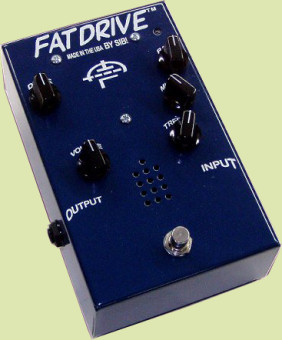
There are so many answers to this. Dirt, compression, eq.

Here's a couple cheap solutions:

Knockout-large.jpg
61VwwlKTcoL._AC_UF894,1000_QL80_.jpg

Either one will bring the phatness
 
  • Like
Reactions: DJ Bebop
You may want to try restringing with flatwound strings as well. I recommend TI's, as they'll be one for the best equipment investments you'll ever make.
View attachment 5154300

Thats an instant “cheat” with a jazz bass. Brings out the mids in the perfect spot. Also, a compressor is a great tool to use with a jazz. If you’re new to them, the Keeley Bassist is a really easy to use great sounding comp. The Cali76 Compact Bass is my favorite.
 
Seymour Duncan Studio Compressor. An “always on” pedal whether stingray, p bass, or a j. My occasional guitarist and longtime friend requests I bring that pedal EVERY time we play. I found I needed a nice compressor when I listened to live recordings of us (3 piece rock band) and found I sounded rather thin. Bought that compressor back in like 2017-2018 and haven’t had a problem sounding thin since
 
Excuse my naïveté but I’m trying to fatten up the sound of my Fender Jazz for live touring. The record I’m touring has a very fat, active, even sounding bass sound. The guy played an active 5 string. Now I’m trying to catch some of that live. I like my Jazz tone but I wish it was more thick and greasy with more sustain. It might be that I need compression, I’m not really sure. What do y’all think? Right now I’m straight into an Aguilar and mostly IEM. In some ways I’d sacrifice some of the detail and prefer just being smooth and fat in the mix.

I have some of the same gear as you, so I just played along to the single. On my passive jazz with 10 year old Chromes, I've got both pickups all the way up (smooth city), or the neck just barely rolled down to about 9.75/10 (closer to the burpiness on the recording). On my tone hammer head, I've got drive all the way down, gain about 9:00, treble at 10:00. Nudging the bass knob up to 1:00 or 2:00 and maybe a similarly small mid boost, near the bottom end of the mid freq knob, is getting me pretty close to that sound. If I had to cover this tonight, that's the setup I'd use - though I'm probably a little lower on the call list than your last sub!

Anyway, give those settings a try. It may or may not work in the band mix, especially as you switch between DB/BG. You might end up favoring the neck pickup and turning up the "drive" knob (I call it the "old-skool magic" knob, and almost always have it at 2-3:00). I'm sure your FOH crew will be more than happy to help with compression at the board, if you decide you want to hear it in your ears. Hope this helps and hope to see you in the PNW soon.
 
  • Like
Reactions: Jason Sypher
I go for a similar sound as my baseline :smug: and with a passive instrument like my Jazz with TI flats, I accomplish it with a Broughton HPF, a tube preamp/DI that passes the transformer out to the amp (like the Noble pre), and some EQ on the amp (I usually boost 80Hz a few dB). With my active basses I will usually also boost the lows a little bit with the onboard preamp (Keith Roscoe's Bart EQ point is 30Hz, Roger Sadowsky's is 40Hz).

The HPF really tightens up the sound, some tube and transformer saturation gives it some sustain, chewiness and girth, and a little boost at 80Hz really fills it out the bottom nicely. That's my formula at least.
 
  • Like
Reactions: Jason Sypher
I ALWAYS use an active J Bass when playing shows..
I can never get my desired sound with a passive J Bass. I don’t use any pedals and the onboard pre just gives you so many options including playing bass in passive mode.
Try a Sadowsky pre am pedal.
 
Last edited:
  • Like
Reactions: daddymactx
Some dirt / drive, and favouring the neck PU slightly (a bit more fat low mids, a bit less overall scoop) could help.
Also a great EQ is one of the most useful piece of gear you can get (could mostly replace an onboard preamp and give you those tone shaping options, also HPF + lows boosted = a nice way to add thickness without mud)
I use Mesa preamp-DI and bypass the amps pre. It doesn't do dirt but the EQ always gives me what I need.
 
  • Like
Reactions: XLunacy