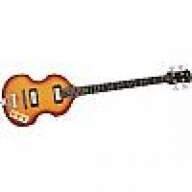
My approach diverges based upon whether it’s an electric bass or a double bass being recorded.
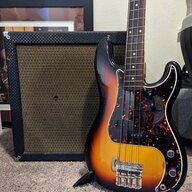
For electric bass I have an old (long discontinued) AKG mic that I use on the speaker cabinet. I can’t remember the model number, but it doesn’t matter as its long out of production.
It was originally, especially designed for use on bass instruments and I’ve never seen another anywhere for many decades. Joe Meek similarly had an old AKG, but I can’t remember what its model number was either.
Neither looked like the typical, ubiquitous kick drum mics, that are commonly used today, but perhaps they were some kinds of forerunner from the distant past, that have been long superseded. Mine came with a special stand (Joe’s did too).
I normally plug the bass into a D. I. Box and that to an amplifier. (If one is being used, but it isn’t always and that alone can make a clear tonal difference from track to track on an album). There are a variety of passive and active D. I. options, depending on the style of music being recorded the player and the bass being used. I take the signal from a D.I. to one channel, from whatever is chosen.
The mic goes to another channel. Normally I have the mic fairly close to the speaker, either centred on the cone, at the edge or halfway between dependant of the style of music. Some music styles benefit from the mic being a bit further away. Typically, I am not trying to record the room itself, and don’t want omni directional bleed floating around, involving deep, colouring frequencies that might interfere with other musician’s efforts occurring simultaneously. (Especially piano or orchestral harp which both feature very low frequency notes and an extremely wide compass.
I record the mic and D.I. to separate tracks and either chose one or the other, or mix both.
Plenty of great mics to choose from out there, but it worth looking hard at the frequency response of any mic you are thinking of using.
If you are not in the habit. Not only of just studying the frequency response in numbers of every mic you own, but rather, the shape of their frequency response curve over their complete range, I would strongly encourage you to do so, and carefully listen to them.
Like musical instruments (which feature break points in their compasses, greatly affecting tonal expression at various points, mics too can sound different in tonality in different parts of their range (although the transition is usually smoother) so listening to the music, knowing what part of the instruments range will dominate, and knowing how that mics tonality will render that, is I feel, all part of deciding what mic will compliment that music best.
Moving coil dynamics, ribbon dynamics and condensers do give entirely different tonal colours, so what dictates everything for me is the actually music to be recorded, the Player themselves who lest we forget actually produce the sound to be recorded in the first place and the tonality of the instrument involved.
But all that aside, for electric bass I typically default to a vintage AKG mic, actually originally designed and manufactured for the job.
Recording double bass is a completely different picture altogether.









 ::
::