Enjoy the benefits of a premium membership!
Upgrade Account
-
TalkBass has been independent since 1998. Add your voice.
Create a free account to reply to discussions, view embedded media, and browse with fewer display ads.
Join free Log in
Want zero display ads or expanded classifieds tools? Compare plans.
You are using an out of date browser. It may not display this or other websites correctly.
You should upgrade or use an alternative browser.
You should upgrade or use an alternative browser.
Favorite studio microphones for bass
- Thread starter scott sinner
- Start date
More options
Who Replied?

VMS is an outstanding product that sounds great and is highly flexible. A friend runs a studio south of Seattle and has a full array of the LDC and SDC mic variants, and the 8-channel VMS mic pre. It's an impressive system that I'm always a little skeptical of at the start of a session but once he starts working I immediately forget about the modeling and just hear great results. The C800G emulation is fantastic which is no small feat given how distinct the sound of that mic is, particularly on male vocals.I know it (and Slate generally) might not be to everyone's taste, but I love it.
VMS is also a perfect example of Slate's typical marketing. I say this as someone that uses Slate VSX frequently and generally find that they (he and Fabrice) put out excellent products. When VMS came out Steven announced that it was revolutionary and nothing else was capable of doing what it did because of proprietary technology. Despite that there are multiple competitors that all do the same thing. When VMS came out Steven also said that you have to use it with Slate's ultra-linear preamps in order for the modeling to work because of some calibration between the preamp, the physical microphone and the software microphone models. After people started posting tests showing that the Slate preamp was basically no different than any other transformerless preamp like you'd find in a prosumer grade interface Steven said that you could use a different preamp but your results would be less effective, and then backed it down further to say that you could use any preamp and VMS will still work great.
Slate makes excellent products, I just wish they would cool it a little with their marketing approach. That and to ditch physical iLok authorization for their plugins.

I've had good results with AKG 414 (more properly an Advanced Audio CM414), MD 421s, and Beyerdynamic M380.

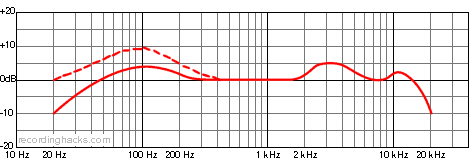
Have a Sennheiser 421 that's recorded bass, mic'ed bass cabs at live shows, and gave me the only in-home piano recordings I have of my late Mom(left the mic with her plugged into a cassette deck/recorder that she could press 1 button on and play into). Got a surprise in Memphis last month when I got picked up at the airport and driven to an old studio there. They gave me this(old Ampeg, DI, and mic). Had my Helix with me but preferred this method as the engineer and I are both familiar with tube amps. Came out real nice but I forgot to ID the mic. Anyone here ID it?
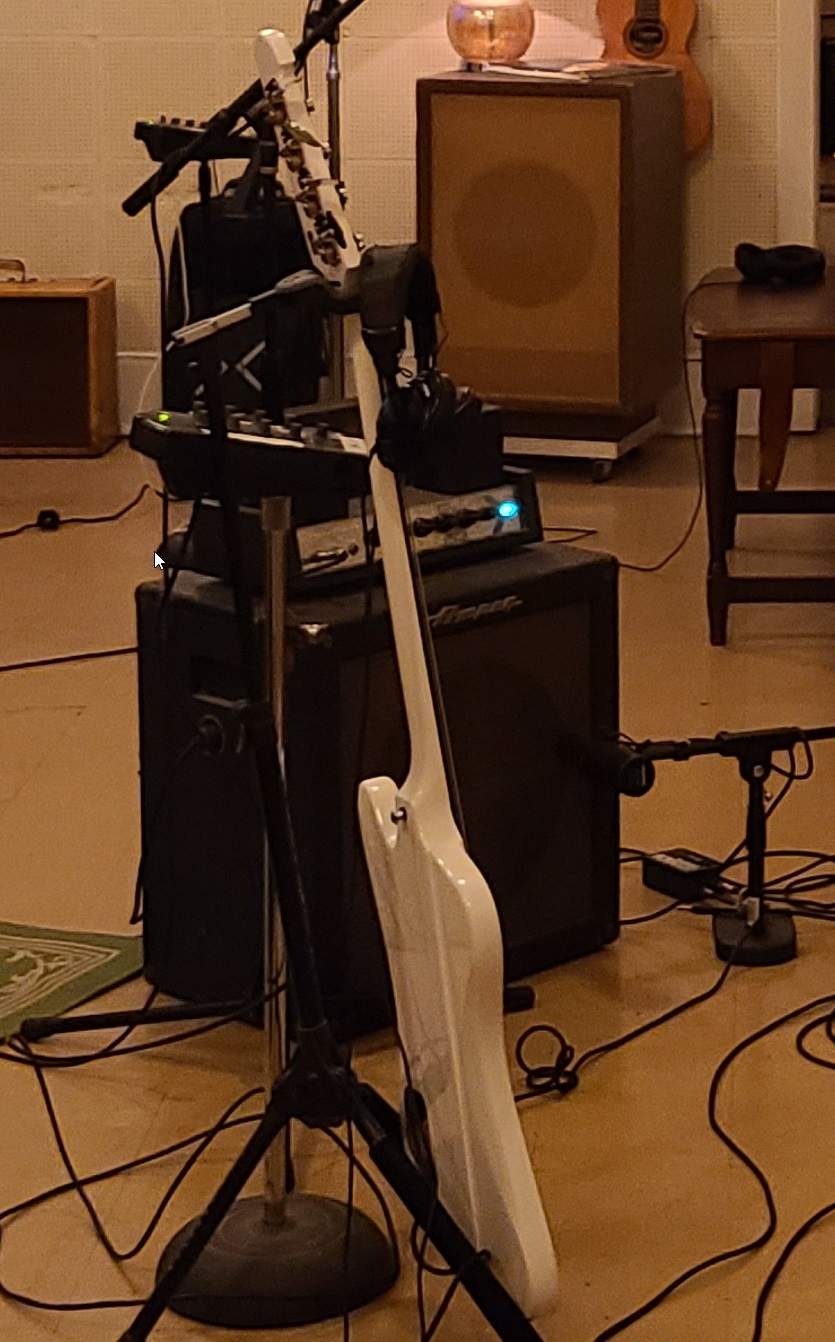
Mic is in the upper left of this picture.
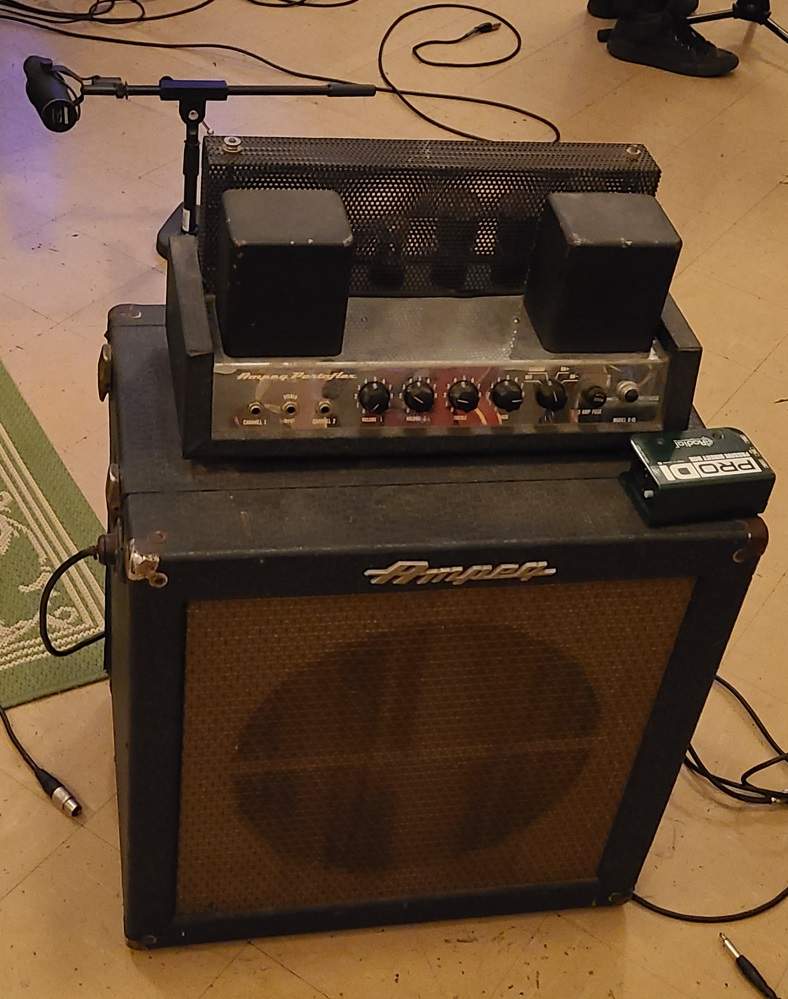
Mic is in the upper left of this picture.
kinda looks like a Shure SM7-B but I could be wrong.
regardless, that is a sweet recording setup that will always sound good!
regardless, that is a sweet recording setup that will always sound good!

As @Slough Feg Bass commented; That appears to be a Shure SM7B, not a Senheiser MD421. The giant cylinder body along with the removed wind screen is a dead giveaway for an SM7B. The MD421 has a comparatively small and tapered back end that goes up to a non-removal headbasket without a built-in wind screen that's lager than the back.
I'd say, you're not wrong.kinda looks like a Shure SM7-B but I could be wrong.
regardless, that is a sweet recording setup that will always sound good!
I like the Sennheiser MD421, the Beyer M160 and the Heil PR40 (large diaphragm dynamic just like the MD421). But most of the times, it's just a good DI and some outboard gear.


I like my Heil PR40, but I'm no recording engineer, just a homebrew hack.
I was a full time professional recording engineer for over 20 years and I like the Heil PR40 too. ::
 ::
::Electro-Voice RE20 and Neumann TLM-170i would be the other mics on my go-to Reach For These First list when mic'ing bass cabs in the studio. I think I actually prefer the Heil to the E-V.

ATK (AudioTestKitchen) has the modeled and also copied mics. You can compare the original to the models or copies.
In implementation some of the models are just fancy EQ/DSP, but given any good mic you can apply some EQ and get a great mimic sound anyway.
Getting a good clean DI track will give you the ability to do some amazing things in production.
There are some digital domain mic/room modeling plugins. They can take a room in a famous recording studio, let you place a speaker and mic, and essentially re-amp.
A mic may seem simple, but can be hard to deal with natural things like bleed, trucks driving by, mechanical pedal clunks (like from pianos), foot tapping, over-driving a vocal mic with a loud cabinet, rumble from the AC, ...
In implementation some of the models are just fancy EQ/DSP, but given any good mic you can apply some EQ and get a great mimic sound anyway.
Getting a good clean DI track will give you the ability to do some amazing things in production.
There are some digital domain mic/room modeling plugins. They can take a room in a famous recording studio, let you place a speaker and mic, and essentially re-amp.
A mic may seem simple, but can be hard to deal with natural things like bleed, trucks driving by, mechanical pedal clunks (like from pianos), foot tapping, over-driving a vocal mic with a loud cabinet, rumble from the AC, ...
kinda looks like a Shure SM7-B but I could be wrong.
regardless, that is a sweet recording setup that will always sound good!
Thanks to you both!As @Slough Feg Bass commented; That appears to be a Shure SM7B, not a Senheiser MD421. The giant cylinder body along with the removed wind screen is a dead giveaway for an SM7B.
I'm familiar with the Senheiser and have one. The Shure goes on my wish list as it also gets great reviews for many other uses.

My favorite mic for bass speaker is the omnidirectional Electro-Voice RE55. They're getting pretty hard to find, though.




Love my e609. Run it along side a SM57 along with DI out, gives me 3 tracks to choose from or blend.I had a lot of success with the Sennheiser e609 even though it’s marketed as a guitar amp microphone.
I didn’t look much further than this + DI as it didn’t need a whole lot of EQ to sit nicely.