• TalkBass has been independent since 1998. Add your voice.
    Create a free account to reply to discussions, view embedded media, and browse with fewer display ads.
    Join freeLog in
    Want zero display ads or expanded classifieds tools? Compare plans.

Fender Flats

A couple of things regarding the new 9050L I just installed...

Going from GHS Pressurewound 44-106 in DGCF (148 lbs. in total tension) to 9050L in EADG, I expected a fair amount of setup tweaks. But as it turns out, all it took was a quarter turn of the truss rod and minor intonation adjustments.

I've always insisted on cleaning brand new flats with an alcohol wipe before installation to get rid of any gunk from the factory. Fender 9050s and D'Addario Chromes in particular are notorious for being sticky when new. After a thorough wipedown they feel just as smooth as any flats should be.

Here's what ended up on the alcohol wipe...

View attachment 5250079
:eek: But…the gunk holds the funk! :laugh:

That’s kinda eye opening actually. I think I’ll start wiping new strings too. Thanks yet again!
 
After 2 months of playing these strings I have no love for them.
Metallic sound when played finger style still there. The low E is not very focused sounding.
A little honky sounding in the mids. Back to LaBella LTF’s or Dunlop flats for me.
Well, bummer. Sorry it didn't work out for ya. Can't say you didn't give it a good try though, after 2 months.
 
Wilkins Marlin jazz. Fralins, passive.
I’ve used LTF’s, Deep Talkin, Dunlops, GHS Precision Flats and Fenders.
It’s all a matter of taste.
It's all good. Just note that 1) all of those others are flatwounds of the traditional camp (minus the Dunlops, which are somewhere between traditional and modern) and usually need little time to settle; and that 2) the clang of new Fenders eventually subsides (precious nobody reports them keeping that initial tone for several months, let alone years).
You could even consider keeping them on a seldom-used bass of yours, and play it regularly at home until they break in.
 
Last edited:
  • Like
Reactions: Phaidrus
It's all good. Just note that 1) all of those others are flatwounds of the traditional camp (minus the Dunlops, which are somewhere between traditional and modern) and usually need little time to settle; and that 2) the clang of new Fenders eventually subsides (precious nobody reports them keeping that initial tone for several months, let alone years).
You could even consider keeping them on a seldom-used bass of yours, and play it a little bit until they break in.

Mine took a few months, certainly more than two, until they sounded relatively broken in. After almost a year they still have some way to go to get there. Where? To flats nirvana!

Edit: It's the 9050M set on my Pbass.
 
Last edited:
Mine took a few months, certainly more than two, until they sounded relatively broken in. After almost a year they still have some way to go to get there. Where? To flats nirvana!

Edit: It's the 9050M set on my Pbass.
But could you tell at 2 months whether it was going in the right direction, or not? I would think that if a string is going to be one you like ultimately, it would not sound bad to you after that time.

(FWIW, I put a 9050L set on my jazz in August, and I've liked the sound at all points since.)
 
  • Like
Reactions: Phaidrus
But could you tell at 2 months whether it was going in the right direction, or not? I would think that if a string is going to be one you like ultimately, it would not sound bad to you after that time.

(FWIW, I put a 9050L set on my jazz in August, and I've liked the sound at all points since.)

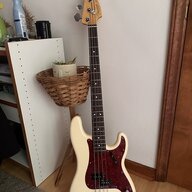
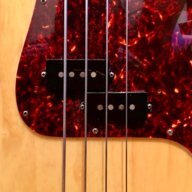
Good question. Two months in I wasn't really sure whether they were going in the right direction, which in the case of this Pbass of mine would be a thick low mids tone for reggae dub. The fact (or "fact") that this genre rather calls for a Jbass and not a Pbass was making matters more complicated. The tone I was getting wasn't what I was looking for. But then I came across a YouTube video of a gentleman playing a Bob Marley track on Pbass with 9050M and having a good reggae tone, fat and bouncy. This was the sign to hang on, as I did. Looks like it was the right thing. Depending on EQing, my setup (Pbass with PV63 pup + 9050M) can yield dub tones (esp. plucking near the neck) but also more modern flatwound tones, like say, in Talisman and in La femme d'argent by Air (French Band) or in Get Lucky by Daft Punk.

Here's the vid with the Marley track. Tremayne is a solid bass player.


And then also this track.

 
Last edited:
  • Like
Reactions: Kyle_S and Pier_
Great tone 9050s on a short scale Fender.


Screen Shot 2023-11-21 at 12.30.23.png
 
I’m curious to ask players here rocking the 9050M’s… has anyone needed to make adjustments to their nut slots to accommodate the beefy 55, 70, and 90 strings? That G especially… at 55 it doesn’t really seem like it would be an easy fit on a standard bass nut.

Didn't have to make any adjustments to the nut of my 2008 Am.Std. Pbass.

It took me a while to decide for the 9050M set fearing that tension would be excessive and consequently playability as well as the neck of the bass would suffer.

It turned out that tension is sort of normal/average for flats. For reference, before the 9050M set this Pbass had LaBella 760FS (45-65-85-105) and required no truss rod adjustment switching to the 9050M. My impression is that the E and A strings of the 9050M have less tension than the ones of the 760FS set, while the D and G of the 9050M have roughly the same tension as the ones of the 760FS set.

The 9050M also feel noticeably more flexible than the 760FS.

All in all, the 9050M set is nothing to be afraid of. Nice tone once broken in (it takes some months) and easy to play. And iconic green silks!

If memory serves, the designer @hasbeen of the 9050s explained here on TB that their playability and low tension is due to the thinner core wire used to this end by design.
 
Last edited:
  • Like
Reactions: Bass Invader
I’m curious to ask players here rocking the 9050M’s… has anyone needed to make adjustments to their nut slots to accommodate the beefy 55, 70, and 90 strings? That G especially… at 55 it doesn’t really seem like it would be an easy fit on a standard bass nut.
If you want to know beforehand if the .055" will fit, just get an acoustic guitar .056" (they're relatively cheap and readily available) and try fitting it in the G string slot.
 
Mine took a few months, certainly more than two, until they sounded relatively broken in. After almost a year they still have some way to go to get there. Where? To flats nirvana!

Edit: It's the 9050M set on my Pbass.

Agreed. They definitely need longer than two months to mellow out. They do share some similarities with D'Addario Chromes so at first I thought the Fender flats would behave the same way and just go straight from metallic/clanky to dull/inarticulate. But I stuck with them and the Fender flats definitely age in a MUCH nicer way than D'A Chromes.

They're not my number one favourite flats, and they'll never get as dark/fat sounding as LaBella or GHS but I like them a lot. I would call them "semi-modern" allround flats, which puts them in the same category as Dunlop flats. But I like the Fenders better (and they're much cheaper than Dunlops too).

I use the 9050ML set btw. I generally like 45-105 with roundwounds and slightly lighter gauges with flats so this set seemed like the best option for me. As a reference the 9050ML set feels slightly stiffer overall than a typical 45-105 roundwound set.
 
  • Like
Reactions: Kyle_S and Phaidrus
Didn't have to make any adjustments to the nut of my 2008 Am.Std. Pbass.

It took me a while to decide for the 9050M set fearing that tension would be excessive and consequently playability as well as the neck of the bass would suffer.

It turned out that tension is sort of normal/average for flats. For reference, before the 9050M set this Pbass had LaBella 760FS (45-65-85-105) and required no truss rod adjustment switching to the 9050M. My impression is that the E and A strings of the 9050M have less tension than the ones of the 760FS set, while the D and G of the 9050M have roughly the same tension as the ones of the 760FS set.

The 9050M also feel noticeably more flexible than the 760FS.

All in all, the 9050M set is nothing to be afraid of. Nice tone once broken in (it takes some months) and easy to play. And iconic green silks!

If memory serves, the designer @hasbeen of the 9050s explained here on TB that their playability and low tension is due to the thinner core wire used to this end by design.
Thanks very much for this... very useful reference point. I know (and like) the tension of Labella 760FS very much, so sounds like 9050M might be a hit. Previously when I was primarily a fingerstyle player the 9050L's were a personal favourite, but the past years I've switched to pick more or less full-time. I've been using 760FS but have been considering going back to "old faithful" 9050 flats, so seems like the 9050M might be the perfect choice. I find that 9050L's are just a bit too low tension for playing with the heavy picks I like.

Thanks!
 
TIJFs are supposed to be the holy grail of bass strings, but I've read enough about them to know they're not for me personally. Just a personal choice...

TI flats are rather unique strings so you tend to get very exaggerated reviews from both the people who love them and the people who hate them. I don't think you will ever truly know whether these strings can work for you unless you actually try them yourself.

They're definitely not some kind of magical solution to everyone's strings problems and they certainly won't be suitable for all playing styles and all genres of music. Saying they're the "best" strings ever (like some die hard TIJF fans tend to do) is quite frankly ridiculous. This will always depend on the playing style and the style of music.

On the other hand, their floppiness is a bit exaggerated IMO. Personally I can't play 40-100 roundwounds. That's too floppy for my playing style, I get terrible fret buzz even with a perfect setup. But I can easily play TI flats with normal action. I suspect the internal silk layer may dampen the vibrations somewhat, which perhaps make them less prone to fret buzz than the gauges and supple feel may suggest. The silk layer doesn't seem to affect the sustain much though. They have far better sustain than any other flats I've played (and I've played most). Ideally I would have wanted the A-string to be SLIGHTLY stiffer but the rest of the set isn't really that floppy IMO. At least if we're talking about the long scale set. The short scale set isn't nearly as nice IMO.

If I had to describe them I would say:

-By far the most articulate flats you'll ever find. In fact, they're one of the most articulate strings you'll ever find in ANY category. The A-string is a bit light tension for my taste but nothing I can't handle (as a reference I prefer the stiffness I get from 45-105 with most roundwounds).

-Brighter than most flats but not in a zingy/metallic way (except maybe for the first 5 minutes). It's more about a nice, smooth upper mid presence. A very "organic" tone.

-They are known to "break in" really fast but in truth they keep mellowing out over time. When comparing sets that are 1-2 years old with sets that are 10+ years old they sound VERY different. Both sound great but the older ones are significantly more mellow. Still VERY nice though. Perhaps even nicer.

-The lows may seem a bit lacking when comparing directly with other strings but in reality they are VERY nicely balanced. After playing TI flats for a while I actually find many other strings to have bloated lows. It will depend on the bass/amp/eq settings of course.

-They seem to last practically forever when installed on a bass but they do NOT seem to hold up well if the tension is completely loosened (for maintenance or moving them to a different bass). I've ruined several sets this way.

-Definitely not the right strings for an "old school" flatwounds tone. I see them as a more articulate and smoother, more "organic" sounding alternative to roundwounds.


I'm not saying these strings will necessarily work for you of course. I can't possibly know that. But I honestly don't think you'll ever know without actually trying them. The gauges, and the supple feel of the TIJFs shouldn't work for my playing style at all, in theory. But they do. And the tone, on the right bass, is absolutely gorgeous! I particularly love them on Danos and single coil P-basses, where the nicely balanced lows and the lovely, smooth upper mid presence balance out the inherent scooped/boomy character of these instruments. I really like them on J-basses too. With many split coil P-basses I find them a bit too mid focused for my playing style. It will depend on the pickup of course. With darker sounding split coils, like the PV63, I like them a lot.

Do I use TIJFs for every song? Absolutely not, but I probably could if I had to.

Can I ever see myself NOT owning a bass with TIJFs installed? Absolutely not.

The TIJFs aren't for everyone of course. If I only owned one bass I would probably not use them. But they are totally unique and every serious bass player should try them at some point IMO. You REALLY won't know until you try them yourself. And if you ever do, allow yourself some time to adapt to their unique "feel" before you make up your mind.
 
Last edited:
I never realized that La Femme d’Argent was flats!!! Great song and now I’m off to play it.

Let me put it this way, I'm 80% sure it's flats on 100% of what they recorded with a bass.

Or let me put this another way, I'm 100% sure it's flats on 80% of what they recorded with a bass.

TI flats are rather unique strings so you tend to get very exaggerated reviews from both the people who love them and the people who hate them. I don't think you will ever truly know whether these strings can work for you unless you actually try them yourself.

Ain't that the truth... like always.


I tried Fender 9050L flats on my Jazz with Fralin pickups before I chose to keep 9050Ms on it. For what it's worth, I'd characterize 9050 flats on my Jazz as keeping use of the VVT and the mixing of all three extremely relevant. I can go from a tubby dub bass tone to a somewhat bright grinding tone and the spectrum between with it. (e.g. Including that general-purpose Fender 34" scale bass tone that people who don't know struggle to discern as a P or a J.)

I briefly tried 9050 flats on a Nash PB but the combination didn't please me. IMO, they're in the flats for Jazz bass lane. It's connected with the relative openness and versatility of the Jazz bass sound.

Dunlop flats--if you get the G string to intonate properly--and Monel Rotosound Jazz 77 can suit a P or J, IMO.

I like the sound and feel of 45-105 or 50-110 Dunlop flats but they have some practical or mechanical issues I won't tolerate; they're so close but so far away from satisfactory to me.

GHS P flats and Labella DTB 760-series flats could probably work on a Jazz bass but IMO they best fit in the P bass lane.
 
Last edited:
  • Like
Reactions: Phaidrus