
Enjoy the benefits of a premium membership!
Upgrade Account
-
TalkBass has been independent since 1998. Add your voice.
Create a free account to reply to discussions, view embedded media, and browse with fewer display ads.
Join free Log in
Want zero display ads or expanded classifieds tools? Compare plans.
You are using an out of date browser. It may not display this or other websites correctly.
You should upgrade or use an alternative browser.
You should upgrade or use an alternative browser.
Fender Jazz bass pick ups
- Thread starter briandavismurph
- Start date
More options
Who Replied?

Ahem....
So, yeah, Jazz Basses and single coil hum. Well, it happens.
Here’s the way I see the deal. The Jazz Bass can be an absolutely stellar versatile bass guitar.
But, Physics happens.
The main culprit is high power incandescent lighting systems. Oh yeah, neon also. Both of those will light up an unbalanced Jazz Bass like the nation’s Christmas Tree.
I did a gig where I backed up Frank Gorshen’s Las Vegas act. If you don’t know Frank Gorshen, there’s always Google. Anyhow, rehearsal was great. Get to the gig, house lights come up and my ‘96 Jazz ‘62 RI is howling like a banshee with everyone on stage, including Frank, turning around looking at moi. The thing about a performance stage is there is no hole to go crawl into.
Anyhow, I of course leveled the pickups and got on with the gig. But, doing that does severely limit what the bass can do.
Next thing I did was mess with the humcancelling pickups, such as the DM Ultra Jazz; but, none of those actually sounded right. Until I eventually stumbled on the Delano JMVC’s. Those pickups actually sound old school; AND they produce a pretty convincing P vibe - something the SC’s can’t do.
This is where I’ve landed, and happy to be here. It’s home now.
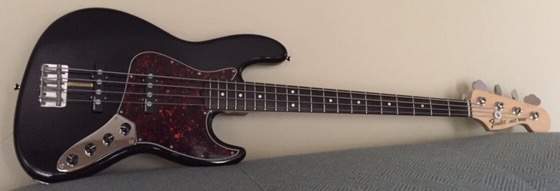
So, yeah, Jazz Basses and single coil hum. Well, it happens.
Here’s the way I see the deal. The Jazz Bass can be an absolutely stellar versatile bass guitar.
But, Physics happens.
The main culprit is high power incandescent lighting systems. Oh yeah, neon also. Both of those will light up an unbalanced Jazz Bass like the nation’s Christmas Tree.
I did a gig where I backed up Frank Gorshen’s Las Vegas act. If you don’t know Frank Gorshen, there’s always Google. Anyhow, rehearsal was great. Get to the gig, house lights come up and my ‘96 Jazz ‘62 RI is howling like a banshee with everyone on stage, including Frank, turning around looking at moi. The thing about a performance stage is there is no hole to go crawl into.
Anyhow, I of course leveled the pickups and got on with the gig. But, doing that does severely limit what the bass can do.
Next thing I did was mess with the humcancelling pickups, such as the DM Ultra Jazz; but, none of those actually sounded right. Until I eventually stumbled on the Delano JMVC’s. Those pickups actually sound old school; AND they produce a pretty convincing P vibe - something the SC’s can’t do.
This is where I’ve landed, and happy to be here. It’s home now.

Star ground? Come on man, it’s not a substation transformer. But yes, shielding is a good idea.I had a similar problem with a Geddy ...star ground and sheilding totally solved it
Ahem....
So, yeah, Jazz Basses and single coil hum. Well, it happens.
Here’s the way I see the deal. The Jazz Bass can be an absolutely stellar versatile bass guitar.
But, Physics happens.
The main culprit is high power incandescent lighting systems. Oh yeah, neon also. Both of those will light up an unbalanced Jazz Bass like the nation’s Christmas Tree.
I did a gig where I backed up Frank Gorshen’s Las Vegas act. If you don’t know Frank Gorshen, there’s always Google. Anyhow, rehearsal was great. Get to the gig, house lights come up and my ‘96 Jazz ‘62 RI is howling like a banshee with everyone on stage, including Frank, turning around looking at moi. The thing about a performance stage is there is no hole to go crawl into.
Anyhow, I of course leveled the pickups and got on with the gig. But, doing that does severely limit what the bass can do.
Next thing I did was mess with the humcancelling pickups, such as the DM Ultra Jazz; but, none of those actually sounded right. Until I eventually stumbled on the Delano JMVC’s. Those pickups actually sound old school; AND they produce a pretty convincing P vibe - something the SC’s can’t do.
This is where I’ve landed, and happy to be here. It’s home now.
View attachment 3254664
When I see 4 knobs on a jazz bass I know there’s something amiss.....
Looks great

By my watch, it’s almost 2019. Why anyone still makes basses that hum is a mystery to me.
The mystery reason is "tone".
I recently fell back in love with my Jazz Basses after using a Precision as my primary bass by using this wiring setup:I have four different precisions and I play them all the time.
I wanted to try jazz just to see how I am I like it, and I haven’t given up yet
It can use the stock components, though I swapped for 500k pots. Essentially, the end result is a master volume and tone with the center pot being a "series blender." With it down all of the way, it's just the neck pickup soloed. As you gradually roll up the bridge pickup blend, it mixes it in series, making the bass fatter and louder. I've found with the blend at about 40% and tone control around 70%, you get an extremely convincing Precision tone. With everything up all of the way, it's a super fat and loud version of the usual "everything at 100%" Jazz Bass sound. You also get a master volume out of this deal so you can leave your blend and tone settings alone to adjust your overall volume.
I'll also echo the masses here and stress proper copper shielding, including shielding the entire pickguard. I just went through all of my basses and fully shielded them and re-did the factory bridge grounds because the continuity wasn't that great. Even though the adhesive on the copper foil is conductive, I still solder the joints where strips overlap because over time the adhesive loses some adhesion and you don't get perfect continuity, and therefore less effective shielding. I also run a common ground wire between all of the pots and the jack in case one of the components works its way loose on a gig; this prevents the signal from cutting out on a Jazz Bass if your jack became loose, for example. Finally, I solder a wire from the shield to the volume pot so, once again, you don't have rely solely on mechanical contact between the control plate and shield for continuity. You'll also want to run a ground wire to the bridge pickup cavity's shielding.
I just put a set of 1/4 Pounders in one of my Jazzes and they have a grounded strip of copper foil on the bottom of the coil, a similar concept to the brass shielding plate Fender used to put in the original iterations of the Jazz Bass under the pickups. So you effectively added some degree of shielding directly under the pickup, in other words.Cant help much. My MIM Jazz does not hum. Nada. Zero.
Of course I did replace the crap pots and jack when I installed Seymour Quarter Pound pickups.
Maybe that helped the issue? No clue, but I did not add shielding, just the stock paint.

I did a gig where I backed up Frank Gorshen’s Las Vegas act. If you don’t know Frank Gorshen, there’s always Google.
?

Couple days ago I bought used Squier VM Jazz from 2012 which already had SD SJB-3S installed by previous owner(s). I had to take it all apart for cleaning and I redid all the soldering and also looked at the pickups. It also came with a set of DiMarzio Area J (DP247 and DP248) as a bonus but I haven't tinkered with those yet.I just put a set of 1/4 Pounders in one of my Jazzes and they have a grounded strip of copper foil on the bottom of the coil, a similar concept to the brass shielding plate Fender used to put in the original iterations of the Jazz Bass under the pickups. So you effectively added some degree of shielding directly under the pickup, in other words.
The bridge SJB-3B pickup does have staggered pole pieces for D and A strings and also has a copper stripe on the bottom that is also soldered to the ground, the main idea I guess is to have pole pieces grounded so they don't make that sound when touched by fingers.
The neck SJB-3N pickup however does not have staggered pole pieces and they also don't stick out of the coil/bobbin, so with the pickup cover on, they seem like they are "sunken". This pickup also does not have the copper stripe at the bottom grounding the pole pieces. I guess there's no need for it, since the pole pieces don't stick out of the pickup cover, but everywhere I look around for pictures, I don't see them Link Removed (pole pieces aren't staggered and are 'sunken'), instead Link Removed (pole pieces are staggered and not sunken). Also in couple of places I've seen photos of SJB-3N pickup actually having a copper grounding stripe at the bottom.
The pickups are authentic and not fake, but is that normal? Maybe it's some older model or variant?
My new QP set has the staggered poles and copper strip on both pickups. I’m thinking the neck pickup may be from an older set as I’ve seen what you’re describing.Couple days ago I bought used Squier VM Jazz from 2012 which already had SD SJB-3S installed by previous owner(s). I had to take it all apart for cleaning and I redid all the soldering and also looked at the pickups. It also came with a set of DiMarzio Area J (DP247 and DP248) as a bonus but I haven't tinkered with those yet.
The bridge SJB-3B pickup does have staggered pole pieces for D and A strings and also has a copper stripe on the bottom that is also soldered to the ground, the main idea I guess is to have pole pieces grounded so they don't make that sound when touched by fingers.
The neck SJB-3N pickup however does not have staggered pole pieces and they also don't stick out of the coil/bobbin, so with the pickup cover on, they seem like they are "sunken". This pickup also does not have the copper stripe at the bottom grounding the pole pieces. I guess there's no need for it, since the pole pieces don't stick out of the pickup cover, but everywhere I look around for pictures, I don't see them Link Removed (pole pieces aren't staggered and are 'sunken'), instead Link Removed (pole pieces are staggered and not sunken). Also in couple of places I've seen photos of SJB-3N pickup actually having a copper grounding stripe at the bottom.
The pickups are authentic and not fake, but is that normal? Maybe it's some older model or variant?
I have another Jazz with a set of Model J pickups and those are great, too. Their obvious difference is that they are noise cancelling, so if you like to solo your pickups a lot they are handy.

Electrical buzzing in Jazz bass...
To sort a shielding issue make sure the pickup cavities are lined with copper sheeting or painted with good quality conductive paint (newer basses should already have painted pickup cavities). Make sure there is a wire from the copper sheeting to a common earth screw in the wall of the preamp cavity. If painted, the paint should connect the pickup and preamp cavities. Make sure there is a cable from the bridge to the earth screw. Connect a cable from the earth screw to the middle (earth) terminal of the output jack. This ensures good earthing. It's not as crucial to line the preamp cavity with copper sheeting or paint especially if it's an active bass. Passive electrics in this cavity are more susceptible and may need shielding. The crucial thing is shielding the pickup cavities, especially for non-hum cancelling single coil pickups.
Just did the above to shield a Fender Marcus Miller bass which only needed the pickup cavities lined. The preamp cavity was already painted. I did line the top edge of the preamp cavity and bent the copper sheeting over onto the top of the bass so the underside of plastic plate (with the knobs on) would touch it. The underside of the plate is a silver material so this ensured it was earthed. The earth screw went through this copper sheeting. I didn't line the rest of the preamp cavity. I probably didn't need to line any of it but the underside of the plate would not have touched the paint in the cavity. If I did it again I'd probably just line the pickup cavities first to see if that cured the buzzing.
- If it gets louder when you touch the strings there's an earthing issue.
- If it gets quieter or stops when you touch the strings there's a shielding issue.
- If the noise stays the same when you touch the strings there maybe a damaged component.
To sort a shielding issue make sure the pickup cavities are lined with copper sheeting or painted with good quality conductive paint (newer basses should already have painted pickup cavities). Make sure there is a wire from the copper sheeting to a common earth screw in the wall of the preamp cavity. If painted, the paint should connect the pickup and preamp cavities. Make sure there is a cable from the bridge to the earth screw. Connect a cable from the earth screw to the middle (earth) terminal of the output jack. This ensures good earthing. It's not as crucial to line the preamp cavity with copper sheeting or paint especially if it's an active bass. Passive electrics in this cavity are more susceptible and may need shielding. The crucial thing is shielding the pickup cavities, especially for non-hum cancelling single coil pickups.
Just did the above to shield a Fender Marcus Miller bass which only needed the pickup cavities lined. The preamp cavity was already painted. I did line the top edge of the preamp cavity and bent the copper sheeting over onto the top of the bass so the underside of plastic plate (with the knobs on) would touch it. The underside of the plate is a silver material so this ensured it was earthed. The earth screw went through this copper sheeting. I didn't line the rest of the preamp cavity. I probably didn't need to line any of it but the underside of the plate would not have touched the paint in the cavity. If I did it again I'd probably just line the pickup cavities first to see if that cured the buzzing.

Here's your sticky-on-one-side copper foil.Use copper foil which is sticky on one side. Apply in small sections if the pickup cavities are an awkward shape. Try to make the cavities "waterproof" so to speak like lining a pond.
(Yes, I know it's a 1/2" roll, and it will take longer to cover large flat areas like pickguards than using wider tape. But trying to shield tight spaces with wider tape takes a whole lot longer, so it's a net time saving. Or you could just get two rolls, one of them wider.)
As an eBay Associate, TalkBass may earn a commission from qualifying purchases.
Here's your sticky-on-one-side copper foil.
(Yes, I know it's a 1/2" roll, and it will take longer to cover large flat areas like pickguards than using wider tape. But trying to shield tight spaces with wider tape takes a whole lot longer, so it's a net time saving. Or you could just get two rolls, one of them wider.)
I used a copper sheet (12 x 12 inches) and cut out the pickup shapes for the bottom of the cavity and short strips for the sides. The tape maybe the easier option. It was a bit fiddly. A pencil with eraser was useful to press it down. Make sure no metal parts of the pickup comes into contact with the shielding. The pickup casing should prevent this happening. You can use another piece of the tape to stick an earth wire to the lining at the base of the cavity. Make sure you splay the wire strands for best contact.
Last edited:
As an eBay Associate, TalkBass may earn a commission from qualifying purchases.

Smooth_bass88
vaxx!
- Oct 31, 2006
- 12,122
- 16,794
- Disclosures
- have been on nationally released albums, charting on the Billboard 200
My main player is a US Lakland 4460 with concentric pots. When I'm playing I mainly run it both pickups wide open, but with the bridge pickup tone rolled all the way off. It's basically the J tone but darker, yet different than what a V-V-T sounds like with the tone rolled all the way off.I am completely with you. My jazz is my main player but, every time I start to turn one pickup down it bugs me massively. I'd like to try an early 60's concentric knob type jazz - I'd like to hear what both pickups with the bridge tone down sounds like.
As someone else mentioned, replacing pickups can be quite expensive. money I'd rather put towards trying out a P or Stingray
Forgot to mentioned, I do actually very much enjoy the wide open tone on my jazz!

Single coils cost less to manufacture. That's why they still use them.Split coils don’t quite sound the same as true single coils and that’s why they still use them.
Single coils cost less to manufacture. That's why they still use them.
Not sure about that. They do cost less, sure, but what’s the unit cost when made in Asia? Say it takes 1 man hour extra and that is generous. $5? So $10 per bass? They probably can pump out 20/hour.
All of this cheaper electronics business is just a way to elevate the higher end instruments. Now fender realize that to compete they need to stop that foolishness and they offer alnico pickups in squier and the players series. IM(uneducated)O.

I tried to accept the hum, but in the end I got some second hand Dimarzio Ultra Jazz's and i'm much happier. Sounds great to me and no hum.


