
Enjoy the benefits of a premium membership!
Upgrade Account
-
TalkBass has been independent since 1998. Add your voice.
Create a free account to reply to discussions, view embedded media, and browse with fewer display ads.
Join free Log in
Want zero display ads or expanded classifieds tools? Compare plans.
You are using an out of date browser. It may not display this or other websites correctly.
You should upgrade or use an alternative browser.
You should upgrade or use an alternative browser.
Fender Jazz Just WON'T Cut Through!
- Thread starter billinbrasil
- Start date
More options
Who Replied?
I must admit my jazz bass with rounds kind of gets lost in the mix sometimes but not my jazz with TI flats, to my surprise.As a jazz bass player (yes, despite some comments in this thread we do exist) this is a pretty useful thread for troubleshooting a lost Jazz Bass in a mix. Personally, I play fingers and Labella flats on my Jazzes, and on my Ashdown amp I usually boost the low mids and treble.
I'll say it, I don't like rounds on a Jazz Bass. I find they really get lost in a mix, and I dislike how the single pickups sound with rounds. Just my opinion, and everyone has one.
As a gigging bassist who plays in multiple different venues in rooms of various sizes, the EQ on my amp is always changing to best suit the room I'm in. With my jazz bass, I usually plug in play a little then during sound check I go all in on adjusting the EQ knobs. I set it to where I can best guess the room, then I walk out to where the crowd would be while me and the band runs through a song or a section, then I twiddle knobs based on what I hear. A jazz bass with both pickups on is REALLY hard to eq just right, at least compared to a P. You really have to be comfortable with turning the knobs on your amp until it sounds good.

OP here.... Just to clear up what seems to have created confusion....
I have a lot of different basses, including a Ric. The issue is not switching to another bass or even the EQ blend with the guitar. I have no problem cutting through with my Ric or my Ray or any of the other tens of basses in my collection. Even the other two Jazz basses....
What I'm trying to acertain is WHY this particular Jazz doesn't respond as I think it should. Saying that, I did find yesterday that the pickups were rather far away from the strings. I hadn't messed with this before, as the "bedroom" tone of the Jazz was very pleasing to my ear. However, yesterday I placed some foam under the pickups so I could bring them up. I liked what I heard and it "seems" that this might have helped to solve the issue. I'll find out tomorrow.
I have a lot of different basses, including a Ric. The issue is not switching to another bass or even the EQ blend with the guitar. I have no problem cutting through with my Ric or my Ray or any of the other tens of basses in my collection. Even the other two Jazz basses....
What I'm trying to acertain is WHY this particular Jazz doesn't respond as I think it should. Saying that, I did find yesterday that the pickups were rather far away from the strings. I hadn't messed with this before, as the "bedroom" tone of the Jazz was very pleasing to my ear. However, yesterday I placed some foam under the pickups so I could bring them up. I liked what I heard and it "seems" that this might have helped to solve the issue. I'll find out tomorrow.
There was no confusion at all to those who actually read your well written and explained OP.

Heh. I was a Jazz Bass fan until I used a 2001 MIM P in a band setting and never really looked back.I've found that the solution to this problem is to play a P bass instead.
Thank you for clarifying OP! Glad to hear that you're tinkering with your bass' pickups. Pickup height or another issue with the bass' setup could be your answer. Good luck tomorrow with your gig!OP here.... Just to clear up what seems to have created confusion....
I have a lot of different basses, including a Ric. The issue is not switching to another bass or even the EQ blend with the guitar. I have no problem cutting through with my Ric or my Ray or any of the other tens of basses in my collection. Even the other two Jazz basses....
What I'm trying to acertain is WHY this particular Jazz doesn't respond as I think it should. Saying that, I did find yesterday that the pickups were rather far away from the strings. I hadn't messed with this before, as the "bedroom" tone of the Jazz was very pleasing to my ear. However, yesterday I placed some foam under the pickups so I could bring them up. I liked what I heard and it "seems" that this might have helped to solve the issue. I'll find out tomorrow.
I have played Fender jazz basses, music man and Dingwall. Got my first ever complaint by a member of the audience back in June and they said they could not hear me. I was using my Fender jazz that day. I was using a Fender bassman 800 and a Fender Rumble 410. I honestly thought I was too loud. I never get those complaints with a Stingray. I’ve played a precision but never in a live band setting. It might solve your problem. I used a Fender Jazz V exclusively for 10 years. My guitarist told me recently that I always had a muddy sound when I used it. I would always accuse me of being too loud and I would have to turn down so low I couldn’t hear myself. That was using a Peavey 115 combo at the time.
EQ issues, nothing more.I have played Fender jazz basses, music man and Dingwall. Got my first ever complaint by a member of the audience back in June and they said they could not hear me. I was using my Fender jazz that day. I was using a Fender bassman 800 and a Fender Rumble 410. I honestly thought I was too loud. I never get those complaints with a Stingray. I've played a precision but never in a live band setting. It might solve your problem. I used a Fender Jazz V exclusively for 10 years. My guitarist told me recently that I always had a muddy sound when I used it. I would always accuse me of being too loud and I would have to turn down so low I couldn't hear myself. That was using a Peavey 115 combo at the time.
Heh. I was a Jazz Bass fan until I used a 2001 MIM P in a band setting and never really looked back.
2001 MIM P basses are magical. Mine is a total beast, and I always say it's the best bass I've ever owned.
I’m so glad I’m not the only one who thinks so! Considering how overall meh the early 2000s were for Fender Mexico, the 2001 Precisions were fantastic2001 MIM P basses are magical. Mine is a total beast, and I always say it's the best bass I've ever owned.

OP seems to be pre-occupied witht the J bass bedroom tone. And theres your problem righ there. That lush bedroom tone disappears on a stage.
I have the same situation here : my basses that sound great in my room when playing alone get lost in the mix when playing with my band.OP seems to be pre-occupied witht the J bass bedroom tone. And theres your problem righ there. That lush bedroom tone disappears on a stage.

Oh dear. 6 pages of at least half or more commenters being non-Jazz Bass players, advising to get a different bass. How illuminating. /s
First, the Jazz Bass has two pickups. Set up and modded properly, the Jazz Bass can perform as well in any mix as any other bass guitar.
No bass guitar will perform well in a mix with two Marshall stack / out of control guitars, purposely dominating a wall of sound "mix." Or, another way to say it is that the Jazz Bass isn't the problem in such a mix. The best solution to this kind of gig is don't do them.
Contrary to the Precision Bass (and I DO adore my Precision Bass), the Jazz Bass needs a certain amount of attention to detail. It doesn't require a lot, but one does have to work with the instrument.
First is Set Up. Roger Sadowsky properly covers set up aspects of the Jazz Bass here:
That video will take a bit of study, which is well worth the time. But, if you are TL;DR, the discussion about pickup height around 44:35 is well worth the effort.
Second is modification / signal chain. There are a mountain of hardware modifiers and signal chain options for the Jazz Bass. Unlike the P Bass. An off the shelf Jazz Bass plugged into a random amp will NOT give the same instant gratification as a P Bass. Jazz Bass players have long used significant signal chain adaptation.
First and foremost of my recommendations would be to get a Sadowsky Outboard SBP-1. This unit is the guts of the Sadowsky Onboard preamp, with some nice routing options for tuner etc. This "preamp" is CUT ONLY Volume and BOOST only Treble and Bass. With a stock Jazz Bass, you set the Volume all the way up (no cut), and the two band controls around 30% to 40%. That simple signal chain enhancement will get the Jazz Bass sitting in pretty much any mix, with a number of voicing options, depending on pickup balance.
On the instrument, fading the bridge pickup about 30% will get you into P-ish territory, particularly with backing off the tone control. Both pickups on full puts you into modern slap space; though the aforesaid P space also produces nice old school slap sounds. Cutting the neck pickup 30% puts you into the staccato overtone land. I tend to set my passive bass with the pickups at about 80%; leaving me both pickup boost and cut options.
String choice is another personal choice. For my purposes, DR High Beams do most of what I want. But, there are certain tunes requiring the upright gut string kind of thud. The rounds with effective palm muting technique can get that as well. Here is an excellent palm muting reference:
Making categorical statements that such and such a bass "doesn't work" either indicates a predisposition for that result or a lack of effort. Or both. Most bass guitars can be made to "work." This includes the Jazz Bass. I also gig my P Bass, which has its own charm. BTW, that Outboard Sadowsky preamp also is amazing with the P Bass.
Carry on.
First, the Jazz Bass has two pickups. Set up and modded properly, the Jazz Bass can perform as well in any mix as any other bass guitar.
No bass guitar will perform well in a mix with two Marshall stack / out of control guitars, purposely dominating a wall of sound "mix." Or, another way to say it is that the Jazz Bass isn't the problem in such a mix. The best solution to this kind of gig is don't do them.
Contrary to the Precision Bass (and I DO adore my Precision Bass), the Jazz Bass needs a certain amount of attention to detail. It doesn't require a lot, but one does have to work with the instrument.
First is Set Up. Roger Sadowsky properly covers set up aspects of the Jazz Bass here:
That video will take a bit of study, which is well worth the time. But, if you are TL;DR, the discussion about pickup height around 44:35 is well worth the effort.
Second is modification / signal chain. There are a mountain of hardware modifiers and signal chain options for the Jazz Bass. Unlike the P Bass. An off the shelf Jazz Bass plugged into a random amp will NOT give the same instant gratification as a P Bass. Jazz Bass players have long used significant signal chain adaptation.
First and foremost of my recommendations would be to get a Sadowsky Outboard SBP-1. This unit is the guts of the Sadowsky Onboard preamp, with some nice routing options for tuner etc. This "preamp" is CUT ONLY Volume and BOOST only Treble and Bass. With a stock Jazz Bass, you set the Volume all the way up (no cut), and the two band controls around 30% to 40%. That simple signal chain enhancement will get the Jazz Bass sitting in pretty much any mix, with a number of voicing options, depending on pickup balance.
On the instrument, fading the bridge pickup about 30% will get you into P-ish territory, particularly with backing off the tone control. Both pickups on full puts you into modern slap space; though the aforesaid P space also produces nice old school slap sounds. Cutting the neck pickup 30% puts you into the staccato overtone land. I tend to set my passive bass with the pickups at about 80%; leaving me both pickup boost and cut options.
String choice is another personal choice. For my purposes, DR High Beams do most of what I want. But, there are certain tunes requiring the upright gut string kind of thud. The rounds with effective palm muting technique can get that as well. Here is an excellent palm muting reference:
Making categorical statements that such and such a bass "doesn't work" either indicates a predisposition for that result or a lack of effort. Or both. Most bass guitars can be made to "work." This includes the Jazz Bass. I also gig my P Bass, which has its own charm. BTW, that Outboard Sadowsky preamp also is amazing with the P Bass.
Carry on.
Last edited:

If I've dialed in the amp to get a typical jazz sound at home, then I've failed if I have to mess with the amp on a gig.
That's the advantage of active basses but basically, I'm picking the pickup bias for the type of sound and style the song calls for.
I always have both pickups on but often not both full open. Then I might go for the front pickup leading and play a p bass style or if I want a 16th note line, I'll pull the back pickup more.
I back down the tone, and have very little boost colour from the Treble and Bass pots.
For me, the OP issue is all about the bass in question and the set up.
That's the advantage of active basses but basically, I'm picking the pickup bias for the type of sound and style the song calls for.
I always have both pickups on but often not both full open. Then I might go for the front pickup leading and play a p bass style or if I want a 16th note line, I'll pull the back pickup more.
I back down the tone, and have very little boost colour from the Treble and Bass pots.
For me, the OP issue is all about the bass in question and the set up.

Rotosound Swing Bass 66 strings.I'm at my wit's end with this Fender Jazz Standard, I cannot get an articulate tone out of it when playing with my band (classic rock trio, not overly loud). All of my other basses (a lot of other basses) all work, some active, some passive, some with rounds, some with flats. I run a mid heavy EQ and never have a problem cutting through, except for this particular bass. I've run it with both pickups, just bridge, just neck. Just neck is the best but it's still not what I want or expect. It's strung with round steels.
What else can I try before I sell it?
EDIT: I should say that the bass sounds fantastic by itself.
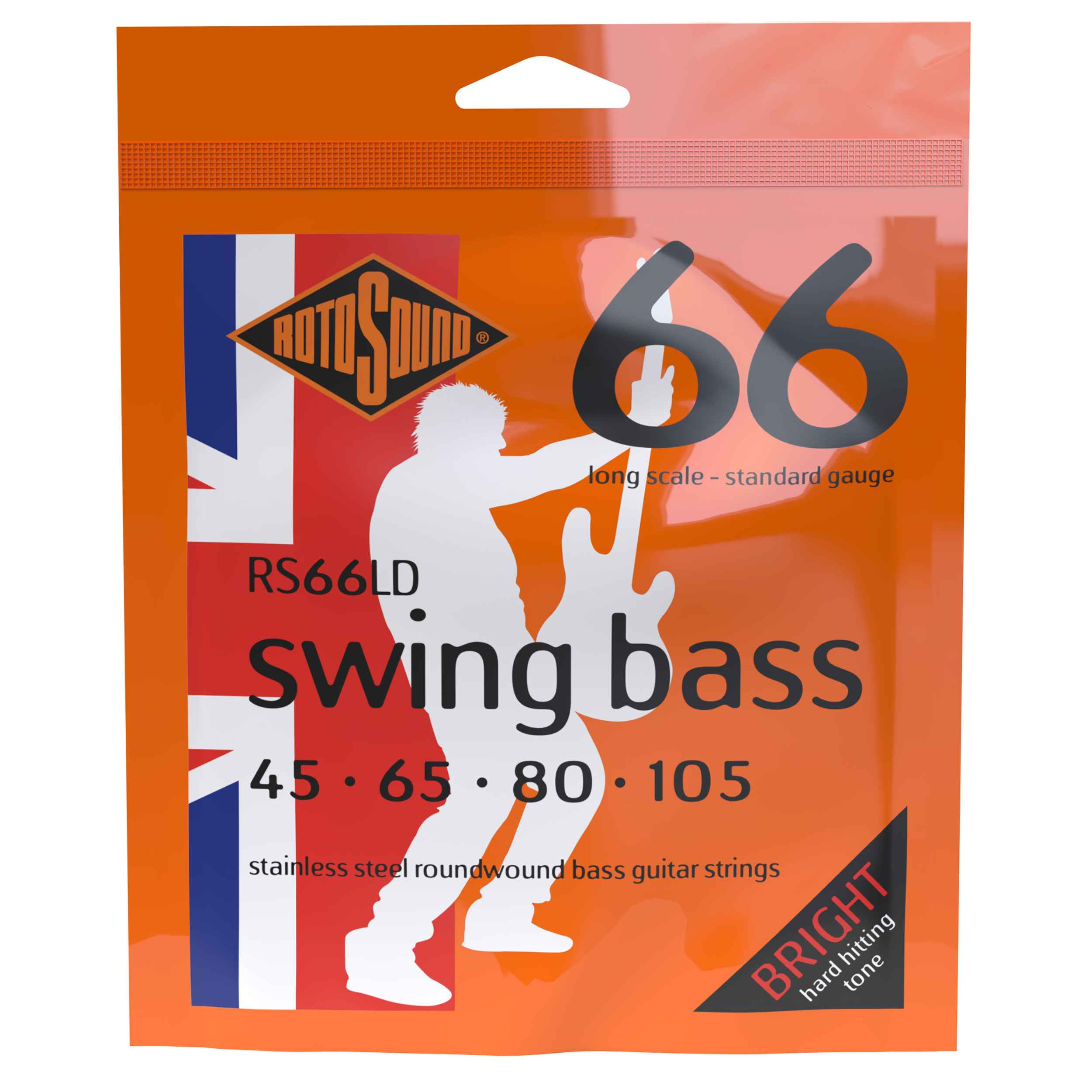
Swing Bass 66 Standard | 45-105
Stainless Steel Roundwound Electric Bass Guitar Strings (45 65 80 105)
Oh dear. 6 pages of at least half or more commenters being non-Jazz Bass players, advising to get a different bass. How illuminating. /s
First, the Jazz Bass has two pickups. Set up and modded properly, the Jazz Bass can perform as well in any mix as any other bass guitar.
No bass guitar will perform well in a mix with two Marshall stack / out of control guitars, purposely dominating a wall of sound "mix." Or, another way to say it is that the Jazz Bass isn't the problem in such a mix. The best solution to this kind of gig is don't do them.
Contrary to the Precision Bass (and I DO adore my Precision Bass), the Jazz Bass needs a certain amount of attention to detail. It doesn't require a lot, but one does have to work with the instrument.
First is Set Up. Roger Sadowsky properly covers set up aspects of the Jazz Bass here:
That video will take a bit of study, which is well worth the time. But, if you are TL;DR, the discussion about pickup height around 44:35 is well worth the effort.
Second is modification / signal chain. There are a mountain of hardware modifiers and signal chain options for the Jazz Bass. Unlike the P Bass. An off the shelf Jazz Bass plugged into a random amp will NOT give the same instant gratification as a P Bass. Jazz Bass players have long used significant signal chain adaptation.
First and foremost of my recommendations would be to get a Sadowsky Outboard SBP-1. This unit is the guts of the Sadowsky Onboard preamp, with some nice routing options for tuner etc. This "preamp" is CUT ONLY Volume and BOOST only Treble and Bass. With a stock Jazz Bass, you set the Volume all the way up (no cut), and the two band controls around 30% to 40%. That simple signal chain enhancement will get the Jazz Bass sitting in pretty much any mix, with a number of voicing options, depending on pickup balance.
On the instrument, fading the bridge pickup about 30% will get you into P-ish territory, particularly with backing off the tone control. Both pickups on full puts you into modern slap space; though the aforesaid P space also produces nice old school slap sounds. Cutting the neck pickup 30% puts you into the staccato overtone land. I tend to set my passive bass with the pickups at about 80%; leaving me both pickup boost and cut options.
String choice is another personal choice. For my purposes, DR High Beams do most of what I want. But, there are certain tunes requiring the upright gut string kind of thud. The rounds with effective palm muting technique can get that as well. Here is an excellent palm muting reference:
Making categorical statements that such and such a bass "doesn't work" either indicates a predisposition for that result or a lack of effort. Or both. Most bass guitars can be made to "work." This includes the Jazz Bass. I also gig my P Bass, which has its own charm. BTW, that Outboard Sadowsky preamp also is amazing with the P Bass.
Carry on.
That video with Roger Sadowsky is gold.
I don't have problems as long as I don't have both pickups full up. Usually I have the pan pot set to 80% neck pickup and it sounds pretty good. This isn't my preferred jazz bass sound but it's what works.
OP here...
Well, raising the pickups helped a LOT with the cutting through issue. However, I stll had to push yhe mids on my amp way more than would be normal for any of my other basses.
If my classic rock trio were my only gig, I'd probably sell this bass. It plays great and looks stunning (that yellowed Olympic White, white pickguard and maple neck). However, there's something that's just not there for the loud trio application. But for other, quieter musical situations, it works and will continue to be useful.
Thanks for all of the suggestions!
Well, raising the pickups helped a LOT with the cutting through issue. However, I stll had to push yhe mids on my amp way more than would be normal for any of my other basses.
If my classic rock trio were my only gig, I'd probably sell this bass. It plays great and looks stunning (that yellowed Olympic White, white pickguard and maple neck). However, there's something that's just not there for the loud trio application. But for other, quieter musical situations, it works and will continue to be useful.
Thanks for all of the suggestions!


