44.2mm would be close to 1.75" which is a C width at the nut. Precision basses historically have used a C or B (1.625", 41.3mm), with a thin neck option using the jazz A width (1.5", 38.1mm) offered at times.
The precision bass was introduced with a C width and that was the standard through the late 60s, in the late 60s they went to a B width as the standard option and that was common through the 70s, though you could order A or C widths as well. I have a 69 with a B width and have had 78 models with A and B widths. I've not seen many 70s models with the C nut width but they are out there.
I believe the 50s roadworn would have a C width given that would be historically accurate. If this person is measuring 44mm that says it's also a C width to me.
That's just the width at the nut. The shape of the neck and thinness from the front to back also varied, and has been described in terms of C, D, U, modern, soft, etc., terms. I haven't played the 50s roadworn so I don't know what fender uses there. I've had some 60s fenders and they were generally thinner front to back than any of the 70s fenders I've owned. The 70s models had more chunk/depth to them, the 60s is flatter. The modern fender basses I've owned are kind of between the two. The late 70s models were definitely the thickest front to back of those I've owned.


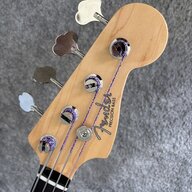
 I love the sound of the 50's Roadworn bass but don't get along with the neck.