• TalkBass has been independent since 1998. Add your voice.
    Create a free account to reply to discussions, view embedded media, and browse with fewer display ads.
    Join freeLog in
    Want zero display ads or expanded classifieds tools? Compare plans.

Fender Prophecy III

Hello fellow talkbass people!

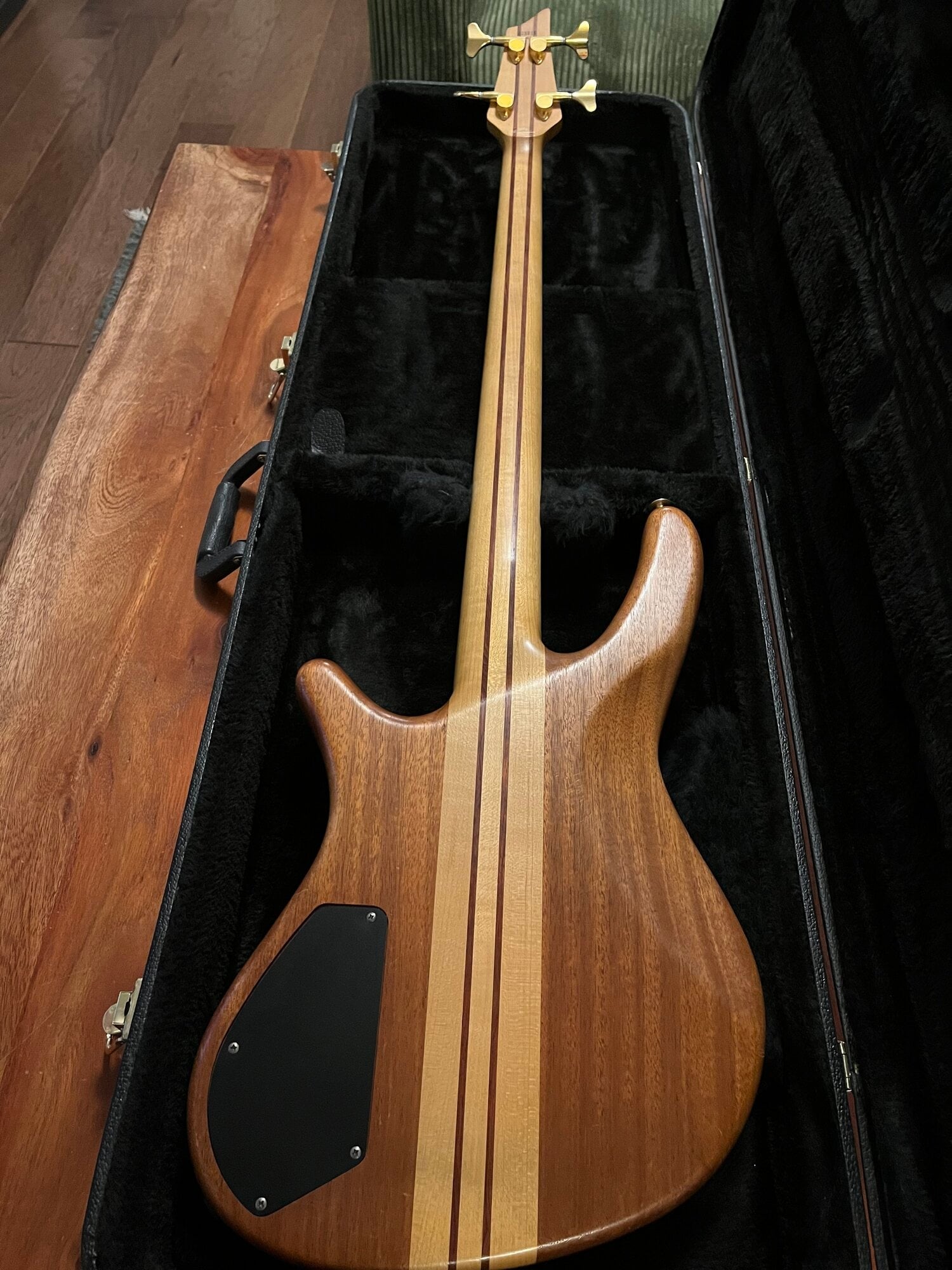
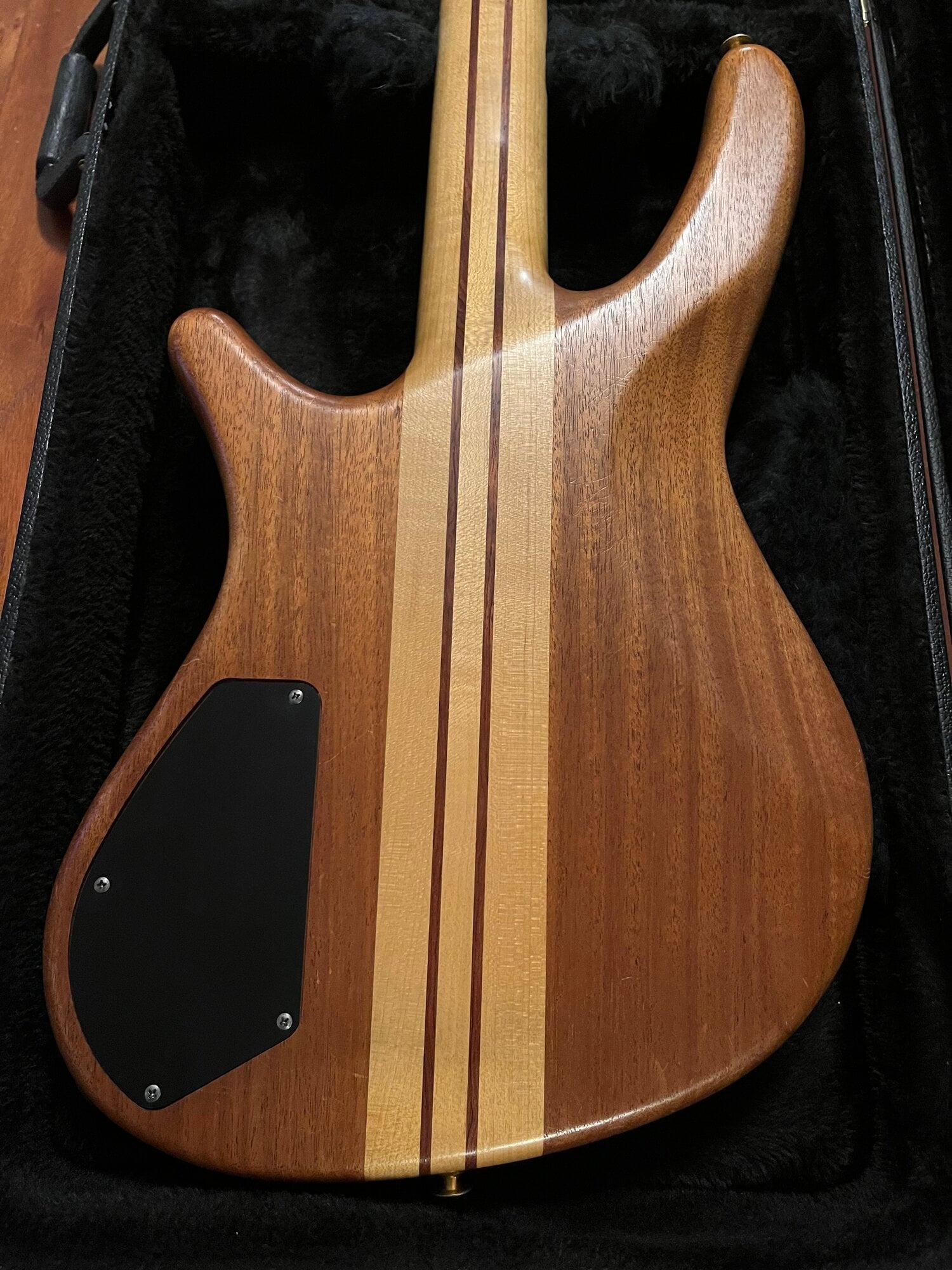
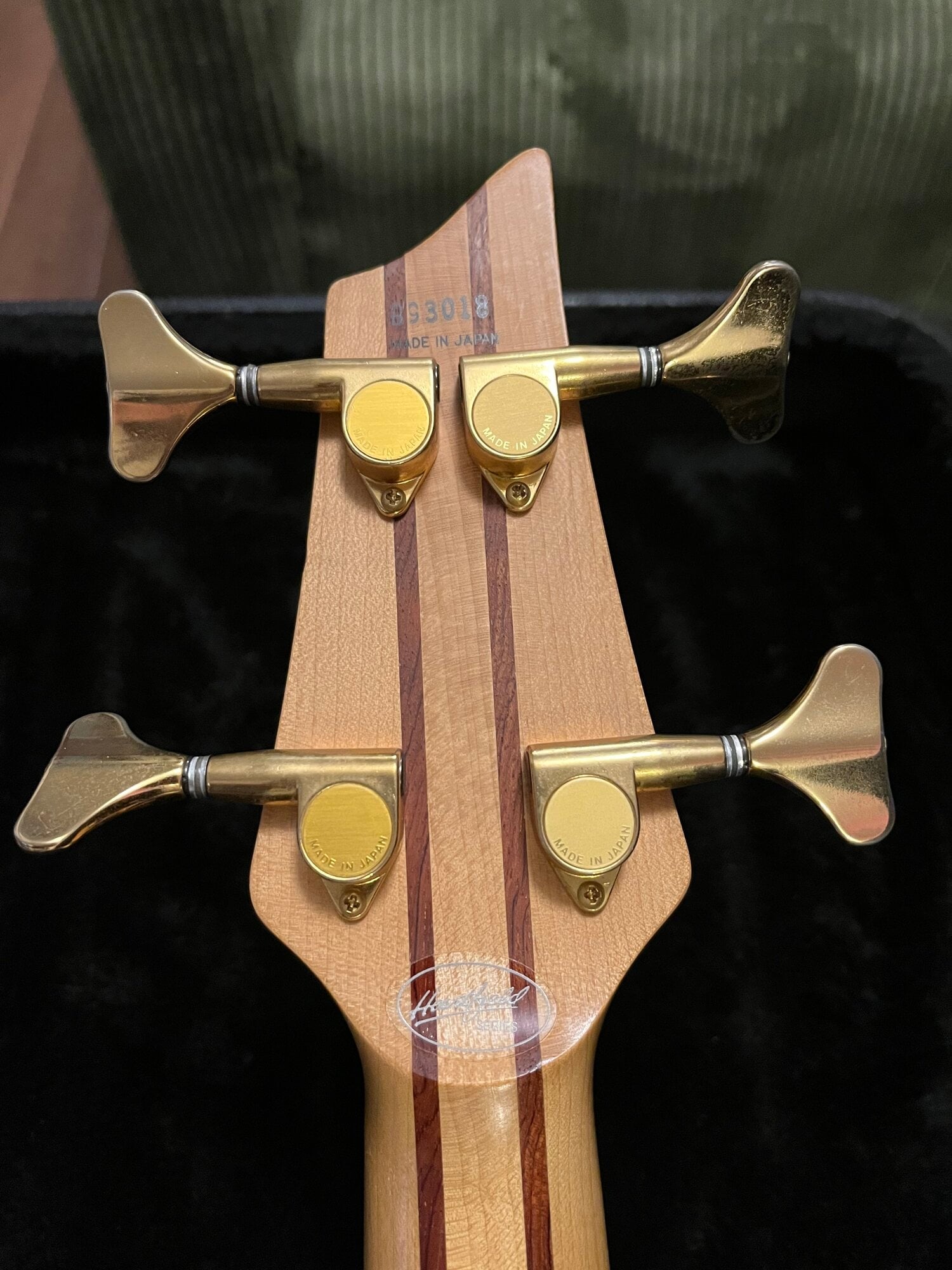
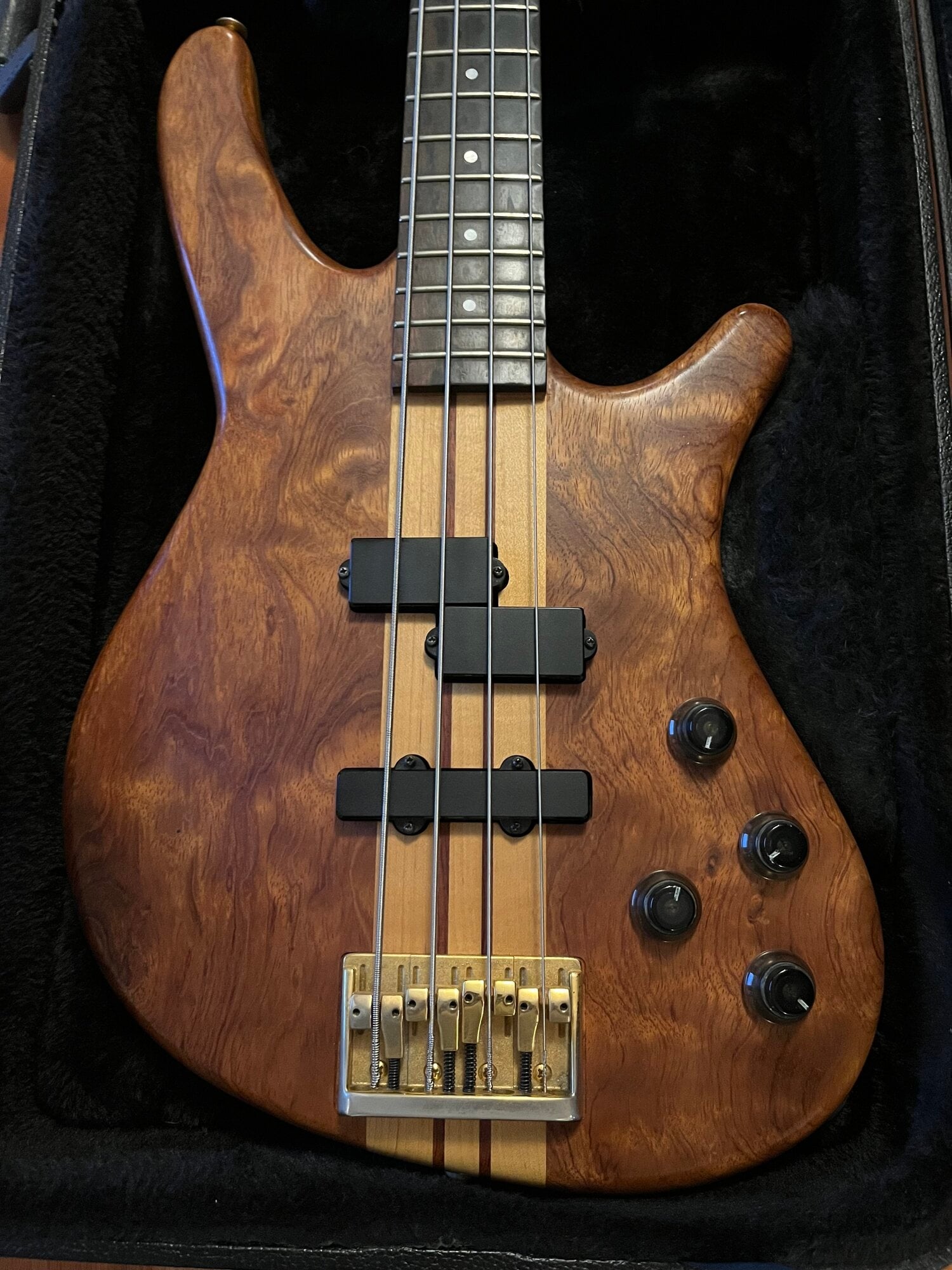
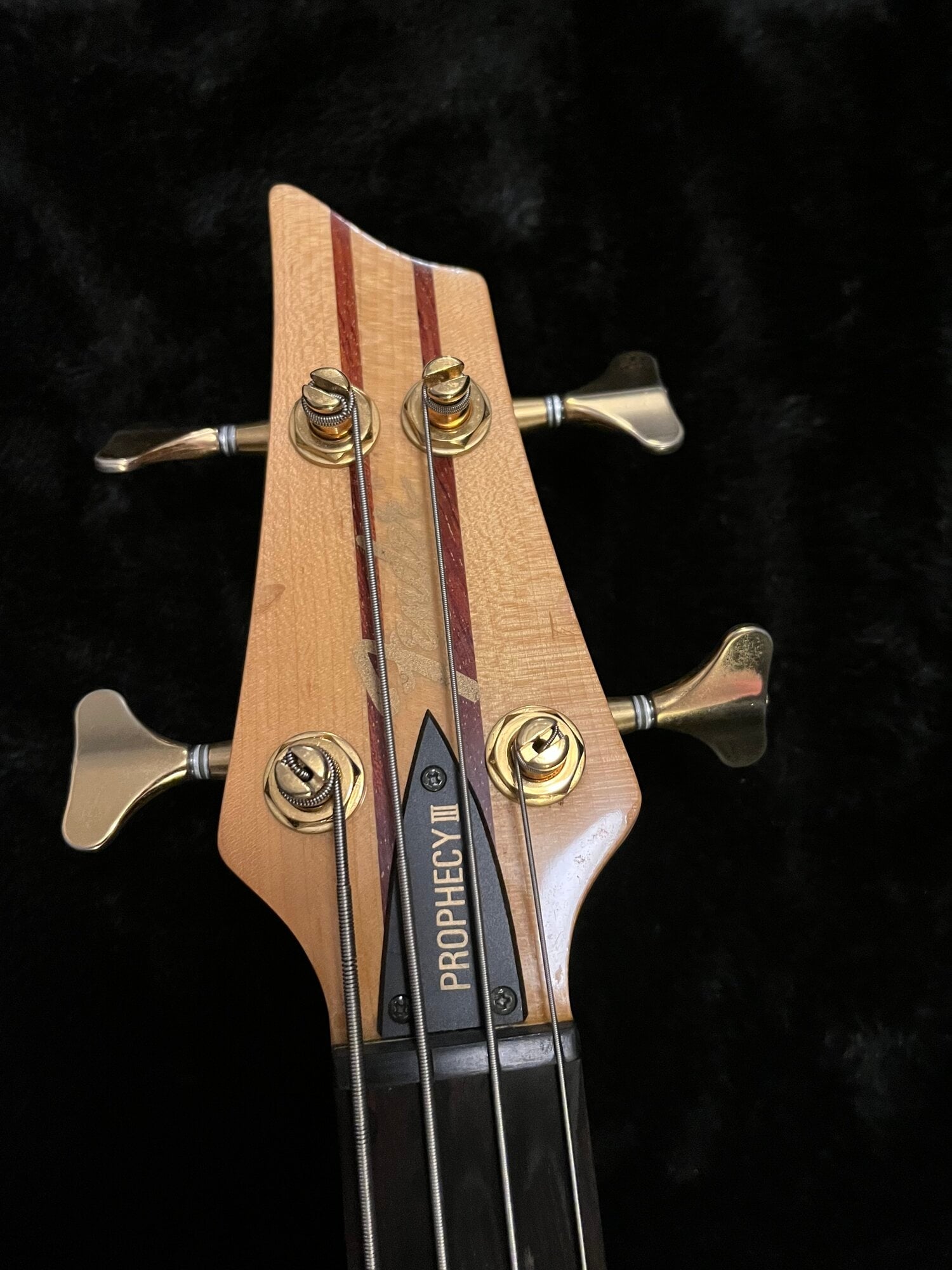
I was perusing my local Facebook marketplace yesterday and came across this beautiful Fender bass I had never heard of. I didn't think Fender made anything like this so I thought it was fake but after some digging it appears this was an extremely limited offering from Fender / Heartfield guitars made in Japan. I was not planning on buying a bass at all but could not pass up the opportunity to snag this. It was listed yesterday for pickup in the middle of nowhere, Arkansas, USA, but the seller happened to be in my area this morning at 6:30 AM and I jumped at the opportunity. I'm very lucky I did as they received several inquiries throughout the night but I had already claimed it. I am amazed at the quality, rarity, uniqueness... just everything. It is in amazing shape especially considering it is over 30 years old. The only thing I can't quite figure out is why the serial number doesn't match Fender's standard and doesn't come up in their database but it absolutely seems legit. Perhaps this is just odd enough that it didn't make the database. If anyone can shed some light on that mystery that would be greatly appreciated. I just wanted to share my find with you wonderful people and welcome any information y'all have about this amazing bass!

IMG_8444.jpeg
IMG_8445.jpeg
IMG_8446.jpeg
IMG_8447.jpeg
IMG_8448.jpeg
IMG_8449.jpeg
 
Two seconds of googling turns up this:

"PROPHECY I/II/III​


The Prophecy line of basses was one of two lines of basses produced by Heartfield.

The PR-1 has a double cutaway basswood body, bolt-on maple neck with 22 frets on a rosewood fingerboard with pearl dot inlay. Fixed bridge, graphite nut, chrome hardware, P-style J-style pickups, and volume/balance controls.
The PR-2 is similar to the PR-1, but has an ash body, gold hardware, active electronics and volume/treble/bass controls.
The PR-3 is similar to the PR-1, but has a laminated ash body, through-body laminated maple neck, gold hardware, volume/treble/bass controls and active electronics.

Prophecy I first documented month of manufacture: January 1991 (serial number A10305, not pictured on this site). Last documented month of manufacture: April 1991 (serial number D10234, not pictured on this site).
Prophecy II first documented month of manufacture: January 1991 (serial number A10322, see bass below). Last documented month of manufacture: May 1991 (serial number E10273, not pictured on this site).
Prophecy III first documented month of manufacture: April 1992 (serial number D92121, see bass below). Last documented month of manufacture: October 1992 (serial number J92257, not pictured on this site).

All models were produced from 1991 to 1993. They first appeared in Fender Frontline in winter (i.e. early) 1992 and last appeared in summer 1993.

Heartfield colour codes available for the Prophecy I: Black (506), Midnight Blue (573), Chrome Red (574), Frost Red (577) and Mystic White (589).
Heartfield colour codes available for the Prophecy II and III: Natural (521), Sapphire Blue Transparent (527), Antique Burst (537) and Crimson Transparent (538).

Some Fender-branded Prophecy basses adhere to the Fender Japan serial numbers scheme. These feature one letter (O, P and S have been seen so far) followed by six numbers. Officially, Oxxxxxx, Pxxxxxx and Qxxxxxx are supposed to date to 1993-1994, Sxxxxxx to 1994-1995. By then Heartfield production had already ceased. Prophecy basses were produced until after the demise of Heartfield and were in the Fender price lists until 1994. By 1995 they had vanished. These Fender-labelled Prophecy basses adhering to the Fender Japan serial number scheme are not in the Heartfield Guitars serial numbers database."
 
Two seconds of googling turns up this:

"PROPHECY I/II/III​


The Prophecy line of basses was one of two lines of basses produced by Heartfield.

The PR-1 has a double cutaway basswood body, bolt-on maple neck with 22 frets on a rosewood fingerboard with pearl dot inlay. Fixed bridge, graphite nut, chrome hardware, P-style J-style pickups, and volume/balance controls.
The PR-2 is similar to the PR-1, but has an ash body, gold hardware, active electronics and volume/treble/bass controls.
The PR-3 is similar to the PR-1, but has a laminated ash body, through-body laminated maple neck, gold hardware, volume/treble/bass controls and active electronics.

Prophecy I first documented month of manufacture: January 1991 (serial number A10305, not pictured on this site). Last documented month of manufacture: April 1991 (serial number D10234, not pictured on this site).
Prophecy II first documented month of manufacture: January 1991 (serial number A10322, see bass below). Last documented month of manufacture: May 1991 (serial number E10273, not pictured on this site).
Prophecy III first documented month of manufacture: April 1992 (serial number D92121, see bass below). Last documented month of manufacture: October 1992 (serial number J92257, not pictured on this site).

All models were produced from 1991 to 1993. They first appeared in Fender Frontline in winter (i.e. early) 1992 and last appeared in summer 1993.

Heartfield colour codes available for the Prophecy I: Black (506), Midnight Blue (573), Chrome Red (574), Frost Red (577) and Mystic White (589).
Heartfield colour codes available for the Prophecy II and III: Natural (521), Sapphire Blue Transparent (527), Antique Burst (537) and Crimson Transparent (538).

Some Fender-branded Prophecy basses adhere to the Fender Japan serial numbers scheme. These feature one letter (O, P and S have been seen so far) followed by six numbers. Officially, Oxxxxxx, Pxxxxxx and Qxxxxxx are supposed to date to 1993-1994, Sxxxxxx to 1994-1995. By then Heartfield production had already ceased. Prophecy basses were produced until after the demise of Heartfield and were in the Fender price lists until 1994. By 1995 they had vanished. These Fender-labelled Prophecy basses adhering to the Fender Japan serial number scheme are not in the Heartfield Guitars serial numbers database."
Yes I have found some good information. I also was pointed to a Hartfield serial number database that gets very close to my number. Thanks!
 
Anyone else suspect the body of that bass is made of Bubinga? Sure doesn't look like basswood or ash. Maybe mahogany....
I believe the back is mahogony and the top is bubinga but I have seen descriptions stating bubinga/walnut top... maybe they made both? Maple neck and I'm not exactly sure about the fretboard... maybe rosewood. For such a limited run there seem to be a several variations out there.
 
  • Like
Reactions: SC Bassboy
An example of the perennial challenge Fender faces whenever they release a bass that isn’t a P or a J.

Grunge and Indie may have saved some oddballs like the Jaguar, Mustang, and Bronco, but they were popular in those genres specifically because they were doomed. Their use was a half-baked artistic statement, and I don’t intend that at all as a judgement or a criticism, I mean it more literally.

Anyway, these guys joined the dustbin that holds the Dimensions, Roscoe Becks, the Bass V, etc. Maybe like the Bass VI they’ll be pulled out of it in some future decade.

If it’s not a Jazz or a P bass, people looking for something that isn’t a Jazz or a P bass aren’t looking at Fender.
 
Very, very similar to a bass I bought at that same time, also made in Japan, under brand name "Bass Collection." It was a premium level instrument, same P/J arrangement, almost identical except bolt on neck and Adler body. 24 frets, super fast player, but the p'ups and pre left something to be desired. I donated it to local boys club, stupid move. Should have kept it and upgraded the p'ups and pre.

Some really quality basses came out of Japan back then, trying to copy popular brands of the day.
 
  • Like
Reactions: Bergerama
Hello fellow talkbass people!

I was perusing my local Facebook marketplace yesterday and came across this beautiful Fender bass I had never heard of. I didn't think Fender made anything like this so I thought it was fake but after some digging it appears this was an extremely limited offering from Fender / Heartfield guitars made in Japan. I was not planning on buying a bass at all but could not pass up the opportunity to snag this. It was listed yesterday for pickup in the middle of nowhere, Arkansas, USA, but the seller happened to be in my area this morning at 6:30 AM and I jumped at the opportunity. I'm very lucky I did as they received several inquiries throughout the night but I had already claimed it. I am amazed at the quality, rarity, uniqueness... just everything. It is in amazing shape especially considering it is over 30 years old. The only thing I can't quite figure out is why the serial number doesn't match Fender's standard and doesn't come up in their database but it absolutely seems legit. Perhaps this is just odd enough that it didn't make the database. If anyone can shed some light on that mystery that would be greatly appreciated. I just wanted to share my find with you wonderful people and welcome any information y'all have about this amazing bass!
View attachment 7408687View attachment 7408688View attachment 7408689View attachment 7408690View attachment 7408691View attachment 7408692
That is BEAUTIFUL! 🥰 Enjoy it!
 
  • Like
Reactions: Bergerama
I vaguely remember the Fender/Heartfeld collaboration when I was first starting out around that time. Fender owned a bunch of different brands at the time like Jackson and De Armand etc. As an ex woodworker I can tell you that you definitely have a Bubinga top over what is likely an African mahogany (Khaya) back with a maple neck w/ Bubinga stringers.
 
Attached is a Fender press release to its dealers (downloaded at the Heartfield website @WG Plum linked) about the Heartfield guitars and basses.

It discusses the problem @MtManiac mentioned, namely that Fender shoppers want a P or J and anything that strays too far from that, they won’t buy. Conversely, players who aren’t Fender fans aren’t inclined to buy anything from Fender, even if it isn’t a FSO.

So, in the late 1980s Fender had the idea of partnering with Fujigen to make and sell guitars under a different brand name (Heartfield), like a number of car manufacturers have done. It seems problems with the value of the Yen to the Dollar crippled and ultimately killed the project. Near the end, Fender reversed course and started putting the Fender name on some of the offerings. Which seems silly, as it put them right back to their original problem.

I have a 5-string Heartfield DR5; it’s an awesome bass and sounds fantastic. My only complaint is that it burns through batteries like candy. Mine has a separate easy-access battery compartment, which helps facilitate easy changes without needing a screw driver. @Bergerama ‘s bass doesn’t have that, and the pickups are different, so I have to wonder if they changed out the electronics with the Prophesy basses.

Regardless, @Bergerama ‘s example is a stunning bass. And from what I’ve heard, neck-throughs are rare.

Regards,
Wayne A. Pflughaupt

Make Your Own Cables: A How-To Guide Unique Arrangements of Hymns, P&W Standards, and Original Tunes
Official Pedulla Club #45
Administrator, Official Heartfield Club #36
Administrator, Official Tobias Club #133
Administrator, Official Pre-Gibson Tobias Owners Club
Administrator, Fretless Club #943
Big Cabs Club #23
My Basses
My Rig: Stage and FOH Friendly
Make Your Own Cables: A How-To Guide
 

Attachments