Hmmm, I haven't thought of tuning as an effect before! But, now that I think about it, this arrangement makes sense to me.

That's good news! When using the XLR Post and FX Send, I have control of the muting. I like that!

I think feeding the FOH from the XLR Pre output is
one way,
because it gives control to the FOH board. If the FOH is willing to accept that control, then it is their
job to mute the mains between songs, while keeping monitors active to allow for tuning (it's not always all visual)! For FOH control, with great power comes great responsibility.

Does FOH have the setlist and know when to change bass tones for different songs, or even within some songs at certain musical points?

Seems to me you are working for the FOH instead of vice versa. Who is the artist and who is the technician?

JK! I believe that, properly done, there is much artistry in the FOH. Although, too often, some just want to "set it & forget it", but raise all kinds of heck if a Post-EQ/Post-Master Volume XLR changes their mix at any point! But,
cooperation usually makes for the best experience for all concerned.

I
prefer to use the tones I've crafted, practiced and rehearsed for my live performances, and use the Post XLR to send them to FOH. It's a part of the creative, and/or artistic, control I feel
responsible for. This is especially true now, with my Rumble Studio, where I can create setlists of tones, easily switched! So, there
will be both volume and tonal dynamics, under my
initial control. Then, the FOH will do what they must to blend it into that mix. I believe this practice is not uncommon among the better FOHs.

I believe that Fender reps do read this thread, and others like it. The Rumble 800 HD is a great example of applying our feedback.
But, I don't see a need for a fix, in this case. Seems to me they got it just right.

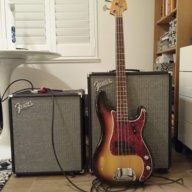





 )
) 
 ]). Then see what kinda stuff they request.