• TalkBass has been independent since 1998. Add your voice.
    Create a free account to reply to discussions, view embedded media, and browse with fewer display ads.
    Join freeLog in
    Want zero display ads or expanded classifieds tools? Compare plans.

Filling Grain after painting?

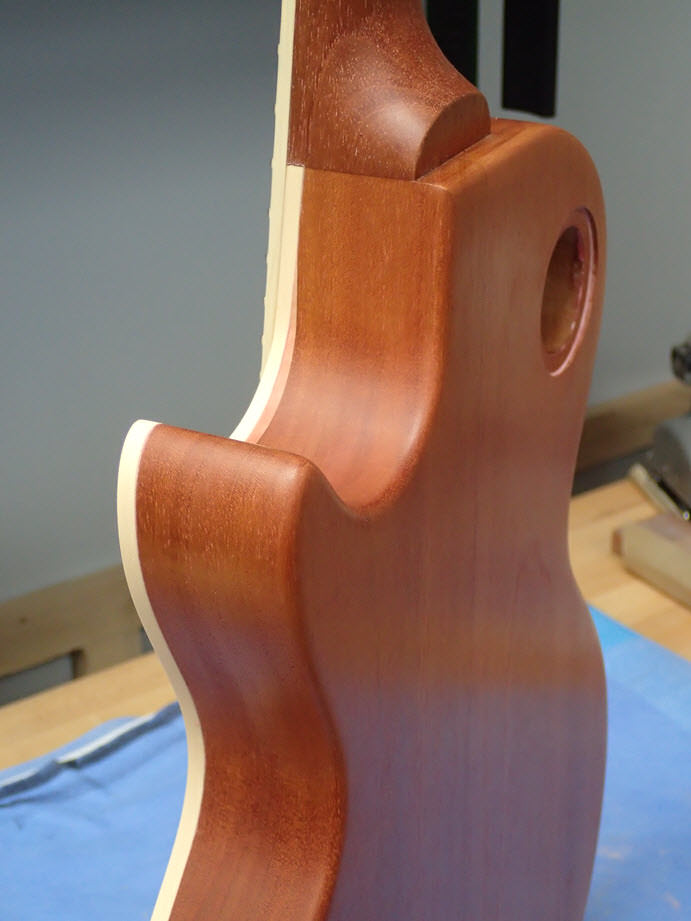
I'm an idiot. I knew better, but I rushed through prep/priming a DIY PB body and got a color coat on only to realize the grain was showing through. This is not going to "buff out".

Now, I have repented of my wayward ways and I'm going to try to do this right. I should have used something like a grain filler in the beginning. Is it too late? How much should I sand down in order to get back to a point where I can apply grain filler?

... or should I? Is there a better way to get to a smooth finish?

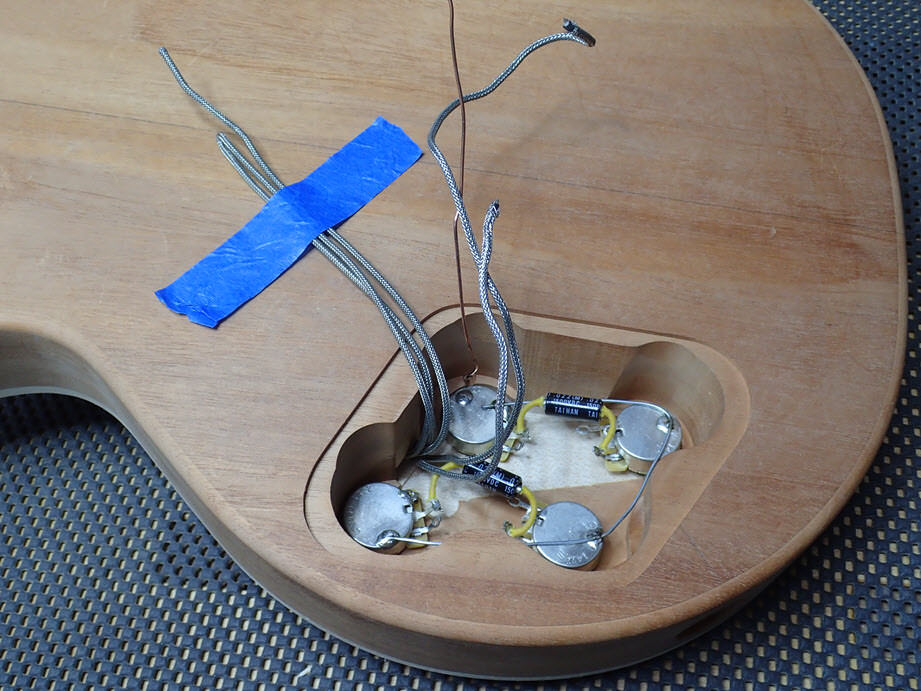
IMG_0489.jpg IMG_0490.jpg
 
When I worked at Gibson, they'd grain fill the mahogany SG bodies in prep to be shot in that traditional Robitussin Red tint.

They didn't always get enough, you'd shoot them with color and after it dried you'd see that hair like grain where the finish sank into those spots. So they'd build and sand a few clear coats till it came out smooth.
 
I'm wondering... has anyone ever used automotive spot putty in this context?

I'm sure someone has....with okay results for a while...But it's not the best material for filling grain in wood. Automotive Spot Putty and Bondo are made to bond to roughened metal. But metal has very little expansion with temperature change and none with humidity/moisture. Using Spot Putty to fill grain may result in shrinkage and popping loose when the wood moves around.

Commercial woodworking grain fillers are thinner so they sink deeper into the grain of the wood. And they also stay a little soft, so they can expand and contract a little bit with the wood. But they also tend to shrink down into the grain over time, showing through the paint.

My favorite product for filling grain in wood is marine epoxy, like West Systems, System Three, or Total Boat. It bonds very well deep into the wood, and is flexible enough to move with it under big temperature and moisture changes. And it doesn't shrink over time. I've got basses that are about 25 years old now, ash bodies with West Systems filling the grain, and they are still showing no signs of shrinkage under the paint.

In the OP's case here, he's already got paint on there, down in the grain. Woodworking grain filler or epoxy won't bond down well now. He's going to have to finish filling the grain with coats of paint, and sanding back. It will take some coats and sanding work, but the paint will bond to itself, and will all shrink and move together.
 
The stuff I'm thinking of typically goes over bondo or primer, rather than metal. It's a mix of minerals and bonding agents in a squeeze tube, wiped on with a plastic tool. I wouldn't think of it for bare wood, but over a rough painted surface... ?
 
The stuff I'm thinking of typically goes over bondo or primer, rather than metal. It's a mix of minerals and bonding agents in a squeeze tube, wiped on with a plastic tool. I wouldn't think of it for bare wood, but over a rough painted surface... ?

Sounds like you're thinking of glazing putty. :thumbsup:

I've used it to fill a ding or two under an opaque finish directly on bare wood and also over a sealer. It works great. No adhesion problems, easy to apply, quick to dry, easy to sand and absolutely no shrinking. I wouldn't hesitate to use it under paint, for fixing dings or for pore filling, but definitely not over paint... unless the OP is going to apply another couple of color coats over the top.

71CSJxi8QsL._AC_UF894,1000_QL80_.jpg
 
Sounds like you're thinking of glazing putty. :thumbsup:

:thumbsup: Don't remember the "glazing" term, but that looks right. There were different brands and colors.


I've used it to fill a ding or two under an opaque finish directly on bare wood and also over a sealer. It works great. No adhesion problems, easy to apply, quick to dry, easy to sand and absolutely no shrinking. I wouldn't hesitate to use it under paint, for fixing dings or for pore filling, but definitely not over paint... unless the OP is going to apply another couple of color coats over the top.

I did assume it would be painted over; wondered if that'd be a way to reduce the number of sand/paint cycles.
 
  • Like
Reactions: Gary_M
Thanks everyone! Great info here and picked up a good tip on the glazing (thx @Gary_M & @1n3 for that) because there is a ding that I noticed late too!

The finish will be opaque - solid red using Dupli-Color from O'Reilly's. I've actually used it on one prior - a repaint - and got great results. @Bruce Johnson , I'll do just that, sand and build up with primer.

FWIW the headstock turned out beautiful ... Loving the "Inferno Red". Ya'll take care!
 
:thumbsup: Don't remember the "glazing" term, but that looks right. There were different brands and colors.

I did assume it would be painted over; wondered if that'd be a way to reduce the number of sand/paint cycles.

Yes, for sure. I know that a lot of folks use a pore filler directly on bare wood, but you'll definitely get a quicker and more complete fill by sealing first, lightly block sanding, then applying the pore filler.

But, there is also a legit case for putting pore filler directly over the wood depending on the look that you want. For example, back in the 1950's Gibson applied an oil based cherry colored pore filler over mahogany on the Les Paul Standard. When the excess pore filler was removed, it stained the wood a cherry color. They still shot transparent red over the top, but that's the way they did it for a while. Later on, they did switch to sealing the wood before applying filler.

Here's and example of one the I did with no sealer first.

Before pore fill:
kjx6seJ.jpg


After:
b97ztcm.jpg
 
I'm wondering... has anyone ever used automotive spot putty in this context?
I use body filler on deep grain woods like swamp ash when painting a solid color. I also use automotive catalyzed primer and automotive paints on a guitars and basses. Never had an issue in 30 years. PRS used automotive finishes on their guitars and basses. The only issue you might have using an automotive putty would be if the paint you used was a cheap rattle can. The putty might react with it.
 
  • Like
Reactions: 1n3
That finish has multiple problems, and IMO should be chemically stripped and started over. The only other reasonable option is doing layer after layer of high solids coatings over what you have, and lots of leveling along the way. Too much in materials and labor, IMO. If this was a production environment, I’d say to write it off, and move on to a new body. More expensive to fix than to scrap. Even in a home hobbyist situation, I place value on time. Average Fender style bass bodies aren’t expensive, and I value an hour of my time doing labor at $50/hr., minimum. At a certain amount of estimated time invested stripping that back to start over, or smoothing it with additional sealer coats, I’d just relegate that body to beater or test bed status, and make or buy a new one.

If I had done that to a body, I’d probably level it as well as I could with an aggressive sanding, spray several more color coats, then smooth to an even matte finish with steel wool, and call finish done – accepting whatever grain sink is there, and just considering the thing a bit of a beater with a low-fi look. For a personal project instrument, that’s probably the fairest compromise between quality, time, and materials.
 
Last edited:
I'm sure someone has....with okay results for a while...But it's not the best material for filling grain in wood. Automotive Spot Putty and Bondo are made to bond to roughened metal. But metal has very little expansion with temperature change and none with humidity/moisture. Using Spot Putty to fill grain may result in shrinkage and popping loose when the wood moves around.

Commercial woodworking grain fillers are thinner so they sink deeper into the grain of the wood. And they also stay a little soft, so they can expand and contract a little bit with the wood. But they also tend to shrink down into the grain over time, showing through the paint.

My favorite product for filling grain in wood is marine epoxy, like West Systems, System Three, or Total Boat. It bonds very well deep into the wood, and is flexible enough to move with it under big temperature and moisture changes. And it doesn't shrink over time. I've got basses that are about 25 years old now, ash bodies with West Systems filling the grain, and they are still showing no signs of shrinkage under the paint.

In the OP's case here, he's already got paint on there, down in the grain. Woodworking grain filler or epoxy won't bond down well now. He's going to have to finish filling the grain with coats of paint, and sanding back. It will take some coats and sanding work, but the paint will bond to itself, and will all shrink and move together.

^^
THIS.


This will get you the best results by far outside of starting over
 
I'm an idiot. I knew better, but I rushed through prep/priming a DIY PB body and got a color coat on only to realize the grain was showing through. This is not going to "buff out".

Now, I have repented of my wayward ways and I'm going to try to do this right. I should have used something like a grain filler in the beginning. Is it too late? How much should I sand down in order to get back to a point where I can apply grain filler?

... or should I? Is there a better way to get to a smooth finish?

View attachment 5244770 View attachment 5244771
Just keep painting it til no grain is left, and sand it down. That's how it used to be done.
 
I'm an idiot. I knew better, but I rushed through prep/priming a DIY PB body and got a color coat on only to realize the grain was showing through. This is not going to "buff out".

Now, I have repented of my wayward ways and I'm going to try to do this right. I should have used something like a grain filler in the beginning. Is it too late? How much should I sand down in order to get back to a point where I can apply grain filler?

... or should I? Is there a better way to get to a smooth finish?
View attachment 5244770 View attachment 5244771
It gives a textured look, which is more distinctive.