• TalkBass has been independent since 1998. Add your voice.
    Create a free account to reply to discussions, view embedded media, and browse with fewer display ads.
    Join freeLog in
    Want zero display ads or expanded classifieds tools? Compare plans.

Finish for Walnut

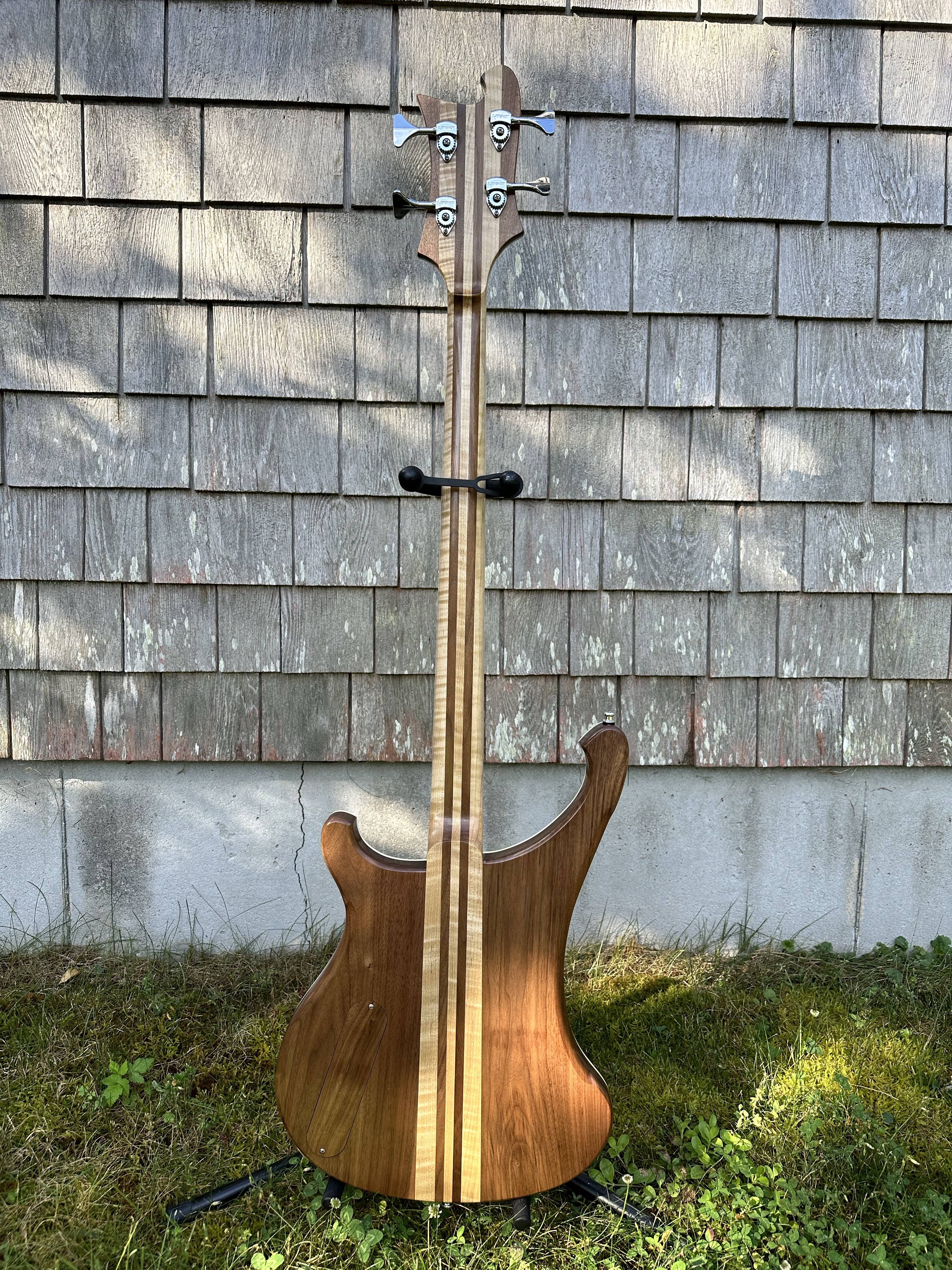
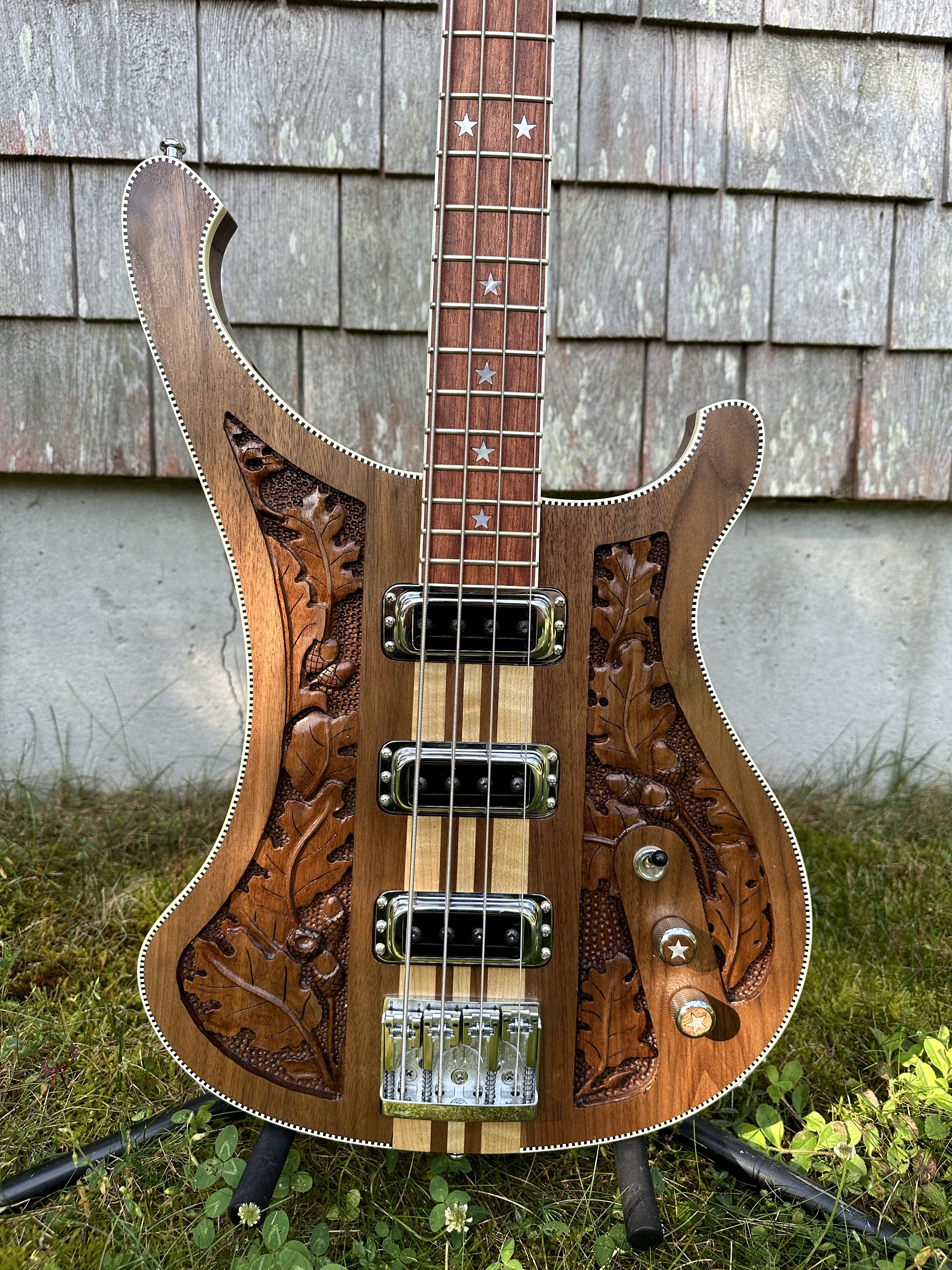
How do you finish walnut ?

  • Tung Oil

    Votes: 11 19.0%
  • Danish oil

    Votes: 8 13.8%
  • Oil and walnut dust mix

    Votes: 1 1.7%
  • Grain filler then oil

    Votes: 4 6.9%
  • Oil & wax

    Votes: 12 20.7%
  • Carrot juice

    Votes: 22 37.9%

  • Total voters
    58
Tru-Oil over walnut and maple. I'd call this "semi-gloss", but if you really want satin, it can easily be knocked back with a grey or white scotchbrite. It's not as durable as wipe-on poly, but I think maybe a little harder drying than Watco.

I'm also very happy with Tru-Oil on my walnut/maple Carvin. I've used Tung Oil on walnut before as well, including on this same bass, but I think the Tru-Oil looks at least as good, if not better, and provides much better protection (although agreed that it is not remotely at the level of protection of poly).



Carvin.jpg
 
I use walnut a bunch in instrument builds. HERE is a short photo essay on finishing walnut with my favorite European hard oil, Osmo PolyX satin oil. I didn't "vote" in the poll because Osmo PolyX isn't any of those choices; it's really a much better product than the other choices listed.
I agree with this 100%, just finished a walnut table and used this finish. Simple to apply, looks great with 2 coats.
 
I recently bought a natural finish walnut bass as a custom build. I wanted it left natural as I couldn’t decide on the finish and I thought natural might be fine anyway. It’s a great looking instrument but the grain is more open than I expected and I want a smoother finish. I also want to show the grain off more. I’m not a luthier but I have furniture restoration experience. I’m thinking of Danish oil as I’ve heard that works well with open grain. I also have beeswax here but would that get stuck in the open grain and look bad? I don’t really like glossy finishes.
What is your go to finish for walnut tops?
Osmo polyx or Rubio are awesome hardwax oils. I got the builder from TJS drums locally to go from a tung oil/carnuba wax blend to osmo!

Two coats and you’re done, you can get ceramic coats if you want more protection, I did osmo satin for these pieces a few years back
 

Attachments

  • Resized_20221222_183839(1).jpeg
    Resized_20221222_183839(1).jpeg
    160.2 KB · Views: 21
  • Resized_20221222_183907(1).jpeg
    Resized_20221222_183907(1).jpeg
    138.9 KB · Views: 22
  • Resized_20221222_183854(1).jpeg
    Resized_20221222_183854(1).jpeg
    162.6 KB · Views: 21
  • IMG_4516.jpeg
    IMG_4516.jpeg
    1.4 MB · Views: 13
  • IMG_3915.jpeg
    IMG_3915.jpeg
    1.2 MB · Views: 13
  • IMG_3911.jpeg
    IMG_3911.jpeg
    1.3 MB · Views: 21
Last edited:
  • Like
Reactions: MonetBass and Yonni
I've done this on walnut table tops and second it. You're essentially wet sanding with the oil, using the slurry made with the actual wood as pore filler.

It takes time, but it can look fantastic.
It's also a very forgiving finish to apply and repair; one of the reasons it was the first finishing method I taught new students.
 
You can use a tinted pore filler to accentuate the grain. Follow with clear abd finish matte. Be sure your finish is compatible with the pores filler.
Totally agree - a dark filler like would look good and work with any oil based finish. Alternately, Walnut stain makes sense as it evens out uneven wood tones which are common - unless it will be darker than you like. Go gradually and you find the perfect color you want. I love Walnut...
 
  • Like
Reactions: Yonni
My bass is a walnut body “studio” finish - not flashy, really just about raw wood and nice pickups.

I did the “oil and dust” via Watco Danish oil (or a similar polymerized danish oil) and steel wool wet sanding for the first few applications. That handled most of the grain filling for me. After that I did a handful of applications with a cotton rag. Then finished with a couple coats Renaissance Wax to work it up towards a satin finish. I don’t think it ever made it to proper satin, but it’s probably more comparable to a really nice brand new cutting board.

Overall, I’m very happy with it, and it’s held up well enough without any maintenance over the last couple years. At first I’d wished that I’d tinted it to warm up the color a touch, but it’s warmed on its own over time. It could probably take a light sanding and refresh on the wax soon.

Maybe not the most glamorous finish, but stupid simple, especially if you don’t have any experience with finishing.

View attachment 7323895View attachment 7323896
Yeah, I woulda done some stain to pull back the differing grain patterns and overall light tone. Still, it's a beauty - play it and be happy!
 
  • Like
Reactions: Yonni
I use walnut a bunch in instrument builds. HERE is a short photo essay on finishing walnut with my favorite European hard oil, Osmo PolyX satin oil. I didn't "vote" in the poll because Osmo PolyX isn't any of those choices; it's really a much better product than the other choices listed.
Please share your reasons; why, speifically, is it "a much better product than the other choices listed."?

Not a challenge, genuinely interested. :)
 
  • Like
Reactions: drumrtommy
Please share your reasons; why, speifically, is it "a much better product than the other choices listed."?

Not a challenge, genuinely interested. :)
I’ll let others say their opinion. I wouldn’t say it’s better, it’s just a different flavor.

It’s low VOC, really easy to apply, very forgiving, a little goes a long way, if you need to reapply it’s no big deal you can patch no problem. If you use polyurethane or others you can get easy streaks and not be able to patch as easily.

That said, it doesn’t really offer protection so a ceramic coating would be needed if you really want that, but again the bonus of all that is just really easy to apply.

I enjoy endurovar by general finishes but I’ve never used that on a guitar body.

I’ve actually never used danish oil but it is on my list, I’ve tried tru oil and it wasn’t for me, and with tung oil you have to get genuine stuff and it takes awhile to cure.

This was a fun project to see what I could do, a shop made veneer, hide glue, and a gel poly. Wasnt perfect but was really fun

Don’t mean to hijack the thread, I just love woodworking and instruments!
 

Attachments

  • IMG_6394.jpeg
    IMG_6394.jpeg
    1.3 MB · Views: 15
  • IMG_6395.jpeg
    IMG_6395.jpeg
    1.3 MB · Views: 14
  • IMG_6396.jpeg
    IMG_6396.jpeg
    1.6 MB · Views: 14
  • IMG_6334.jpeg
    IMG_6334.jpeg
    1.5 MB · Views: 16
  • IMG_6261.jpeg
    IMG_6261.jpeg
    1.2 MB · Views: 13
  • IMG_6241.jpeg
    IMG_6241.jpeg
    1.2 MB · Views: 15